In today’s fiercely competitive and rapidly evolving real estate market, leveraging advanced technology is no longer optional—it’s absolutely essential. A robust mobile application has emerged as a cornerstone for modern real estate businesses, serving as a direct and efficient channel to connect with clients, streamline complex operations, and provide unparalleled user experiences. From initial property searches to immersive virtual tours and seamless deal closures, a well-designed app optimizes nearly every facet of the real estate journey, fostering deeper engagement and driving significant business growth.
However, before diving into app development, a pivotal decision awaits every real estate entrepreneur: should you opt for a ready-made, “out-of-the-box” solution like Homestack, or invest in a bespoke application crafted by a custom real estate app developer? This choice isn’t merely technical; it’s a strategic business decision that will significantly impact your operational efficiency, brand identity, market differentiation, and long-term scalability. Understanding the nuances, advantages, and potential drawbacks of each path is crucial for making an informed choice that aligns perfectly with your business objectives and future vision.
The Indispensable Role of Mobile Apps in Modern Real Estate
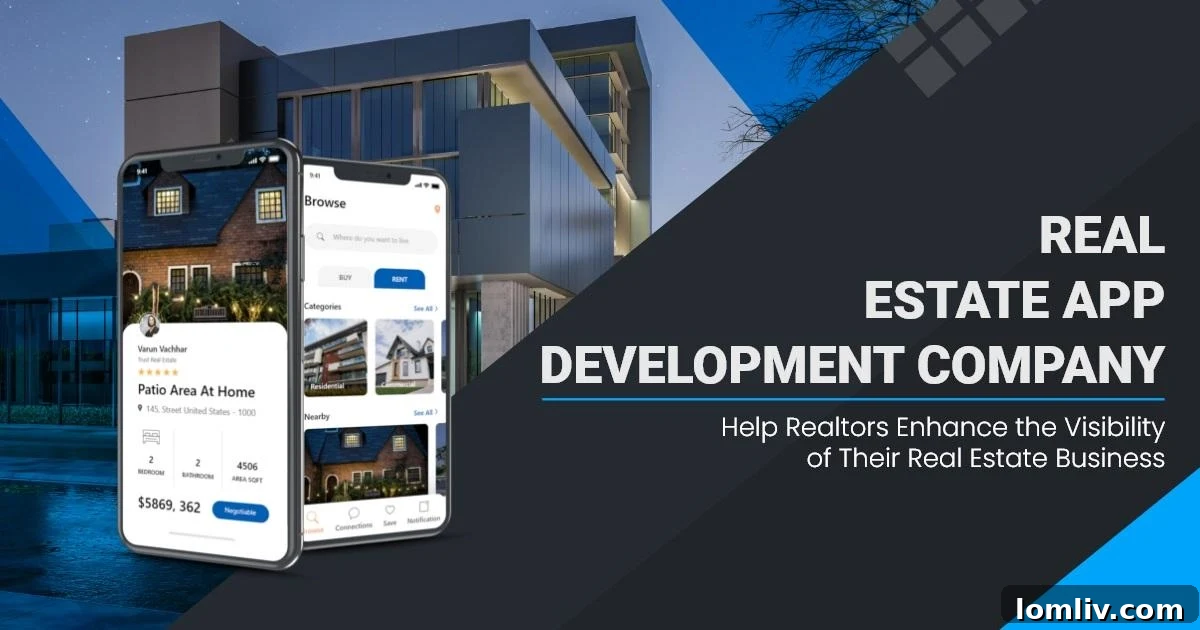
Real estate applications are fundamentally transforming the way agents, buyers, and sellers interact, making property transactions smoother, faster, and more accessible than ever before. These powerful digital tools empower users with a wealth of information and functionalities right at their fingertips, wherever they are. Key features commonly found in modern real estate apps include detailed property listings complete with high-resolution images and videos, immersive virtual tours, instant communication channels with real estate agents, convenient appointment booking and scheduling, intuitive mortgage calculators, and personalized property recommendations based on user preferences and search history. All these conveniences are delivered through a mobile gadget, drastically improving efficiency and elevating user satisfaction.
Beyond offering mere convenience, mobile apps provide real estate businesses with a significant competitive edge in a crowded market. They serve as powerful tools to enhance brand visibility, generate qualified leads, and allow for sophisticated data analytics that can inform highly targeted marketing strategies and drive innovative business development. For real estate agents, a dedicated app means faster client response times, more efficient management of property showings, and instant access to critical client data and market insights while on the go. For buyers and sellers, it translates to a transparent, user-friendly experience that accelerates the decision-making process and builds trust. While platforms like Homestack offer a standardized, functional foundation for real estate businesses, collaborating with a custom real estate app developer unlocks the potential to build a truly unique platform, perfectly tailored to your specific operational workflows, market niche, and long-term strategic ambitions.
Homestack: The Appeal of a Ready-Made Real Estate App Solution
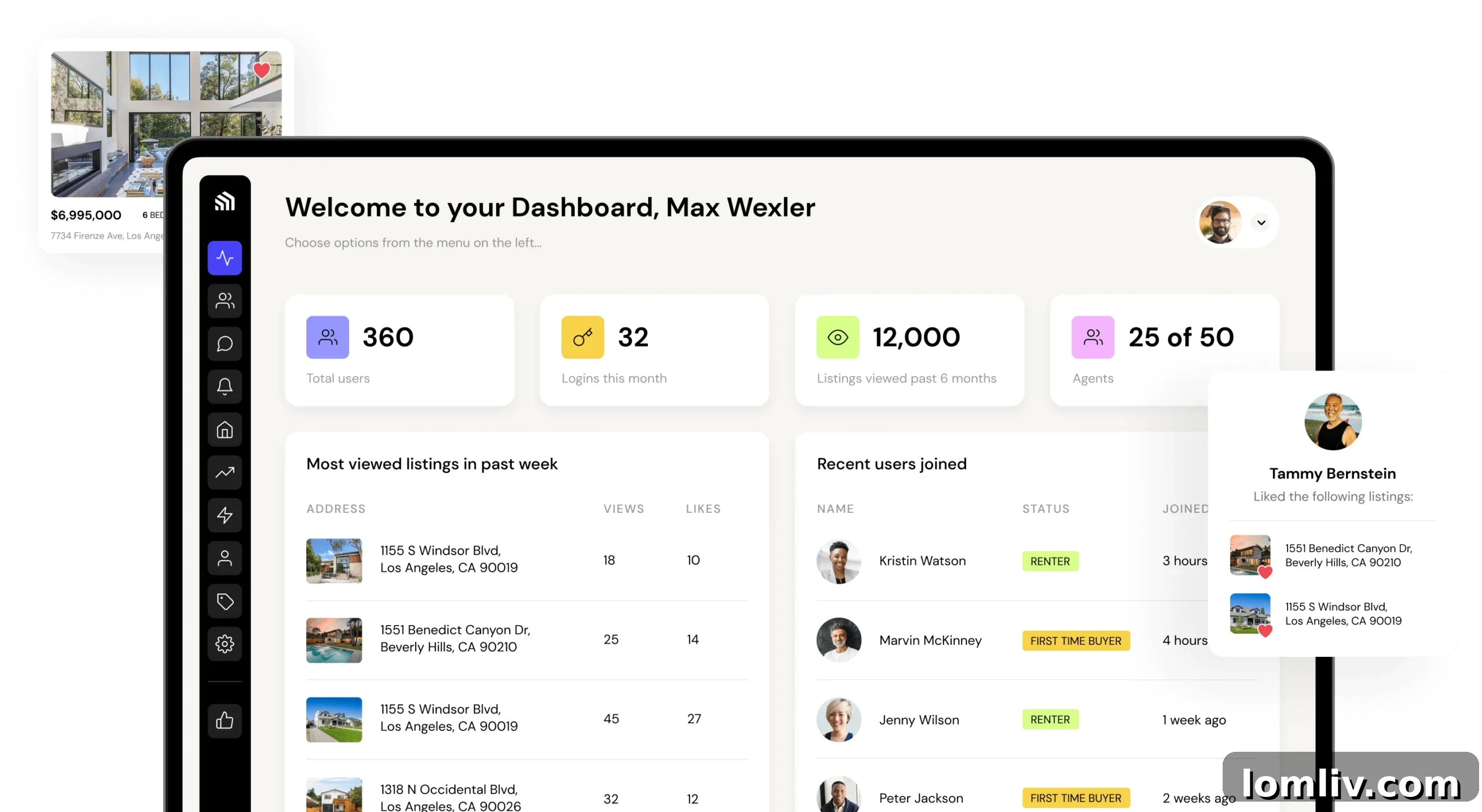
For many real estate businesses, especially those just beginning their digital transformation journey or operating with tighter budgets, a ready-made solution like Homestack presents an attractive and practical proposition. It’s specifically designed to get you up and running swiftly with essential features, minimizing the initial investment of both time and capital. Homestack positions itself as a streamlined and accessible entry point into the mobile app landscape for real estate professionals who prioritize speed and efficiency.
1. Rapid Deployment and Swift Time-to-Market
One of the most compelling advantages of choosing a platform like Homestack is its unparalleled speed of deployment. Unlike custom real estate app development projects that can span several months from concept to launch, integrating with a ready-made platform means your branded real estate app can be configured and made live within days, or even mere hours. This swift time-to-market allows businesses to quickly establish their mobile presence, immediately start engaging with clients through a modern interface, and test the waters of digital interaction without enduring prolonged and costly development cycles. For real estate businesses needing an immediate solution to capture emerging market share, react to competitive pressures, or address an urgent operational need, this efficiency is a significant and often decisive benefit.
2. Cost-Effective for Startups and Small Businesses
Given that Homestack is a pre-built, templated platform, it significantly reduces the upfront development costs typically associated with creating a complex mobile application from scratch. This makes it a highly cost-effective solution for independent brokers, small real estate agencies, or new startups operating with limited financial resources. Rather than investing heavily in intricate design, bespoke coding, rigorous testing, and robust infrastructure setup, businesses typically pay a manageable subscription fee, often on a tiered basis, to gain access to a fully functional, professionally maintained platform. This lower barrier to entry democratizes access to powerful mobile technology, enabling more real estate professionals to establish a competitive digital footprint without substantial capital outlay.
3. Comprehensive Standard Features and Functionality
Homestack provides a robust suite of standard features that are widely recognized as essential for most real estate operations. These typically include intuitive property search functionalities with various filters, detailed listing pages showcasing properties effectively, virtual property visitation options (such as photo galleries and basic video tours), and integrated communication tools for connecting directly with agents or property owners. While these features are generally sufficient for core business needs and meet common user expectations, they are designed for broad applicability. For many firms, particularly those focusing on conventional residential sales or straightforward listings, these standardized offerings can effectively support daily operations and client interactions without the necessity for highly specialized or customized functionalities. It provides a reliable and proven foundation that covers the basics comprehensively and efficiently.
4. Reduced Maintenance Burden and Technical Overhead
Opting for a ready-made solution like Homestack often means that the platform provider takes full responsibility for ongoing technical maintenance, crucial security updates, and underlying infrastructure management. This significantly alleviates a substantial technical burden from the real estate business itself, allowing them to allocate their resources and focus primarily on sales, marketing, and cultivating strong client relationships rather than managing IT overhead. Regular updates, bug fixes, and compatibility adjustments for evolving operating systems are typically handled centrally by the platform vendor, ensuring the app remains stable, secure, and compatible without requiring internal technical expertise.
Custom Real Estate App Developers: Crafting a Tailored Digital Experience
While ready-made solutions offer undeniable advantages in terms of speed and initial economy, custom real estate app development provides an unmatched level of control, flexibility, and differentiation. It’s an investment in a unique digital asset that can be meticulously crafted to perfectly mirror your specific business processes, embody your brand ethos, and align precisely with your long-term strategic goals. For real estate businesses aiming for market leadership, fostering innovation, or serving a highly specialized niche, custom development is frequently the superior and more impactful choice.
1. Unique Features and Distinct Brand Identity
Collaborating with a custom real estate app developer empowers you to design an application that is a true extension of your brand and caters precisely to your unique operational requirements and target audience preferences. This means you can integrate highly specialized, proprietary functionalities that genuinely set you apart from competitors. Imagine capabilities such as sophisticated AI-powered property recommendations based on intricate user behavior patterns, hyper-local market insights derived from proprietary data sources, immersive augmented reality (AR) tours for visualizing unbuilt properties or virtual staging, advanced CRM system integrations specifically tailored to your complex sales pipeline, or even blockchain-enabled transaction processes for enhanced security and transparency. A custom app isn’t just a generic tool; it’s a powerful statement of your brand’s innovation, uniqueness, and unwavering commitment to delivering a truly superior client experience.
2. Unparalleled Scalability and Future-Proofing
Custom applications are meticulously built from the ground up with your future growth in mind. As your real estate business expands its operations, evolves its services, or diversifies into new markets or specialized offerings, your custom app can seamlessly adapt and scale. Experienced developers can architect the application to effortlessly accommodate increased user loads, integrate cutting-edge new technologies (like IoT for smart homes), add new modules for property management or investment analysis, or expand functionalities without the inherent limitations or constraints typically found in off-the-shelf platforms. This inherent scalability means your custom app remains a valuable, dynamic asset that grows strategically alongside your business, rather than becoming an outdated or restrictive constraint that eventually necessitates costly replacement.
3. Optimized and Enhanced User Experience (UX)
An application developed from scratch allows for meticulous attention to every detail of user experience (UX) and user interface (UI) design, resulting in a beautifully integrated, intuitive, and highly engaging platform. Custom developers can conduct in-depth research into your specific target audience, optimizing every aspect from navigation flow and content presentation to visual aesthetics and interactive elements to meet their exact preferences and address their pain points. This tailored approach significantly increases user satisfaction, leading to higher engagement rates, longer session durations, improved conversion rates, and reduced bounce rates. A superior UX fosters deep client loyalty, strengthens your brand perception, and makes your custom app the undeniable go-to resource for property seekers and sellers.
4. A Strategic Long-Term Investment with High ROI
While the initial financial outlay for a custom real estate app solution may be considerably higher than a recurring subscription to a ready-made platform, it represents a profound strategic long-term investment that is capable of yielding significant returns over time. A custom real estate app becomes a proprietary asset for your business, giving you complete ownership of the code, all collected user data, and the invaluable intellectual property. This exclusive value proposition helps to powerfully differentiate your brand in a crowded market, attract more discerning and tech-savvy clients, and solidify your position as an innovative leader within the technology-driven real estate sector. The ability to continually refine, optimize, and potentially monetize your unique app contributes to a compelling return on investment over its lifecycle, making it a powerful engine for sustainable business growth and long-term competitive advantage.
5. Full Control, Data Ownership, and Enhanced Security
With a custom application, your business retains complete and unfettered control over every aspect of the app, from its granular design and specific features to its underlying architecture and comprehensive data management protocols. This also means full ownership of all collected user data, which is an invaluable resource for advanced analytics, highly personalized marketing campaigns, and understanding nuanced market trends. Unlike third-party platforms where data usage might be restricted, subject to vendor policies, or even shared, a custom app ensures your data remains your exclusive competitive asset, providing unique insights that drive strategic decisions while maintaining stringent client privacy and security standards. Furthermore, custom development allows for the implementation of advanced security measures tailored to your specific needs, protecting sensitive client information and transaction data more robustly.
Key Factors to Consider When Making Your Choice

The decision between adopting Homestack and commissioning a custom real estate app developer is not a one-size-fits-all solution. It demands a careful, introspective assessment of your business’s unique circumstances, strategic goals, operational intricacies, and long-term aspirations. Here are critical factors to consider thoroughly before making your definitive choice:
- Budget Considerations: Thoroughly evaluate both your immediate financial capacity and your long-term investment strategy. Homestack typically offers significantly lower upfront costs but involves recurring ongoing subscription fees. Custom development, conversely, demands a higher initial investment in design and development but provides complete ownership of the digital asset and potentially much greater long-term return on investment (ROI) due to its unique value. Clearly define the extent of investments you are prepared to make, both presently and in the future, including potential maintenance costs.
- Timeline for Launch: How quickly do you need your mobile app to be fully operational and available to your clients? If speed-to-market is an absolute paramount priority, Homestack’s rapid deployment capability is a clear and undeniable advantage. If, however, you have the luxury of a longer development cycle and your primary focus is on implementing truly unique features and achieving perfection in user experience, custom development allows for more thorough planning, iterative design, and meticulous execution.
- Essential Features vs. Unique Functionality: Identify the core functionalities and tools your real estate business absolutely needs to function effectively. Are the standard, comprehensive features offered by platforms like Homestack sufficient for your current operational requirements and client expectations? Or do you require highly specialized tools, seamless integrations with existing systems, or proprietary features that will genuinely differentiate you from your competitors and cater to a specific market niche? Determine precisely what kind of functions, whether out-of-the-box or bespoke, your business truly requires to thrive and innovate.
- Future Growth Potential and Scalability Needs: Consider your business’s long-term vision and projected growth trajectory. Do you anticipate significant expansion, diversification of services (e.g., into commercial real estate, property management, or investment portfolios), or entry into entirely new geographic markets? A custom app is inherently built to scale and evolve harmoniously with your business, whereas a ready-made solution might eventually limit your growth capabilities, necessitate compromises, or eventually require a costly and disruptive migration to a new platform in the future. Think deeply about your future business objectives and whether the chosen app solution can not only align with them but also dynamically grow alongside your enterprise.
- Target Audience and Niche Market Focus: Who are your primary users, and what are their specific expectations, technological literacy, and pain points? If you serve a broad, general market with conventional real estate needs, a standard, robust app might suffice. If, however, you cater to a highly specialized or niche market with very specific demands (e.g., luxury properties, unique architectural styles, commercial real estate, or complex property management services), a custom app allows you to tailor the experience, content, and features precisely to resonate with that specific audience, fostering greater engagement and loyalty.
- Internal Technical Resources and Ongoing Maintenance: Do you have an in-house technical team or sufficient expertise capable of managing an app’s technical aspects, including bug fixes, security updates, and future enhancements? Or do you prefer a solution where maintenance, infrastructure, and technical support are comprehensively handled by a third-party provider? Homestack typically manages all underlying updates and support, significantly reducing your internal IT burden, while a custom app will necessitate either a dedicated in-house technical team or a reliable, long-term development partner for ongoing maintenance, security patching, and future enhancements.
Conclusion: Charting Your Course in Real Estate App Development
The decision between adopting a ready-made platform like Homestack and commissioning a custom real estate app developer is a strategic crossroads for any forward-thinking real estate business. Each path offers a distinct set of advantages and potential trade-offs, making the “best” choice entirely dependent on your organization’s unique circumstances, current financial capabilities, overarching strategic objectives, and long-term vision for market positioning.
Homestack shines as an excellent choice for businesses that prioritize speed, cost-effectiveness, and a reliable, comprehensive set of standard features. It’s an ideal solution for startups, independent agents, or smaller agencies looking to establish a professional mobile presence quickly and efficiently, without the heavy initial investment or prolonged development cycles typically associated with a custom build. If your immediate goal is to offer essential functionalities like property search, engaging virtual tours, and seamless agent contact with minimal fuss and maximum speed, Homestack provides a robust, accessible, and proven solution.
Conversely, if your vision involves creating a truly distinctive brand experience, integrating highly specialized and proprietary features, ensuring unparalleled scalability for ambitious future growth, and owning a valuable proprietary digital asset that truly differentiates you, then investing in custom real estate app development is the unequivocally superior and more strategic route. While it demands a greater initial financial commitment and a longer timeline for development, the resulting application will be perfectly aligned with your precise business model, offering a powerful competitive edge through unique functionalities, an optimized user experience tailored to your audience, and the flexibility to adapt dynamically to evolving market demands and technological advancements. It’s an investment in differentiation, innovation, intellectual property, and long-term market leadership.
Ultimately, the key lies in conducting a thorough and honest self-assessment. Define your core business needs with precision, quantify your budget and timeline constraints realistically, envision your ideal user experience in detail, and project your growth trajectory confidently. By weighing these critical factors carefully against the comprehensive pros and cons of both Homestack and custom development, you can make an informed and strategic decision that perfectly fits your ideal vision for your real estate business. A well-chosen and well-executed app is not just a digital tool; it is a powerful enabler that can significantly enhance your service delivery, reinforce your brand image, cultivate deeper client relationships, and empower you to truly thrive and lead in the dynamic and highly competitive modern real estate market.