In the intricate world of real estate, the process of buying or selling a home can be fraught with hidden complexities. Beneath the fresh paint and staged decor often lie crucial details that can significantly impact a property’s value, safety, and long-term livability. This is precisely where professional home inspectors, like the detail-oriented team at Green Scene Home Inspections, play an indispensable role. Every week, we bring Daltxrealestate.com readers an exclusive insight into the often-overlooked aspects of property assessment, a series we proudly call “Upon Closer Inspection.”
As dedicated home inspectors, our primary function is that of a generalist. This means our expertise spans across various interconnected systems within a home. We meticulously observe, test, and evaluate these diverse components – from structural integrity and roofing to electrical systems, plumbing, HVAC, and beyond. Our objective is clear: to discern what functions as intended, identify areas of malfunction, and pinpoint potential problems that could escalate into costly repairs or pose safety risks down the line. We don’t just scratch the surface; we delve deep to provide a comprehensive snapshot of a property’s current condition.
While we possess a broad understanding of home systems, it’s important to clarify that we are not licensed roofers, certified electricians, or professional interior designers. Our role isn’t to fix issues or design solutions, but to expertly identify and report them. We act as your knowledgeable guide, shining a light on critical observations that might require further evaluation by a specialized professional. Often, these observations come from experiences that make us raise an eyebrow and say, “We’re not the expert, but we’re just saying…” Let’s explore some instances where our generalist’s eye spotted something worth noting.
We’re Not Roofers, But Improper Shingle Installation Can Be a Costly Oversight
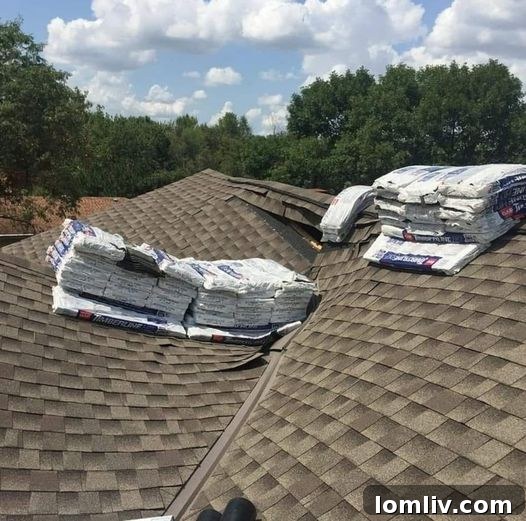
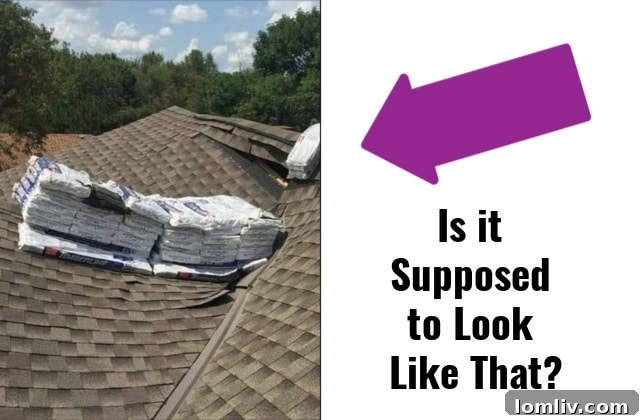
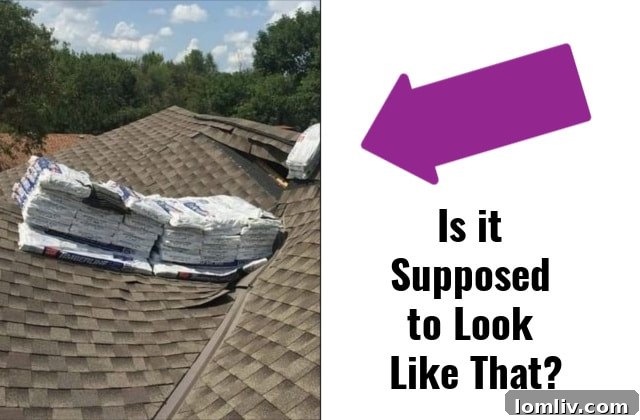
One of the most critical components of any home is its roof, acting as the primary shield against the elements. During our inspections, we carefully examine its condition, looking for signs of wear, damage, and improper installation. While we don’t install or repair roofs, we can certainly spot practices that indicate poor workmanship or potential future problems. For example, loading an excessive amount of shingle bundles onto a specific section of the roof, as depicted in the accompanying image, seems like a poor choice with several concerning implications.
Improper shingle loading isn’t just an aesthetic concern; it poses significant structural and safety risks. Firstly, concentrated weight can unduly stress the roof decking and supporting rafters, potentially leading to sagging, cracking, or even structural failure over time. This can compromise the entire roof system, accelerating its deterioration and opening the door to leaks and extensive water damage inside the home. Secondly, the uneven distribution of weight can be hazardous for workers on the roof, increasing the risk of accidents during installation. Thirdly, placing heavy bundles on the roof for extended periods, especially in hot weather, can cause the shingles themselves to deform or become damaged before they are even properly installed, thereby reducing their lifespan and effectiveness prematurely.
A professional home inspection delves deeper than what’s immediately visible from the ground. We look for indicators such as missing or damaged shingles, curling or buckling, compromised flashing around chimneys and vents, damaged gutters, and overall roof drainage issues. Our assessment ensures that the roof, a crucial asset for protecting your home, is in sound condition or highlights areas that need expert attention. While we won’t fix these problems, our detailed report will highlight them, providing potential buyers with crucial information to negotiate repairs or factor in future replacement costs. Understanding the condition of your roof, and recognizing signs of poor installation practices, is fundamental to protecting your investment and ensuring the longevity of your home.
We’re Not Interior Designers, But Fan Blades Hitting the Ceiling is a Clear Hazard
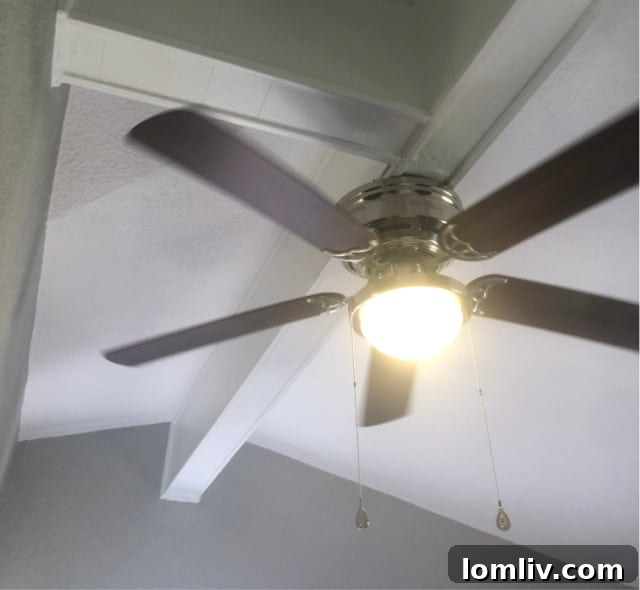
While home inspectors don’t offer interior design advice, certain installations immediately catch our eye because they point to fundamental issues of safety, functionality, or improper construction. A common example that falls into this category is a ceiling fan with blades so high they scrape against the ceiling. If the blades of your ceiling fan are hitting the ceiling, you might want to consider adjusting its mounting or choosing a different fixture altogether. This isn’t just an irritating noise; it’s a clear indicator of an installation flaw that can lead to several problems.
When ceiling fan blades make contact with the ceiling, it’s typically due to incorrect installation, using the wrong type of downrod for the ceiling height, or an improperly secured mounting bracket. This issue causes incessant noise, vibrations, and over time, can lead to significant damage to both the fan motor and the ceiling surface itself. More critically, constant impact can weaken the fan’s structural integrity, potentially causing blades to become detached – a serious safety hazard for anyone underneath. It also signifies poor air circulation, as the fan cannot operate efficiently when obstructed, defeating its purpose of cooling or ventilating a room. Such an oversight can lead to increased energy consumption without the desired comfort.
During a home inspection, we assess ceiling fans for proper operation, secure mounting, and adequate clearance from the ceiling and surrounding walls. We check for excessive wobble, unusual noises, and ensure that all speeds and light functions (if applicable) are working correctly. While we won’t tell you what style of fan to buy, we will certainly flag an installation that compromises safety or functionality. Such an observation prompts a recommendation for a qualified electrician or handyman to correct the issue, ensuring the fan operates safely and effectively within the home. This attention to detail helps prevent future repair costs and potential injuries.
We’re Not Home Builders, But Some Kitchen Designs Raise Serious Practical Concerns
The kitchen is often considered the heart of the home, a space designed for culinary creation, family gatherings, and daily routines. Its layout and functionality are paramount to a home’s livability and value. As home inspectors, while we don’t possess a design degree, our extensive experience viewing countless properties gives us a unique perspective on what constitutes a practical, safe, and efficient kitchen. Occasionally, we encounter designs that are so unconventional or poorly thought out that they immediately warrant a deeper look. This is kind of a weird kitchen design, right?
A “weird” kitchen design, as highlighted in cases like the video above, often points to more than just aesthetic preferences. It can indicate fundamental flaws in planning that compromise the kitchen’s “work triangle” (the path between the sink, refrigerator, and stove), limit counter space, create hazardous pathways, or make appliance use impractical. Such designs can hinder daily tasks, reduce storage efficiency, and even negatively impact the home’s resale value. For instance, an oven placed too close to a doorway, a refrigerator that blocks a walkway when opened, or insufficient ventilation above a cooktop might not be immediately apparent to a casual observer, but they scream “problem” to a trained inspector.
Poor kitchen design isn’t just an inconvenience; it can pose safety risks. Inadequate clearance around cooking surfaces or appliances can increase the risk of burns or fires. Poor ventilation can lead to an unhealthy accumulation of smoke, grease, and odors. Furthermore, a non-functional layout can make the kitchen a less desirable space, affecting a buyer’s perception and potentially the property’s market appeal. Our inspection of a kitchen goes beyond the visual. We evaluate the condition and functionality of appliances, check for proper electrical outlets and GFCI protection, inspect plumbing for leaks and adequate drainage, and look for signs of poor ventilation or moisture issues. While we won’t rearrange your cabinets, we will identify design choices that could lead to inconvenient living, potential safety hazards, or non-compliance with building codes. Our goal is to ensure that the kitchen is not only visually appealing but also a safe, functional, and durable space for its inhabitants.
We’re Not Electricians, But Obstructed Electrical Panels Are a Serious Safety Violation
Electrical systems are the backbone of any modern home, powering everything from lights and appliances to heating and cooling. Consequently, the electrical panel, or breaker box, is the nerve center of this system, designed to safely distribute electricity and protect circuits from overload. Its accessibility is not just a matter of convenience; it’s a critical safety requirement. During inspections, we occasionally encounter situations where this vital component is obstructed, making us declare, “We’re not electricians, but there’s going to be a problem when these folks need to flip a breaker.”
National electrical codes mandate specific clearance requirements around electrical panels to ensure safe and immediate access. Typically, this involves a clear working space of at least 30 inches wide, 36 inches deep, and 78 inches high in front of the panel. When this space is blocked by furniture, storage, or built-in structures, as often shown in instances like the video above, it creates a severe safety hazard. In an emergency, such as an electrical fire or a tripped breaker, quick access to the panel is paramount to shut off power and prevent further damage or injury. Delays caused by moving obstructions can have catastrophic consequences, potentially allowing a small issue to escalate rapidly.
Beyond emergency access, an obstructed panel makes routine maintenance or troubleshooting impossible. An inspector’s keen eye will also look for signs of overloaded circuits, incorrect wiring, scorch marks, rust, or loose connections, all of which indicate potential fire risks. While we do not open live electrical panels (that’s a job for a qualified electrician to ensure safety and specialized expertise), we thoroughly inspect the panel’s exterior and its surroundings, noting any code violations related to accessibility. An obstructed electrical panel is a serious deficiency that will always be flagged in our report, requiring immediate attention from a licensed electrician to bring the property up to safety standards and ensure the household’s well-being.
Why a Generalist Home Inspector’s Eye is Invaluable for Your Property Investment
The anecdotes shared above, from poorly loaded shingles to obstructed electrical panels and impractical kitchen designs, underscore a crucial point: while home inspectors are generalists, our training and experience equip us to identify a vast array of issues that could impact a home’s safety, functionality, and value. We may not be specialists in every single trade, but our comprehensive knowledge allows us to spot the red flags that warrant further investigation by a certified professional. This makes our role indispensable in the real estate transaction process, providing a vital layer of protection for buyers and sellers alike.
Our thorough inspections provide potential buyers with critical leverage during negotiations and peace of mind about their investment. Understanding the true condition of a property empowers them to make informed decisions, whether that means requesting repairs, adjusting their offer, or proceeding with confidence. For sellers, an inspection report can reveal hidden issues that, when addressed proactively, can enhance the property’s marketability and prevent last-minute deal complications or renegotiations. Whether it’s a seemingly minor detail like a fan blade hitting the ceiling or a significant structural or electrical concern, our “Upon Closer Inspection” approach ensures no stone is left unturned, giving a complete picture of the property’s health.
Don’t leave the biggest investment of your life to chance. A professional home inspection offers clarity, empowers informed decisions, and safeguards your financial well-being. Partner with experts who see beyond the aesthetics and understand the intricate workings of a home. Trust Green Scene Home Inspections to provide you with the detailed, unbiased assessment you need to move forward confidently. Tune in for more insights from “Upon Closer Inspection” every week, and remember: a well-inspected home is a well-protected investment, ensuring safety, functionality, and lasting value for years to come.