Navigating the Architectural Maze: A Critical Look at a Westmont, Illinois Home
In the vast and varied landscape of residential architecture, certain homes manage to stand out not for their luxurious amenities or groundbreaking innovation, but for designs that leave occupants, and indeed observers, utterly perplexed. This week, we shine a spotlight on a property that, from its curiously tiered exterior to its labyrinthine interior, seems to challenge the very notion of comfortable and intuitive living. While some architectural choices aim for aesthetic appeal or unique character, the design of this particular Westmont, Illinois house raises a fundamental question: was it built by someone with an exceptionally peculiar vision, or perhaps, as we humorously suggest, by a designer with a rather “mean” streak?
We’re not talking about minor eccentricities or charming quirks; we’re dissecting a layout that transforms everyday tasks into unexpected physical feats. Imagine a home where every transition is an ascent or descent, where moving from one room to another requires conscious navigation of steps and drops. For the fitness enthusiast, this residence might present a novel way to incorporate a daily workout, effectively eliminating the need for a “leg day” at the gym. For everyone else, it promises a continuous, often inconvenient, battle against gravity and a constant search for stable footing. Join us as we explore the captivating, albeit confounding, multi-level intricacies of this Westmont property, a true case study in the fine line between unique design and functional frustration.


A Deceptive Introduction: The Exterior of 312 N Washington Street
Located at 312 N Washington Street, Westmont, Illinois, this home initially presents itself as a charming, if conventional, residence. With four bedrooms, four bathrooms, and just over 3,000 square feet of living space on almost half an acre, its statistics suggest a comfortable family home. The asking price of $849,900 places it firmly within a desirable market segment. However, beneath this veneer of normalcy lies a series of design choices that defy common sense and practical living, beginning even before you step through the front door.
The Front Steps: Grand Width, Questionable Safety
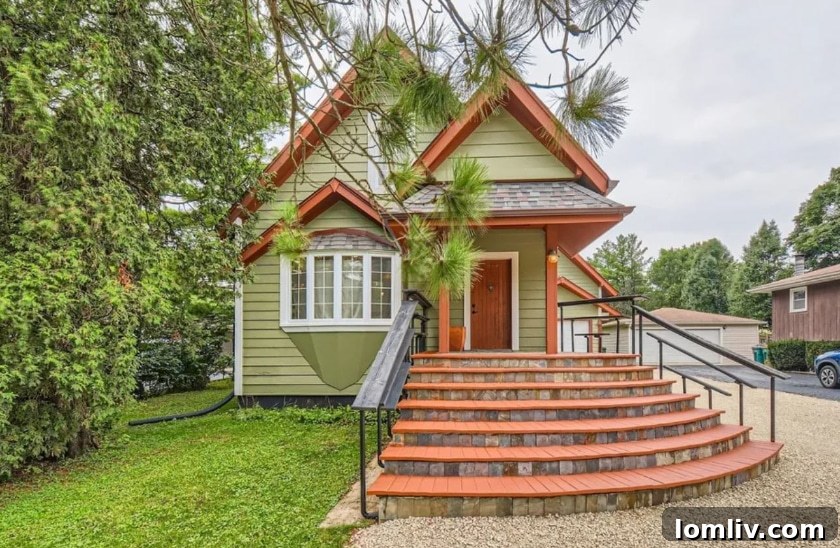
The journey into this house starts with its very first impression: the front steps. While generously wide, a closer look reveals a significant functional oversight. The sheer breadth of the steps means that a handrail is only available on one side. This immediately creates a safety concern, particularly for those who naturally reach for a central support, or for individuals with balance issues, young children, or the elderly. In an ideal world, accessibility and safety are paramount in entryway design, often dictating the inclusion of dual handrails or a central railing for broader support. Here, the choice seems to lean towards a grand visual statement, inadvertently sacrificing practical safety.
The challenges don’t conclude with the railing. As you reach the bottom of these steps, instead of a firm, welcoming landing, you are met with a scattering of small pebbles. This seemingly innocuous detail quickly transforms into a significant nuisance. Walking on these loose stones is akin to navigating a miniature, albeit less dramatic, quicksand pit. High heels become a treacherous undertaking, pushing a stroller becomes a test of strength, and even sturdy footwear struggles to maintain a firm grip. This aesthetic choice, rather than enhancing the curb appeal, detracts from the user experience, making simple tasks like carrying packages or greeting guests an unexpected struggle. It’s a clear example of how a seemingly minor design decision can have a disproportionately large impact on daily convenience and safety.
Stepping Inside: An Obstacle Course of an Entryway
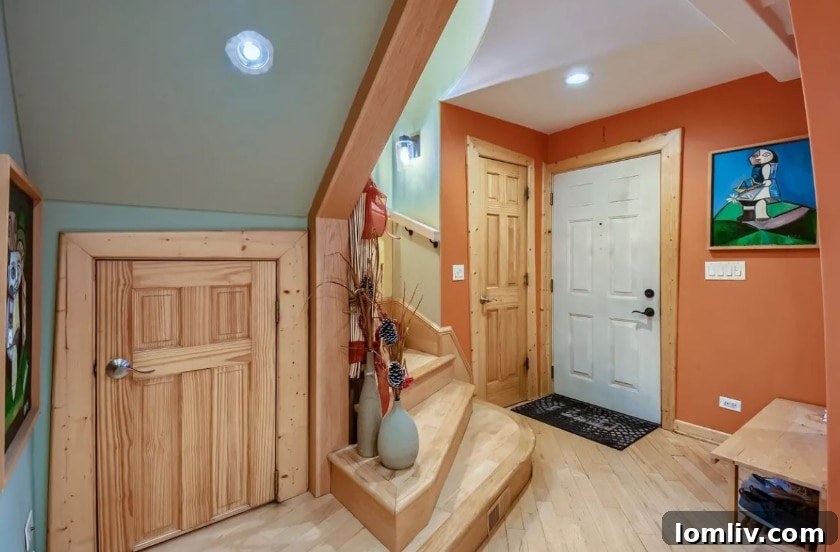
If the exterior offered a mere prelude to the home’s unique design philosophy, the interior entryway immediately plunges you into the full narrative. The act of entering the front door sets the tone for what’s to come. Pushing the door open reveals an unfortunate collision point: the front door bumps directly into the closet door. This isn’t just a minor annoyance; it’s a glaring design flaw that hampers natural movement, causes undue wear and tear on both doors, and creates an immediate sense of constricted space. An entryway should be welcoming and functional, allowing for seamless transition and storage; instead, this design decision introduces friction from the very first step inside.
The Immediate Ascent and the Mystery of the “Hobbit Door”
Beyond the door dilemma, the entryway presents a formidable challenge: a prominent staircase directly ahead. There’s no spacious foyer, no gentle pause to take off your shoes or place your keys. Instead, you are immediately confronted with the demand to ascend, a recurring motif that will soon define this entire residence. This abrupt introduction to vertical navigation instantly communicates the home’s dedication to multi-level living, setting expectations for a journey rather than a simple stroll through the house.
Adding to the entryway’s intrigue is a peculiar, diminutive door tucked away to the side. Affectionately, and somewhat bewilderedly, referred to as the “hobbit door,” this miniature portal offers more questions than answers. To even access this curious space, one must first step up, and once inside, anyone taller than a small child would be forced into an uncomfortable crouch, risking a bumped head. What lies beyond this tiny threshold? A compact utility closet? Secret storage? Or perhaps, as the whimsical name suggests, a gateway to a realm populated by smaller beings? Regardless of its intended purpose, its design is undeniably inconvenient, a testament to a layout that prioritizes an unusual aesthetic over practical, ergonomic use. It’s a prime example of an architectural choice that adds unnecessary complexity without any obvious functional benefit, leaving visitors to wonder about the thought process behind its creation.

The Side Entrance: Another Path, More Pitfalls, and the Infamous “Pit Trap”
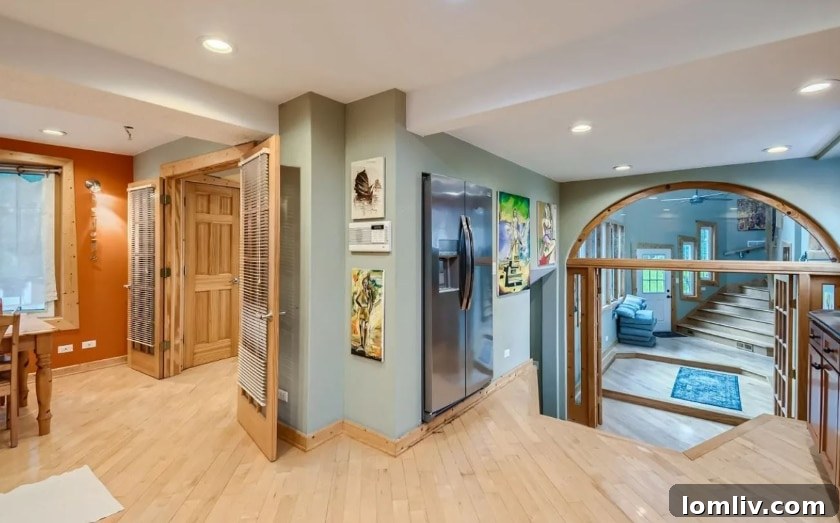
Recognizing the front door’s immediate challenges, one might logically seek an alternative point of entry, such as the side door. However, hopes for a smoother transition are quickly dashed. This alternative entrance offers no reprieve from the home’s multi-level obsession; you are once again greeted by a set of stairs. But the true architectural spectacle (or conundrum) awaits if you choose not to immediately ascend these steps. Instead of a continuous, flat floor, you are confronted with what we’ve coined the “pit trap” – a significantly sunken area that abruptly interrupts the floor plan.
This unexpected drop in the middle of the floor is more than just a quirky design feature; it’s a genuine safety hazard. It’s disorienting, particularly in low light, and poses a significant risk of trips and falls for anyone unfamiliar with the layout. One can’t help but ponder the designer’s intent here. Was it an ambitious attempt at a modern, open-concept layout that went awry? Or a peculiar strategy to create distinct zones within a seemingly integrated space? The practical implications for daily living are profound. Imagine navigating this feature while carrying an armful of groceries, a laundry basket, or even a small child. The constant demand to step down and then immediately step up again disrupts natural movement, complicates furniture arrangement, and fundamentally transforms a simple walk across a room into a calculated, vigilant maneuver. This design choice actively works against the principles of comfortable and intuitive living, turning routine household tasks into a series of physical challenges.
The Grocery Gauntlet: A Journey to the Kitchen
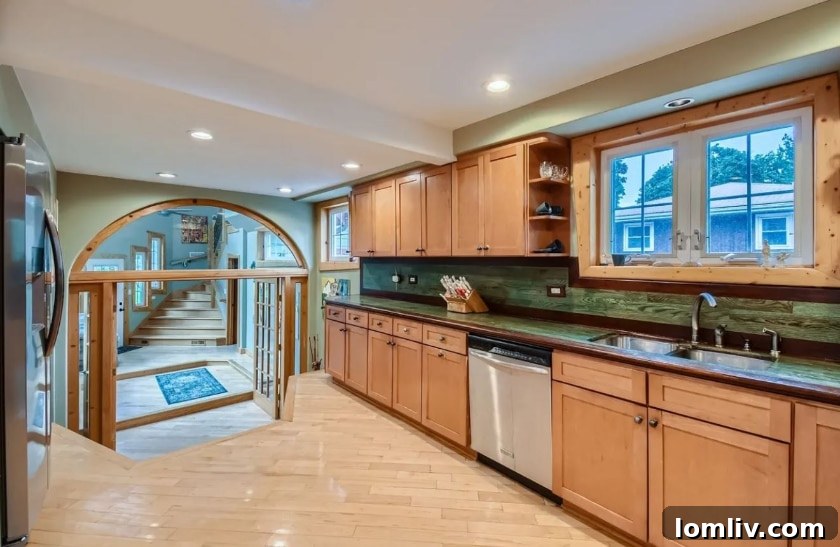
The true test of patience, endurance, and perhaps even one’s sanity, comes with the seemingly straightforward task of bringing groceries into the house and putting them away. Picture this scenario: you’ve successfully navigated the side entrance and confronted the infamous “pit trap.” Now, laden with bags, you face a dilemma. Do you painstakingly descend into the sunken area, traverse it, and then ascend again, all while balancing your provisions? Or, driven by sheer exasperation, do you consider a more unorthodox, perhaps even Olympic-level, approach – launching your groceries from the doorway, over the pit, hoping they land safely within the general vicinity of the kitchen? The very thought of such a maneuver is enough to induce a mild, albeit understandable, frustration.
But the journey is far from over. Even after conquering the “pit trap” and any impromptu grocery tossing, you are then met with yet another set of stairs, this time leading up to the kitchen itself. This relentless series of elevation changes transforms the simple act of unpacking groceries into a demanding physical workout. What should be a quick and efficient task becomes a protracted, energy-sapping ordeal. This design actively works against the practicalities of household management, turning a routine chore into a test of strength and agility. Beyond groceries, imagine the challenges of hosting a dinner party, carrying hot dishes, or even simply moving between the living area and the kitchen with a cup of coffee. The continuous up-and-down movement not only detracts from the fundamental comfort of a home but also significantly impacts its overall functionality and the ease of daily living within the space.

Beyond the Walls: The Multi-Tiered Outdoor Oasis (or Another Obstacle Course)
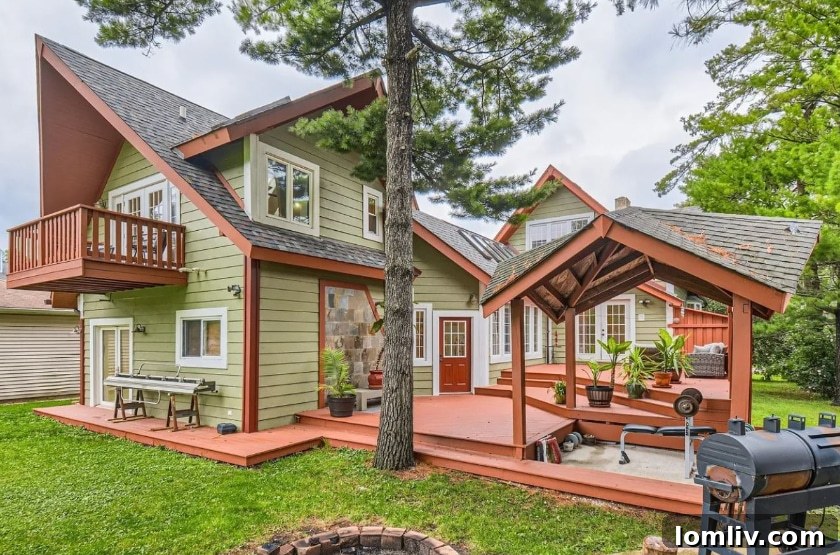
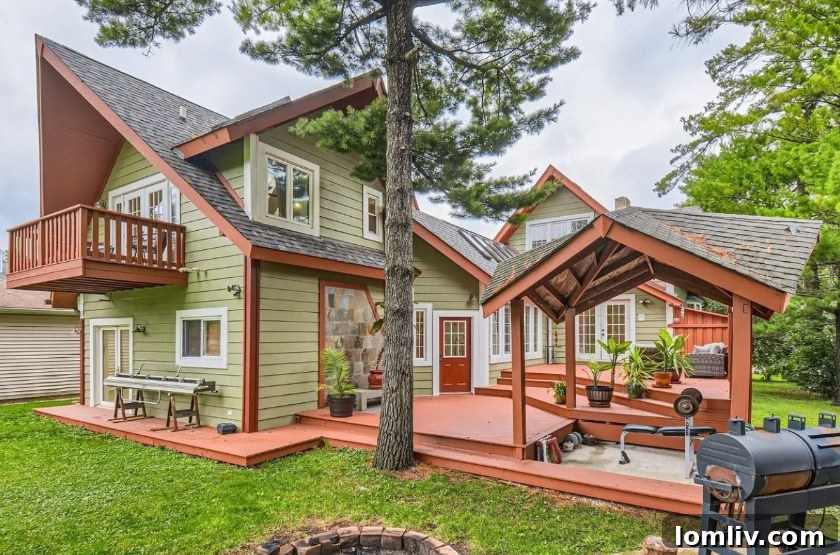
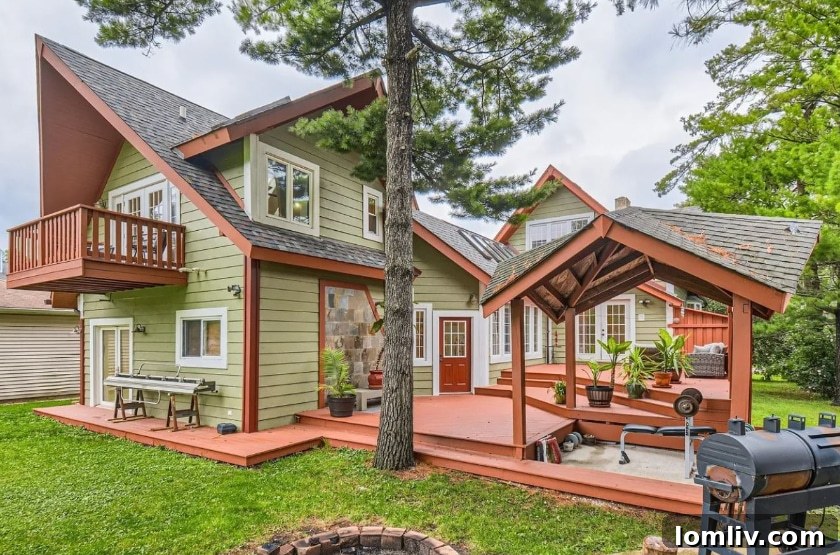
The home’s unwavering commitment to multi-level living extends far beyond its interior walls, bleeding into what should be a serene and accessible backyard space. Stepping out through the back door, you are immediately greeted by yet another step up. If your intention is to relax on an outdoor sofa, enjoy an alfresco meal on the patio, or simply move freely around your garden, prepare for a continuous series of elevation changes. So many levels, so many steps – even in the outdoor living areas, the pattern of constant vertical navigation persists.
While tiered patios and multi-level decks can certainly add visual interest and create distinct zones for outdoor activities, in the context of this Westmont home, they seem to compound the overall theme of constant physical effort. Envision hosting a backyard barbecue, where carrying platters of food, beverages, or even simply moving between different conversational groups requires careful negotiation of steps. Gardening tasks become more cumbersome, playing with children or pets is segmented by risers, and the desired seamless flow of an outdoor living space is repeatedly interrupted. It reinforces the notion that this house, from its core to its extremities, perpetually asks its occupants to engage in an unceasing, and often unnecessary, vertical workout. The dream of an effortless backyard retreat is replaced by a landscape that demands constant attention to footing and elevation changes.
The Broader Implications: Functionality, Accessibility, and Resale Value
Beyond the humorous exasperation elicited by such a design, a house with an abundance of challenging levels and unexpected drops raises significant practical concerns. For families with young children, the elderly, or individuals with any form of mobility impairment, this home would be an absolute nightmare. Safety, already a concern with single steps and slippery surfaces, becomes a constant, overarching preoccupation. The cherished ideal of “aging in place” transforms into an impossible fantasy, as fundamental accessibility, a cornerstone of thoughtful modern design, is conspicuously absent. This renders significant portions of the home effectively unusable or unsafe for a considerable demographic.
From a real estate perspective, such idiosyncratic designs, while undeniably unique, can have a profound impact on marketability and resale value. While a niche buyer might be charmed by its unconventional character, the vast majority of prospective homeowners prioritize practicality, ease of living, and a layout that supports, rather than hinders, daily life. Renovating a home with such fundamental structural challenges would be an immensely complex and costly undertaking, likely requiring extensive re-engineering of the floor plan rather than simple cosmetic updates. This isn’t merely an aesthetic choice; it’s an intrinsic design flaw that would demand a comprehensive overhaul to achieve conventional functionality and broad appeal.
Moreover, the constant physical and mental effort required to simply exist within this home can take a considerable toll. The cumulative fatigue of perpetually being aware of steps, drops, and potential collisions can erode the comfort and sense of sanctuary that a home is meant to provide. It transforms a living space into a perpetual obstacle course, making genuine relaxation and effortless movement feel like distant concepts. Ultimately, thoughtful home design should enhance the quality of life, not complicate it. It should provide a seamless and intuitive backdrop for daily activities, rather than a continuous series of physical and mental hurdles.

Concluding Thoughts: A Case Study in Design Choices
This Westmont, Illinois property stands as a compelling case study in how architectural choices, intended or not, can profoundly shape the resident’s experience. While the underlying intention behind its multi-level design might have been to foster visual interest, create distinct zones, or achieve a unique aesthetic, the execution has arguably resulted in a home that actively challenges its inhabitants at every turn. From the precarious front steps and the unsettling pebble landing to the collision-prone entryway, the enigmatic “hobbit door,” the infamous “pit trap,” and the seemingly never-ending ascents to the kitchen and outdoor spaces – this house demands a level of physical engagement that far surpasses the typical daily routine.
Perhaps, as our humor suggests, only a truly “mean” designer could conceive of such a relentless gauntlet of steps and levels. Or, more charitably, it serves as a powerful reminder that aesthetics, when not meticulously balanced with fundamental functionality and universal design principles, can inadvertently create spaces that are more frustrating than inspiring. For those rare individuals who genuinely appreciate a home that makes you work for every inch of its unique character, this Westmont residence might just be your dream come true. For the rest of us, it reaffirms our appreciation for designs that prioritize seamless living, intuitive navigation, and the simple, effortless comfort that a truly well-designed home should always provide. After all, a truly great home should elevate your spirit, not constantly require you to climb.
For more detailed photos and to explore the full listing of this unique property, you can view it here.