In the intricate world of construction and building infrastructure, every component, no matter how small, plays a pivotal role in the overall integrity and longevity of a structure. From robust plumbing systems to critical structural fittings, the demand for strong, precise, and durable connections is paramount. Yet, among these vital elements, one often overlooked but supremely critical process ensures that everything remains tightly joined, secure, and enduring: thread machining. In the realm of real estate development and maintenance, thread machining is the silent guardian, providing the foundational strength that holds pipe connections firm and solid, ensuring the seamless assembly and reliable operation of plumbing, HVAC, and countless other systems within any home or commercial building.
This comprehensive article delves into the essential aspects of thread machining, explaining its fundamental principles in an accessible yet detailed manner. We will explore why this often-underappreciated technique is indispensable for any real estate project, detailing its far-reaching impact on safety, durability, and cost-efficiency. Furthermore, we will introduce key approaches and considerations, including the strategic selection of threading methods and tools such as pipe taps, and a deeper understanding of crucial geometric properties like the helix angle. By shedding light on these critical elements, we aim to underscore the profound importance of precision threading in achieving construction excellence and ensuring the long-term resilience of our built environment.
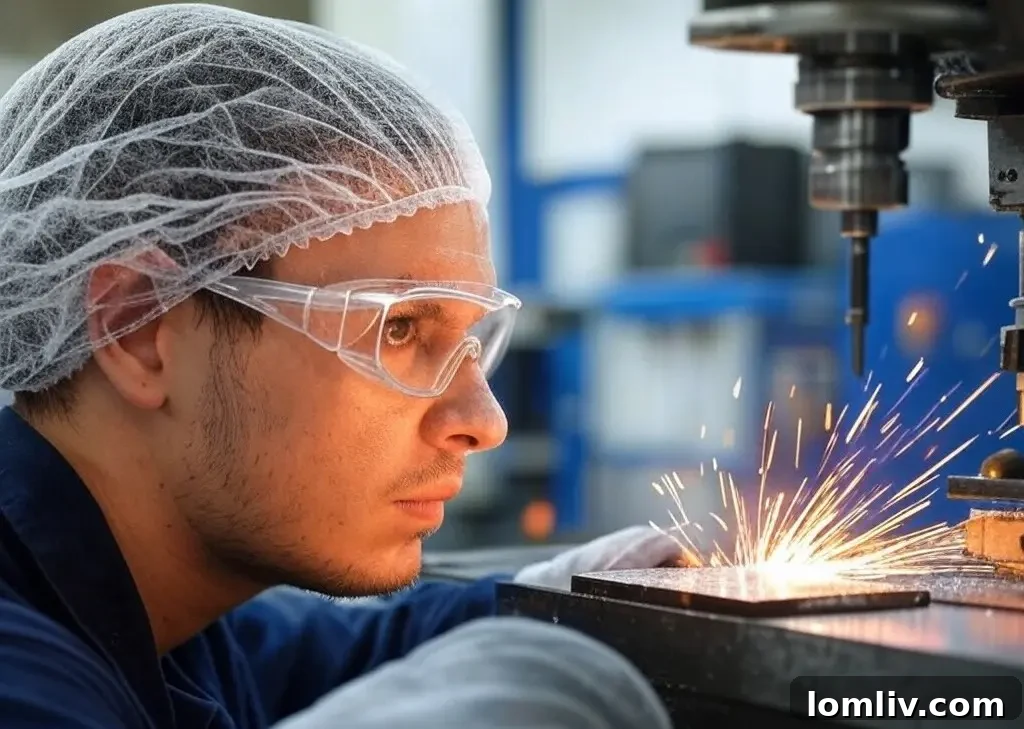
What is Thread Machining? The Foundation of Secure Connections
Thread machining is a sophisticated and highly precise manufacturing technique employed to create helical ridges, known as threads, on various components, typically made of metal. These threads are ingeniously designed to enable the secure and detachable fastening of different parts, or to guide their movement, as seen in the assembly of pipes, bolts, and specialized machinery. In the dynamic and demanding field of real estate, the integrity of these threads is not merely important; it is absolutely crucial. Strong, accurately machined threads are the bedrock of reliable plumbing systems, HVAC installations, and structural frameworks that must withstand the test of time, pressure, and environmental stresses.
Whether you are overseeing the ground-up construction of a new residential complex, undertaking an extensive renovation of an existing commercial property, or even managing smaller-scale home improvement projects, the quality of thread machining directly dictates the security and longevity of countless connections. Essentially, thread machining ensures that every joint is not just connected, but securely fastened, leak-free, and capable of performing its intended function without compromise. This precision engineering prevents potential failures, reduces maintenance needs, and significantly enhances the overall safety and durability of the entire structure. From cutting external threads on a bolt to tapping internal threads within a pipe, the process requires meticulous attention to detail and specialized tools to achieve the required dimensional accuracy and surface finish that define a high-quality, durable threaded connection.
Why Does Thread Machining Matter for Real Estate? Ensuring Structural Integrity and Longevity
The significance of thread machining in real estate extends far beyond a mere manufacturing process; it is fundamental to the structural integrity, operational efficiency, and long-term value of any property. When you are engaged in projects ranging from intricate home plumbing installations to large-scale industrial construction, thread machining acts as the unseen force that binds everything together. Consider, for instance, the plumbing system, a lifeline of any building. Here, specialized tools known as pipe taps are utilized to cut precise internal threads within pipes and fittings. This exactitude is not a luxury but a necessity, guaranteeing a tight, hermetic, and leak-free connection. The consequences of imperfect threads in such critical systems can be severe and multifaceted, leading to costly leaks, disruptive pressure fluctuations, and even catastrophic structural issues that compromise the safety and functionality of the entire building.
Beyond the immediate concerns of leaks, poorly machined threads can lead to connections that loosen over time due to vibration or thermal expansion and contraction. This gradual degradation can compromise the structural stability of fastened components, necessitating frequent repairs and increasing maintenance costs. Moreover, in high-pressure systems, weak threads can present serious safety hazards, including the risk of catastrophic pipe bursts or equipment failure. The integrity of threaded connections is also directly linked to compliance with building codes and safety regulations. Inspectors often scrutinize the quality of plumbing and structural fasteners, and substandard threading can lead to failed inspections, delays, and expensive reworks, significantly impacting project timelines and budgets.
Furthermore, an often-underestimated factor is the helix angle. This geometric property refers to the angle of the thread itself relative to the axis of the component, and it profoundly influences how smoothly threads engage, their resistance to loosening, and their load-bearing capacity over time. A correctly engineered helix angle ensures that components thread together effortlessly, without binding or excessive friction, thereby minimizing wear and tear during assembly and throughout the component’s service life. Conversely, an incorrect helix angle can result in stripped threads, inadequate engagement, or uneven stress distribution, significantly weakening the connection and accelerating its failure. In critical applications, the helix angle also impacts the thread’s ability to resist vibrational loosening, a crucial consideration for machinery and infrastructure components subjected to dynamic loads. Understanding and correctly applying these principles of thread machining is therefore not just about creating a connection, but about forging a durable, safe, and efficient system that will perform reliably for decades.
How to Choose the Right Threading Tools for Real Estate Projects: Precision and Performance
The success of any real estate project heavily relies on the quality and durability of its connections, and when it comes to thread machining, selecting the appropriate tools and methods is absolutely paramount. Whether you’re working with the critical plumbing pipes that snake through a building, fastening structural beams, or installing intricate HVAC components, the choice of threading tools—such as specific pipe taps, dies, or specialized thread mills—can profoundly impact the outcome. A meticulous approach to tool selection is essential to guarantee not just a proper fit, but also the long-term performance and reliability of every threaded joint.
Several critical factors must guide your decision-making process. Firstly, the material being threaded is a primary consideration. Different materials—be it carbon steel, stainless steel, brass, copper, or various plastics—require distinct tool geometries, coatings, and cutting parameters. For instance, threading hardened steel demands tools with superior hardness and wear resistance, often featuring specialized coatings, whereas softer materials may require different rake angles to prevent chip welding or tearing. Secondly, the precise thread size and type are non-negotiable. There are numerous thread standards globally, such as NPT (National Pipe Taper), BSPT (British Standard Pipe Taper), UNC (Unified National Coarse), UNF (Unified National Fine), and Metric threads, each with specific dimensions, pitch, and form. Using a tool designed for one standard on another will inevitably lead to an improper fit, cross-threading, or complete failure.
Thirdly, the scale and nature of the project dictate whether manual threading tools, power-driven equipment, or even advanced CNC machining processes are most suitable. For small repairs or limited runs, hand taps and dies might suffice. However, for extensive plumbing installations or large-scale structural work, portable power threaders or stationary threading machines offer greater efficiency, consistency, and accuracy. Fourthly, the environment in which the threading will occur, including accessibility and safety considerations, must influence tool choice. Tight spaces may require compact, specialized tools, while hazardous environments might necessitate spark-free or intrinsically safe options.
Finally, investing in high-quality tools from reputable manufacturers is crucial. While seemingly more expensive upfront, well-made tools offer superior precision, longer service life, and consistent results, ultimately reducing rework, preventing material waste, and enhancing overall project efficiency and safety. The wrong tool, or a worn-out one, can lead to threads that are either too loose, too tight, misaligned, or entirely stripped, inevitably resulting in leaks, structural weaknesses, or premature failure down the road. Therefore, a thoughtful and informed selection process for threading tools is not just a best practice; it is a fundamental requirement for delivering exceptional quality and lasting value in any real estate endeavor.
Common Thread Standards in Real Estate and Their Importance
Understanding the various thread standards is crucial for anyone involved in real estate construction, as selecting the incorrect standard can lead to incompatible connections, leaks, and potential system failures. The two most prevalent thread standards for pipes and fittings are National Pipe Thread (NPT) and British Standard Pipe Taper (BSPT).
- NPT (National Pipe Taper): Widely adopted in North America, NPT threads are tapered, meaning the diameter of the thread decreases along its length. This taper allows the threads to wedge together, creating a mechanical seal without the need for additional sealant in some applications, although thread sealant or PTFE tape is highly recommended to ensure a leak-proof connection. NPT threads are specified in ASME B1.20.1 and are essential for plumbing, gas lines, and fire sprinkler systems in the U.S. and Canada.
- BSPT (British Standard Pipe Taper): Predominantly used in the UK, Europe, Australia, and parts of Asia, BSPT threads are also tapered. However, their thread angle (55 degrees) and pitch are different from NPT (60 degrees). This difference makes them incompatible with NPT threads despite both being tapered. BSPT threads also rely on the wedging action of the taper for sealing, usually augmented with sealants. They are specified by ISO 7-1.
- NPS (National Pipe Straight): Unlike NPT and BSPT, NPS threads are straight (parallel) rather than tapered. They do not create a mechanical seal by themselves; instead, they require a gasket or O-ring to achieve a seal. NPS threads are often found in drain lines or as coupling threads where a mechanical seal isn’t primary, but a secure connection for alignment is.
Mixing these standards or using an inappropriate thread type can lead to significant problems. For example, attempting to connect an NPT male fitting to a BSPT female fitting will result in either an incomplete engagement that leaks or damage to the threads. Awareness and strict adherence to the appropriate local or project-specific thread standards are therefore non-negotiable for ensuring compatibility, performance, and compliance with building codes.
Ensuring Quality and Durability in Threaded Connections: Best Practices
Achieving truly durable and leak-free threaded connections goes beyond merely choosing the right tools; it involves adhering to a set of best practices throughout the entire process. For real estate projects where long-term reliability is paramount, these practices are indispensable:
- Proper Surface Preparation: Before threading, ensure the material’s end is clean, square-cut, and deburred. Any imperfections can hinder thread formation, leading to weak points or rough surfaces that compromise the seal.
- Appropriate Lubrication/Cutting Fluid: Using the correct cutting fluid is vital during the threading process. It reduces friction, dissipates heat, extends tool life, and helps produce a smoother, more precise thread. The type of fluid depends on the material being cut.
- Correct Tool Alignment and Engagement: Whether using hand tools or power machinery, ensure the tap or die is perfectly aligned with the workpiece. Misalignment is a primary cause of crooked threads, cross-threading, and premature tool wear. Gradual engagement, especially when starting a new thread, helps establish a clean lead.
- Regular Tool Maintenance: Keep taps and dies sharp and free of debris. Dull or damaged tools will produce inferior threads, requiring more effort and increasing the risk of material damage. Regular inspection and replacement of worn tools are cost-effective in the long run.
- Thread Sealants and Tapes: For tapered pipe threads (NPT, BSPT), the use of appropriate thread sealants (like PTFE tape or pipe joint compound) is crucial for creating a robust, leak-proof seal. Apply these materials correctly and sparingly, ensuring they do not interfere with the thread engagement.
- Correct Torque Application: Over-tightening can strip threads, crack fittings, or deform components, while under-tightening leads to loose connections and leaks. Follow manufacturer specifications for torque values, using torque wrenches where precise control is needed.
- Inspection and Testing: Visually inspect newly cut threads for completeness, smoothness, and absence of burrs or defects. For critical systems, perform pressure testing (hydrostatic or pneumatic) according to relevant codes and standards to verify the integrity of all connections before commissioning.
By diligently following these best practices, real estate developers and contractors can significantly enhance the quality, safety, and longevity of their threaded connections, thereby protecting their investment and reputation.
Conclusion: The Enduring Value of Precision Thread Machining in Real Estate
While thread machining might not be the most glamorous aspect of real estate development, its role is undeniably foundational and profoundly impactful. It is the silent, essential discipline that underpins the reliability and durability of our built environment. From the complex network of a building’s plumbing system to the critical structural fastenings that ensure its stability, the precision and integrity of threaded connections are paramount to preventing failures, ensuring safety, and preserving the long-term value of any property.
Whether the task involves meticulously cutting internal threads for plumbing pipes with specialized pipe taps or carefully considering the precise engineering of the helix angle to maximize thread engagement and strength, these seemingly minor details coalesce to make an enormous difference in the overall quality and resilience of a construction project. The judicious selection of appropriate tools and techniques, coupled with an unwavering commitment to best practices in threading, is not just a recommendation—it is an absolute imperative for any construction professional.
Investing in precision thread machining is, in essence, an investment in the longevity, efficiency, and safety of a building. It translates into reduced maintenance costs, fewer costly call-backs, enhanced compliance with stringent building codes, and ultimately, a sterling reputation for delivering structures that stand the test of time. By recognizing and prioritizing the critical importance of thread machining, real estate stakeholders can ensure that every connection is secure, every system operates efficiently, and every building provides a reliable, leak-free, and enduring environment for its occupants. It’s a testament to the fact that true quality in construction begins with the finest details, ensuring that the foundations we build today will last far into tomorrow.