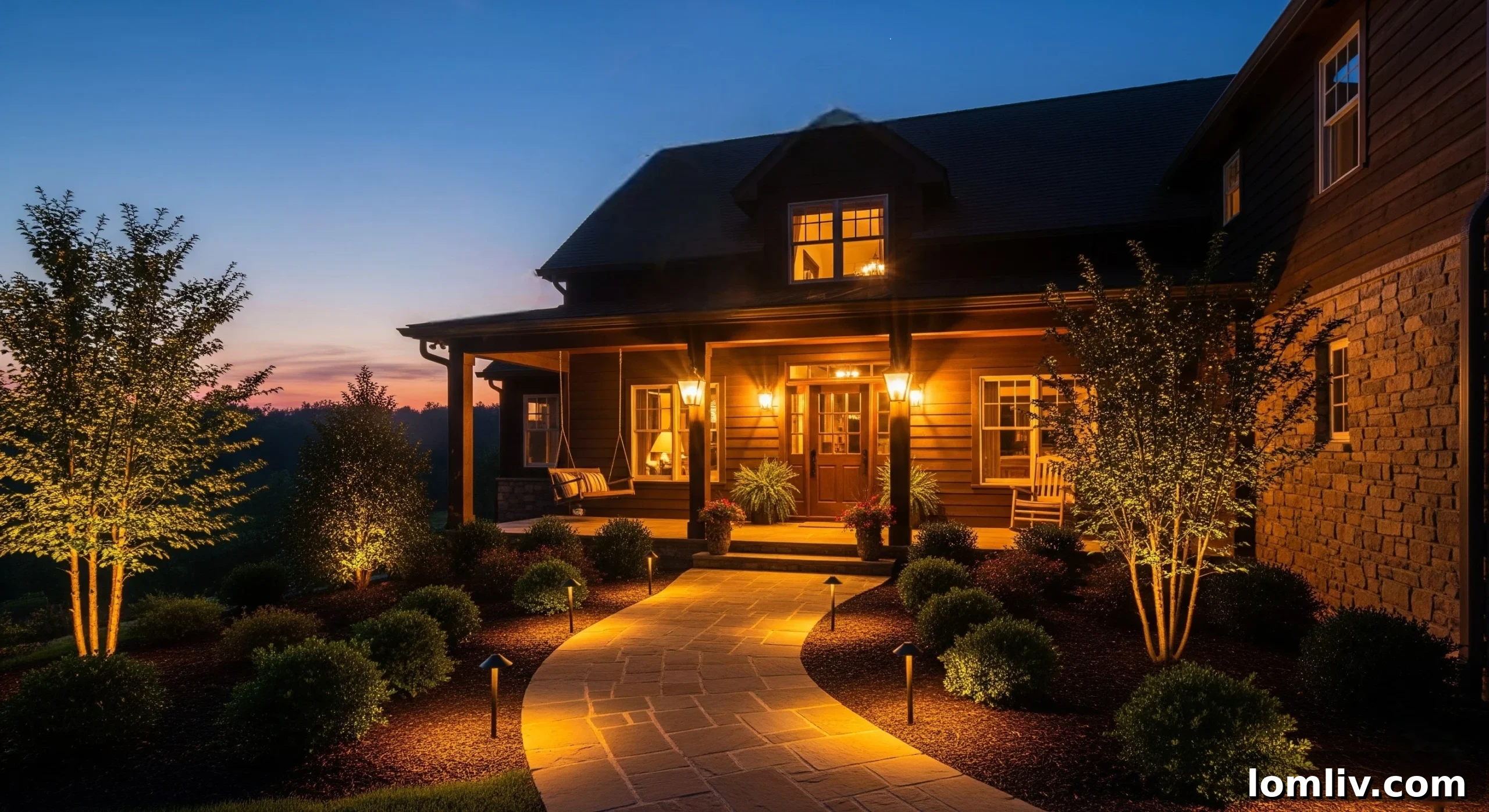
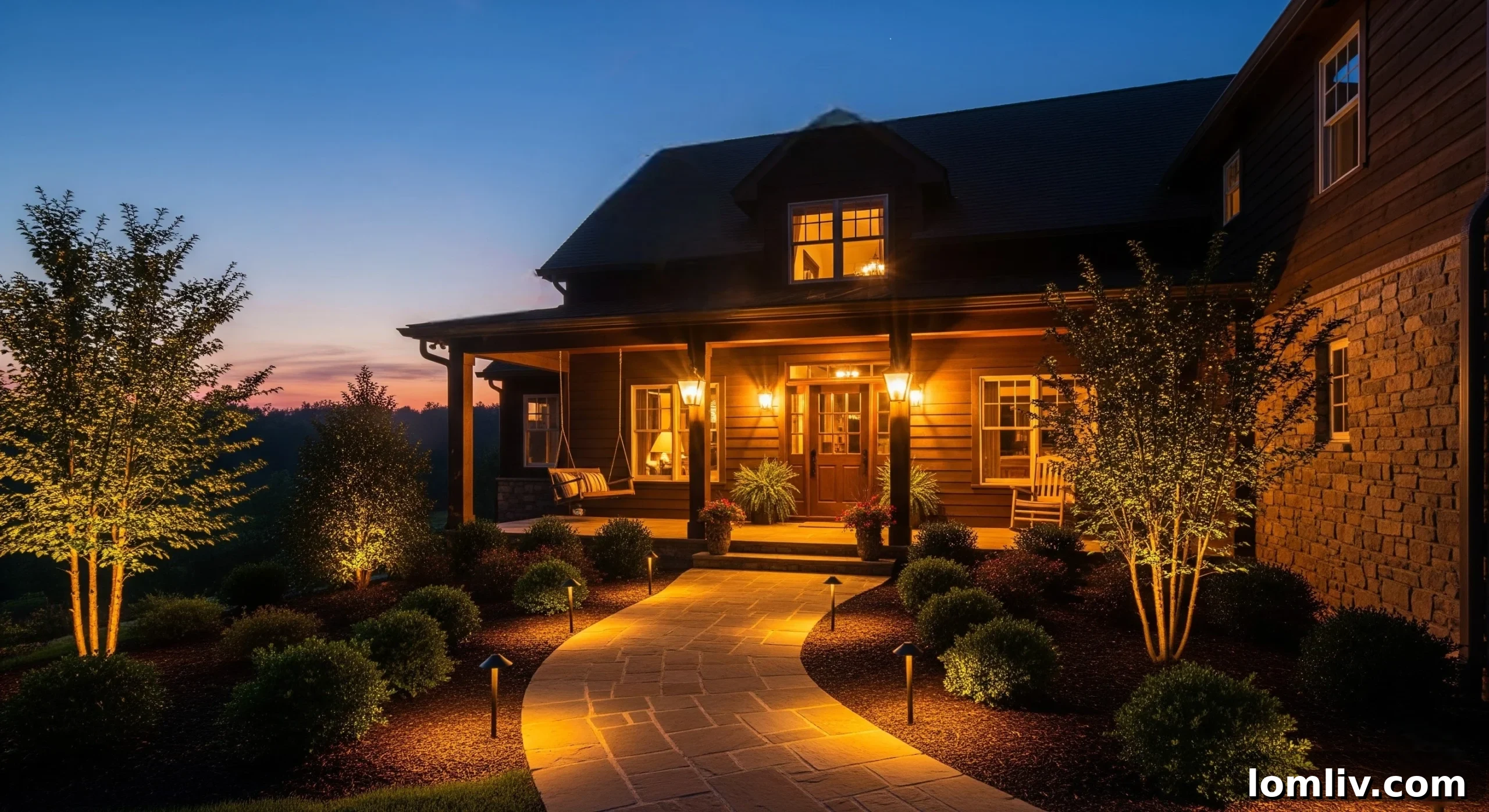
Imagine purchasing an outdoor motion-sensor light from a large retail chain for what seems like a reasonable price – say, $30. You install it, and suddenly your front porch is bathed in a harsh, glaring light that feels less like a welcoming entrance and more like a prison yard. It’s blindingly bright, washes out the architectural beauty of your home, and typically, it fails within a single season, leaving you to repeat the cycle with another equally ill-suited fixture. This common scenario highlights a fundamental misunderstanding many homeowners have about exterior illumination.
The truth is, most people approach outdoor lighting with a flawed perspective. Their primary, often sole, criterion is brightness. They simply want “more light,” equating maximum luminosity with enhanced security and visibility. What they overlook are crucial elements like color temperature, the specific purpose of the light, the architectural style of their home, and how the fixture integrates with the surrounding landscape. The unfortunate consequence is a property that, after dark, resembles a commercial parking lot rather than a warm, inviting, and secure personal sanctuary.
Modern outdoor lighting transcends mere visibility. It’s an art form, a critical component of home design that meticulously sculpts intentional spaces. It transforms a simple pathway into a welcoming guide without being blinding. It elevates a front porch from a functional entry to an inviting focal point. It extends the usability of your backyard well into the evening hours, creating areas for relaxation and entertainment, free from the intrusion of harsh, indiscriminate light.
The encouraging news is that mastering the art of exterior lighting isn’t an arcane skill reserved for professionals. It simply requires a shift in perspective, moving beyond the outdated notion that brighter is always better. By understanding a few core principles and making informed choices, you can dramatically enhance your home’s curb appeal, safety, and overall ambiance. This comprehensive guide will illuminate the path to achieving a beautifully lit outdoor environment that truly reflects your home’s character and meets its functional needs.
Beyond Brightness: Rethinking Your Approach to Outdoor Lighting
The most pervasive error in outdoor lighting design stems from the belief that more brightness automatically equates to better security or functionality. This misconception leads homeowners down a path of over-illumination, resulting in landscapes that are not only aesthetically displeasing but also often less effective for their intended purpose. You’ve undoubtedly encountered homes with motion-sensor floodlights that blast an entire front yard into an unnatural daylight at 2 AM, driveways so intensely lit they’re uncomfortable to navigate, or porch lights that momentarily blind you upon opening the front door.
Such excessive lighting isn’t true security; it’s often counterproductive overkill. Instead of creating a sense of safety, it can make a home appear defensive and uninviting, turning a cozy residence into an illuminated fortress. According to extensive research in outdoor design, truly effective exterior lighting achieves a harmonious balance between adequate visibility and a desirable atmosphere. You certainly need sufficient light to identify potential hazards, safely traverse pathways, and deter unwanted visitors. However, this does not necessitate turning your entire property into a sports arena.
Here’s a crucial insight from lighting experts: most residential properties can achieve optimal illumination with significantly less brightness than homeowners typically assume. For instance, a thoughtfully chosen 60-watt equivalent LED fixture can often provide superior perceived brightness and coverage compared to an old 200-watt incandescent bulb. The secret lies not just in the lumen output (raw brightness) but critically in the light’s color temperature and the intelligent design of the fixture itself. A well-designed LED, often consuming a fraction of the energy, can deliver focused, effective light where it’s needed most.
A fixture emitting warm color temperature light, typically around 2700 Kelvin (K), instantly evokes a sense of welcome and coziness, even at moderate brightness levels. In stark contrast, a fixture producing a cool, bluish-white light (5000K or higher) can feel harsh, sterile, and institutional, even if its actual lumen output is identical. This distinction is paramount because the entire emotional resonance and visual appeal of your home’s exterior after sunset depend profoundly on the careful selection of color temperature.
The Transformative Power of Color Temperature in Exterior Spaces
Understanding color temperature is arguably the single most impactful factor in elevating your outdoor lighting design from merely functional to truly exceptional. This is where the magic of exterior illumination truly begins to unfold. Many outdoor environments default to a cool, bluish-white light, largely because it’s prevalent in public spaces like parking lots and streetlights. While functional for broad visibility, our brains instinctively associate this type of light with commercial or institutional settings, detracting from the intimate, personal feeling of “home.”
In contrast, warm light, typically ranging from 2200K to 3000K, beautifully mimics the comforting glow of a sunset, a crackling fire, or candlelight. This spectrum creates an ambiance that feels inherently safe, welcoming, and thoughtfully designed. It draws people in and encourages relaxation. Cool light, generally 4000K to 6000K+, by emulating the sterile brightness of clinical fluorescents or daylight, can appear vivid and intense but utterly devoid of warmth and hospitality. The emotional impact of these differences cannot be overstated in residential applications.
For nearly all residential outdoor applications, warm light is the superior choice:
- Front Porch and Entryway: Warm light casts a golden, inviting glow that instantly makes your home feel welcoming to guests and provides a comforting return for residents. It transforms the entrance from a mere threshold into a true gateway, unlike the starkness of an office building lobby.
- Pathway and Step Lighting: Strategically placed warm lights gently guide movement, enhancing safety and wayfinding without producing glare. The subtle illumination allows clear visibility of the path and steps, preventing trips and falls, while maintaining a pleasant, unobtrusive presence.
- Backyard and Patio Areas: In spaces designed for leisure and entertainment, warm light is indispensable. It fosters a relaxed, cozy atmosphere, making decks, patios, and outdoor dining areas feel inviting and usable long after sunset. The goal here is enjoyment and ambiance, not task-oriented brightness.
- Driveway Lighting: Even for practical areas like driveways, warm light can provide ample visibility for parking and maneuvering without casting a harsh, overwhelming light that diminishes your home’s aesthetic appeal or bothers neighbors.
- Landscape and Architectural Accent Lighting: Warm light beautifully highlights the natural textures of foliage, the rich colors of brickwork, and the intricate details of architectural features, enhancing their beauty rather than flattening them.
The primary exception where cool light might be genuinely appropriate is in highly functional, task-oriented zones such as a workshop within a garage, where precise visibility for detailed work is paramount. Even in such cases, many homeowners opt for a nuanced approach: warm ambient lighting for the general space, complemented by cooler, adjustable task lighting for specific workbenches or areas where critical visual acuity is required. This hybrid strategy offers the best of both worlds, ensuring comfort and utility.
Strategic Fixture Selection: Tailoring Light to Its Purpose
Effective outdoor lighting hinges on understanding that different areas and functions demand distinct types of illumination and, consequently, specific fixture designs. Each outdoor lighting fixture has a unique job, and selecting the right tool for that job is crucial for both performance and aesthetics.
- Pathway and Step Lighting: These fixtures are designed to guide movement and enhance safety. They are typically low-profile, mounted close to the ground, or integrated directly into steps. Their purpose is wayfinding, not broad illumination. A soft, warm light (around 2700K) at a modest brightness (equivalent to 15-30 watts LED) is ideal. Examples include subtle bollards, discreet path lights, or recessed step lights. The aim is to clearly define the path without creating glare or excessive light spill.
- Porch and Entry Lighting: This is where your home makes its first impression. These fixtures serve to welcome visitors, provide security at the doorway, and define the architectural style of your entrance. Options range from traditional coach lights and elegant pendants to modern, sleek wall sconces. Style is paramount here, as these fixtures are highly visible. Warm light (2700K-3000K) is essential for an inviting glow, with brightness levels typically between 40-60 watts equivalent, offering ample light without being overpowering.
- Security and Motion-Sensing Lighting: The primary goal here is deterrence and immediate, strong visibility. These fixtures require genuine brightness (100+ watts equivalent) but critically, they must be precisely directed. A well-designed security floodlight illuminates your property’s vulnerable points – doors, windows, dark corners – without spilling light onto your neighbor’s property or blinding passersby. While warm light is generally preferred, a neutral to cool white light (3500K-5000K) can be acceptable for the brief duration it’s active, signaling an alert. Modern security lights often integrate smart features like motion detection, timers, and even camera capabilities.
- Ambient Backyard and Patio Lighting: These lights create a usable and relaxing environment for outdoor living after dark. The emphasis is on atmosphere, not theatrical drama. Solutions include charming string lights, elegant recessed lighting integrated into pergolas or eaves, or subtle uplighting on perimeter plantings. Warm light (2200K-2700K) is essential for a cozy, comfortable feel. Dimmable options are highly recommended to allow flexibility in setting the mood for various activities, from quiet evenings to lively gatherings.
- Accent and Landscape Lighting: This category is where creativity truly shines. Accent lighting is used to highlight specific architectural features, dramatic trees, garden sculptures, or unique landscaping elements. Techniques include uplighting (illuminating from below), downlighting (casting light from above), cross-lighting (from multiple angles to create depth), and silhouetting. While often considered a professional-level endeavor, carefully chosen accent lighting can create the most polished and sophisticated results, adding depth, drama, and visual interest to your property. Warm light is almost always preferred to enhance natural colors and textures.
The Integral Role of Style in Outdoor Lighting Design
Beyond functionality and light quality, the aesthetic style of your outdoor fixtures plays a far more significant role than many homeowners realize. These fixtures are not merely light sources; they are extensions of your home’s architecture, contributing profoundly to its overall curb appeal and perceived value. The most cohesive and attractive outdoor lighting schemes are those where the fixtures respond directly to, and enhance, your home’s architectural style.
Consider the impact: sleek, minimalist fixtures look perfectly at home on a contemporary residence, conveying intentional design. Place those same modern fixtures on a traditional colonial home, and the result is visual confusion and discord. Conversely, a traditional colonial adorned with period-appropriate coach lights exudes classic elegance, while those same coach lights on a contemporary ranch house appear mismatched and out of place. The goal is not necessarily an exact replication, but rather selecting fixtures that speak the same architectural language as your home.
Here’s a guide to matching fixtures with common home styles:
- Modern/Contemporary Homes: These demand fixtures with simple, clean lines, geometric shapes, and minimal ornamentation. Materials often include sleek metals (brushed nickel, matte black, stainless steel) and clear or frosted glass. Examples include cylinder sconce lights with precise profiles, minimalist pendant lights, or flush-mounted fixtures that blend seamlessly with the structure.
- Transitional Homes: Bridging the gap between traditional and modern, transitional homes benefit from fixtures that balance classic elements with contemporary simplicity. They might feature some subtle detailing but avoid excessive ornamentation. Metal finishes combined with clean construction are common. Think updated lantern styles, simplified coach lights, or contemporary pendants with a slightly more engaging form.
- Traditional/Colonial Homes: These homes call for fixtures that evoke historical design and a sense of timelessness. Visual detail is often more pronounced. Classic coach lights, ornate lanterns, and fixtures with decorative scrollwork or seeded glass are excellent choices, honoring the architectural heritage.
- Farmhouse/Rustic Homes: Fixtures for these styles often possess character, warmth, and a handcrafted or vintage appeal. Distressed metals, warm bronze or copper finishes, and visible structural details are common. Barn lights, gooseneck sconces, industrial-inspired lanterns, or fixtures that mimic antique designs fit well.
- Modern Farmhouse Homes: A popular hybrid, this style combines rustic charm with contemporary refinement. Fixtures should reflect this blend – perhaps a barn light silhouette with a sleek, matte black finish, or a traditional lantern form executed with minimalist lines. They often feel substantial and well-crafted but without being overly ornate.
When your outdoor fixtures are thoughtfully chosen to complement your home’s architectural narrative, everything else in your exterior lighting scheme begins to fall harmoniously into place, enhancing your property’s cohesion and overall appeal.
The Undeniable Advantage of Quality in Outdoor Lighting
This is a critical area where many homeowners make costly mistakes: underestimating the importance of quality in outdoor lighting fixtures. The allure of a low-priced motion-sensor light from a big-box store often overshadows the long-term implications of its inferior construction. While a $30 fixture might seem like a bargain, its lifespan is typically a fleeting 12-18 months. In contrast, a robust, high-quality fixture costing $150 or more can easily last 5-10 years, or even longer. When amortized over a decade, the “expensive” option invariably proves to be the more economical choice, all while maintaining its aesthetic appeal and functional integrity.
Outdoor lighting fixtures operate in a perpetually challenging environment. They must withstand a barrage of elemental forces year-round, including:
- Salt Spray: For coastal properties, corrosive salt air rapidly degrades non-resistant materials, leading to rust and finish failure.
- UV Damage: Prolonged exposure to sunlight’s ultraviolet rays causes plastics to become brittle, paint finishes to fade and crack, and sealants to deteriorate.
- Temperature Swings: Cycles of freezing and thawing, common in many climates, can cause cheap metals to crack, expand, and contract, leading to structural fatigue and compromised seals.
- Moisture Penetration: Rain, snow, and humidity are constant threats. Inferior fixtures often lack proper sealing, allowing water to infiltrate, corrode internal electronics, and short-circuit components.
Cheaply manufactured fixtures typically utilize flimsy plastic housings that quickly degrade and turn brittle under UV exposure. They employ inferior metals that are prone to rapid rusting and corrosion. Their electronic components are often inadequately sealed against moisture, making them highly susceptible to weather-related failures. A single year of exposure to the elements is often enough to render these low-cost options useless.
In stark contrast, quality outdoor lighting fixtures are engineered for longevity and performance:
- Solid Construction: They feature robust housings crafted from durable materials such as marine-grade brass, resilient stainless steel, or powder-coated, die-cast aluminum. These materials offer superior resistance to corrosion, impact, and wear.
- Superior Sealing: High-quality fixtures incorporate advanced gaskets, O-rings, and precision-engineered seals to achieve high IP (Ingress Protection) ratings, effectively preventing water and dust ingress, protecting internal electronics.
- UV-Resistant Finishes: Their finishes are designed to withstand intense sun exposure without fading, chipping, or peeling, preserving the fixture’s aesthetic appeal for years.
- Outdoor-Rated Electronics: Internal wiring, LED drivers, and other electronic components are specifically rated and robustly protected for consistent performance in harsh outdoor conditions.
The difference in quality becomes immediately apparent when you eventually need to address a faulty fixture. The cheap unit will likely be broken, corroded, or unsightly. The quality fixture, however, will still be reliably performing its function, looking excellent, and often has many more years of service life remaining. Investing in quality initially saves significant money, time, and frustration in the long run, contributing to a consistently beautiful and functional outdoor environment.
A Holistic Framework for Comprehensive Property Lighting Design
Before making any purchasing decisions, the most effective strategy is to develop a comprehensive outdoor lighting plan for your entire property. A simple sketch or diagram outlining key areas and desired effects will serve as an invaluable guide, ensuring a cohesive, functional, and aesthetically pleasing result. The key principle here is layering – understanding that no single fixture can achieve all lighting goals. Instead, multiple fixtures, operating at different brightness levels and serving distinct purposes, create depth, visual interest, and ultimate control.
Here’s a simple framework to guide your planning:
- Entryway and Front Porch Lighting: Allocate one or two prominent fixtures that are both welcoming and clearly visible from the street. Opt for warm light (2700K-3000K) to create an inviting atmosphere. Ensure the style is appropriate for your home’s architecture. Aim for a brightness equivalent of 40-60 watts per fixture, providing adequate illumination without glare.
- Pathway and Walkway Lighting: Install low-level lights strategically placed every 6-8 feet along pathways, creating a gentle, guiding illumination. These should use warm light (2700K) and be relatively dim, around 15-30 watts equivalent each. The goal is subtle guidance and safety, making sure steps and obstacles are visible without over-lighting the space.
- Driveway Lighting: Depending on the length and layout of your driveway, choose between ambient path lighting along its edges or a single, well-placed overhead fixture. Warm light (2700K-3000K) is generally preferred to maintain a residential feel. The brightness and number of fixtures will depend on the driveway’s dimensions, with longer drives naturally requiring more substantial or numerous fixtures.
- Backyard Ambient Lighting: Create a usable and relaxed atmosphere for your outdoor living spaces. This can be achieved with string lights draped across a patio or pergola, stylish outdoor lanterns, or subtle uplighting on perimeter plants and fences. Always use warm light (2200K-2700K). Incorporate dimmable features wherever possible to allow for flexible mood setting.
- Security Lighting: Strategically position motion-sensor lights or fixed fixtures to cover all entry points, vulnerable areas, and dark corners of your property. While security lights demand real brightness (100+ watts equivalent), careful direction is crucial. Direct the light downward and inward, ensuring it illuminates your property effectively without causing light pollution or annoyance to neighbors. A neutral to cool light (3500K-5000K) is acceptable for these functional fixtures, as their operation is typically brief.
- Accent and Landscape Lighting: This optional but highly impactful layer adds sophistication and drama. Use focused lights to highlight architectural details (e.g., stone columns, textured siding), showcase magnificent trees, or draw attention to specific garden features. Always use warm light (2700K-3000K) to enhance natural colors and textures. Techniques like uplighting for trees or downlighting from eaves create stunning visual effects.
By planning your outdoor lighting as a series of interconnected layers, you gain precise control over functionality, safety, and aesthetics, transforming your entire property into a beautifully illuminated and inviting extension of your home.
FREQUENTLY ASKED QUESTIONS ABOUT OUTDOOR LIGHTING
How bright should my outdoor lights actually be?
Significantly less bright than most people assume. For a welcoming front porch, a 40-60 watt equivalent LED fixture is typically ample. Pathway lights require even less, often just 15-30 watt equivalents per fixture, providing subtle guidance. For security lighting, you’ll want genuine brightness (100+ watts equivalent), but it’s paramount that this light is directed precisely at your property, avoiding spillover. A practical rule of thumb: if you find yourself squinting when looking directly at the light source, or if the light creates harsh shadows, it’s likely too bright. The ideal is sufficient light to navigate safely and appreciate the space comfortably.
Should outdoor lights emit warm or cool light?
For nearly all residential outdoor applications, warm light (typically 2700K) is the superior choice. It creates a welcoming, comfortable, and intentional ambiance that makes your home feel inviting. Cool light (5000K or higher) should be reserved for specific functional areas like security lights (during their brief activation) or workspaces within a garage where clinical visibility is absolutely essential. If you’re ever uncertain, selecting a warm color temperature is almost always the correct decision. Many people mistakenly believe they desire cool light when their actual need is simply for more brightness, failing to understand that brightness and color temperature are distinct lighting characteristics.
Do inexpensive outdoor lights really fail so quickly?
Unfortunately, yes. A budget-friendly motion-sensor light from a general retail store, often priced around $30, typically succumbs to the elements within 12 to 18 months. Their plastic housings become brittle and crack, internal electronics are prone to corrosion from moisture, and cheap metal components rust rapidly. While a quality fixture may cost three to five times more upfront, its robust construction ensures it lasts five to ten years, if not longer. When you consider the replacement costs, wasted energy, and recurring inconvenience, investing in quality proves to be far more economical over time, in addition to looking superior throughout its lifespan.
What is the most common outdoor lighting mistake homeowners make?
The single most prevalent mistake is over-lighting, specifically by choosing fixtures that are excessively bright and emit a harsh, cool-toned light. Homeowners often install powerful floodlights under the misguided impression that maximum brightness automatically equates to maximum security. This approach frequently results in a property that resembles a sterile commercial lot or even a prison yard, completely diminishing its residential charm. True security is achieved with strategically directed light that effectively illuminates potential threats on your property without blinding residents or disturbing neighbors. True outdoor ambiance, by contrast, relies on carefully chosen warm light, set at moderate, comfortable brightness levels, encouraging enjoyment and relaxation in your outdoor spaces.
What about smart outdoor lighting? Is it worth the investment?
Absolutely. Smart outdoor lighting offers unparalleled convenience, control, and energy efficiency. Systems that connect to your home Wi-Fi or a smart hub allow you to control lights via smartphone apps, voice commands, or automated schedules. You can dim lights, change color temperatures (if RGBW bulbs are used), set timers, link to motion sensors, and even create dynamic scenes. This level of customization can enhance security, conserve energy, and significantly improve the usability and ambiance of your outdoor living areas, making it a valuable upgrade for many modern homes.
Should I attempt a DIY outdoor lighting installation or hire a professional?
The decision depends on the complexity of your plan and your comfort level with electrical work. Simple installations, like adding solar path lights or plug-and-play string lights, are typically manageable DIY projects. However, for comprehensive landscape lighting, hardwired fixtures, low-voltage systems, or intricate accent lighting, hiring a professional is highly recommended. Professionals possess the expertise to design an optimal lighting scheme, ensure proper wiring and safety, select durable, weather-resistant fixtures, and navigate local electrical codes. While a higher initial investment, it often guarantees a superior, long-lasting, and safer result, saving you from potential headaches and costly mistakes down the line.