The Dallas-Fort Worth Interurban: A Century of Transit-Oriented Development Reimagined
By Jay Firsching
Senior Associate and Historic Preservation Specialist, Architexas
North Texas is once again poised at the brink of a significant transportation transformation. In the coming weeks, the City of Fort Worth, in collaboration with Trinity Metro, will host crucial public meetings to discuss the “Advancing East Lancaster” transit-oriented development (TOD) plan. This ambitious proposal seeks to establish a high-capacity transit system along one of the region’s most heavily utilized corridors. If successfully implemented, this initiative promises to ignite economic revitalization and foster community growth in vital neighborhoods like Sycamore Heights, Meadowbrook, and Handley, breathing new life into these historic areas.
What many might not realize is that the “Advancing East Lancaster” vision for the Lancaster corridor is not an entirely new concept. In fact, it represents a remarkable reboot of a groundbreaking plan first conceived over 120 years ago by an enterprising syndicate of Ohio investors. Their foresight and investment laid the very foundation for this corridor and the surrounding communities, shaping the urban landscape of North Texas in ways that continue to resonate today. Understanding this rich history provides invaluable context for the future of transit development in the region.
Bridging the Distance: The Birth of the Dallas-Fort Worth Interurban
At the turn of the 20th century, the thriving cities of Fort Worth and Dallas were separated by a formidable expanse of undeveloped prairie. Travel between these burgeoning metropolitan centers was a challenging endeavor. While the Texas and Pacific Railroad provided essential freight and passenger services, the only alternative was navigating a rudimentary network of rough, often impassable, dirt roads. This isolation limited economic and social interaction, creating a significant barrier to regional growth.
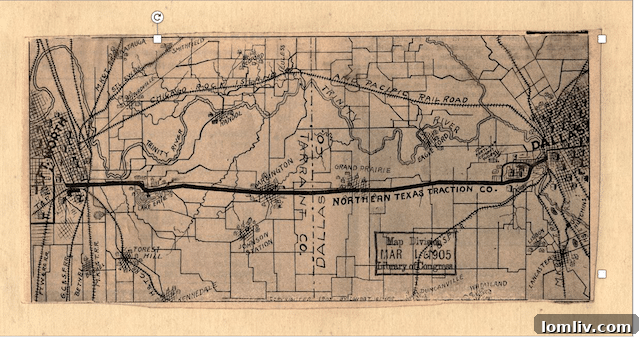
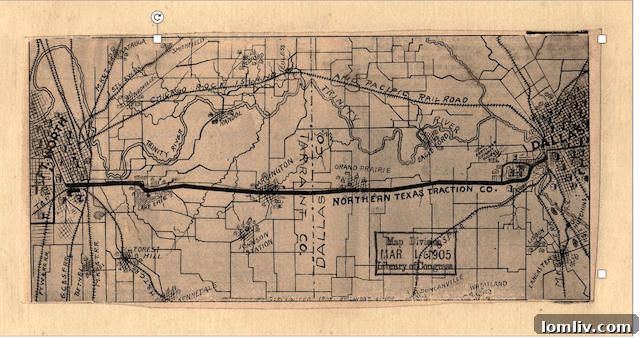
It was within this context of immense potential and logistical challenge that a group of astute Ohio investors recognized a monumental opportunity. In 1901, they publicly unveiled an audacious plan: to construct a cutting-edge electric interurban trolley line, designed to seamlessly connect Dallas and Fort Worth. This revolutionary system would include strategic stops in key emerging towns such as Handley, Arlington, and Grand Prairie, effectively shrinking the vast distances between communities. With this announcement, the Northern Texas Traction Company (NTTCo) was officially born, signaling a new era of connectivity for North Texas.
Engineering a New Era: Route and Construction
With swift approval from the Texas Legislature, the NTTCo wasted no time in meticulously charting its ambitious route. The line was designed to originate at Fort Worth’s Texas and Pacific Depot on the city’s west side, traversing eastward to connect with the existing Oak Cliff Street Railway in Dallas, before finally terminating at the Dallas post office. This extensive route spanned an impressive 33 miles, representing a monumental engineering and logistical undertaking for the period.
Construction commenced almost immediately, with Sycamore Creek, situated at the eastern periphery of Fort Worth, serving as a pivotal starting point. The sheer scale of the project was impressive; soon, a workforce of 200 dedicated crews labored tirelessly, laying tracks, erecting poles for overhead electric lines, and constructing bridges and stations along the corridor. This massive effort transformed the landscape, carving a modern path through what was once undeveloped terrain. The vision was clear: to create a reliable, high-speed connection that would not only transport people but also foster unprecedented regional development.
Beyond Transportation: Recreation and Community Building
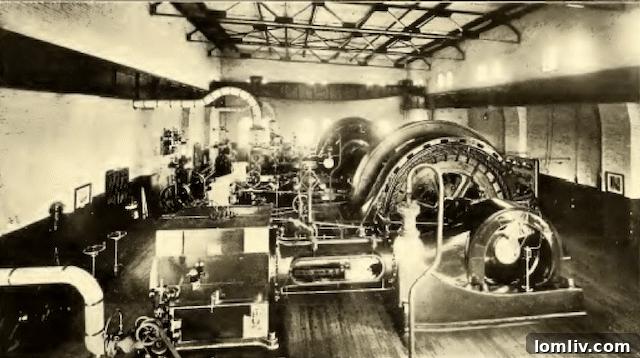
Establishing an electric interurban system was a complex endeavor, requiring substantial infrastructure. At its core, this included a powerful electrical generating plant to energize the entire line and dedicated shops for the meticulous maintenance and repair of the rolling stock. The Northern Texas Traction Company strategically chose the nascent town of Handley, located east of Fort Worth, as the ideal site for this critical operational hub. The reasons behind this decision, however, extended far beyond mere logistical convenience.
The Handley Powerhouse: A Strategic Hub and Recreational Gateway
Private transit companies of this era understood that profitability relied heavily on maximizing ridership, particularly through recreational travel. To stimulate demand and encourage patronage, many companies invested in creating their own attractions. Handley proved to be a singularly advantageous location for the NTTCo not just for its central position along the line, but for its unique natural attributes. The area boasted one of the few significant stands of mature trees between Dallas and Fort Worth, offering natural beauty and shade. Crucially, it also provided a reliable and abundant source of water, essential for both power generation and the ambitious plans to create a new recreational lake.
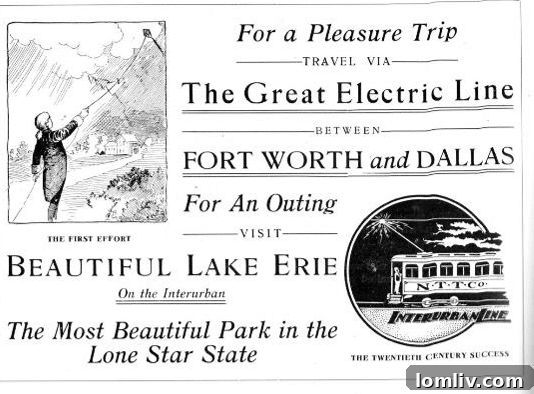
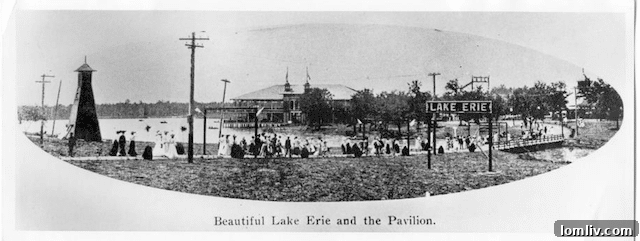
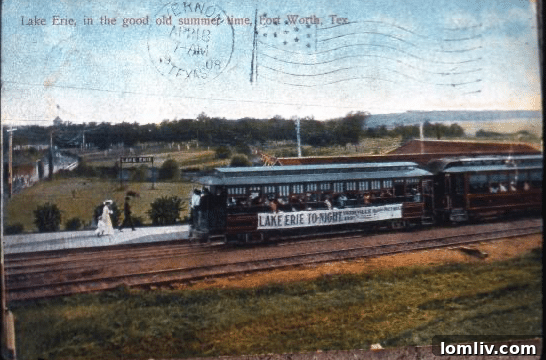
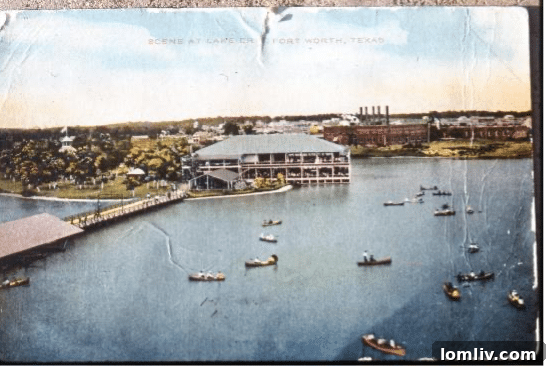
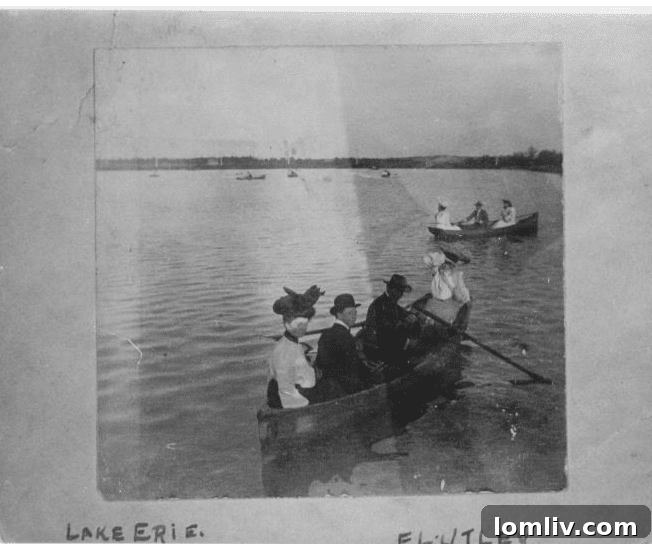
Upon its completion, the NTTCo’s grand resort at Lake Erie was a sprawling 700-acre marvel designed to attract visitors from across the region. This impressive destination featured a spacious dancing pavilion, a charming restaurant, state-of-the-art sports facilities, and extensive opportunities for boating, fishing, and hunting. Access to this meticulously developed property was offered free to the public, but with a critical caveat: it was exclusively accessible via the interurban line. This brilliant strategy ensured a steady stream of passengers, making the interurban not just a means of transport, but a gateway to leisure and entertainment, deeply integrating it into the social fabric of North Texas.
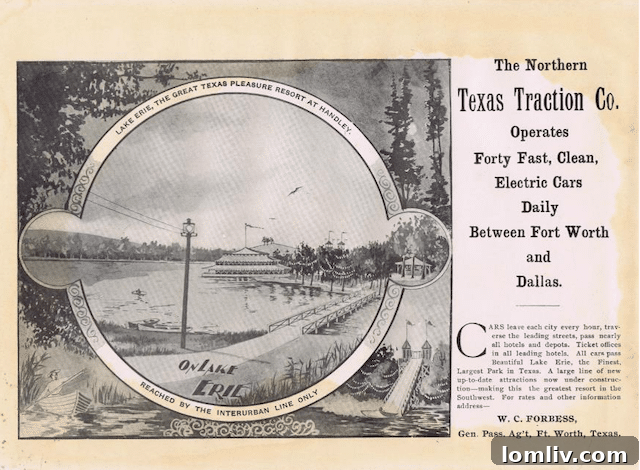
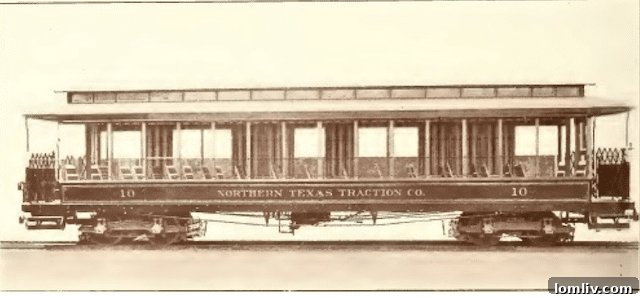
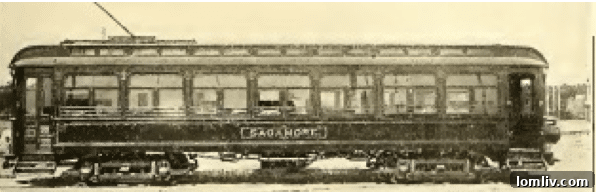
The Northern Texas Traction Company’s pioneering interurban line, linking Fort Worth and Dallas, officially opened its doors to the public on June 12, 1902. The momentous occasion was marked by a lively barbecue celebration held at Handley, drawing crowds and fanfare. The company’s fleet was impressive for its time, featuring eight luxurious passenger cars, three charming open-air trolleys for pleasant weather, a dedicated baggage car, and a single freight express car for commercial shipments. A one-way journey between the two cities typically took a swift 90 minutes, with cars departing dependably every hour, offering a level of convenience previously unheard of.
It is genuinely challenging to overstate the profound improvement this innovation represented for the average traveler. Prior to the interurban, cross-county journeys were arduous and time-consuming. To illustrate this dramatic shift, consider that the very first automobile trip from Terrell to Dallas reportedly consumed a grueling five hours, a journey plagued by frequent stops, including a mandatory visit to a blacksmith for repairs! The interurban, by contrast, offered speed, reliability, and comfort, fundamentally transforming the perception and reality of regional travel in North Texas.
Fueling Growth: The Interurban’s Economic Impact
The establishment of the Dallas-Fort Worth Interurban Line was far more than just a transportation project; it was a catalyst for unprecedented economic expansion and urban development. Its presence fundamentally reshaped the landscape, creating a cascade of new commercial and residential opportunities along its entire length. The convenience and reliability of the interurban attracted businesses and residents alike, sparking rapid growth in previously undeveloped areas.
New Opportunities, New Neighborhoods
By early 1904, just two years after the interurban’s launch, the transformative effects were undeniable. Tarrant County, recognizing the immense value of this new artery, partnered with property owners adjacent to the tracks to co-fund the construction of a new, expansive sixty-foot-wide boulevard connecting Fort Worth and Handley. This ambitious infrastructure project was a direct response to the burgeoning economic activity and increased population along the interurban route. New neighborhoods, such as the vibrant Sycamore Heights and the growing Meadowbrook, rapidly sprang up, designed to capitalize on the ease of access and convenience offered by the interurban line. These communities were explicitly marketed to those seeking modern amenities and efficient commutes.
Eventually, what we now recognize as Lancaster Boulevard, a major thoroughfare today, extended along the entire length of the original interurban line. It stretched through Arlington, Grand Prairie, and continued into Dallas, ultimately aligning with Jefferson Boulevard through the historic district of Oak Cliff. This boulevard, directly influenced by the interurban, became a primary artery for both local and regional commerce and further spurred suburban development, creating a lasting legacy that defines much of the area’s layout even today. The interurban, therefore, didn’t just move people; it actively shaped the very structure of North Texas’s emerging urban centers.
The Decline and Legacy: From Tracks to Roads
The golden age of the interurban, despite its transformative impact, was not destined to last forever. The final journey of the Dallas-Fort Worth Interurban, a bittersweet moment in transportation history, occurred on December 24, 1934. Ironically, the very boulevard whose existence was catalyzed and defined by the interurban ultimately contributed to its demise. This shift underscores a broader evolution in American travel preferences and technological advancements.
The Shifting Sands of Transportation
The dawn of the automobile era brought with it a new paradigm of personal mobility. Cars and buses offered unparalleled freedom, flexibility, and the convenience of door-to-door travel, appealing to a public eager for individual control over their journeys. The once-revolutionary interurban, with its fixed routes and schedules, began to feel increasingly restrictive in comparison. The expansive boulevard that once ran alongside the tracks, facilitating access to the interurban, was eventually upgraded and absorbed into the growing national highway system, becoming the iconic Highway 80.
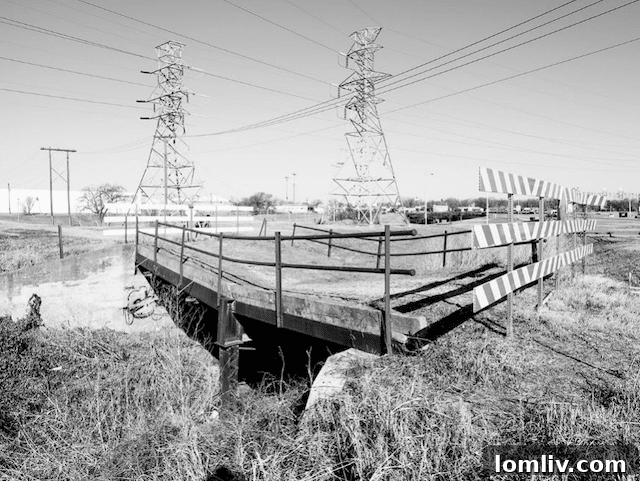
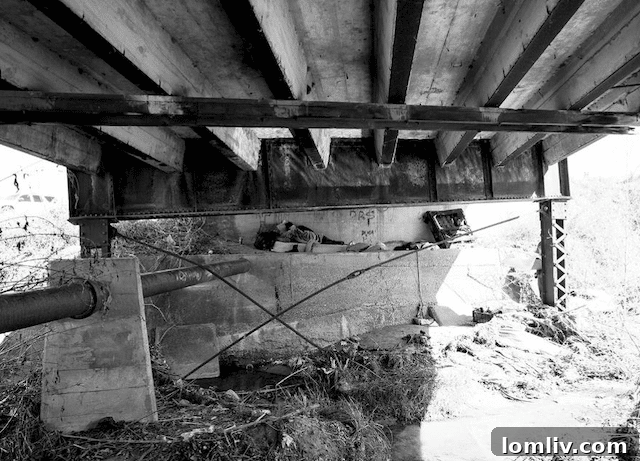
Today, much of the physical legacy of the interurban has faded into history. The vibrant Lake Erie resort, once a bustling hub of recreation, is now submerged beneath the waters of Lake Arlington, a modern reservoir. The original power plant and maintenance shops in Handley have been replaced by the sprawling TXU power station, a testament to continued energy needs but a different form of industrial presence. All that remains of the original interurban construction in Handley is an aging iron and concrete overpass, a solitary sentinel of a bygone era. However, even this last tangible remnant faces an uncertain future, its deteriorated condition signaling its imminent removal.
Preserving the Fading Traces
Recognizing the invaluable historical significance of this last remaining structure, Architexas, a leading firm in historic preservation, recently undertook a crucial documentation project. Through meticulous drawings, detailed photographs, and a comprehensive written history, the firm has ensured that a permanent record of the Handley overpass will endure for future generations of researchers and historians. This vital work ensures that even as physical structures disappear, their story and contribution to the region’s development will not be lost.
History Rhymes: The Advancing East Lancaster Reboot
The narrative of the Dallas-Fort Worth Interurban line is a compelling reminder that truly transformative ideas often find resonance across generations. As we consider the “Advancing East Lancaster” plan today, it becomes clear that this initiative is not merely a contemporary urban development project; it is a vision 120 years in the making. The core principle—using high-capacity transit to spur economic growth and enhance community vitality—echoes the very foundation laid by the Northern Texas Traction Company at the turn of the 20th century.
A New Chapter for East Lancaster
If the “Advancing East Lancaster” plan achieves its objectives, it holds the potential to dramatically revitalize the very neighborhoods that owed their initial existence and early prosperity to the original interurban line in 1902. Sycamore Heights, Meadowbrook, and Handley, once thriving hubs along the electric trolley route, are now poised for a new era of growth and connectivity, harnessing the enduring power of modern transit. This contemporary approach to transit-oriented development aims to create walkable, vibrant communities, reducing traffic congestion, improving air quality, and fostering local businesses, much as the interurban did in its day.
Learning from the Past, Building for the Future
Mark Twain’s famous adage, “History doesn’t repeat itself, but it often rhymes,” perfectly encapsulates the essence of this historical parallel. While the technology, urban context, and societal needs have evolved dramatically since the early 1900s, the fundamental desire for efficient, community-shaping transportation remains constant. The Advancing East Lancaster plan is a testament to the idea that by understanding and honoring our past, we can draw inspiration and invaluable lessons to forge a more connected, prosperous, and sustainable future for Fort Worth and its surrounding communities. It’s an opportunity to reinterpret a century-old success story for the demands of the 21st century, ensuring that the legacy of innovation in North Texas continues to move forward.
For more detailed information about the Advancing East Lancaster plan and to learn about the upcoming public meetings, where community input is highly encouraged, please visit advancingeastlancaster.com.

Jay Firsching is a highly respected Senior Historic Preservation Specialist at Architexas, a distinguished firm specializing in planning, architecture, and historic preservation. With a deep passion for urban history and conservation, Jay has been an active member of Preservation Dallas and previously dedicated eighteen years of service as Vice Chair of the Dallas Central Business District, West End, and Individual Sites Task Force. In his personal time, Jay channels his expertise into his own DIY conservation projects and cherishes outdoor adventures. He can often be found camping in his vintage VW Westfalia, accompanied by his wife, Amelia, and their daughters, Sydney and Isabella, exploring and appreciating the rich historical tapestry of Texas.