Fire and Security Woes Plague Historic Mosaic Building in Downtown Dallas
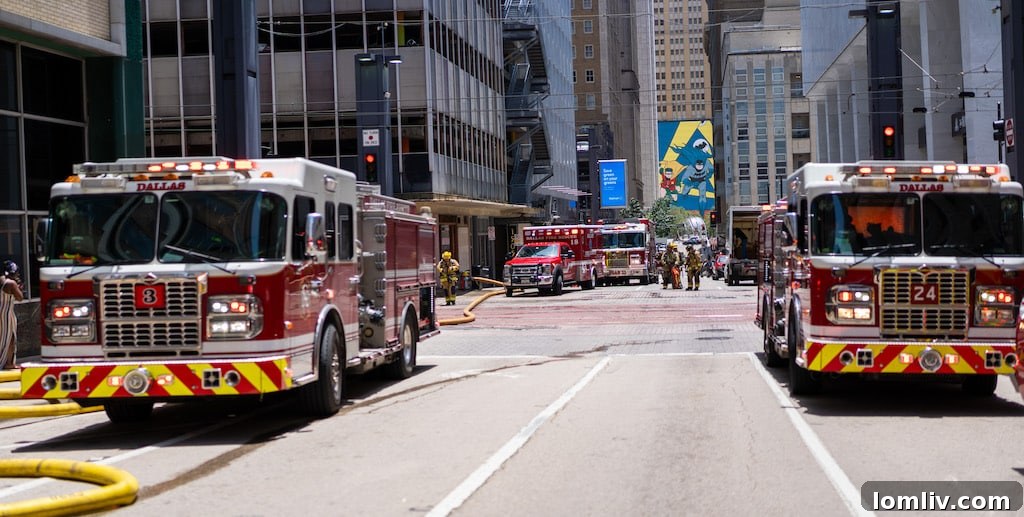
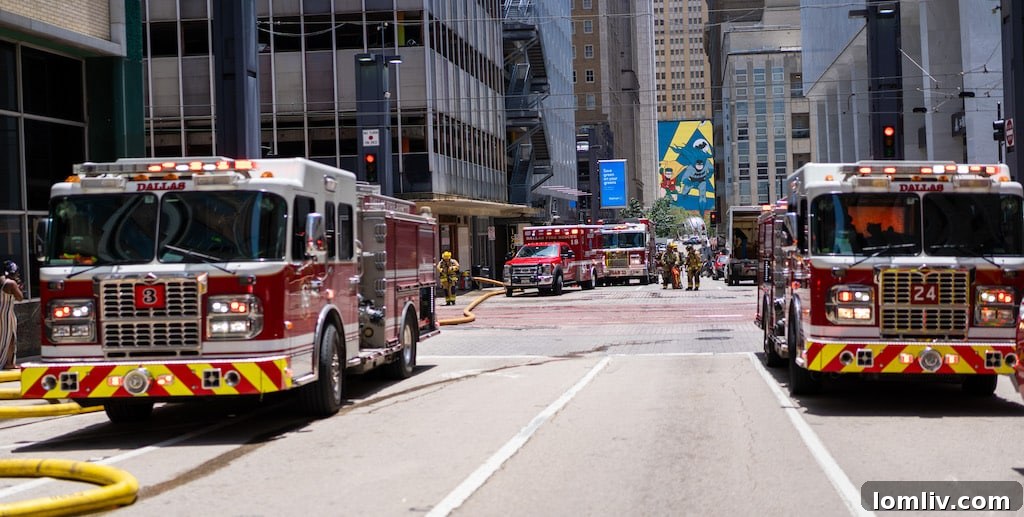
A recent fire incident at The Mosaic Building, a prominent high-rise apartment complex nestled in the vibrant heart of Downtown Dallas, has cast a stark spotlight on critical safety and security concerns. On the afternoon of July 13th, residents of the iconic structure, comprising two impressive towers – one rising 20 stories and its counterpart soaring to 30 stories – were abruptly forced to evacuate following a blaring fire alarm. What began as a routine evacuation quickly unveiled deeper, more unsettling issues, raising serious questions about resident safety, building management, and the overall security infrastructure of this historic Dallas landmark.
According to eyewitness accounts from residents present in the building at the time, the blaze reportedly originated within the trash chute or the adjacent lobby area. While an official investigation is currently underway, as confirmed by messages relayed from building management to tenants, the initial findings have already sparked widespread apprehension. The incident itself, though contained, served as a catalyst, drawing attention to a series of underlying problems that residents claim have plagued The Mosaic for an extended period.
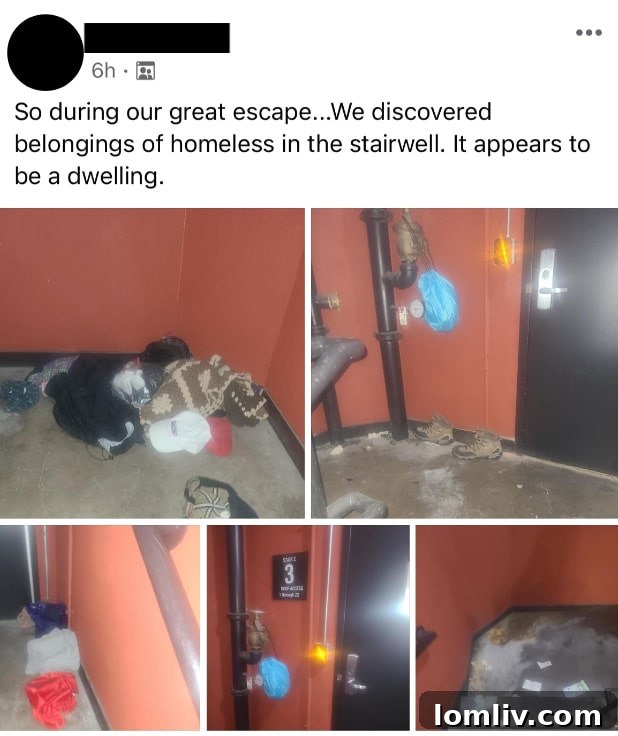
One particular resident, who meticulously navigated the emergency stairwells from her apartment on the 23rd floor during the evacuation, described a shocking discovery that overshadowed the immediate danger of the fire. As she descended, she encountered multiple makeshift encampments, complete with personal belongings and accumulated trash, seemingly established by homeless individuals on various floors throughout the building’s emergency stairwells. This revelation left residents pondering a critical question: how did these unauthorized individuals gain unrestricted access to a residential high-rise, and what does this signify for the security of hundreds of tenants?
“We all assume they are gaining access because there are no security guards at Mosaic, especially during crucial hours,” the resident unequivocally stated, articulating a sentiment widely echoed by her neighbors. This perceived absence of visible security personnel at The Mosaic stands as a significant point of contention, contributing to a growing sense of vulnerability among the resident community. The fire, while a serious event in itself, has inadvertently pulled back the curtain on a systemic security vulnerability that residents argue has been overlooked for too long, potentially endangering lives and property.
Everyday Issues, Eroding Trust and Safety
The sentiment that “There’s always something going on at The Mosaic” is not merely a casual observation but a deeply felt frustration among its inhabitants. From persistent malfunctions plaguing the building’s elevators, frequently leaving only a single unit operational for hundreds of residents, to the unsettling occurrence of random fire alarms sounding at inconvenient and odd hours, the building’s operational inconsistencies are a daily ordeal. These “everyday issues” have chipped away at residents’ confidence in the building’s management and its commitment to providing a safe and reliably functioning living environment.
The July 13th fire alarm initially followed this familiar pattern of unreliability. Residents received an initial communication from building management, dismissing the alarm as yet another false alert. However, moments later, a follow-up email urgently reversed this message, emphatically urging all occupants to evacuate immediately. This confusing and contradictory communication not only added to the chaos of the moment but further exacerbated residents’ distrust, highlighting a perceived lack of clear, consistent, and timely emergency protocols. The initial dismissive tone, quickly followed by a panicked retraction, underscores a concerning deficit in the building’s emergency response system, putting residents at unnecessary risk.
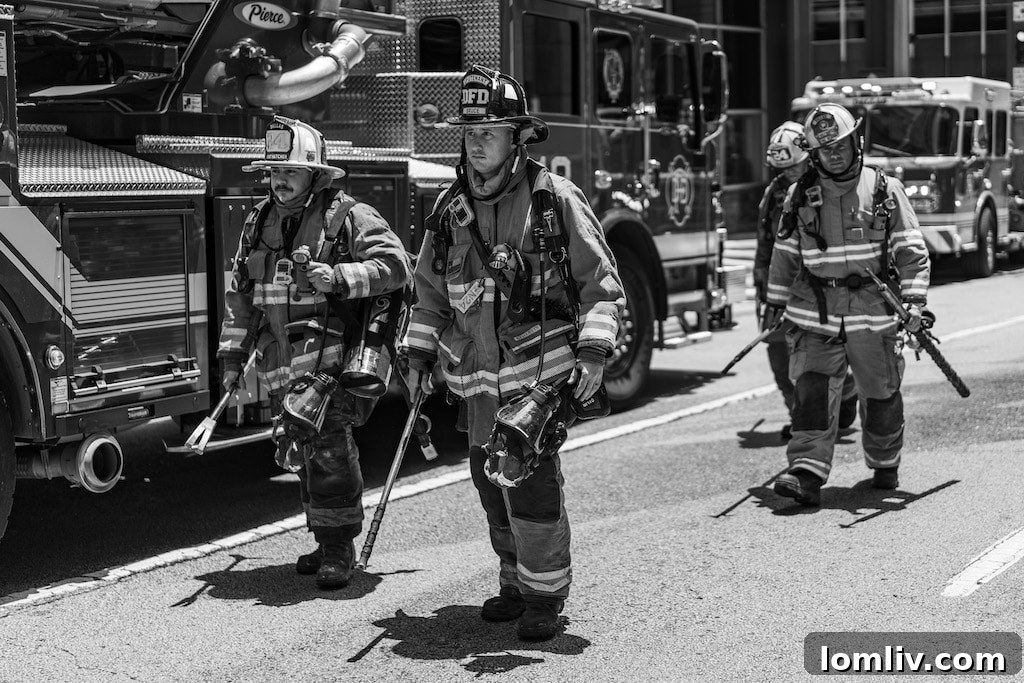
It was during this harrowing evacuation that the aforementioned resident, alongside others, bore witness to the deplorable conditions within the stairwells. These vital emergency routes, designed for safe passage during crises, were reportedly cluttered with trash and the personal belongings of homeless individuals who had ostensibly taken shelter within the building. The disturbing visual evidence, captured in several photographs and subsequently shared within the building’s private Facebook group, painted a grim picture of a significant security breach and an alarming disregard for basic safety standards. The presence of such unauthorized encampments in emergency exits not only poses a fire hazard but also impedes swift and safe evacuation, transforming a critical safety feature into a potential death trap. This discovery has intensified calls for immediate and decisive action from building management, Olympus Property, to address the glaring security vulnerabilities that have seemingly allowed such a situation to fester unnoticed.
The Shadow of a Tragic Past: Unsettling Precedents at The Mosaic
The recent fire and security breaches are not isolated incidents in The Mosaic’s narrative; indeed, the building carries a complicated and, at times, tragic past that resonates with current concerns about safety and management accountability. Eleven years prior, in a chillingly short span of just 10 days, two individuals tragically fell to their deaths from windows on different floors of the very same building. Jeremy King, aged 35, plunged from an 11th-story window, followed just over a week later by 24-year-old John Michael Byrd, who fell from a 27th-story window. These separate, yet proximate, fatalities sent shockwaves through the Dallas community and among the building’s then-residents.
According to a comprehensive report from theDallas Morning Newspublished at the time, police investigations into both incidents concluded without suspicion of foul play. While the exact circumstances surrounding these falls remain deeply unsettling, the building’s management issued a statement in response to the tragedies, asserting that it was, “deeply saddened by the recent deaths at the property.”
The letter disseminated to residents following these incidents notably stated: “We respectfully urge each of you to be mindful of your own safety and the safety of your guests and to take no action that would place the safety of yourself or others at risk. Please also reacquaint yourself with the safety provisions in your lease with The Mosaic.”
This previous response, placing the onus of safety primarily on the individual residents, strikes a familiar chord with the current situation. It raises questions about whether the building’s management has historically deflected responsibility, rather than proactively implementing comprehensive safety and security enhancements. Residents today express a similar frustration, feeling that their concerns about fundamental building security are not being adequately addressed, forcing them to navigate perceived dangers with little support or proactive intervention from those entrusted with their well-being.
Regarding the more recent July 13th incident, there has been a notable silence from building management, beyond the initial communication confirming the fire’s location and the ongoing investigation. As of writing, there has been no official word to tenants regarding the disturbing discovery of homeless encampments within the stairwells or any concrete plans to address the gaping security breaches this implies. Our team has reached out to the building management company, Fort Worth-based Olympus Property, for an official statement, seeking clarity on their immediate and long-term strategies to ensure the safety and security of The Mosaic’s residents. The lack of transparent communication in such critical moments only serves to escalate anxiety and erode the vital trust between residents and building administration.
(Video footage potentially related to the fire incident would be displayed here.)
Historic Midcentury Modern High-Rise: A Legacy Beset by Modern Challenges
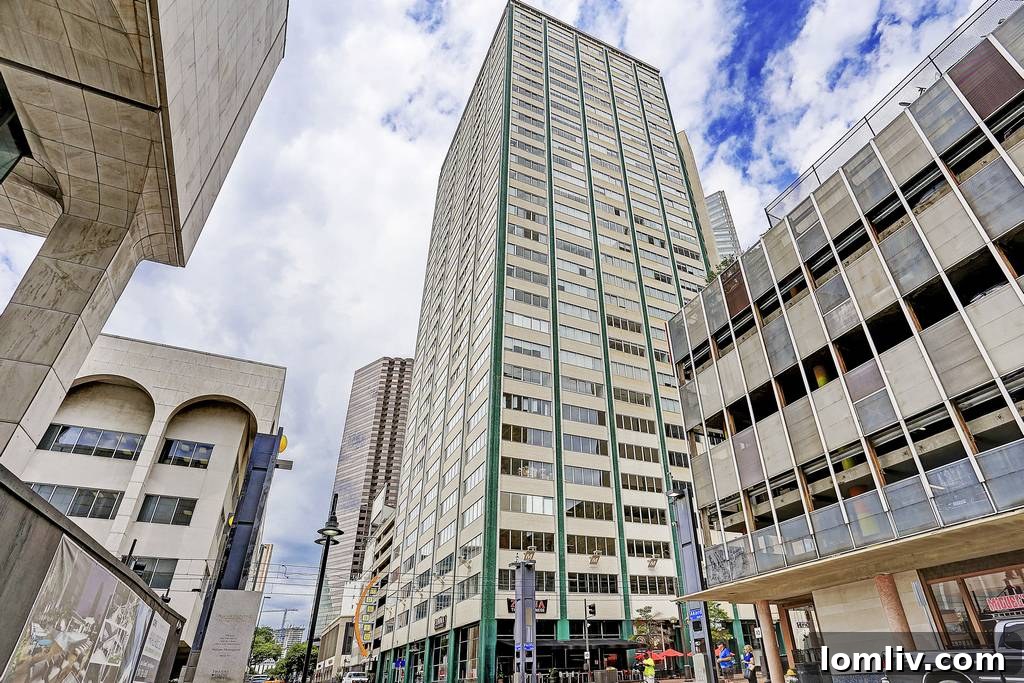
The Mosaic Building’s current predicament stands in stark contrast to its distinguished architectural legacy and significant place in Dallas history. Originally constructed as the headquarters for the prestigious Fidelity Union Life Insurance Company, The Mosaic is a quintessential example of midcentury modern architecture. The initial 20-story tower was completed in 1952, marking a significant addition to the burgeoning Dallas skyline. Its success led to the construction of a second, more imposing 30-story tower, which was finished in 1960, cementing its status as a prominent urban landmark.
After Fidelity Union vacated the premises in 1985, and TXU followed suit in 1992, the impressive complex stood vacant for over a decade, a dormant giant in the heart of the city. It wasn’t until 2004 that Hamilton Properties Corporation acquired the property, envisioning its transformation into a dynamic residential space. This vision materialized in 2006 with the grand unveiling of “The Mosaic,” a name carefully chosen to honor the thousands of distinctive green tiles that intricately line the building’s iconic façade, giving it a unique visual identity that captivates onlookers to this day. The ambitious restoration project, meticulously undertaken by the renowned Merriman Anderson Architects, breathed new life into the historic structure. This comprehensive revitalization resulted in 440 modern apartment units, alongside the inclusion of a vibrant first-floor restaurant and a state-of-the-art fitness center, offering contemporary amenities within a historically rich setting. The building proudly opened its doors to its first residential occupants in 2007, quickly becoming a coveted address in Downtown Dallas.
The Mosaic’s architectural and historical significance has been formally recognized. The structure earned a prestigious Preservation Achievement Award from Preservation Dallas, an organization dedicated to safeguarding the city’s architectural heritage. Furthermore, its national importance was acknowledged in 2009 when it was officially listed on the National Register of Historic Places, solidifying its status as a landmark of enduring cultural and architectural value. Yet, despite its storied past and celebrated restoration, The Mosaic now faces contemporary challenges that threaten to undermine its appeal and, more critically, the safety and peace of mind of its residents. The contrast between its grand historical narrative and the pressing issues of security, maintenance, and communication highlight a critical juncture for this iconic Dallas high-rise.
Addressing the Future: Demands for Accountability and Enhanced Security
The recent fire and the alarming discovery of homeless encampments within The Mosaic Building have brought to a head a series of ongoing complaints and concerns that residents have voiced for years. These incidents are not just isolated events but symptoms of deeper systemic issues related to building security, maintenance, and management responsiveness. The safety of hundreds of residents, their property, and the very integrity of this historic structure are at stake.
Residents are now calling for a comprehensive review of the building’s security protocols, including the immediate implementation of visible security personnel, particularly during off-peak hours when vulnerabilities are often highest. They demand transparency from Olympus Property regarding the ongoing investigation into the fire and concrete measures to prevent future security breaches, such as stricter access control and regular patrols of all building areas, including emergency stairwells. The expectation is not merely a reactive clean-up but a proactive overhaul designed to restore confidence and ensure a truly safe living environment.
Beyond immediate security concerns, there is a clear demand for improved communication channels. Residents need timely, accurate, and consistent information during emergencies, devoid of the confusion and mixed messages that characterized the July 13th incident. Furthermore, the persistent operational issues, such as elevator malfunctions and false alarms, require sustained attention and effective resolution to improve the overall quality of life at The Mosaic. The building’s storied history and architectural prestige should be matched by an equally high standard of modern management and resident care.
The challenges faced by The Mosaic are, in some ways, reflective of broader urban issues concerning homelessness, security in high-density residential areas, and the complexities of managing large historic properties. However, for the residents of The Mosaic, these are not abstract problems but immediate threats to their daily lives and personal safety. The future reputation and viability of The Mosaic as a premier residential destination in Downtown Dallas now hinge on how effectively and transparently its management addresses these critical concerns, transforming recent anxieties into a renewed sense of security and trust for all who call this iconic building home.