In today’s dynamic real estate market, building a new construction home represents a significant milestone and a substantial investment for many aspiring homeowners. The journey from an empty lot to a finished home is intricate, involving numerous specialized trades, complex schedules, and often, rapid construction timelines. While dedicated home builders strive for excellence, the pressures of high demand and tight deadlines can sometimes lead to oversights or minor imperfections during the construction process. This comprehensive guide, presented by the detail-oriented professionals at Green Scene Home Inspections, aims to enlighten Daltxrealestate.com readers about the indispensable value of independent inspections throughout your new home’s build. Join us for “Upon Closer Inspection,” where we uncover the vital details that safeguard your most important asset.
Protecting Your Investment: The Essential Role of New Construction Phase Inspections
The current housing market is characterized by soaring demand and exceptionally low inventory, putting unprecedented pressure on home builders to deliver properties quickly. While we commend the hard work and skill of North Texas home builders, it’s a simple fact that mistakes can occur. For anyone building a new home, employing a skilled Phase Inspector is not just an option, it’s a critical strategy to ensure your home is constructed flawlessly from the ground up. These specialized inspections provide an independent, expert eye, offering peace of mind and protection for your substantial investment.
Without independent oversight, seemingly minor construction flaws can quickly escalate into major, expensive problems that manifest long after you’ve moved in. Hidden defects can compromise structural integrity, lead to extensive repairs, or even create safety hazards that remain undetected until it’s too late. A professional Phase Inspector acts as your dedicated advocate, meticulously examining each critical stage of construction. Their goal is to identify and document potential issues before they are concealed by subsequent construction, making them difficult and costly to rectify later. This proactive approach ensures that your new home meets the highest standards of quality, safety, and durability, safeguarding your investment for years to come.
The Four Pillars of Quality: Understanding the Phase Inspection Process
A thorough new construction inspection process is strategically divided into four distinct phases. Each phase is timed to evaluate the most crucial components of your home’s build, ensuring that every foundational, structural, and system element adheres to stringent quality standards and local building codes before it becomes inaccessible. Let’s explore each vital stage in detail:
Phase 1: Pre-Pour Foundation Inspection
The pre-pour foundation inspection is arguably one of the most critical stages in the entire new home construction process. This meticulous inspection takes place just before the concrete slab or foundation is poured, offering a singular opportunity to examine the very base upon which your home will rest. Our experienced inspectors rigorously review all elements that will soon be permanently encased in concrete. This includes verifying the proper installation and precise placement of the foundation forms, the structural integrity and correct spacing of the rebar grid (reinforcing steel), and the accurate positioning of any post-tension cables, which are essential for long-term stability and crack prevention.
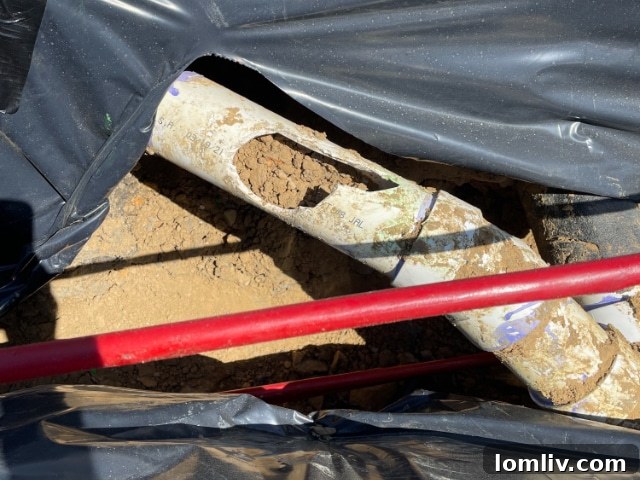
Crucially, we also inspect all plumbing lines, electrical conduits, and HVAC ductwork that run through or beneath the slab, ensuring they are correctly laid out, securely connected, and free from any damage or obstructions. Proper grading of the soil and the installation of vapor barriers are also checked to prevent future moisture intrusion. The accompanying image vividly demonstrates the importance of this phase: our inspector discovered a broken plumbing line, mistakenly filled with dirt, just hours before the concrete pour. Had this critical flaw gone undetected, it would have inevitably led to severe drainage issues, potential water damage within the home, and incredibly expensive, disruptive repairs requiring the demolition of a newly poured foundation. This incident powerfully illustrates that once the concrete is poured, such hidden issues become almost impossible to fix without significant cost and disruption. Catching these fundamental problems at the pre-pour stage is paramount, saving homeowners from immense future headaches, financial burdens, and potential structural compromises.
Phase 2: Framing and Mechanical Rough-In Inspection
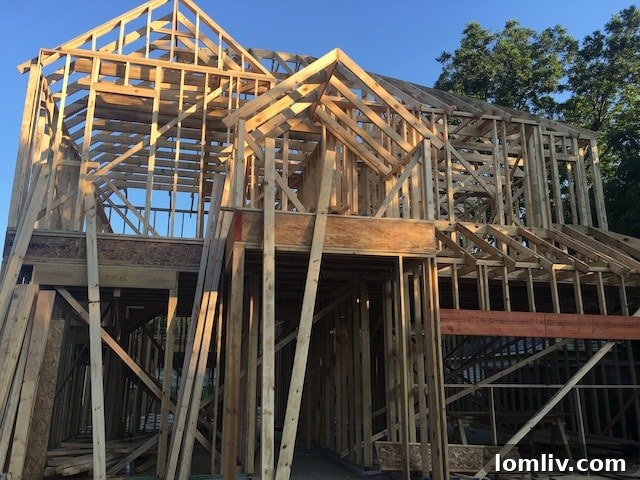
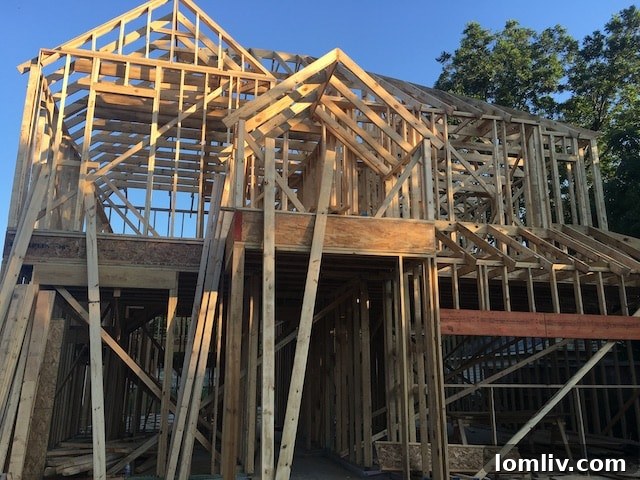
Following the completion of the foundation, the next major construction milestone is the framing of your home. The framing and mechanical rough-in inspection is conducted after the entire structural skeleton of the house has been erected, but critically, before any insulation, drywall, or exterior siding is installed. This timing provides our certified inspectors with unobstructed access to the vital structural and mechanical systems that will soon be concealed. During this comprehensive assessment, we meticulously examine the entire wood or steel framing for structural integrity, ensuring that all load-bearing walls, floor joists, roof trusses, and support beams are installed correctly, meet architectural specifications, and comply with all local building codes. We pay close attention to proper nailing patterns, adequate bracing, correct window and door opening dimensions, and the installation of fire blocking.
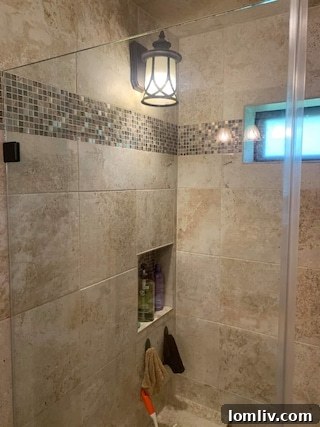
Beyond the structural elements, this phase is indispensable for inspecting the ‘rough-ins’ of your home’s essential systems: plumbing, electrical, and HVAC. Our inspectors verify that all plumbing lines are correctly routed, adequately supported, and free of leaks. Electrical wiring is checked for proper gauge, secure connections, correct circuit breaker installation, and adherence to all safety standards. HVAC ductwork is examined for proper sealing, insulation, and efficient routing to ensure optimal airflow and climate control throughout the home. Consider the revealing, if somewhat amusing, photo provided: an outdoor lantern clearly installed within a shower stall. This glaring error, likely a mix-up between electrical and plumbing plans, unequivocally highlights the necessity of a thorough framing inspection. Such a mistake, if uncorrected, could lead to dangerous electrical hazards, severe water damage, and significant, costly rework after walls are sealed. Identifying these types of fundamental errors at the framing stage ensures that all systems are correctly and safely installed, preventing expensive rectifications and guaranteeing the long-term safety, efficiency, and functionality of your new home.
Phase 3: Final Home Inspection
The final home inspection marks the culmination of the entire construction process, performed once your new home is essentially complete and ready for occupancy. This paramount evaluation should ideally be scheduled a few days prior to your final walk-through with the builder. It is a comprehensive, whole-home assessment, mirroring the rigorous standards of a traditional pre-purchase home inspection, but specifically tailored to evaluate the quality and completeness of a newly constructed property. Our certified inspectors meticulously examine every accessible component of the home, from the structural integrity of the roof and exterior grading to the foundation, interior finishes, and all major operational systems. We verify the functionality of all appliances, plumbing fixtures, electrical outlets and switches, and the heating and cooling systems. Close attention is also given to proper insulation, ventilation, the smooth operation of windows and doors, adequate drainage around the perimeter, and the overall cosmetic condition of the property.
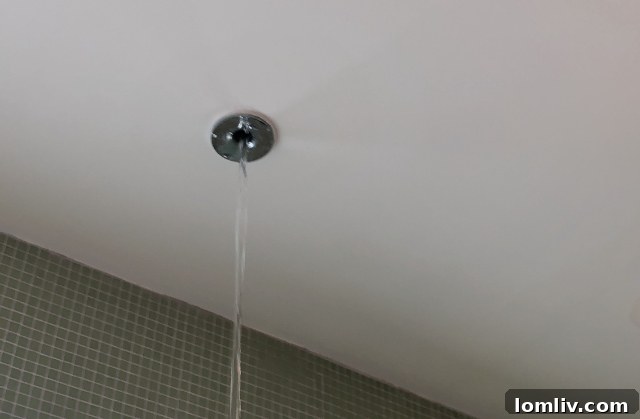
This critical phase is specifically designed to uncover any deficiencies, defects, or incomplete work that may have emerged during the final stages of construction, or those that might have been overlooked in previous inspections. The compelling image provided, depicting water actively pouring out of a downstairs light fixture when the upstairs shower is running, perfectly illustrates the type of severe, post-completion issues a final inspection can bring to light. This specific problem points to a significant plumbing leak or improper installation within the walls or ceiling, which could lead to extensive structural water damage, hazardous mold growth, and dangerous electrical risks. Discovering such a critical flaw before closing means the builder is obligated to rectify the issue, preventing you from inheriting a major, immediate problem after taking possession. A comprehensive final inspection ensures that all systems are functioning as intended, that the home meets all current safety standards, and that you are receiving a finished product of the highest quality, free from glaring defects or safety hazards.
Phase 4: Builder’s Warranty Inspection
Most new homes are accompanied by a one-year Builder’s Warranty, a valuable contractual safeguard designed to cover defects in materials and workmanship. The Builder’s Warranty Inspection is strategically performed approximately 10 to 11 months after you move into your new home, just before this crucial warranty period expires. This precise timing is intentional, allowing sufficient time for the home to fully settle, for various seasonal changes to occur, and for any latent defects, performance issues, or initial installation flaws to manifest under normal living conditions. It provides an invaluable opportunity to thoroughly assess the property for any problems that have developed since your move-in date and to have them addressed by the builder under the terms of your warranty, at absolutely no cost to you.
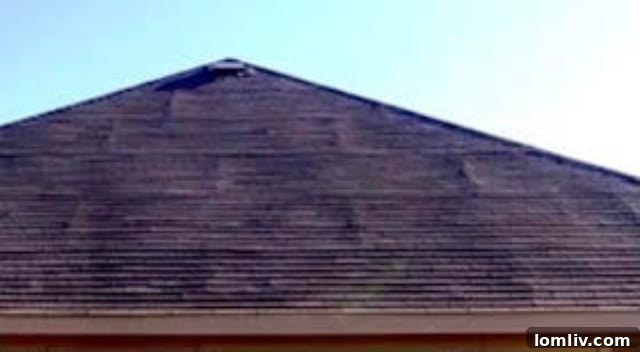
During this comprehensive post-occupancy inspection, our expert evaluators meticulously assess everything from the home’s foundation performance and exterior grading to the integrity of the roof, the efficiency of the HVAC system, plumbing functionality, electrical systems, and all interior and exterior finishes. We specifically look for common issues that frequently arise within the first year of ownership, such as nail pops in drywall, minor foundation cracks due to settling, exterior drainage problems, appliance malfunctions, and any wear-and-tear items that might indicate initial installation flaws or material defects. The image above clearly depicts a classic example of a common problem identified during Builder’s Warranty Inspections: buckling shingles. This issue is often a strong indicator of excessive moisture infiltration into the roof sheathing, inadequate attic ventilation, or faulty initial installation techniques. Addressing this type of problem early through the warranty prevents larger, more expensive roof repairs down the line. By conducting this critical inspection, you ensure that you fully leverage your builder’s warranty, holding them accountable for any covered repairs and maintaining the long-term value, structural integrity, and comfort of your new home. It is your final opportunity to have defects remedied on the builder’s dime, offering significant financial protection and invaluable peace of mind.
The Unmatched Value of Independent Phase Inspections for New Builds
While reputable builders typically conduct their own quality assurance checks, an independent, third-party inspector offers an unbiased and objective assessment of your new home. Unlike builder-led inspections, our primary allegiance is solely to you, the homebuyer. We bring specialized expertise, focusing on identifying defects, potential code violations, and future problems that might be overlooked or deemed acceptable by others. This independent oversight ensures a consistently higher standard of accountability and quality throughout the entire construction process, rigorously safeguarding your interests and securing your substantial investment.
Investing in new construction phase inspections is not an additional expense; it is a wise and necessary investment in the long-term integrity and future value of your home. It provides essential protection against unforeseen and costly repairs, significantly enhances the safety of your living environment, and definitively confirms that your home meets the highest standards of construction quality. Even if your home is already partially or completely built when you find it, it is never too late to engage a professional Phase Inspector. Each stage of inspection offers unique benefits and crucial opportunities to identify and rectify critical issues, no matter where your home is in the construction timeline.
To gain further insight into how professional Phase Inspections can effectively protect your new home investment and ensure its lasting quality, we encourage you to explore additional resources and consult with our team of experts. You can delve deeper into comprehensive Phase Inspections and understand how they seamlessly integrate into your new home journey here. Make sure your new home truly is built right, perfectly from the ground up.