Texas Landlords: A Comprehensive Guide to Legally Handling Abandoned Tenant Property
For landlords in Texas, discovering that a tenant has left behind personal belongings and unwanted junk after vacating a property can seem like a straightforward cleanup task. However, acting too quickly or without proper legal guidance can lead to severe consequences, including costly wrongful lockout claims or property damage lawsuits. Texas landlord-tenant law is intricate, demanding a meticulous, legally defensible process to protect your interests and ensure compliance.
The correct legal path for managing abandoned property is not a one-size-fits-all solution. It significantly depends on the circumstances under which the unit was recovered. Whether it was a voluntary move-out, an abandonment explicitly covered by your lease agreement, a commercial tenancy, or an eviction executed with a writ of possession, each scenario carries distinct legal requirements under Texas statutes.
In the bustling Dallas-Fort Worth (DFW) metropolitan area, many landlords strategically partner with professional services for junk removal McKinney and surrounding suburbs. This proactive approach ensures that properties can be efficiently cleared and prepared for new tenants once all legal prerequisites for property removal have been met. It’s crucial to understand that the information provided here serves as a conservative general framework, not legal advice. We strongly recommend consulting with a qualified Texas landlord tenant attorney before undertaking any action to ensure full adherence to current laws and to mitigate potential risks.
1. Diligently Confirm Property Abandonment
Before any item is moved, donated, or disposed of, establishing a legally defensible reason to treat the property as abandoned is paramount. Texas law generally prohibits landlords from excluding a tenant from a rental unit without a court order, with very limited exceptions. Therefore, making assumptions about abandonment without concrete evidence is a significant risk.
Gathering Compelling Evidence of Abandonment
To confidently confirm abandonment and build a robust defense, landlords should meticulously collect various forms of evidence. This documentation illustrates the tenant’s intent to permanently vacate the premises. Key indicators often include:
- Rent Delinquency and Unresponsiveness: The tenant’s rent is significantly past due, and all attempts to contact them—via phone calls, text messages, emails, and mailed notices—have gone unanswered or unacknowledged.
- Voluntary Surrender: The tenant has explicitly returned keys, provided a written notice of their intent to move out, or visibly removed most of their essential belongings, leaving the unit largely empty.
- Utility Disconnection and Vacant Appearance: Utilities (electricity, water, gas) have been disconnected or stopped, the unit appears visibly vacant from the exterior, and postal mail or packages are accumulating, indicating no one is regularly present.
- Eyewitness Accounts: Reliable reports from building staff, maintenance personnel, or neighbors confirm that the tenant has moved out and has not been observed returning to the property.
The Critical Role of Documentation
In all matters concerning abandoned tenant property, comprehensive documentation is your strongest ally. Maintain a detailed log of every communication attempt, including dates, times, and methods (e.g., certified mail return receipts, email read receipts). Keep dated notes and high-resolution photographs or videos of the property’s condition and contents. This meticulous record-keeping allows you to precisely demonstrate what knowledge you possessed at the time decisions were made.
Eviction as the Safe Alternative
If you cannot confidently and unequivocally confirm abandonment based on the collected evidence, attempting self-help measures is ill-advised. The safer and legally compliant route is to pursue a formal eviction. Texas law generally mandates a written “Notice to Vacate” before filing an eviction lawsuit. The default notice period is typically at least three days, though a lease agreement may specify a different timeline. Landlords must also be aware of upcoming changes to the notice to vacate statute taking effect on January 1, 2026. Always double-check current statutory requirements before serving any notice to ensure full compliance.
2. Secure the Property and Thoroughly Document Remaining Goods
Once you have established a lawful reason to enter the property (whether through confirmed abandonment, a valid lease clause, or a writ of possession), your next critical steps involve securing the unit and meticulously documenting its contents before any items are moved. Always adhere to the entry rules stipulated in your lease agreement and provide any required notice, unless an immediate emergency necessitates entry.
Systematic Entry and Inventory
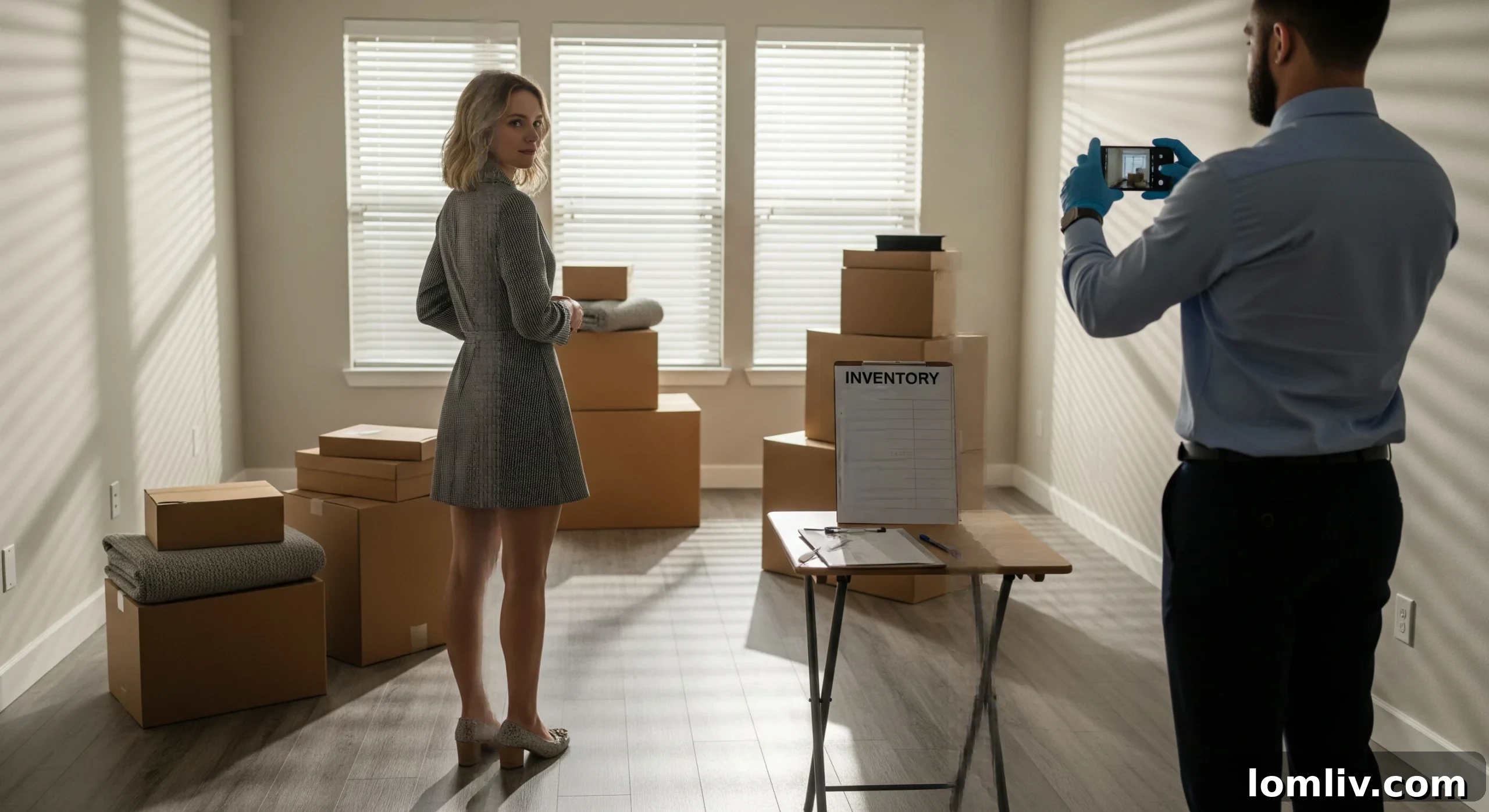
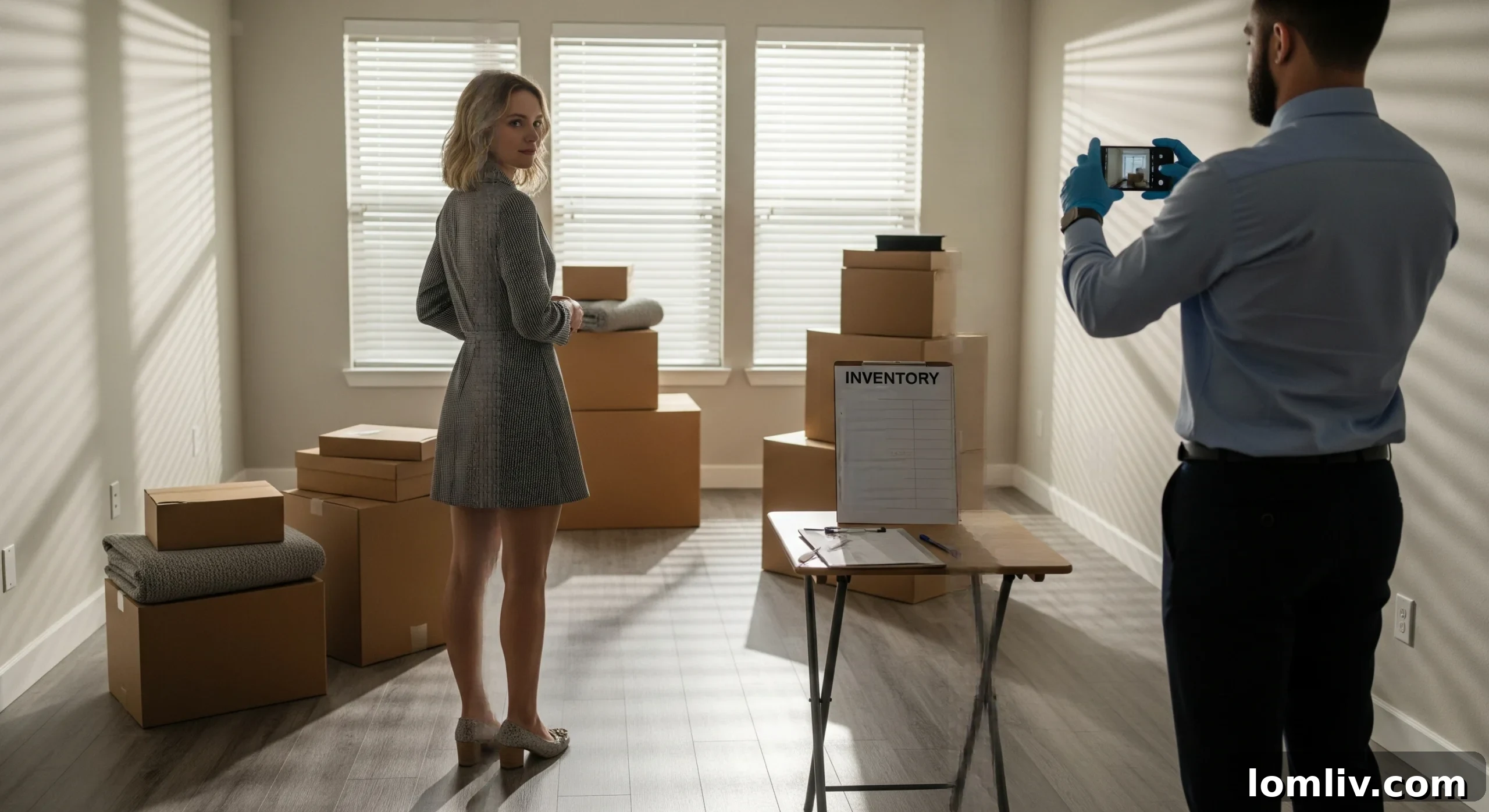
To protect against future disputes, always bring an independent witness when entering the property to create an inventory. Take clear, comprehensive photos and videos of every room and all items present. Simultaneously, create a detailed written inventory that notes exactly what you found, its condition, and its specific location within the unit. This multi-faceted documentation serves as irrefutable proof of the property’s state upon entry.
Distinction: Eviction via Writ of Possession
It is imperative to understand that if the situation involves a formal eviction, you must not attempt to remove the tenant’s property yourself. In Texas, a writ of possession is executed solely by a sheriff or constable. This officer is legally responsible for overseeing and controlling the removal process, often placing the tenant’s belongings outside the property or into a designated storage facility, as per court order and statutory guidelines.
Addressing Health and Safety Hazards
Upon entry, if you encounter spoiled food, pest infestations, or other obvious health and safety hazards, these must be handled promptly and safely. Prioritize taking detailed photos of the hazards before any cleanup begins. Keep all receipts related to the disposal or remediation of these hazardous materials, as these costs may be recoverable from the tenant, depending on your lease and local ordinances.
Protecting Sensitive Personal Items
Particular care must be taken with highly personal and sensitive items. Segregate and store separately any personal documents, photographs, identification cards, medical records, or financial paperwork. These types of items are frequently the source of the most intense disputes and potential legal claims from former tenants, making their careful handling and secure storage critically important.
3. Provide Formal Notification to the Tenant
Even if the rental unit appears unequivocally abandoned, sending a formal, written notice to the tenant remains your strongest legal protection. This notice serves as demonstrable proof that you acted reasonably and afforded the tenant a fair opportunity to reclaim their valuable possessions, significantly reducing your liability.
Methods for Delivering Notice
Send a written notice to the tenant’s last known physical address. Additionally, if you have an email address or emergency contact information on file, send notices to those contacts as well. Always use a delivery method that provides proof of mailing and/or receipt, such as certified mail with a return receipt requested. Keep meticulous copies of all notices sent and proof of delivery.
Essential Contents of the Abandonment Notice
Your notice should be comprehensive and clearly communicate all necessary information to the tenant. It must include:
- Statement of Abandonment: A clear declaration that personal property appears to have been left behind and that you are treating the unit as abandoned according to your lease terms and Texas law.
- Property Holding Location: The specific address where the abandoned property is being held.
- Pickup Procedure: Clear instructions on how the tenant can schedule a time to retrieve their belongings.
- Pickup Deadline: A reasonable deadline for property retrieval, which should align with your lease agreement and the specific circumstances of the abandonment.
- Applicable Charges: A statement of any reasonable moving or storage charges that will be required before the property’s release. This is only permissible if explicitly allowed by your lease and state law.
- Post-Deadline Actions: A clear explanation of what will occur if the property is not claimed by the deadline, such as disposal, donation, or sale.
Specifics for Commercial Leases
Texas law provides distinct guidelines for commercial landlords. Specifically, it allows a landlord to remove and store property left in abandoned commercial premises. Furthermore, it permits the disposal of such property if the tenant fails to claim it within 60 days after it has been stored. The landlord is legally required to send a certified mail notice to the tenant’s last known address, explicitly stating that the property may be disposed of if not claimed within this 60-day period.
Writ of Possession and Warehouseman Notice
If a sheriff or constable employs a warehouseman to store property during the execution of a writ of possession, the officer must ensure that notice is given to the tenant. This notice must include the warehouse address and phone number and is generally required to be delivered within 72 hours after the writ is executed, particularly if the tenant was not present during the removal.
4. Implement Secure Property Storage Protocols
Should you decide to store any of the tenant’s abandoned property, it is imperative to do so with the expectation that your actions may later be scrutinized in court. The storage environment must be dry, secure, and well-protected from theft, damage, or adverse conditions.
Ensuring Secure Storage Conditions
You have the option to store items in a locked room on your property, such as a designated storage area within the apartment complex, or in a rented off-site storage unit. Regardless of the location, all storage containers or bins should be clearly labeled. Maintain an updated, itemized inventory of all stored belongings. Furthermore, meticulously document any labor involved in moving items to storage, keeping all corresponding receipts for transportation and handling services.
Rigorous Cost Tracking for Reimbursement
Accurately tracking all expenses associated with abandoned property is essential for potential reimbursement. Retain all invoices and receipts for labor, hauling services, storage fees, and eventual disposal costs. If a professional warehouseman is involved following a writ of possession, Texas law grants them a lien on the stored property for reasonable moving and storage charges. In such cases, the notice to the tenant must explicitly include the daily storage rate.
Understanding the 30-Day Warehouseman Window
Under Texas law, when a warehouseman is utilized, the tenant generally has a specific window to reclaim their property. They typically have until the 31st day after the warehouseman notice is delivered to pay the accumulated charges and redeem their belongings. Crucially, the warehouseman is typically prohibited from selling the property until at least the 31st day following its storage, allowing the tenant a fair opportunity for retrieval.
5. Executing Final Disposal or Sale Legally
The final step of disposing of or selling abandoned property must only be undertaken after you are absolutely certain you possess the legal right to do so, and only after any required notice periods have fully expired. Rushing this stage and acting prematurely is a common pitfall that often leads to landlords facing costly lawsuits.
Property Sale Considerations
Most landlords only opt to sell abandoned items when mandated by a specific lien, a court order, or statutory requirements. If a warehouseman stored property after an eviction, they are typically authorized to sell the stored property to satisfy their lien, but only after the legally prescribed waiting period has elapsed. For commercial rentals, Texas law explicitly permits a landlord to dispose of stored abandoned tenant property if it remains unclaimed for 60 days following storage, provided the required certified mail notice has been properly sent.
Legally Compliant Property Disposal
If the abandoned items are clearly low-value junk, hazardous, or unsanitary, and you have received legal clearance to remove them, proceed with disposal in a well-documented manner. Keep records, including photos, of everything that was removed and the method of disposal. If the unit was cleared as a result of a writ of possession, the executing officer (sheriff or constable) may remove property and place it outside the unit. The officer can also request that a city department remove a storage container holding the property after a reasonable time has passed.
Once you are legally in the clear to remove abandoned items, promptly clearing the unit becomes important for minimizing vacancy periods. This is precisely why many DFW landlords rely on professional junk removal services. These professionals efficiently handle bulky furniture, mixed debris, and general trash, allowing the unit to be quickly cleaned, repaired, and remarketed for new tenancy.
Bypassing any of these critical steps or misjudging the circumstances of abandonment can expose landlords to severe penalties and claims for unlawful lockout, property damage, or conversion. When faced with uncertainty regarding abandoned tenant property, the safest course of action is always to slow down, meticulously document every detail, and either utilize the formal eviction process or seek immediate legal guidance from a qualified attorney. This proactive approach will help you navigate these complex situations legally and avoid transforming a routine property cleanout into a protracted and expensive lawsuit.