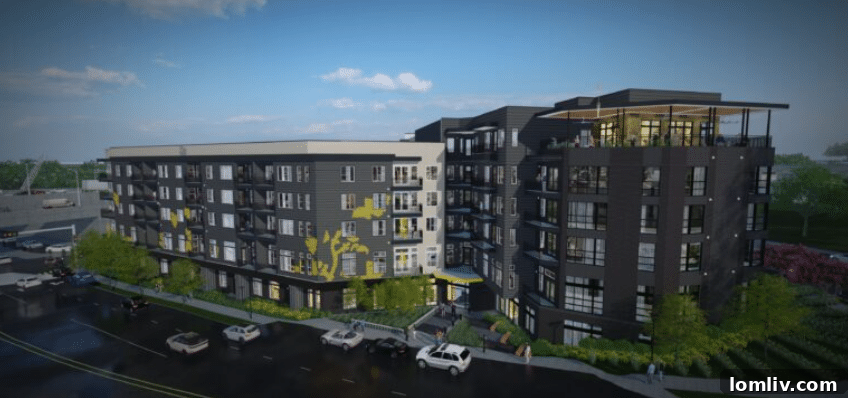
In a rapidly growing urban landscape, the challenge of providing adequate and affordable housing remains a pressing concern for cities like Dallas. A relatively new and increasingly significant tool in addressing this issue is the Public Facility Corporation (PFC) structure, which made its debut in Dallas last year. While designed to foster essential housing solutions, many stakeholders, from city residents to policymakers, are still grappling with the intricacies of its operation, its financial implications, and its overall return on investment. This guide aims to demystify the Dallas Public Facility Corporation framework, exploring its mechanisms, the legislative landscape surrounding it, its perceived benefits and drawbacks, and its future potential in shaping the city’s housing future.
The limited public understanding of PFCs stems partly from the City of Dallas’s cautious approach to marketing these complex projects. Furthermore, confusion has arisen over state legislation designed to prevent misuse by poorly managed housing authorities—an issue that, according to city officials, does not currently plague Dallas’s implementation of PFCs. This article will delve into how these corporations function within Dallas, the ongoing discussions about their effectiveness, and what these innovative housing finance structures mean for residents and taxpayers.
Understanding the Quiet Evolution of Public Facility Corporations in Dallas
The Dallas Public Facility Corporation Board was established with minimal fanfare in 2020, quietly laying the groundwork for a new era of affordable housing initiatives. By the following year, PFC projects began to move swiftly through board approvals, often receiving near-unanimous endorsement from the Dallas City Council. This rapid adoption highlights the city’s urgent need for creative solutions to its housing crisis.
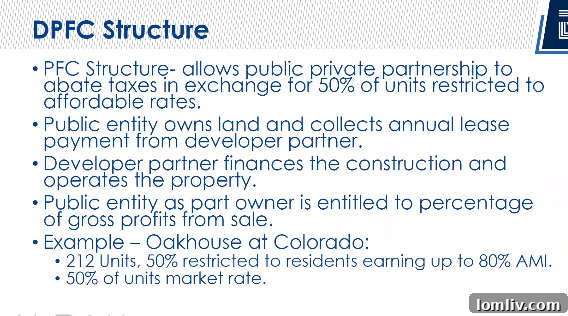
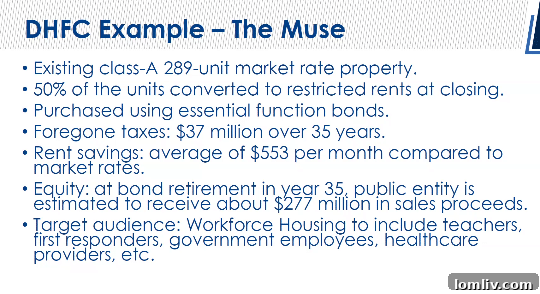
At its core, the PFC financing structure involves a unique partnership between the city and private developers. When a developer seeks to utilize this model, they enter into a long-term lease agreement for city-owned land with the Public Facility Corporation. A key component of this arrangement is the removal of the property from the local tax rolls for an extended period, typically 75 years. In exchange for this significant tax exemption, developers commit to dedicating a substantial portion of the units—at least 50 percent—at an affordable rate. This affordability is generally tied to the Area Median Income (AMI), ensuring that a segment of the housing stock is accessible to residents earning below the market average. This structure aims to reduce developers’ operating costs, which can then be passed on to residents in the form of lower rents, thereby addressing the critical demand for workforce and affordable housing.
The Debate: Revenue Loss vs. Affordable Housing Imperative
While the PFC structure offers a pathway to increased affordable housing, it has not been without its critics. District 12 Councilwoman Cara Mendelsohn has consistently voted against these projects, not out of opposition to affordable housing itself, but due to concerns over the long-term loss of property tax revenue for the city’s general fund. Her argument centers on the idea that Dallas is sacrificing essential revenue in the pursuit of affordable housing, particularly in districts already densely populated with apartment complexes. Mendelsohn advocates for a shift towards programs that empower individuals to purchase homes, arguing that such initiatives could offer more sustainable benefits for residents and the city’s tax base.
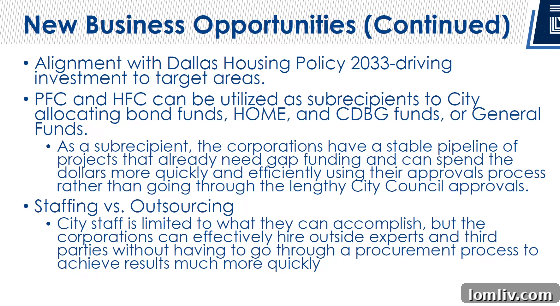
Interestingly, city staff have been proactively working to integrate homebuyer assistance programs into the PFC structure, aiming to balance the need for rental affordability with the aspiration of homeownership. This development, though only recently discussed publicly, signals an evolving strategy to diversify the benefits derived from these financial tools. The integration of such programs could potentially mitigate concerns about revenue loss by fostering long-term community stability and individual wealth building, alongside rental affordability.
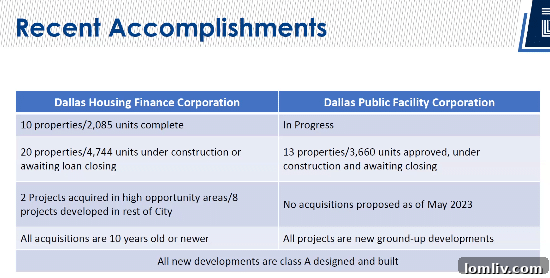
To date, thirteen Public Facility Corporation projects have received approval in Dallas, with three currently moving forward into the construction phase. Despite the growing number of approved projects, concrete financial figures detailing the total foregone tax revenues or the anticipated economic impact these projects will generate have yet to be publicly disseminated. This lack of clear financial metrics contributes to the ongoing debate and public skepticism surrounding the PFC model.
The Dallas City Council’s Housing and Homelessness Solutions Committee recently held a briefing on May 22, providing an overview of existing PFC projects, an update on related state legislation, and a glimpse into future plans. This briefing underscored the city’s ongoing efforts to navigate the complexities of these innovative housing solutions.
Navigating the Legislative Landscape: Texas Reforms for Public Facility Corporations
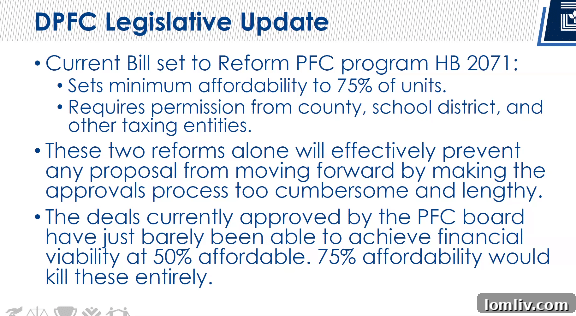
The rapid proliferation of Public Facility Corporations across Texas, while addressing critical housing needs, has also prompted calls for legislative reform. Texas Senator Paul Bettencourt has been a leading voice in this movement, championing legislation aimed at introducing greater oversight and accountability to the PFC structure. His efforts appear to be culminating in significant changes, with House Bill 2071 having recently passed both chambers and awaiting the Governor’s signature. Another related bill, Senate Bill 805, was also making its way through the legislative process, reflecting a comprehensive push for reform. The Governor has until June 18 to act on these bills, which could significantly reshape how PFCs operate across the state.
Major REFORM LEGISLATION passes! It took 3 years of collecting Public Facility Corporation (PFC) horror stories, trying to passing bills out of the Senate twice in 2021 and again in 2023, holding interim hearings, and FINALLY HB 2071 by @JaceyJetton PASSES 115 TO 20. As the…
— Team Bettencourt (@TeamBettencourt) May 25, 2023
Carrie Rogers, Dallas Director of Government Affairs, announced plans to file a memo detailing the specific implications of this new legislation for Dallas. While this memo was anticipated ahead of a recent holiday weekend, its release is crucial for understanding how the state’s reforms will integrate with Dallas’s existing PFC framework and future housing strategies.
Targeting “Bad Actors,” Not Dallas
Senator Bettencourt has clarified that the primary target of his legislation is not well-managed cities like Dallas, but rather certain housing authorities that have leveraged the PFC structure without adequate municipal oversight. These “bad actors” have, in some instances, acquired properties, removed them from tax rolls, and failed to uphold the intended affordable housing component, thereby undermining the purpose of the PFC model and depriving local communities of tax revenue without delivering on the promised public benefit. The proposed reforms aim to introduce stronger guardrails to prevent such abuses across the state.
Aaron Eaquinto, Administrator for the Dallas Housing Finance Corporation, stated during the May 22 briefing that city staff are diligently analyzing any potential impacts of the new legislation on Dallas’s operations. Eaquinto expressed confidence that most of the forthcoming changes would not adversely affect Dallas, emphasizing the city’s proactive and responsible approach to PFC implementation. “Generally, they’re trying to enact some further guardrails… Other jurisdictions have used the PFC in a way different than we have,” Eaquinto explained. “They have been acquiring projects, taking them off the tax rolls, and not necessarily providing a lot of rent savings. We haven’t done that. Most of the changes that are going to be enacted won’t affect us. We’ve been doing it the right way, so it’s something we can be proud of.” This sentiment suggests that Dallas’s current practices align closely with the spirit of the state reforms, focusing on genuine affordable housing provision alongside tax exemptions.
Carrie Rogers further elaborated that the last-minute amendments made to the bill were specifically designed to target these “bad actors.” Consequently, Dallas has maintained a neutral stance on the legislation, as its intent is to correct practices not employed by the city.
Enhancing Public Understanding: The Need for Effective PFC Marketing
Despite Dallas’s commitment to responsible PFC implementation, a significant challenge remains in effectively communicating the value and mechanics of these projects to the public. District 11 Councilwoman Jaynie Schultz recently advocated for a more robust public information campaign, stressing the importance of transparency and education. “There’s a lot of pushback as we saw by the legislation that was initiated on this,” Schultz noted. “I think what we need, that would be extremely helpful for the public, is to do our own marketing piece that would help people understand… Why we want to do these projects is to create a Class A affordable rather than a Class C or even worse.”
Schultz highlighted that public apprehension, often manifesting as “Not in My Backyard” (NIMBYism), frequently stems from a lack of understanding regarding the long-term benefits of these developments. Many residents are unclear whether the significant tax exemptions granted to developers truly yield a worthwhile return on investment for the community. She emphasized the need for a narrative that illustrates how PFC projects, much like investments in public infrastructure such as new roads, generate long-term value that far outweighs the immediate costs or foregone revenues. This includes explaining how affordable housing developments contribute to a more diverse and stable workforce, reduce commuting burdens, and support local businesses.
Another crucial point raised by Councilwoman Schultz addresses the persistent myth that affordable housing projects negatively impact surrounding property values. She strongly refuted this notion, stating, “We know that’s a myth. We know that when you put in Class A properties, regardless of what the rent is being charged, it increases the value of homes in the area. We have not effectively marketed that to the public.” The construction of high-quality, well-maintained Class A affordable housing can, in fact, enhance neighborhood aesthetics and appeal, attracting further investment and improving overall community desirability, thereby positively influencing property values. Effective marketing and public education are vital to dispel misconceptions, build community trust, and foster greater acceptance of these much-needed developments.
Distinguishing Between HFC and PFC: Different Tools for Dallas’s Housing Strategy
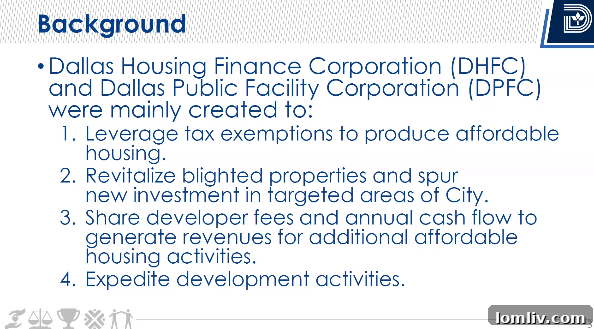
During the May 22 briefing, Aaron Eaquinto provided valuable clarity on the distinct roles of two key entities within Dallas’s housing finance ecosystem: the Dallas Housing Finance Corporation (HFC) and the Public Facility Corporation (PFC). While both serve the overarching goal of increasing affordable housing, they employ slightly different legal structures and target various segments of the housing market.
Eaquinto explained the fundamental commonality: “The HFC and the PFC are basically using tax exemptions to leverage the savings on operating costs to create more affordable housing through those savings in operating costs.” This core principle underpins both models, allowing developers to reduce expenses and pass those savings on to residents in the form of lower rents.
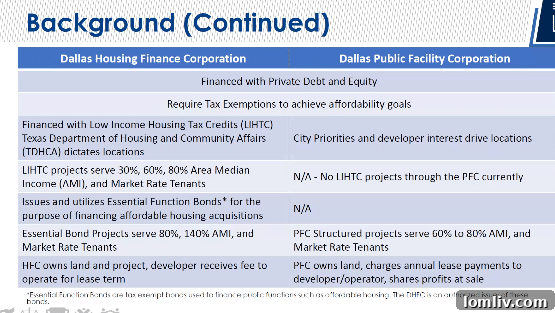
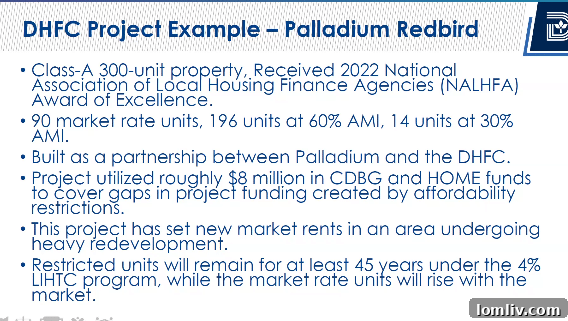
However, their specific applications diverge. The HFC primarily utilizes low-income housing tax credits and essential-function bonds to finance the acquisition, construction, or rehabilitation of multifamily housing. This structure allows the HFC to achieve “deeper affordability,” often serving residents earning as low as 30 percent of the Area Median Income (AMI) through various specialized programs. This makes the HFC an ideal vehicle for addressing the needs of very low-income individuals and families, ensuring housing accessibility for those most vulnerable.
In contrast, the PFC operates with a slightly different legal framework, enabling it to focus on “targeted workforce areas.” While still providing significant affordability, the PFC often targets a slightly higher income bracket, catering to essential workers and middle-income families who struggle with market-rate rents but may not qualify for the deepest subsidies. Furthermore, the PFC has predominantly focused on “ground-up development,” meaning it supports the construction of entirely new housing projects. This allows for modern, purpose-built affordable communities in strategic locations.
Impact and Progress: HFC and PFC Successes in Dallas
The Dallas HFC has demonstrated considerable success in its mission, boasting 10 completed projects and an additional 20 currently in progress. Eaquinto noted that many of the HFC’s acquired properties are “Class A in high-opportunity areas.” This strategic focus ensures that affordable housing is not concentrated in areas of disinvestment but integrated into vibrant, amenity-rich neighborhoods, providing residents with better access to jobs, schools, and services. “It’s been really successful so far and we’re going to continue to look at it and its effectiveness,” Eaquinto affirmed.
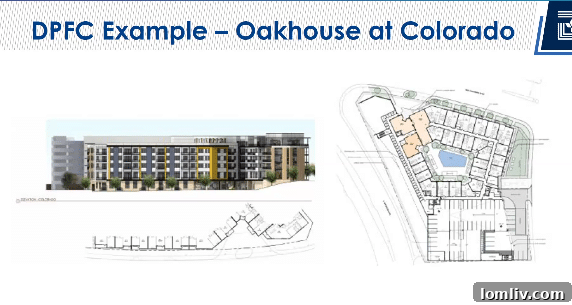
The PFC, as a newer entity, has primarily concentrated on ground-up development, strategically deploying its advantages to construct brand-new projects in high-quality, high-opportunity areas. A notable example is the 212-unit Oakhouse development on Colorado Boulevard in North Oak Cliff. This project exemplifies the PFC’s mission by offering 50 percent of its units at an affordable rate, thereby integrating accessible housing into a desirable and developing neighborhood. “That’s kind of where the PFC has its advantages,” Eaquinto highlighted. “We can build these brand new projects but in higher-quality, higher-opportunity areas, and that’s where we’ve targeted the use of this structure.”
Developers typically initiate the process by approaching the PFC with potential sites where there is a demonstrated need for affordable housing or where they envision significant development potential. This proactive engagement ensures that projects are aligned with community needs and city planning objectives.
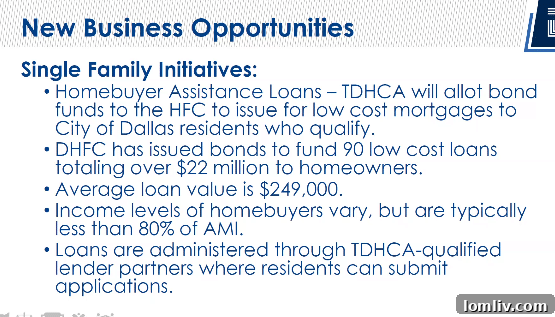
Beyond their core functions of creating rental housing, the revenues generated through the HFC and PFC also empower their respective boards to act as state issuers. This allows them to utilize bond funds to provide low-cost mortgages to qualified single-family homebuyers. This initiative has seen impressive results, with approximately 90 home loans totaling $22 million issued in just six months, demonstrating the broader impact these corporations have on fostering homeownership and economic stability within Dallas communities.
Future Horizons: Expanding the Impact of Dallas’s Housing Corporations
Looking ahead, the Dallas Housing Finance Corporation and Public Facility Corporation envision expanding their impact even further. Future plans include acting as sub-recipients for Community Development Block Grant (CDBG) funds and other federal and state funding streams. This strategic move would enable the corporations to access and deploy larger sums of money more rapidly and efficiently into the community, accelerating the pace of affordable housing development and broader community revitalization efforts. “We can use larger chunks of this money, deploy it faster, and get it out to the community much more efficiently,” Eaquinto articulated. “That’s currently a plan and an idea, and we’ll develop that further as the funds become available.” This ambitious outlook suggests a future where these corporations play an even more central role in addressing Dallas’s multifaceted housing challenges, ensuring a more equitable and sustainable urban environment for all residents.