Dallas Property Tax Fairness: Unpacking Commercial Valuations and DCAD’s Role
The landscape of property taxation in a dynamic, rapidly growing metropolis like Dallas is a subject of constant public interest and, at times, considerable debate. Recent indicators from the Dallas Central Appraisal District (DCAD) suggest a potential, albeit gradual, shift towards ensuring that large commercial property owners contribute their fair share to the local tax base. This issue is paramount, as the equitable assessment of property taxes directly impacts the funding for essential public services, including schools, infrastructure, and public safety, which benefit all residents and businesses within the city. For too long, concerns have lingered about discrepancies in how properties are valued, often leading to a disproportionate burden on residential taxpayers compared to their commercial counterparts. This article meticulously examines a specific instance involving HEB’s extensive property holdings in a prime Dallas location, scrutinizing the appraisal process, revealing notable inconsistencies, and advocating for a more transparent and just property tax system.
The HEB Development Saga: From Shifting Plans to Undervalued Assets
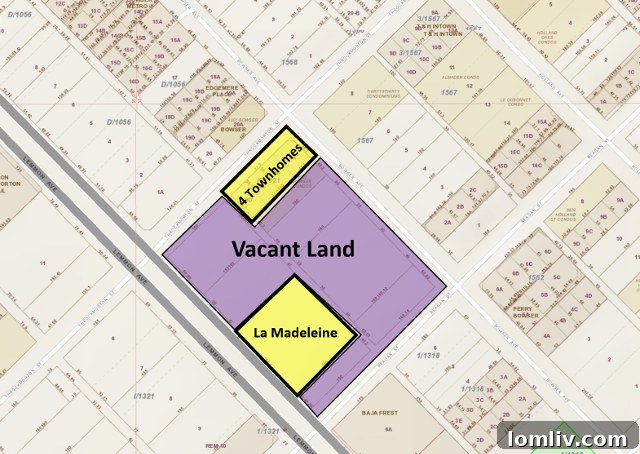
The story begins with HEB’s strategic acquisition of a significant block on Lemmon Avenue, nestled between Reagan and Throckmorton Streets. This prime piece of real estate was initially earmarked for the development of a new Central Market, a project that garnered considerable excitement within the community. However, as often happens in the fast-paced world of real estate development, these plans were subsequently re-evaluated and expanded, shifting to a more ambitious project located at the bustling intersection of Lemmon and McKinney Avenues. This change in development strategy had unforeseen implications for the property’s tax assessment.
Prior to the definitive shift in HEB’s development focus, DCAD had already initiated standard procedures for the original Reagan/Throckmorton block. It’s a common practice for appraisal districts to adjust assessed values in anticipation of major redevelopment, often resulting in a temporary, but significant, reduction in valuations. This practice, while intended to reflect the interim state of properties awaiting new construction, can inadvertently—or deliberately—create substantial tax advantages for large property owners during the transitional period. The financial benefits reaped during this phase often come at the expense of consistent, robust tax revenues that are crucial for municipal services.
The ramifications of this preparatory undervaluation became strikingly evident on the block in question. A cluster of four townhouses located there were each assessed at an astonishingly low value of just $1,000. This nominal valuation was particularly perplexing given that DCAD’s own records rated these properties as being in “very good” or even “excellent” condition. Furthermore, the underlying land, situated in a highly desirable and appreciating part of Dallas, was also assessed at rates far below prevailing market standards. Cumulatively, for three consecutive years, these four properties were valued at less than half their actual market rate from 2015. During the same period, countless homeowners across Dallas experienced substantial, often burdensome, increases in their annual property assessments. This stark contrast led many to conclude that the multi-billion dollar HEB corporation had benefited from what could only be described as a form of “shoddy benevolence” from DCAD. Such discrepancies raise serious questions about the fairness of a system where ordinary citizens shoulder increasing tax burdens, while well-resourced commercial entities appear to enjoy significant tax breaks, undermining the principle of equitable taxation.
DCAD’s Proposed Revaluations: A Step Towards Equity, But With Lingering Questions
Encouragingly, there’s evidence that the Dallas Central Appraisal District is attentive to public discussions and detailed reports, including those published on Daltxrealestate.com. For the 2019 proposed valuations, significant adjustments were indeed made to the properties that had previously been undervalued. This suggests a responsive shift in DCAD’s approach, acknowledging, perhaps belatedly, the need to correct historical discrepancies and move closer to market-reflective assessments.
A closer look at the revised figures for the four townhouses reveals dramatic increases. For instance, the property at 3929 Bowser, which had a 2015 valuation of $331,220 before plummeting to $141,950 for three years, received a proposed 2019 valuation of $427,140. Similarly, 3520 Throckmorton’s proposed 2019 valuation reached $456,750. Its adjacent property, 3516 Throckmorton, saw a proposed 2019 valuation of $464,100. Rounding out this quartet, 3512 Throckmorton’s proposed 2019 value was set at $388,920. These figures undoubtedly represent substantial corrections, aiming to align the assessments more closely with current market realities after a prolonged period of undervaluation.
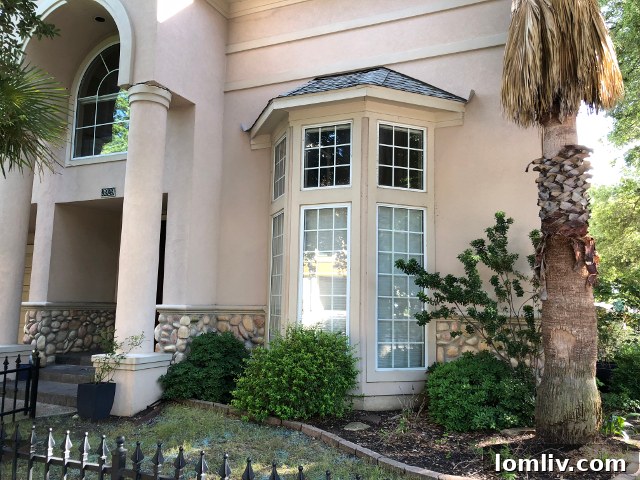
However, even with these adjustments, the core question of fairness and consistency remains pertinent. Are these new valuations truly fair, and are they uniformly applied? When compared to their 2015 assessments, the increases are significant but oddly varied: 3512 Throckmorton experienced a $132,200 jump, a 34 percent increase. For 3516 Throckmorton, the valuation soared by $125,970, or 27 percent. The property at 3520 Throckmorton saw a 19 percent increase, equating to an $87,000 rise since 2015. Lastly, 3929 Bowser’s valuation climbed by approximately 22 percent, or $95,920, over its 2015 assessment. What stands out conspicuously is the wide spread in these percentage increases—ranging from 19 to 34 percent—for four townhouses that were built simultaneously, share identical construction and aesthetic standards, and are even physically connected to each other. How can a 15 percent disparity in increases be reasonably justified for virtually indistinguishable properties? This lack of uniform application raises legitimate concerns about the underlying methodology and potential for arbitrary outcomes within the appraisal process. Predictably, HEB has already engaged Popp Hutcheson, a prominent firm specializing in property tax challenges, to contest these new valuations across all four properties. A hearing date is firmly set for June 26th at 1 p.m., signaling that the intricate battle over fair and accurate property valuations is far from reaching its conclusion.
The Wider Impact: Residential Burdens vs. Commercial Concessions
The detailed examination of HEB’s commercial property valuations naturally prompts a critical reflection for every property owner in Dallas, particularly those residing in vibrant neighborhoods like Oak Lawn. The immediate question that arises for many is: how do your property tax increases compare to these figures? Have your assessed values escalated between 19 and 34 percent since 2015, or perhaps experienced even more substantial hikes? For countless residential homeowners in Dallas, the reality has been one of consistent, often steep, annual increases that frequently push the boundaries of financial comfort.
My own experience with a Pink Wall condo serves as a compelling illustration of the residential property tax landscape. The proposed 2019 assessed value for my condo soared by an astounding $104,450, representing a remarkable 34 percent increase in a single year. Looking at a broader timeframe, its value has surged by a staggering 58 percent since 2015, and has more than doubled since my initial purchase in 2013. The rapidity and magnitude of these increases have been such that I have consistently hit the homestead cap every year but one. The homestead cap is a vital protective measure for Texas homeowners, limiting the annual increase in the taxable value of an owner-occupied residence to 10 percent. While this cap offers a crucial safety net for residential owners grappling with rapidly escalating market values, it simultaneously highlights a fundamental imbalance in the property tax system. Commercial properties generally do not benefit from such protective caps, yet they are frequently subject to inconsistent, and sometimes significantly undervalued, assessments. This disparity ultimately diverts crucial potential tax revenue away from essential public services and places a disproportionate financial burden on the shoulders of residential property owners.
La Madeleine: The Other End of the Discrepancy Spectrum
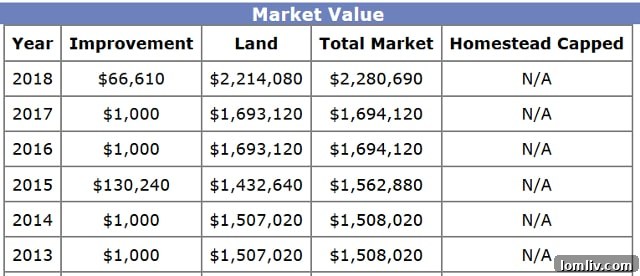
The narrative of property tax inconsistencies on HEB’s Lemmon Avenue block extends beyond the townhouses to encompass another significant commercial asset: the building prominently fronting Lemmon Avenue that houses the popular restaurant, La Madeleine. This substantial commercial structure, spanning 17,360 square feet, is officially rated by DCAD as being in “good” condition. However, a deeper dive into its tax situation reveals another intricate puzzle, one that some might liken to a “shell game,” where the true, consistent market valuation appears to be obscured by strategic adjustments and shifting figures.
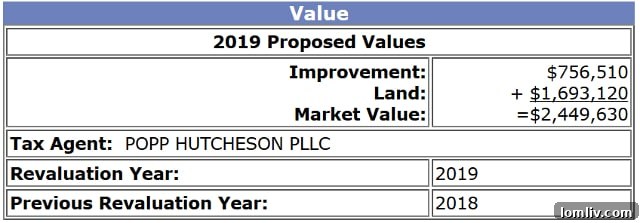
Initially, the proposed 2019 valuation for the La Madeleine building seemed to indicate a substantial correction, with the building’s value alone reportedly soaring from $66,610 to $756,510. This represented an impressive twelve-fold increase, signaling a significant move toward market-accurate assessment. Yet, a more comprehensive analysis of the entire property’s assessment reveals a less dramatic overall impact. While the building’s valuation saw a steep rise, the assessed value of the underlying land concurrently and inexplicably dropped by $520,960. This offsetting reduction in land value effectively mitigated the dramatic building increase, resulting in a net total property value increase of only $168,670. This translates to a rather modest 7.5 percent year-over-year rise for the entire parcel. Such a maneuver, where a significant increase in one component (the building) is largely canceled out by a decrease in another (the land), effectively dampens the overall taxable value, raising questions about the consistency of DCAD’s assessment practices. Unsurprisingly, HEB is also contesting this valuation with DCAD, further illustrating their proactive approach to managing their property tax liabilities.
To fully appreciate the extent of this inconsistency, it is crucial to draw a direct comparison between the 1985-built La Madeleine building and the Pet Supermarket located directly across Lemmon Avenue. The Pet Supermarket building, constructed in 1971, is not only a full 14 years older than the La Madeleine structure but also significantly smaller, encompassing 10,000 fewer square feet than La Madeleine’s 17,360 square feet. Despite these clear and verifiable differences in age, size, and likely condition, both properties are assessed at the exact same rate per acre for their land component. However, the building valuations themselves remain wildly divergent, defying any logical correlation to their physical attributes or market value.
The Pet Supermarket property serves as a stark and telling counterpoint. In 2018, its assessed building value climbed from $969,850 to $1,112,500. This year, it surged again, reaching $1,434,500. Over a mere two-year period, the Pet Supermarket building has experienced a remarkable 50 percent increase in its assessed value, with a substantial $322,000 jump occurring in the current year alone. Meanwhile, the La Madeleine building, despite being both 10,000 square feet larger and a full 14 years newer, is currently valued by DCAD at an astonishing $677,990 less than the older, smaller Pet Supermarket building. This blatant and substantial discrepancy casts a serious shadow of doubt on the consistency, fairness, and overall accuracy of DCAD’s appraisal methods for commercial properties. It suggests that while DCAD may indeed be monitoring real estate discussions and journalistic reports, its consistent and equitable application of fair valuation principles for all properties, particularly large commercial holdings, still requires significant improvement. The very integrity of the property tax system hinges on such fairness, ensuring that every property owner, irrespective of their corporate size or influence, contributes equitably to the collective well-being and development of the community.
Ensuring Accountability and a Fairer Future for Dallas Property Taxes
The ongoing saga of property tax valuations in Dallas, particularly as illuminated by the examples involving major commercial entities like HEB, unequivocally highlights a critical need for enhanced transparency, consistency, and rigorous accountability within the Dallas Central Appraisal District. While it is commendable that DCAD demonstrates some responsiveness to public scrutiny and detailed investigative reporting, as evidenced by the proposed revaluations for the previously undervalued townhouses and the La Madeleine property, the persistent inconsistencies and the perceived “shell game” tactics observed in some commercial assessments remain deeply problematic. A fair and equitable property tax system is far more than a mere bureaucratic ideal; it is the fundamental cornerstone of a healthy, thriving local economy, directly responsible for funding vital public services such as schools, public safety, urban infrastructure, and a myriad of other essential city functions that collectively benefit every resident and business within Dallas.
The stark and often frustrating contrast between the rapid, and typically capped, increases endured by residential homeowners and the sometimes circuitous or seemingly preferential valuations applied to large commercial properties demands continuous and vigilant public oversight. While property tax appeals are an inherent and fundamental right for all property owners, the substantial resources and specialized legal expertise readily available to large corporations like HEB can inadvertently create an uneven playing field, making it difficult for smaller entities or individual homeowners to effectively challenge their assessments. To genuinely foster public trust and ensure that every dollar of tax revenue accurately reflects true market values, DCAD must commit to implementing and adhering to more rigorous, transparent, and consistently applied appraisal methodologies across the entire spectrum of properties it assesses. This commitment extends beyond mere regular updates to valuations; it demands clear, understandable explanations for significant discrepancies observed between seemingly similar properties. Ultimately, an informed and engaged public, alongside diligent and independent journalistic reporting, plays an absolutely crucial role in holding appraisal districts accountable. This collective vigilance pushes relentlessly for a property tax system where commercial entities unequivocally pay their fair share, thereby alleviating the disproportionate financial burden on individual homeowners and fortifying the long-term financial stability and overall well-being of our dynamic and vibrant city.

As a recognized voice in real estate journalism, covering the intricate dynamics of high-rises, HOAs, urban renovations, and the evolving interplay between modern and historical architecture balanced against the YIMBY movement, I am profoundly dedicated to shedding light on critical real estate issues impacting our community. My extensive work in this field has been honored by the National Association of Real Estate Editors, receiving three Bronze awards (for reporting in 2016, 2017, 2018) and two Silver awards (for pieces published in 2016 and 2017). If you possess a compelling story concerning Dallas real estate, property tax injustices, or appraisal discrepancies, or if you wish to share valuable insights that contribute to these crucial conversations, please do not hesitate to reach out via email at [email protected]. Your contributions are invaluable in helping to illuminate important discussions about our community’s development, economic equity, and the pursuit of fairness. While you are certainly welcome to search for me on popular social media platforms like Facebook and Twitter, my primary focus and commitment remain firmly on delivering in-depth, impactful, and thoroughly analyzed real estate insights directly to the public.