

Tinder Home: Redefining Real Estate with a Swipe
“Swipe left” and “swipe right” are rapidly moving beyond the realm of dating apps and into the competitive world of real estate. Tinder, the pioneering force behind the popular swiping mechanic, is reportedly expanding its platform to revolutionize how individuals buy and lease residential properties. This bold new venture, dubbed “Tinder Home,” introduces a dynamic, interactive experience where sellers and landlords create comprehensive profiles for their listings, allowing prospective buyers and tenants to navigate the market with unprecedented ease and speed. This innovative approach threatens to fundamentally alter the role of traditional real estate agents, potentially streamlining transactions and empowering direct connections between parties.
Imagine browsing through nearby home and apartment listings on your mobile device, engaging with properties that catch your eye, and dismissing those that don’t with a simple gesture. Tinder Home promises just that. Prospective buyers and tenants can effortlessly scroll through an endless feed of available properties, swiping right on listings that spark interest and left on those that are unsuitable. But the sophistication of Tinder Home goes far beyond a mere digital catalog. At its core are new, patent-pending artificial intelligence (AI) algorithms designed to learn and adapt. These advanced algorithms analyze individual swiping data, meticulously identifying personal preferences, architectural styles, neighborhood desires, and lifestyle aspirations. Over time, the AI constructs a detailed profile of what each user likes, and even what aggregated groups of users prefer, prioritizing and presenting listings that align most closely with their evolving criteria.
For sellers and landlords, these intelligent algorithms are equally transformative. By analyzing buyer preferences, the AI provides actionable insights and suggestions to enhance a property’s appeal. This could range from recommending specific staging elements and virtual renovations to advising on optimal pricing strategies based on current demand signals. The goal is to maximize the chances of a “match” – a successful connection between a property and a genuinely interested buyer or tenant, moving past mere browsing to meaningful engagement.
Understanding the “Swipe” Culture in Real Estate
For those unfamiliar with the phenomenon, Tinder popularized a location-based mobile application where users interact with profiles by swiping. A left swipe signifies disinterest, while a right swipe expresses interest. When two users both swipe right on each other, a “match” is made, opening a channel for communication. In the context of Tinder Home, the analogy is cleverly translated: a “match” can be seen as the initial spark leading to a “buy” or “lease” agreement. The platform builds user profiles by drawing information and photographs from linked social media accounts, primarily Facebook, and allows for additional integration with Instagram and Spotify to create a holistic picture of the user’s lifestyle and tastes. Just as in traditional dating apps, appearance holds significant weight – a concept brilliantly termed “human curb appeal” in the original article. This digital first impression is not just subjective; it’s measurable and profoundly influences engagement metrics within the app, determining a listing’s visibility and desirability.
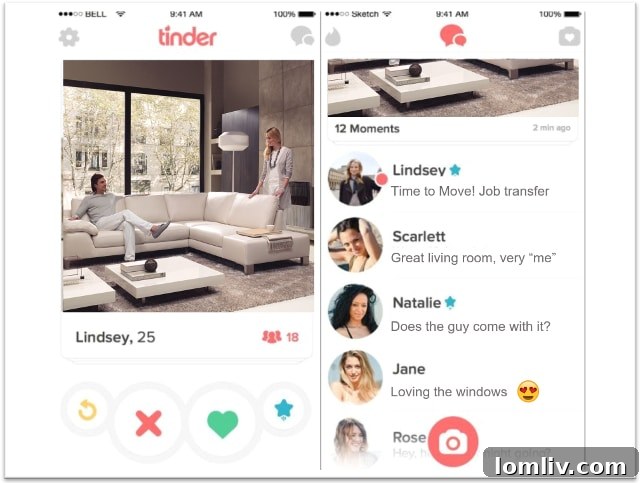
In Tinder Home, property images are not merely photographs; they are curated glimpses into a lifestyle. Sellers upload a suite of high-quality visuals that showcase the home’s aesthetics, its unique features, and crucially, the lifestyle it enables. This comprehensive visual storytelling allows potential buyers to fully grasp the home’s character and envision themselves living within its walls. Intriguingly, this concept extends beyond just property appeal. Sellers gain the ability to subtly “judge” a buyer’s profile to assess their potential “fit” within the seller’s vision for their home’s future. For instance, an owner might want to ensure their meticulously designed mid-century modern home goes to someone who appreciates its unique architectural heritage. This feature empowers sellers with a degree of discretion, aiming to prevent scenarios where an “unfit” next owner might diminish the perceived value or online reputation of their previous home on social media platforms.
The Power of Social Validation in Property Decisions
For the social media generation, validation from peers is paramount. Tinder Home taps into this need by allowing prospective buyers to easily share contemplated properties with their friends and family. This “crowd share” feature enables users to solicit opinions, gather feedback, and ensure their future home receives sufficient social support, thereby mitigating the risk of regretful decisions. As one beta user humorously articulated, “High school reunions happen every five years, but Tinder Home lets me seek critical validation from acquaintances I haven’t seen in years, all for my next big purchase.” This integration of social feedback transforms the often solitary home-buying journey into a communal experience, offering an additional layer of confidence.
The social amplification doesn’t stop there. Tinder Home also facilitates the viral spread of listings. A seller’s friends can effortlessly share a property with their own networks, dramatically expanding the listing’s reach in a way that traditional Multiple Listing Services (MLS) cannot replicate. In our interconnected 21st-century world, governed by the “six-degrees of separation” principle, the more shares a Tinder Home listing garners, the greater its exposure to the “right” kind of lifestyle-conscious buyers. This organic, peer-to-peer marketing mechanism significantly increases a property’s visibility, potentially attracting a wider and more targeted audience than conventional advertising channels.

Navigating the Pitfalls of Digital Real Estate
Like any online platform, Tinder Home is not without its potential drawbacks and pitfalls. Another beta user highlighted the pervasive issue of “internet measurements,” where digital representations can often exaggerate or distort reality. Inches might deceptively become feet in property dimensions, and a listing described as “hot neighborhood adjacent” could, in reality, be miles away from any desirable amenities. The potential for misuse and misleading descriptions is significant. Just as dating app profiles might feature “6-pack abs” from someone who only uses their core to reach for the remote control, Tinder Home listings could employ equally creative liberties. “Freshly painted” might translate to a wall adorned with Home Depot paint chips, rather than a full, professional coat. Furthermore, the concern of “bots” – fake users purchased by sellers to artificially inflate a property’s appeal and gain higher approval ratings – looms large. These deceptive tactics could push less desirable properties to the top of search results, exploiting the psychological bias that “if so many people like it, it must be good.”
Making Money: The Business Model of Tinder Home
Ultimately, successful apps are designed to generate revenue, and Tinder Home is no exception. Following the monetization strategies of its dating app counterpart, Tinder Home is poised to offer a range of chargeable premium features and add-on applications. Among these is “Boost,” a highly effective tool borrowed directly from the dating app. For a specified duration, typically 30 minutes, a property listing is pushed to the very front of potential buyers’ feeds, granting it significantly increased exposure and visibility. This can be particularly advantageous in competitive markets or for properties needing a quick sale. Another easily transferable premium function is “Tinder Plus,” which allows properties to seek promotion outside their immediate local area. This feature would be invaluable for sellers of vacation homes, investment properties, or those targeting out-of-state buyers seeking second residences, vastly expanding their potential reach beyond geographical limitations.
Beyond these established features, Tinder Home introduces unique, real estate-specific premium services. “Tinder Virtual” offers bespoke virtual staging packages, allowing sellers to recast their home in an entirely new light, presenting different design possibilities and aesthetic configurations without the need for physical renovations. This service can be further paired with “Tinder Reality,” an innovative feature that connects virtually-staged property images with vetted construction companies capable of delivering the envisioned dream for a pre-set price. This holistic approach bridges the gap between digital aspiration and tangible reality, offering a comprehensive solution for buyers to visualize and actualize their ideal living space.
However, the most significant revenue stream for Tinder Home, and indeed for many modern tech platforms, lies in the monetization of user data. Leveraging advanced mobile device capabilities, Tinder Home’s algorithms track intricate user interactions. Using the device’s camera, it can analyze facial expressions, monitor eye movement patterns, and measure lingering times on specific images or features as users swipe through listings. These granular behavioral measurements are aggregated and processed to discern highly specific design and style profiles for individual users. For instance, the system can determine which room color “Mary” consistently lingers on, or what style of furniture most consistently catches “Steve’s” eye. These detailed design preferences are then cross-referenced with data scraped from a user’s current home – gathered from profile picture backgrounds, linked social media content, and other available digital footprints. This incredibly rich dataset is then packaged and sold to home renovation companies, furniture retailers, and interior designers as part of highly targeted advertising campaigns. This “what they have versus what they want” advertising model allows advertisers to precisely target consumers with products and services that align perfectly with their observed tastes and expressed desires, creating an incredibly potent marketing tool.

Competitors on the Move: The Broader Impact
The impending launch of Tinder Home is already sending ripples through the tech and real estate industries, prompting other major dating apps to consider similar expansions and enhancements. Reports suggest that dating apps like Bumble and Grindr are eyeing forthcoming features that capitalize on user data in novel ways. A fascinating example involves plumbing manufacturer Kohler, which is reportedly exploring the utilization of “errant data” gleaned from ubiquitous bathroom selfies. By analyzing these impromptu self-portraits, Kohler aims to identify prevailing design trends and pinpoint individuals in urgent need of bathroom renovations. Insights into public bathroom selfies are considered particularly telling, as they often subtly convey dissatisfaction with one’s home bathroom while simultaneously hinting at a potential budget for renovation based on the quality of the public facility. In a nod to the “e-less” naming convention of other tech platforms, Kohler’s rumored new service is whimsically dubbed “Kohlr,” signaling a broader trend of leveraging unconventional data sources for highly targeted marketing.

The Downside: From Individual Tastes to Mass-Market Trends
While the allure of efficiency and personalization offered by platforms like Tinder Home is undeniable, a significant downside emerges when everything becomes crowdsourced and trend-driven: the gradual erosion of individuality. When algorithms dictate what’s popular and social validation drives decisions, the pressure to conform can become overwhelming. Do you have the “it” colored living room that everyone is swiping right on? Is your toilet the exact model hot celebrities are purportedly using this year? This phenomenon mirrors the problems seen in disposable fashion, where companies like Forever 21 and H&M mass-produce cheap clothing designed for rapid consumption and eventual landfill, often reliant on near-slave labor. It’s estimated that producing a single cotton T-shirt consumes a staggering 713 gallons of water, yet a generation that often champions “authenticity” and environmental initiatives like the Green New Deal readily embraces these fast-fashion trends in the name of fleeting trendiness.
In the spheres of real estate and home design, we already witness similar pressures through pervasive media influence. Channels like HGTV and DIY Network broadcast 24/7 programming, implicitly urging homeowners to continually update, renovate, and remodel their homes, often under the subtle threat of “social outcasting” if their properties fall behind the latest trends. An app like Tinder Home would inevitably accelerate this cycle of continuous consumption and renovation. By making real estate choices hyper-visible and subject to immediate public judgment, it would intensify the pressure to conform to popular aesthetics and fleeting design fads, potentially transforming homes into disposable commodities rather than lasting investments.
This raises a crucial societal question: Do we truly want to perpetuate the exploitation of natural resources and third-world workers in a desperate, never-ending quest to merely appear (rather than authentically be) “forever cool” in our living spaces? The implications of such platforms extend far beyond convenient property transactions, touching upon profound issues of sustainability, ethical consumption, and the very definition of individual taste in a hyper-connected, validation-seeking world.
While Tinder Home, as described, is an April Fools’ prank, the underlying downsides and societal questions it raises are very real.

Remember: High-rises, Homeowners Associations (HOAs), and property renovation are my primary focus. However, I also deeply appreciate the delicate balance between modern and historical architecture, especially in conversation with the YIMBY (Yes In My Backyard) movement. My commitment to insightful real estate commentary has been recognized by the National Association of Real Estate Editors, which honored my writing with three Bronze awards in 2016, 2017, and 2018, alongside two Silver awards in 2016 and 2017. Should you have a compelling story to share, a challenging question to pose, or even a marriage proposal to make (I’m open to all forms of communication!), please don’t hesitate to reach out via email at [email protected]. You’re also welcome to search for me on Facebook and Twitter, though finding me might prove to be an elusive quest.