Navigating Dallas’s Urban Evolution: Why Smart Density is Our Path to a Vibrant Future
A few months ago, I attended a spirited neighborhood meeting, drawn by the prospect of potentially moving into the area and, as always, eager to deepen my understanding of Dallas for this blog. The agenda was pressing: residents were grappling with serious safety concerns stemming from a nearby bustling street. Erratic driving by trucks and cars had become a pervasive issue, leading to frequent collisions with property and damaged lawns on corner lots. It was clear that the community sought solutions to curb this dangerous pattern, with proposals on the table to restrict street access and reclaim peace and safety for their homes.
While the discussion generally maintained a level-headed tone, moments of passionate, even fervent, disagreement punctuated the evening. One particular resident frequently interjected, loudly proclaiming that the proposed solutions were nothing short of a government conspiracy. Her recurring outbursts eventually led the meeting organizer to refer to her, perhaps tellingly, as “our special child.” This anecdote, while specific, perfectly encapsulates a phenomenon far too common in community discussions, not just in Dallas, but in any city wrestling with change.
Understanding the “Not In My Backyard” Syndrome
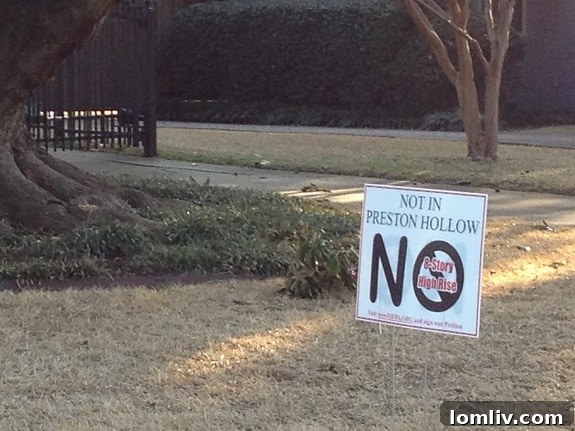
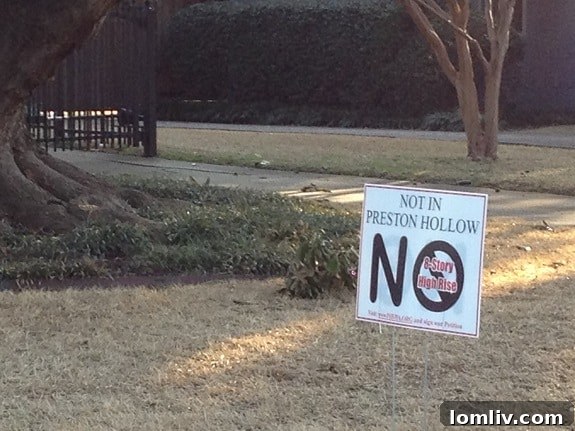
When neighborhood meetings convene in Dallas, or indeed anywhere, it’s almost inevitable that a chorus of “special children” will emerge. These voices often frame necessary urban evolution as the insidious work of an unseen hand – be it the NSA, Big Brother, or some nebulous boogeyman – responsible for orchestrating unwelcome changes. The prevailing sentiment among such groups is a strong aversion to alteration, a belief that any shift from the status quo is inherently detrimental. This perspective, commonly known as NIMBYism (Not In My Backyard), is a powerful force that can stall progress and inhibit the organic growth essential for a thriving city.
Yet, paradoxically, change remains the only constant in life. Cities, like living organisms, must adapt, evolve, and grow to remain vibrant and prosperous. It is precisely this dynamic that makes a recent opinion piece by Robert (Bobby) Abtahi, a respected Dallas attorney and Vice Chairman of the Dallas City Plan Commission, an absolutely essential read. Titled “Why Dallas Needs a Real Discussion About Density,” Abtahi’s insights are not just timely but critical for our city’s future. I’ve known Bobby since he was 15 – he’s truly a standout individual, the kind of person you’d trust with your daughter’s heart, because he earned that trust! His perspective comes from a deep understanding of Dallas’s needs and challenges.
Dallas’s Development Dilemmas: Common Concerns
As I’ve documented stories like the “Behind the Pink Wall” debates, the ongoing evolution of Preston Center, and the exciting new high-rise options emerging from the razing of the Saltillo Apartments on Cole in Oak Lawn, I hear a familiar refrain of NIMBY concerns echoing across our city. These anxieties, while understandable, often overlook the broader benefits of strategic urban development. The most frequently voiced objections typically include:
- “These buildings are too tall, too dense!” A common visual and spatial objection, fearing an overwhelming change to the skyline and neighborhood character.
- “These developments will lower my property value!” A fundamental economic fear, despite evidence often suggesting the contrary in thriving urban centers.
- “These developments will bring in more people and traffic!” A concern about strained infrastructure, congestion, and a perceived decline in quality of life due to increased population.
- “Oh yes: light reflecting, on something!” A specific, sometimes seemingly minor, but often passionately argued aesthetic or comfort concern.
It’s worth noting that these fears persist even as Dallas property values have consistently trended upward since I moved here in 1980, demonstrating a resilient market that often thrives amidst growth and development. The data simply doesn’t support the “lower property values” narrative in a dynamic, growing city like Dallas.
The Case for Quality Density: Insights from Robert Abtahi
Robert Abtahi eloquently counters these pervasive fears, urging Dallas to embrace a more nuanced understanding of urban growth. He observes:
Doomsday traffic scenarios, the threat of lower property values and the destruction of our neighborhoods are all shouted from the rooftops — as if it is any developer’s goal to destroy our neighborhoods. Arguments for increased tax revenue and an infusion of new people are drowned out by the noise of loud knee-jerk reactions.
Perhaps the concept of density is so new to our city that we are ignorant to the fact that not all density is created equal. To get a truly quality development, it should be dense, sustainable, walkable and, most of all, people-friendly. When we get all those factors in the right mix, we end up with the quality communities that people and tax dollars flock to.
Abtahi’s words are a crucial reminder that density, when approached thoughtfully, is not a threat but a pathway to stronger, more vibrant communities. The key lies in “quality development” – projects that are meticulously planned to integrate seamlessly into the urban fabric, fostering sustainability, walkability, and genuine human connection. Such developments attract not only residents but also businesses and investment, leading to a robust tax base that benefits everyone. This thoughtful approach ensures that while our city grows taller and closer-knit, it also grows greener, more accessible, and more livable for all its inhabitants.
Learning from Other Cities: Chicago’s Grid vs. Dallas’s Evolution
Just last week, while discussing urban design at Rockitecture, I shared with Veletta Forsythe Lill my long-held wish for Dallas to possess the linear clarity of my hometown, Chicago. It’s almost impossible to get lost in Chicago; the city’s meticulous grid formation, with Madison Avenue neatly dividing north from south and State Street bisecting east from west, offers an intuitive navigational system. Even on overcast days, the consistent gusts from Lake Michigan provide an unmistakable compass point to the east. Downtown Dallas, by contrast, feels lopsided and angular, a labyrinth of one-way and “no-way” streets that often confound even long-time residents. Veletta wisely pointed out that Chicago’s unique layout was, in part, a consequence of a devastating fire that necessitated a complete urban redesign. Dallas, fortunately, never experienced such a catastrophic event to force a total reset.
However, Robert Abtahi posits that Dallas is now facing its own metaphorical “fire” – the imperative of rezoning. This isn’t a destructive blaze, but rather a transformative force, a rare opportunity to intentionally reshape our urban landscape. This moment isn’t just about reimagining downtown Dallas; it extends to revitalizing crucial neighborhood “depots” like Preston Center and Valley View. Imagine the potential: the substantial tax revenue generated from a thoughtful, integrated project like Luke Crosland’s Highland House could be strategically invested to transform the current “fugly” two-story parking lot squatting in the center of Preston Center – a design appealing primarily to skateboarders and an undeniable ingress/egress disaster. Preston Center, like many of Dallas’s retail hubs, evolved somewhat haphazardly, a corner that grew without the benefit of comprehensive, forward-thinking planning.
Seizing the “Mulligan”: A Second Chance for Dallas
Abtahi’s perspective brilliantly redefines rezoning. He argues that it’s time for residents to shed their apprehension towards those ubiquitous rezoning signs and instead embrace what they truly represent. In golf, a “mulligan” is a rare, informal second chance to replay a stroke without penalty. For Dallas, rezoning is precisely this: a precious opportunity, a second chance for us to collectively decide what we want our city to look and feel like for generations to come. It’s a chance to intentionally design for a future where urban spaces are not just functional but inspiring, where every street corner contributes to a cohesive, vibrant whole.
It’s time for people to stop fearing those rezoning signs and realize what they really are. They’re a chance for a mulligan, an opportunity for us to have a discussion of what we want our city to look and feel like. A chance to have wider sidewalks, new people and new businesses.
Instead of thinking about traffic, think of vibrancy. If that doesn’t work for you, think of tax revenue. Think about the potholes that will be fixed, and the police and firefighters who will be hired with the increased taxes from more dense development.
This “mulligan” allows us to move beyond reactive concerns and proactively envision a Dallas with wider, pedestrian-friendly sidewalks, dynamic new businesses that foster local economies, and an influx of diverse individuals who bring fresh perspectives and energy. Instead of allowing fears of increased traffic to dominate the conversation, we should shift our focus to the immense potential for vibrancy that well-planned density offers. Picture bustling urban centers where people walk, gather, and connect, reducing reliance on cars and fostering a true sense of community.
The Tangible Benefits of Thoughtful Density
If the abstract concept of “vibrancy” doesn’t immediately resonate, consider the undeniable financial advantages. Increased urban density, when developed strategically, translates directly into a more robust tax revenue stream for the city. This isn’t just an abstract number; it has concrete, positive impacts on every Dallas resident. Imagine the transformative power of these increased taxes:
- Improved Infrastructure: Our often-criticized roads could see significant investment, leading to a permanent solution for those persistent potholes that plague our daily commutes. Better infrastructure doesn’t just mean smoother rides; it means more efficient public services and a more attractive city overall.
- Enhanced Public Safety: A stronger tax base means the ability to hire more police officers and firefighters, ensuring faster response times, greater community presence, and a safer environment for everyone. This directly addresses the safety concerns voiced in neighborhood meetings.
- Better Schools and Parks: With greater revenue, the city can invest more in our public education system, providing better resources for our children. It can also fund the creation and maintenance of beautiful parks and green spaces, offering essential recreational opportunities and improving the quality of life.
- Cultural and Recreational Amenities: A thriving, denser city can support a richer array of cultural institutions, entertainment venues, and community programs, making Dallas an even more exciting place to live, work, and visit.
- Economic Competitiveness: Cities that embrace thoughtful density often become magnets for innovation, business, and talent. This strategic growth strengthens Dallas’s position as a major economic powerhouse, creating jobs and opportunities for its diverse population.
The future of Dallas hinges on our collective ability to look beyond immediate, often fear-driven reactions and embrace a vision of smart, sustainable growth. By leveraging the opportunity of rezoning, and by having real, constructive discussions about density, we can transform Dallas into an even more dynamic, efficient, and beautiful city – a place where both people and prosperity can truly flourish. This isn’t just about buildings; it’s about building a better future for our entire community.