Jean Nouvel: A Visionary Architect Shaping Global Skylines with Light, Texture, and Nature
Renowned French architect Jean Nouvel has been a formidable force in the architectural world since the late 1960s, establishing a legacy defined by innovation, contextual sensitivity, and a masterful interplay of light and texture. His international acclaim first soared with the completion of the Arab World Institute in Paris in 1987. This groundbreaking structure captivated the global imagination by integrating the intricate geometries of Arabic architecture with cutting-edge technology. Its exterior features a sophisticated lattice of multi-sized mechanical lenses, inspired by traditional Arabic mashrabiya screens, that ingeniously regulate the amount of natural light entering the building. These dynamic lenses open and close in response to external light levels, demonstrating an early and profound commitment to intelligent design and environmental responsiveness. This ingenious approach showcased Nouvel’s ability to fuse cultural heritage with modern functionality, setting a precedent for his future works.
Nouvel’s design philosophy is deeply rooted in the belief that every building possesses a specific place and time, a principle he rigorously applies across his diverse portfolio. He famously states that he would never design the same building for Doha, Qatar, as he would for New York, New York. Each location demands a unique connection to its local context, history, and modern requirements. This profound respect for locality ensures that his creations are not merely structures but extensions of their environments, resonating with the spirit of their surroundings. Throughout Nouvel’s extensive body of work, a consistent focus on texture and light emerges as a signature element. He masterfully layers these elements to create dramatic and immersive architectural experiences. His visionary contributions to architecture were recognized with the prestigious Pritzker Architecture Prize in 2009, often considered the Nobel Prize of architecture. Today, his firm, Ateliers Jean Nouvel, employs over 140 professionals in Paris, with satellite offices in Rome, Geneva, Madrid, and Barcelona, extending his global reach and influence.
Let’s embark on a journey through some of Jean Nouvel’s most iconic and fascinating projects, starting with his impactful presence in New York City.
53 West 53rd Street: Elevating Luxury and Culture in New York City
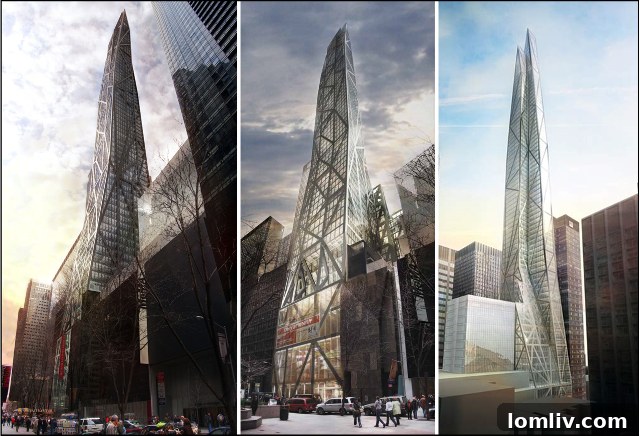
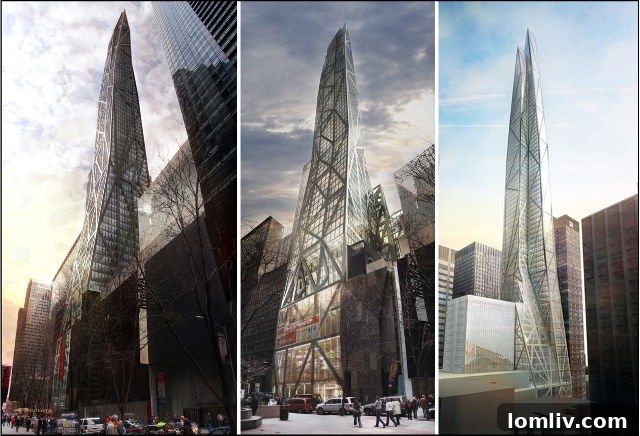
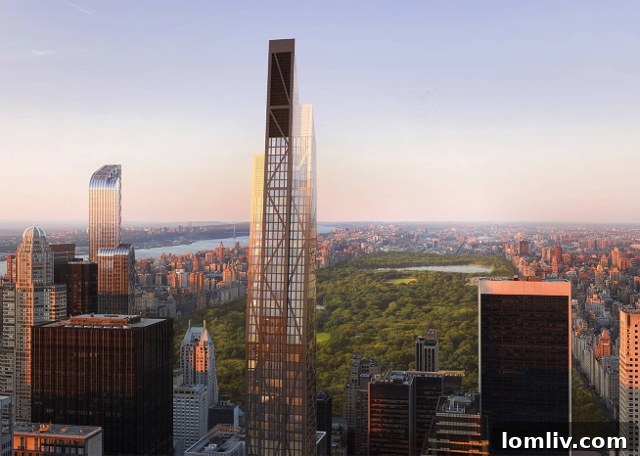
Often referred to as the MoMA Extension or “The MoMA Tower,” 53 West 53rd Street stands as a testament to contemporary urban development and architectural daring. This super-tall, 1,050-foot skyscraper, still under construction, is a prominent feature of New York City’s evolving skyline. It represents a significant trend in Manhattan, particularly south of Central Park, where architects are pushing the boundaries with incredibly slender, sky-grazing buildings designed to maximize breathtaking park views. The challenge lies in their depth, often limited to half the width of a short city block, which necessitates innovative structural solutions to counteract the increased wind speeds and sway associated with extreme height and narrowness. Unlike Chicago’s Sears Tower (now Willis Tower), which relied on bundled tube construction for stability almost 50 years ago, Nouvel’s design for 53 West 53rd ingeniously incorporates visible, interconnected sections to fortify its sleek east-west profile, demonstrating how engineering prowess continues to evolve to meet new architectural demands.
The first four floors of this architectural marvel seamlessly integrate with and expand the campus of the Museum of Modern Art, hence its well-deserved nickname. Above this cultural hub, the tower ascends to accommodate an unnamed luxury hotel, culminating in an exclusive collection of residential condominiums. These residences offer a spectrum of lavish living options, from elegant one-bedroom units on the 24th floor, measuring a spacious 1,619 square feet and priced at approximately $3.6 million, plus monthly assessments, to an opulent full-floor residence on the 62nd floor. This grand offering spans 6,954 square feet, features four bedrooms, and commands a price of $42.5 million. Residents are indulged with an extraordinary array of amenities, including a dedicated chauffeur’s lounge, personalized floral delivery and care, access to a technology consultant, a state-of-the-art golf simulator, a comprehensive wellness center, and a magnificent two-story wine tasting room. Nouvel’s design often integrates diagonal structural beams as an aesthetic feature, a bold move that some argue enhances the building’s distinct character, though the resale market for units without such prominent structural elements in buildings like Chicago’s John Hancock Tower suggests that unobstructed views often fetch higher prices. Nevertheless, 53 West 53rd Street is poised to become a landmark of modern luxury and design in the heart of Manhattan.
100 Eleventh Avenue: A Pixelated Masterpiece in Chelsea, New York City
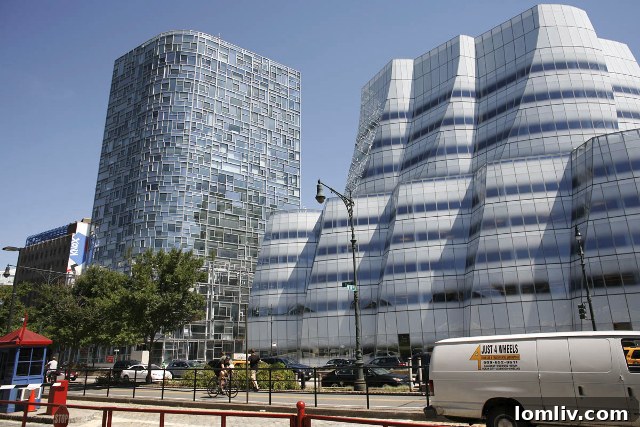
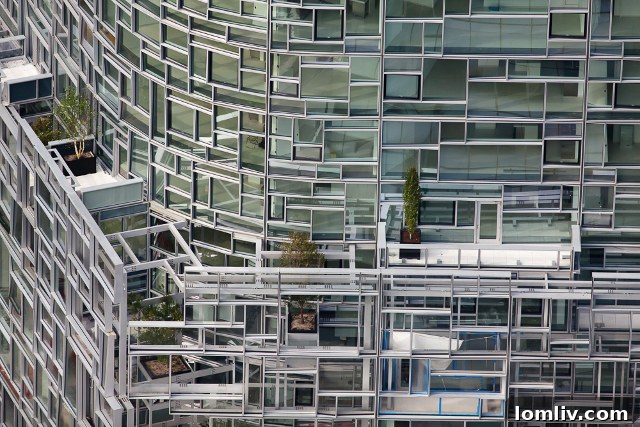
Designing a building adjacent to a Frank Gehry masterpiece is a formidable challenge, yet Jean Nouvel embraced this task with characteristic innovation at 100 Eleventh Avenue in New York’s vibrant Chelsea neighborhood. Situated on the West Side Highway, Nouvel’s design offers a compelling counterpoint to Gehry’s curvilinear, sculptural forms. While Gehry’s IAC Building next door features undulating glass articulation, Nouvel crafted a distinctly pixelated façade for his 23-story condominium tower. This innovative design consists of a modularized façade that artfully mixes 32 different window sizes, each meticulously angled between two and five degrees left, right, up, or down. This seemingly random yet precisely orchestrated arrangement creates a dynamic interplay of light and reflection, giving the building a unique, ever-changing appearance as one moves around it or as the light shifts throughout the day.
Beyond its striking visual appeal, the pixelated and curved edge design serves a crucial functional purpose: it ensures that virtually every unit within 100 Eleventh Avenue is afforded unparalleled views and an abundance of natural light. This thoughtful consideration for occupant experience is a hallmark of Nouvel’s work. The lower floors feature an intriguing “façade within a façade,” creating a 15-foot semi-enclosed interior ‘loggia.’ This unique transitional space is further enhanced by floating planting boxes, where trees appear magically suspended in the air, blurring the lines between indoor and outdoor environments. The intricate close-up of the glazing reveals a highly non-standard curtain wall structure, a testament to Nouvel’s pioneering approach to architectural envelopes. This building is not merely a residence; it is a work of art that constantly engages with its urban context, reflecting its surroundings and offering a fresh perspective on modern living.
One Central Park: Sydney, Australia – Pioneering Vertical Gardens and Sustainable Living
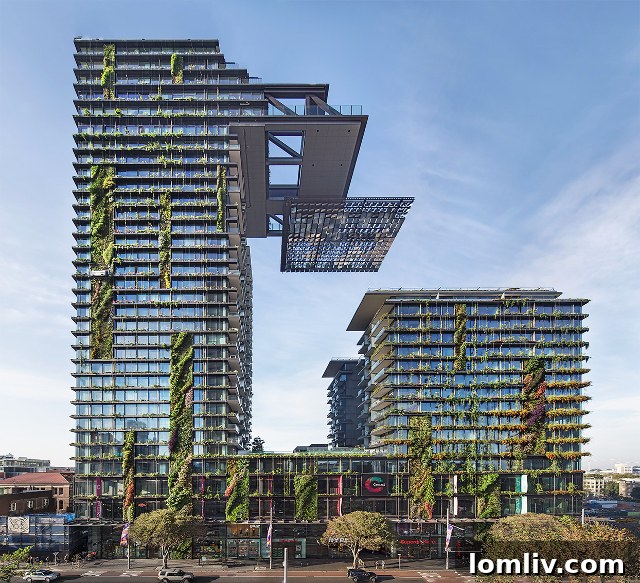
While New York may boast its iconic Central Park, Sydney, Australia, has redefined urban green spaces with Jean Nouvel’s extraordinary One Central Park. Completed in 2013, this revolutionary development comprises a pair of condominium towers housing 623 units, perched above a bustling six-level shopping center. One Central Park is celebrated not just for its striking aesthetic, but for its profound commitment to sustainability, earning it a prestigious five-star rating from the Green Building Council of Australia. While its exterior plantings are visually captivating and contribute significantly to its green image, the true drivers of its environmental excellence are the integrated on-site power generation, advanced HVAC systems, and sophisticated water treatment facilities, showcasing a holistic approach to eco-conscious design.
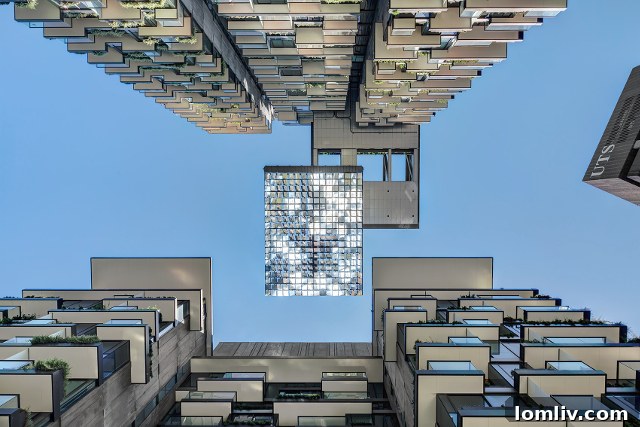
The most immediately striking feature of One Central Park is undoubtedly the colossal cantilever that dramatically projects between the two towers. This architectural marvel is more than just a visual statement; it’s a functional nexus of the building’s sustainable innovations. The upper section of the cantilever houses a breathtaking sky garden, providing residents with an elevated oasis amidst the urban sprawl. Below this verdant space lies the “heliostat,” where true magic unfolds. This ingenious system consists of 220 precisely angled mirrors that automatically track the sun’s movement, capturing natural light and reflecting it downwards. This ensures that the pool, amenity deck, and the shopping center atrium—areas that would otherwise be perpetually shrouded in shade for much of the day—are bathed in constant, invigorating sunlight. This dynamic interplay of technology and nature exemplifies Nouvel’s commitment to creating environments that are both beautiful and functionally brilliant.
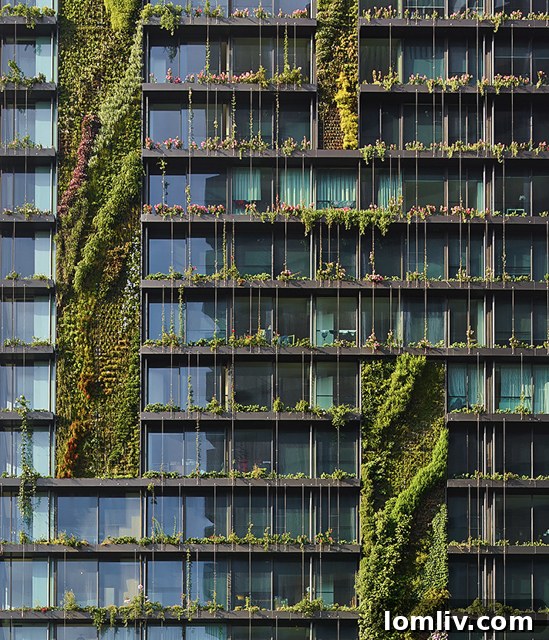
While many contemporary buildings tout their green roofs, One Central Park takes a different, more pervasive approach: its walls are green. The entire perimeter of the building is adorned with window boxes and an intricate network of wires, supporting a lush tapestry of climbing vines and plants. Furthermore, the building’s skin is punctuated by sections of embedded green space, creating pockets of biodiversity that ascend the vertical planes. This ambitious integration of nature is not merely a visual treat for passersby; the windows bordering these larger green spaces offer residents unexpected and captivating peripheral views of the verdant tapestry, fostering a deeper connection to nature within a high-density urban setting. This holistic green design earned One Central Park the prestigious award for “Best Tall Building Worldwide” in 2014, solidifying its status as a global benchmark for sustainable architecture and vertical urban ecosystems. It stands as a powerful demonstration of how architecture can actively contribute to a greener future.
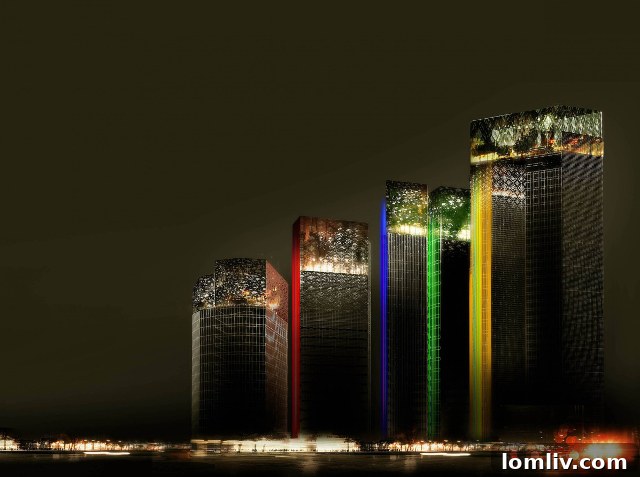
Reimagined City: Lima, Peru (Unbuilt) – A Vision of Urban Oasis
In 2011, as Lima, Peru, embarked on developing a new urban district named San Martin, the call for visionary proposals attracted Jean Nouvel’s keen eye. His unbuilt concept for the “Reimagined City” illustrates his profound ability to blend natural inspiration with cutting-edge design, offering a blueprint for a vibrant district that would be as delightful to inhabit as it would be to behold. The project drew inspiration from Lima’s mist-covered mountains, a distinctive natural feature that Nouvel sought to echo and integrate into the urban fabric. His proposal envisioned a collection of residential and office buildings where the tops of the structures seamlessly dissolve into diaphanous rooftop forests. These ethereal green canopies were conceived to appear lost in a gentle mist of steel and glass, creating a serene and almost otherworldly aesthetic that connects the man-made with the natural environment.
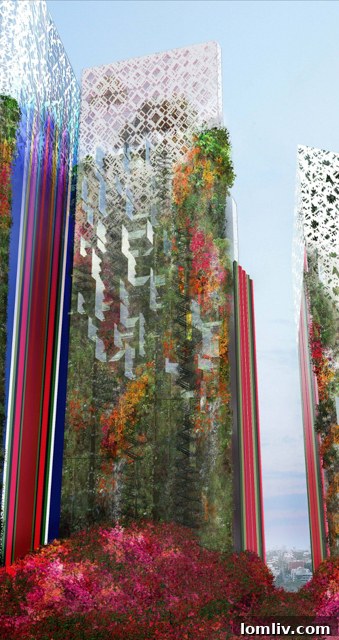
From one perspective, the integrated forest appears to completely encapsulate the building, allowing nature to reclaim and define the structure. This organic integration begins with a seemingly wild forest growing from the base, extending upwards to the building’s summit, where the exterior greenery subtly seeps inwards, creating the illusion of a forest growing within a transparent cage. This dynamic interaction between architecture and flora was designed to offer residents an immersive experience, fostering a constant connection to nature despite being in a dense urban setting.
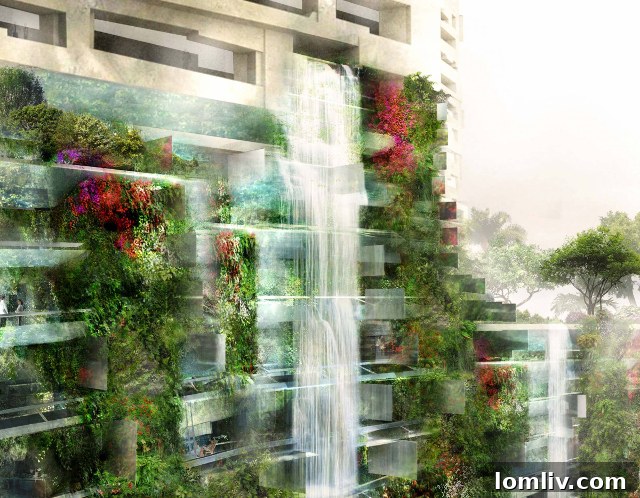
The lower floors of the “Reimagined City” were designed to offer their own unique connection to the natural world. Here, Nouvel envisioned a series of vegetation-filled walls and gloriously unexpected waterfalls, transforming mundane urban spaces into serene oases. Imagine the sensory experience of living behind a waterfall – the tranquil sound, the cool mist, and the constant visual delight of water cascading before your eyes. This innovative design concept aimed to create an environment so captivating and enchanting that residents might never want to leave their homes, underscoring Nouvel’s dedication to crafting spaces that evoke wonder and deepen human connection with nature. Though unbuilt, this project stands as a powerful illustration of Nouvel’s visionary capacity to transform urban landscapes into living, breathing ecosystems.
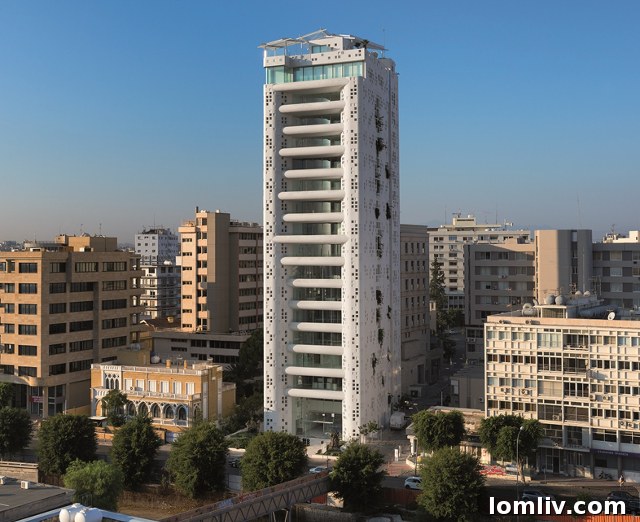
Tour 25 – White Walls: Nicosia, Cyprus – Blending Urbanity with Wild Greenery
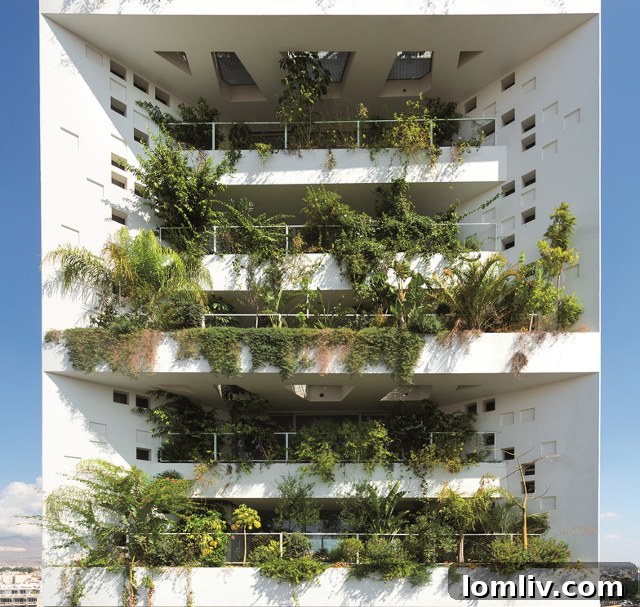
Awarded the prestigious title of “Best Tall Building in Europe,” Tour 25, also known as White Walls, in Nicosia, Cyprus, offers a nuanced yet equally compelling example of Jean Nouvel’s signature “green-piercing, façade-in-façade” design approach. This 17-story residential building masterfully balances urban sleekness with an exuberant embrace of nature. From the front, Tour 25 presents a seemingly conventional modern façade, blending harmoniously with its urban surroundings. However, as one moves to the sides and edges of the structure, the architectural language dramatically shifts. Here, one discovers pixelated cutouts and recesses, from which an uninhibited riot of greenery grows, seemingly bursting forth from within the building’s very core. This creates a fascinating visual tension between the ordered urban front and the wild, organic sides.
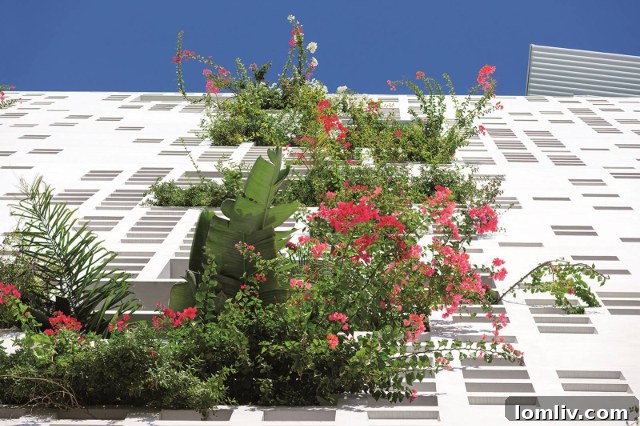
Gazing up from the ground, the sides of Tour 25 truly explode with verdant life. This deliberate design choice evokes a sense of nature forcefully reclaiming the urban environment, a concept that might remind one of speculative documentaries like Life After People, which depicted how quickly the natural world would reassert itself after humanity’s disappearance. Yet, the building’s relatively calm and understated front façade holds another profound secret. The rear of Tour 25 unveils an extraordinary feature: individual, expansive parks for each residential unit. These are far from typical, modest balconies with a struggling basil plant; instead, they are full-scale, wild kingdoms, offering residents genuine private gardens in the sky. Furthermore, the roof features strategically placed open skylights, designed not just to let in light but also to capture rainwater. This collected water then percolates downwards, nourishing the extensive network of plants throughout the entire building, completing a sophisticated and self-sustaining ecosystem. Tour 25 stands as a bold declaration that urban living can be deeply intertwined with lush, thriving nature, offering a groundbreaking model for future residential design.
Landmark: Beirut, Lebanon (Unbuilt) – A Sculptural Facade with Dynamic Living Spaces
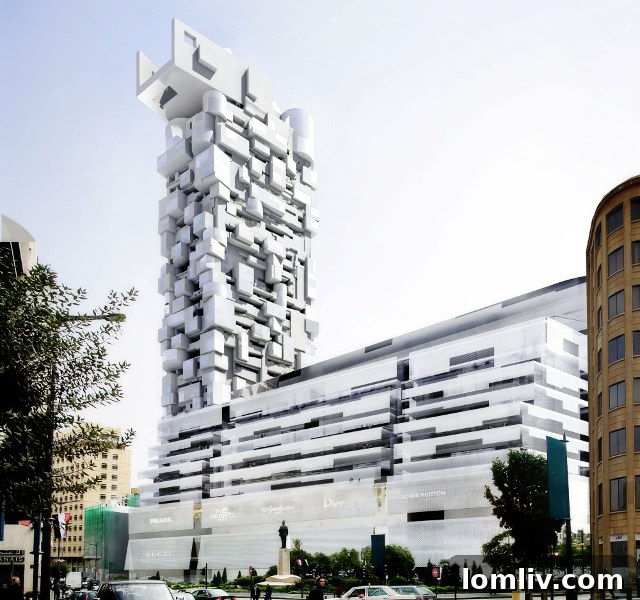
Another captivating unbuilt project by Jean Nouvel, the Landmark in Beirut, Lebanon, shares a similar playful and dynamic façade approach seen in his 100 Eleventh Avenue design in New York. This stunning proposal represents another brilliant exploration of “windows gone wild,” transforming what might otherwise be a conventional high-rise into a vibrant, sculptural urban statement. The design envisioned lower floors dedicated to bustling offices and a contemporary shopping mall, creating a vibrant commercial base, while the towering upper section was dedicated entirely to residential units. The heavily articulated exterior is undeniably striking for observers, creating a visually rich and engaging structure that constantly shifts with light and perspective.
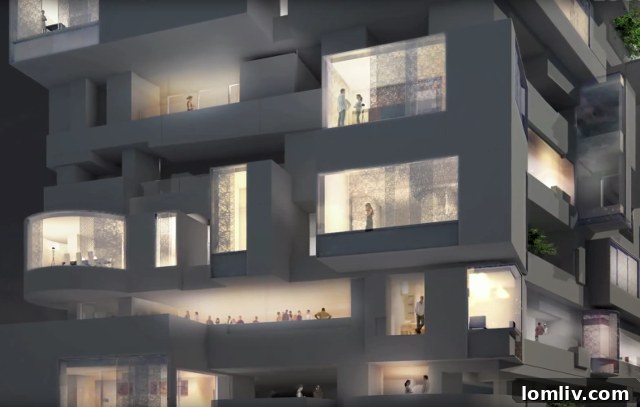
However, the beauty of this articulation extends far beyond mere aesthetics. This deliberate design choice also produced unique and highly varied floorplans, along with a diverse array of outdoor spaces for residents. Some units would have enjoyed flat, expansive balconies, others charmingly rounded nooks, and still others recessed balcony spaces, each offering a distinct living experience and connection to the city. At night, the Landmark was designed to transform into an urban spectacle. The switching on and off of individual lights within the varied window grid would create a mesmerizing, ever-changing vertical sculpture. This dynamic light show would be reminiscent of a slow-moving, vertically oriented 1980s Saturday Night Fever dancefloor, imbuing the Beirut skyline with a sense of energy and artistic expression. The Landmark project, though not realized, eloquently demonstrates Nouvel’s commitment to creating buildings that are not just functional but also profoundly experiential and culturally resonant.
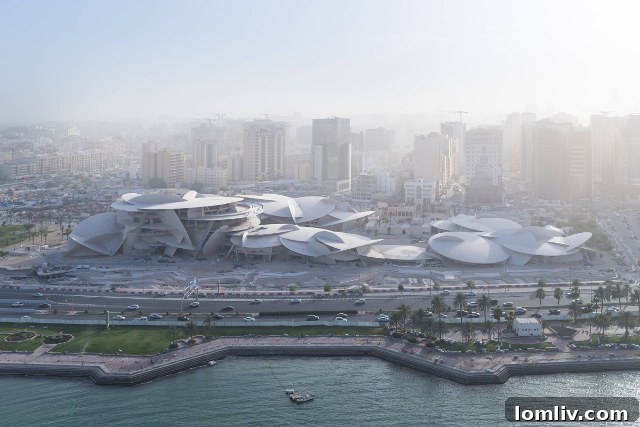
National Museum of Qatar: Doha (Under Construction) – A Desert Rose Blooms in Architecture
The National Museum of Qatar in Doha is another award-winning project by Jean Nouvel, a masterpiece that beautifully marries cutting-edge modernity with profound Arabic architectural traditions. Its striking design is immediately recognizable for its complex geometry, composed of intersecting, disc-like forms that evoke the natural crystalline formations known as the “desert rose.” This architectural concept is not merely a stylistic choice but a deep reference to the Qatari landscape and culture. Beyond its futuristic facade, the museum also subtly integrates elements of traditional architecture, particularly evident in the low section to the right of the center where a historic palace, Sheikh Abdullah bin Jassim Al-Thani’s original palace, is seamlessly joined with the modern mass. This fusion symbolizes the dialogue between Qatar’s rich past and its ambitious future, a theme central to the museum’s mission.
Nouvel’s design for the National Museum of Qatar exemplifies his philosophy that buildings must be deeply connected to their specific place and time. The “desert rose” concept is a direct response to the Qatari environment, providing both an iconic visual identity and functional benefits, such as natural shading and ventilation in the desert climate. The museum is poised to become a cultural beacon, narrating the story of Qatar from its geological formation to its contemporary life, all within a structure that is itself a profound cultural statement. This project highlights Nouvel’s enduring ability to create structures that are not only visually stunning but also deeply resonant with their cultural and environmental contexts, echoing the intelligent design of his early work like the Arab World Institute. It solidifies his legacy as an architect who consistently seeks to create dialogue between past and future, local and global, natural and man-made.
Jean Nouvel has been designing buildings that challenge conventions and inspire awe for decades, and based on this small review of his remarkable work, one can only hope for many more decades of his visionary contributions. His unparalleled use of texture, his masterful manipulation of light, and his innovative integration of greenery consistently create buildings that people not only desire to live within but also to live next to, simply to admire their captivating beauty and ingenuity every day. His projects demonstrate a deep understanding of how architecture can enrich human experience and elevate urban environments, leaving an indelible mark on global skylines and cultural landscapes.

Remember: My passion lies in exploring high-rises, homeowners’ associations (HOAs), and urban renovation projects. However, I also hold a deep appreciation for both modern and historical architecture, particularly when balanced against the imperative of the YIMBY (Yes In My Backyard) movement, which advocates for more housing. My writing has been consistently recognized by the National Association of Real Estate Editors, earning me three Bronze awards in 2016, 2017, and 2018, as well as two Silver awards in 2016 and 2017. If you have a compelling story to share, an interesting architectural project to highlight, or even a marriage proposal to make (I’m good for advice!), feel free to reach out to me via email at [email protected]. You’re welcome to look for me on Facebook and Twitter, though you might find me elusive in the digital sphere!