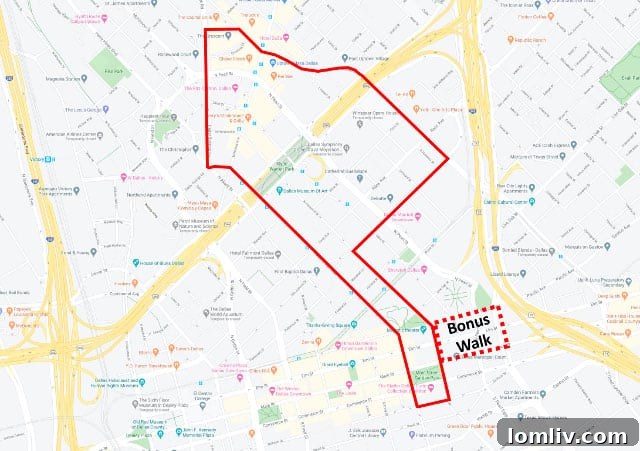
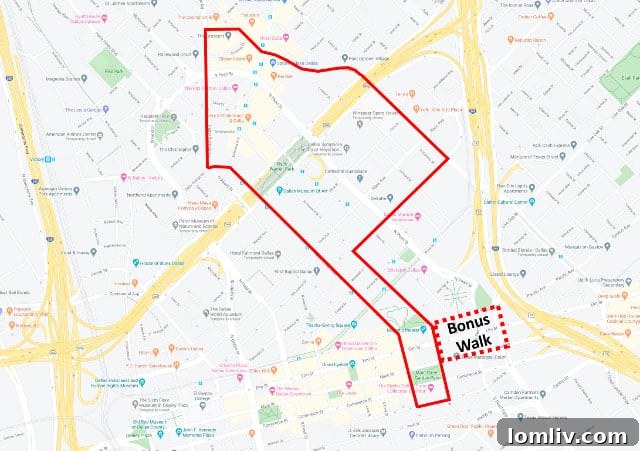
The urban landscape of any major city tells a story, a narrative etched in stone, glass, and unfortunately, concrete. Our previous “Walk Dallas” column explored the vibrant energy of downtown, eliciting enthusiastic responses from those who experienced the city anew. This week, we embark on a different journey – a similar three-mile trek through downtown Dallas, but with a sharpened focus on the often-overlooked, yet pervasive, architectural blight: the ubiquitous parking garage. This expedition serves not just as a physical exercise but as a critical examination of urban planning decisions that have shaped, and in many ways, hindered the pedestrian experience and aesthetic appeal of our beloved city.
Our starting point, as before, is the distinguished Crescent Court. This location is strategically chosen to allow for an extended walk, supplementing the mileage that might be missed by commencing directly downtown. For those aiming to match the full 3.5 miles of the popular Katy Trail, this meticulously planned route includes a convenient half-mile bonus, ensuring a comprehensive exploration of Dallas’s downtown core and its challenges. Join us as we uncover the hidden realities of Dallas’s urban fabric, one block and one parking structure at a time.
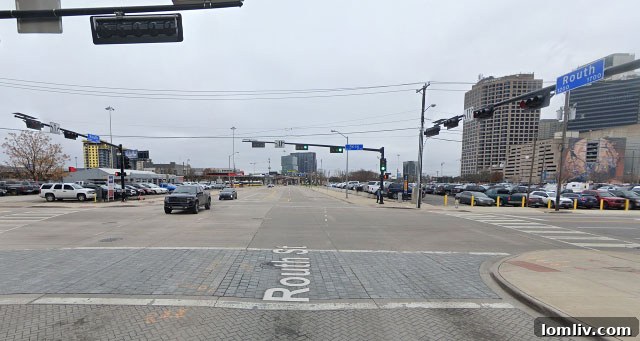
Ross Avenue and Routh Street: The Canvas of Future Development
Our journey commences with a familiar path, guiding us through the Maple-Routh Connection directly into the heart of downtown Dallas. As we once again traverse past the acclaimed Arts District, the intersection of Ross Avenue and Routh Street unfolds before us. Like many expansive tracts within the downtown area, this intersection bears the unmistakable marks of transient urban planning: two of its four corners are occupied by sprawling surface parking lots. While it may seem counterintuitive, in the context of urban evolution, there’s a certain fleeting optimism in their presence.
Surface parking lots often represent more than just temporary vehicle storage; they are, in essence, a blank canvas for “future development.” Property owners might generate just enough revenue to cover taxes and operational costs, patiently awaiting the opportune moment for the city’s infrastructure and market demand to catch up. In this particular locale, the anticipation is palpable, linked directly to the ongoing Arts District extension towards Ross Avenue. Despite current official reticence regarding definitive plans during authorization hearings, the buzz of imminent change is undeniable. To our left, the distinct yellow glimmer of a new high-rise project rises majestically east of the freeway, signaling vibrant growth in the Deep Ellum-adjacent area.
These temporary surface lots are increasingly enveloped by a wave of new construction, suggesting their days are numbered. It is an enduring hope that at some point, these spaces will undergo significant redevelopment. Perhaps, after more than 35 years, Dallas will finally witness the emergence of a truly skyline-altering “tallest building,” transcending the understated elegance of structures like One Arts Plaza. The transformation of these spaces from mere parking facilities to iconic architectural statements is not just a dream but a necessary step for Dallas to fully realize its potential as a dynamic, modern metropolis.
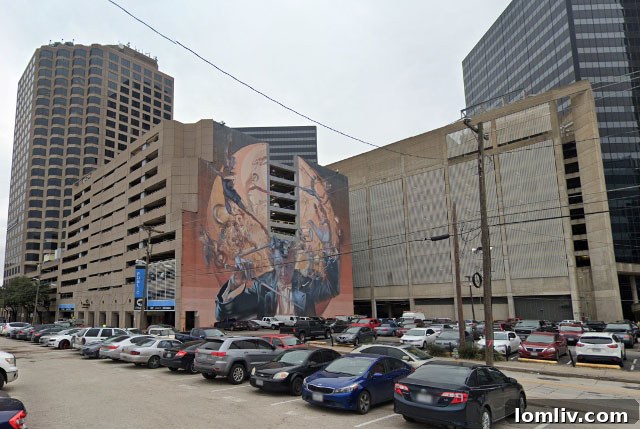
San Jacinto and Leonard: Unmasking Architectural Deception
Continuing our urban exploration, we proceed to San Jacinto Street, making a right turn onto Olive. Here, the familiar black glass facade of the Plaza of the Americas complex, a landmark from our previous walk, comes into view. However, our focus shifts slightly, pausing at Leonard Street. While the Plaza of the Americas projects an image of meticulous order and sophistication, this carefully curated exterior conceals a less glamorous truth: a formidable and rather unsightly parking garage dominating its rear elevation.
It’s a common practice in Dallas, and indeed in many cities, to adorn these massive concrete structures with murals, often presented as public art. These artistic endeavors, or sometimes commercial advertisements, serve a dual purpose: they attempt to soften the harsh visual impact of the garage while also generating revenue. While an artistic mural might momentarily distract the eye, it often feels like a superficial application, a decorative veneer over an inherent architectural challenge. As one might put it, it’s akin to applying makeup to an architectural corpse – an attempt to beautify something fundamentally flawed in its urban integration.
Historically, when the Plaza of the Americas was conceived and constructed, the economic landscape favored above-ground parking. Land was considerably cheaper than the complex engineering and excavation required for subterranean garages. Furthermore, the prevailing downtown office park ethos of the 1980s dictated that urban aesthetics, particularly for structures primarily serving commuters, were not a top priority. The city essentially emptied out after the traditional five o’clock workday, leaving little incentive for designers to consider the pedestrian experience or the overall street-level vibrancy. This particular approach to urban development has unfortunately become a recurring motif throughout downtown Dallas, creating an enduring legacy that proves incredibly difficult, if not impossible, to reverse. The challenge lies in retrofitting these monolithic structures into a more pedestrian-friendly and visually appealing urban fabric.
San Jacinto and Pearl: The Pedestrian’s Perilous Trifecta
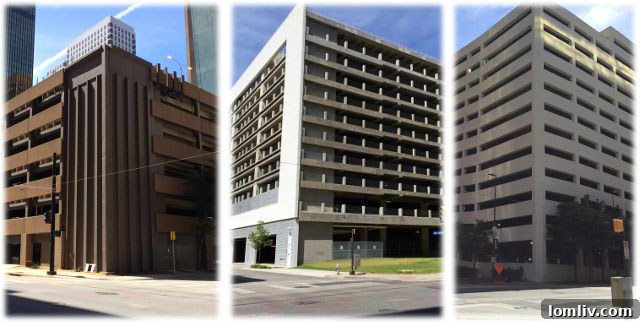
Our journey persists towards Pearl Street, where a startling urban phenomenon awaits. Upon reaching this intersection, one is compelled to stop and observe, with a mixture of bewilderment and dismay, the convergence of three of the four corners dominated by imposing parking garages. Strikingly, these structures offer virtually no pedestrian-friendly engagement at ground level, creating an exceptionally hostile environment for anyone navigating the area on foot. While I openly confess my antipathy towards above-ground parking, the concentration of these colossal structures at busy intersections represents a particularly egregious failure in urban design. Intersections, by their very nature, are focal points for pedestrian traffic, yet here, walkers are made to feel like unwelcome intruders, navigating a concrete labyrinth designed purely for vehicles.
Among this trio of garages, a glimmer of what might be considered a “saving grace” perhaps resides in the central structure. It is a relatively recent addition, having emerged from what was, for decades, another sprawling surface parking lot. This particular site, ideally, should have been developed into a high-rise building complete with integrated underground parking, maximizing land use and enhancing urban density. Adjacent to it, a green patch suggests a buildable empty lot, hinting at future potential rather than serving as an intended park. One can only hope, and indeed assume, that the stark, unadorned ugliness of its side walls anticipates future encapsulation by another building. This expectation, however, fails to excuse the San Jacinto-facing elevation, which merely frames the visible rows of parked cars beyond – a questionable design choice that perhaps echoes the controversial aesthetic of One Arts Plaza. Moreover, while this garage does incorporate restaurants along its Harwood facade, its San Jacinto side starkly mirrors the older, uninviting lot directly opposite.
The garage positioned to the right of this trio stands as a stark, light-colored battlement of concrete, its sheer walls punctuated only by dozens of narrow, uninviting slits, each revealing another level of parked vehicles. This architectural monotony underscores a deeper issue in urban planning, where functionality often trumps aesthetics and the human experience, leaving pedestrians to navigate a landscape that feels alienating and unwelcoming. The cumulative effect of these structures is a resounding argument for more thoughtful, integrated urban design that prioritizes people over mere parking capacity.
Harwood and Wenchell: A Continuous Chain of Concrete
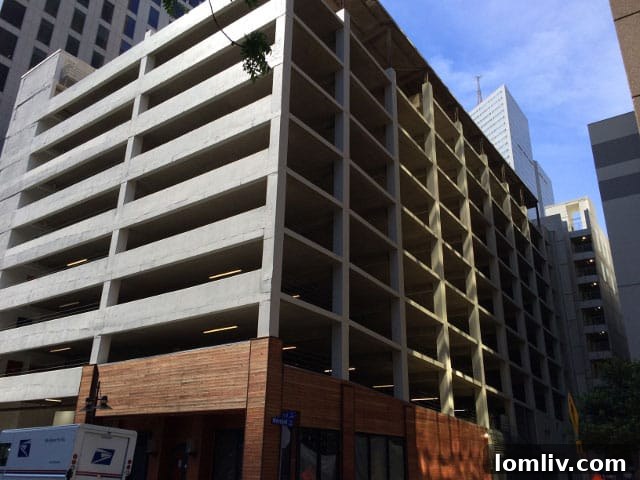
Continuing our observation along San Jacinto Street for another block, we arrive at the intersection of Harwood. On the southeast corner, a formidable, dark ten-story parking structure looms, an extension of the same garage we encountered earlier at Pearl Street, forming part of that imposing trio. At least at this particular end of the block, some concessions to urban vitality have been made; restaurant spaces are carved into the ground floor, offering convenient fast-food options to the bustling lunch crowd. This modest integration of commercial activity provides a momentary respite from the relentless concrete, hinting at what could be a more thoughtful design approach.
Turning left onto Harwood, our path leads us to the diminutive Wenchell Lane. To our right, the massive parking lot from earlier continues its dominance. Here, a specific design detail catches the eye: the presence of steel cables (as depicted below) serving as barriers to prevent vehicles from plunging off the edges of the multi-story structure. While such cables might evoke a sense of modern industrial chic in a residential setting, as a railing system in a parking garage, they exemplify the height of cost-cutting and aesthetic neglect, contributing significantly to the structure’s overall ungainliness.
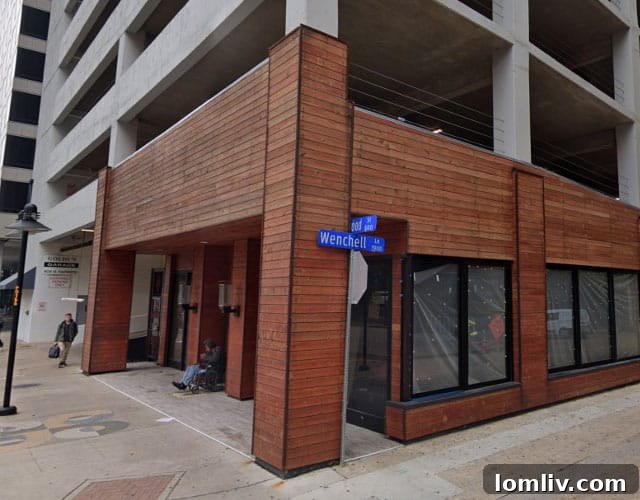
The shiplap corner, awkwardly affixed by a restaurant tenant, creates a splash of incongruous ambiance, a desperate attempt to inject warmth into an otherwise cold urban setting. So poorly integrated is this corner column that it obscures the street sign, humorously leading one to wonder if we are, in fact, on “ood” Street. Directly across “ood” street, a rather expansive surface lot sprawls. This vacant space poses a critical question for Dallas’s urban future: will it ultimately be developed into a more architecturally significant building, or will it succumb to the pressure of parking demand and become yet another colossal garage, mirroring its unsightly neighbor across the street? The latter scenario would lead to an even more disheartening outcome, resulting in three additional adjacent parking garages within the span of a single block.
Much like seasoned campers instinctively avoid the perilous “leaves of three,” Dallas must critically assess its approach to urban development. Can the city not strive to avoid the proliferation of adjoining, aesthetically displeasing garages of three or more, which only serve to further degrade the pedestrian environment and overall urban appeal? The challenge is to break this cycle of repetitive, uninspired concrete structures and embrace designs that prioritize human scale, green space, and architectural integrity.
Harwood and Live Oak: The Unyielding Concrete Wall
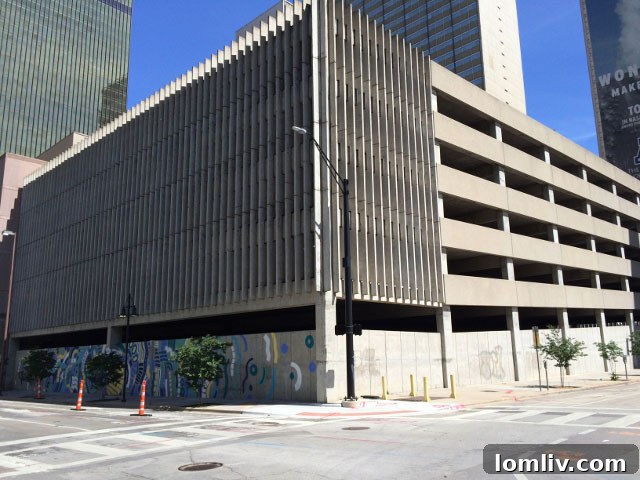
In our previous “Walk Dallas” column, I captured several photographs from the vantage point of the Sheraton parking lot. Now, we confront this behemoth directly at the intersection of Live Oak and Harwood. This particular structure, arguably one of downtown’s less aesthetically pleasing edifices, stands in stark contrast to its immediate neighbor: Pacific Plaza, a vibrant urban park. The ground floor of this parking garage presents an unyielding, monolithic wall of solid concrete, a truly impenetrable barrier to pedestrian engagement. Its sheer blankness is so overwhelming that even the most enthusiastic muralists, or perhaps more accurately, graffiti artists, seem to have abandoned the monumental task of attempting to cover its vast, uninviting expanse. This design choice represents a significant missed opportunity, especially given its proximity to a public green space, to create a more integrated and visually appealing streetscape. Instead, it acts as a concrete curtain, effectively severing the connection between the urban park and the street, diminishing the overall pedestrian experience in this vital downtown corridor.
Harwood and Elm: The Gamble of Urban Decay
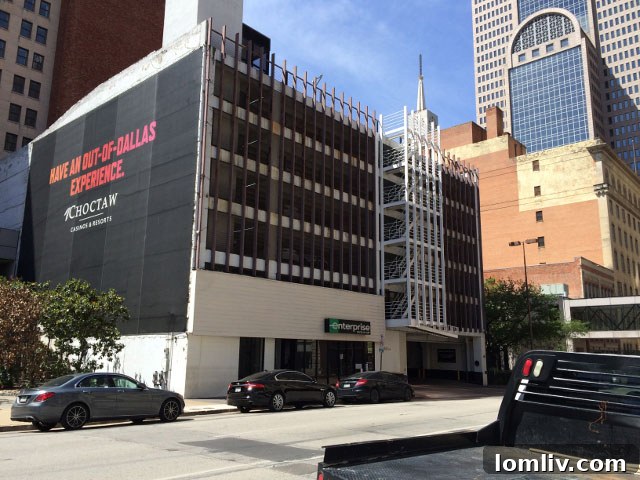
Just across from the expansive sea of parking structures we’ve been documenting, another architectural curiosity presents itself, directly opposite the historic Majestic Theater. This particular parking garage bears a casino advertisement emblazoned on its side, a detail I find remarkably fitting. Given the visibly deteriorating state of the garage’s facade, one might reasonably consider it a gamble whether rust will make an unwelcome appearance in your ice tea should you pause for refreshment nearby. The peeling paint, corroding metal, and general disrepair of this structure not only detract from the aesthetic appeal of the immediate vicinity but also cast an unfortunate shadow over the adjacent, beautifully preserved Majestic Theater. It serves as a stark reminder of the urgent need for comprehensive urban renewal and investment in maintaining the quality of all structures, especially those in such prominent downtown locations. The contrast between the grandeur of the theater and the decay of the parking garage highlights a critical imbalance in urban development and preservation efforts, begging for a more integrated approach to maintaining the vitality and beauty of Dallas’s historic and commercial core.
Bonus Walk: Harwood, Pacific, Main and I-75 – A Sea of Unfulfilled Potential
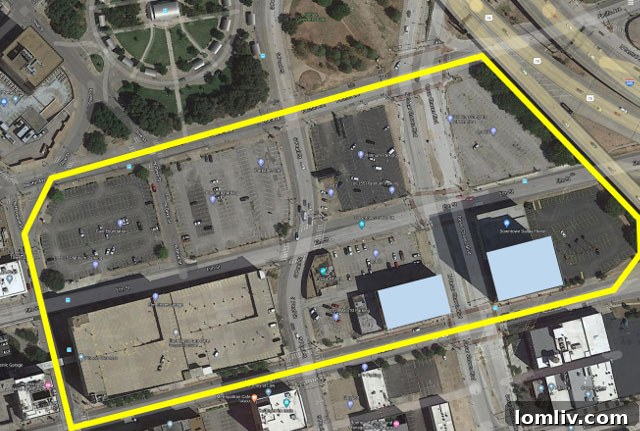
Recall that our initial walk was planned for three miles, designed to emulate the popular 3.5-mile Katy Trail. For those seeking to complete the full Katy replacement distance, we now embark on a vital half-mile bonus walk, circling a truly immense “sea of parking” that dominates this particular quadrant of downtown Dallas. To the lower left of our expanded map, a towering ten-story parking structure stands prominently at Harwood and Elm Street, mirroring another at Elm and Cesar Chavez Boulevard. These monolithic structures are juxtaposed with two relatively newer, striking blue-squared office buildings, hinting at more thoughtful architectural trends emerging amidst the older, less inspired designs.
This entire area, a vast expanse of surface lots and towering concrete structures, is ripe for significant redevelopment. Optimism suggests that at some future point, these spaces will be transformed into something more reflective of modern urban design principles. The potential for revitalization is clearly visible when we consider the surrounding amenities: across Pacific Street, to the upper right, lies the serene John W. Carpenter Park; in the upper middle, the vital DART transfer station, a hub for public transit; and just out of shot to the upper left, the James W. Aston Park, which seamlessly connects to the aforementioned Pacific Plaza. These green spaces and public transportation hubs underscore the immense, untapped potential of this area to evolve into a vibrant, pedestrian-friendly urban environment.
However, in the interim, before any truly transformative and hopefully wonderful structures are built, we are left to contend with an enormous eyesore of sprawling surface lots and unapologetically utilitarian parking towers. It’s a stark reminder of the challenges that lie ahead in balancing the city’s need for vehicle accommodation with its aspirations for beautiful, livable urban spaces. This bonus walk serves as a powerful testament to the necessity of forward-thinking urban planning that prioritizes human experience and aesthetic value over mere functionality.
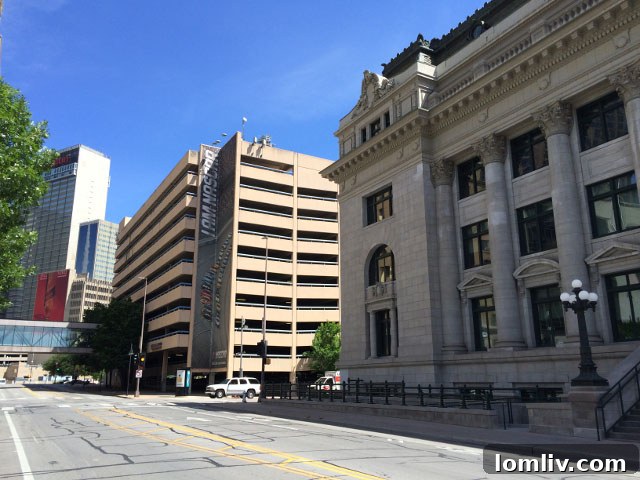
Our extended walk brings us to a compelling visual juxtaposition at Main and Harwood, where a prominent parking lot firmly anchors what could be dubbed the “parking district” described earlier. Here, the utilitarian starkness of the garage stands in sharp, almost painful, contrast to the majestic Beaux-Arts-styled Municipal Building, erected in 1914. This architectural clash is profoundly symbolic of Dallas’s ongoing struggle to integrate its rich historical heritage with the demands of modern urban development. What makes this scene even more poignant, even somewhat depressing, is that the grand Municipal Building directly faces the charming Main Street Garden Park, which in turn fronts the equally emblematic Statler Hilton. This arrangement highlights a critical misstep in urban planning: allowing such a dominant, uninspired parking structure to occupy a pivotal location that detracts from a significant civic building and important public green spaces. It disrupts the visual harmony and diminishes the pedestrian appeal of what should be one of Dallas’s most distinguished urban cores, emphasizing the urgent need for designs that respect and enhance the city’s historical and cultural assets.
Jackson and St. Paul Streets: The Superblock’s Shadow
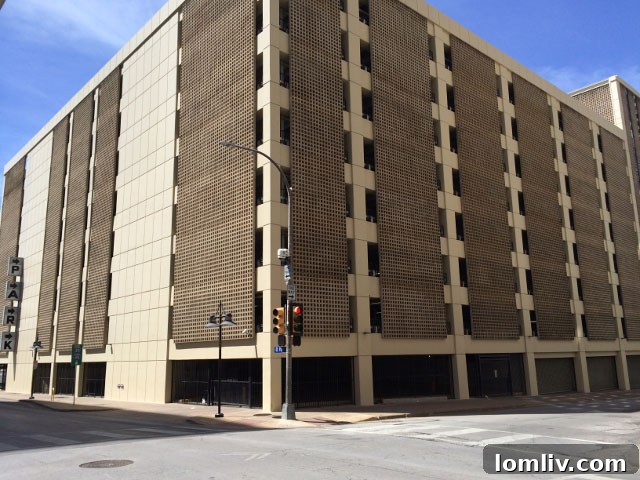
From Harwood, we make a right turn onto Jackson Street, proceeding for one block until we reach St. Paul. Here, we encounter another example that underscores our thesis: not all aesthetically challenging parking garages are products of recent construction. This particular structure serves as a key anchor for another expansive “super-block,” an area brimming with untapped development potential. Bounded by St. Paul, Young, Ervay, and Jackson Streets, this double-block parcel is almost entirely dominated by sprawling surface parking. It represents a significant landholding in a prime downtown location, yet its current use dramatically underutilizes its inherent value and potential contribution to the urban fabric.
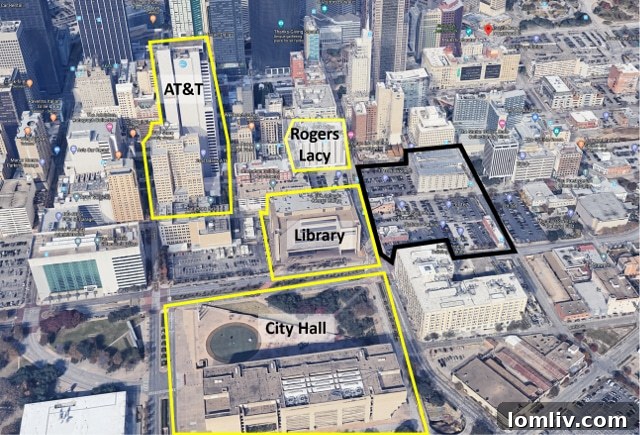
On one side, this super-block faces the Dallas Central Library, which is conveniently situated directly across the street from City Hall, placing it at the very epicenter of civic activity. It is also just a block away from the extensive AT&T complex of buildings, signifying its proximity to major corporate presence. Furthermore, a third corner, at Jackson and Ervay, sits kitty-corner to yet another spectacularly unattractive parking garage positioned behind the prestigious Neiman Marcus department store. This particular garage holds a poignant historical footnote, as it occupies the site where the envisioned Rogers Lacy Hotel, a design by the legendary architect Frank Lloyd Wright, was tragically never realized. The current reality of this site, a mundane parking structure instead of a masterpiece of modern architecture, serves as a powerful symbol of lost opportunities and the lasting impact of planning decisions that prioritized convenience over visionary design. This entire super-block, with its strategic location and historical context, represents a monumental opportunity for Dallas to rethink its approach to urban development, moving beyond temporary parking solutions towards integrated, aesthetically pleasing, and functionally diverse urban spaces that truly enrich the city’s core.
St. Paul and Bryan Streets: A Glimmer of Hope and Quirky Observations
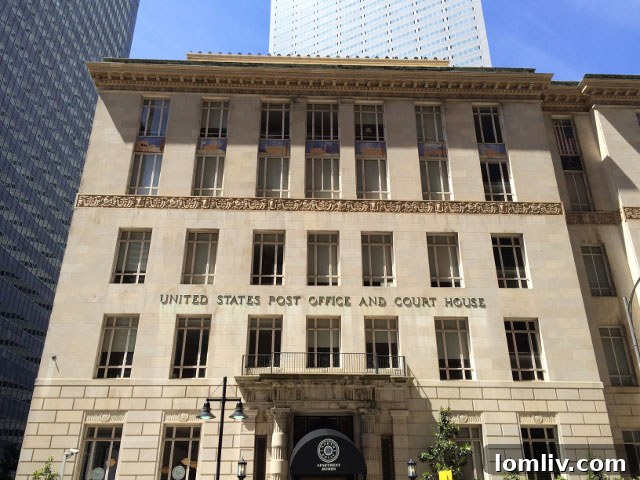
Turning north on St. Paul, our journey culminates with a welcome reprieve, a sight to genuinely admire amidst the concrete monotony: the magnificent old Post Office and Court House, now thoughtfully repurposed into elegant apartments. Opened in 1930, this architectural gem replaced the 1889 Post Office that once stood on the very site of the Mercantile National Bank, a highlight from our previous downtown exploration. Thankfully, a somewhat audacious 1984 plan to construct a 34-story expansion atop this historic building never came to fruition, preserving its original grandeur and integrity.
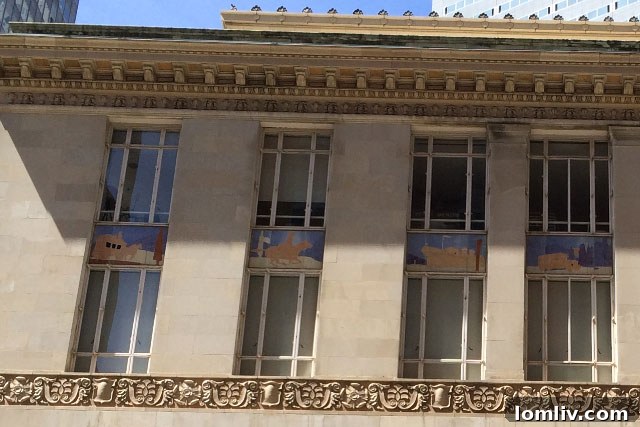
Beyond its overall handsome presence, a closer look at the building’s upper facade reveals captivating terra cotta inserts. These intricate panels depict various historical methods of mail transport, from horseback and stagecoach to the advent of the airplane – a fascinating visual timeline of communication progress. These unique decorative elements were added following criticism from contemporary observers who, perhaps lacking foresight, deemed the building “too boring.” Today, they stand as a testament to thoughtful design and attention to historical detail, certainly worth a closer inspection. For those enamored with this architectural landmark and harboring landlord aspirations, it’s noteworthy that the building was recently listed for sale, presenting a unique opportunity.
Adjacent to the Post Office on St. Paul stands the imposing edifice of the First Baptist Church. As a keen observer of urban aesthetics, one might be forgiven for perceiving its central fountain as strikingly resembling a cross dramatically jammed into an exploding boil – an intriguing, if somewhat provocative, visual metaphor that raises questions about architecture’s subconscious mimicry of ideology. Our return route to the Crescent takes us past numerous additional parking garages along St. Paul, until we reach Akard Street. A sharp right turn onto Cedar Springs, followed by an ascent towards the Crescent, offers a final observation. We pass the rear of the McKinney and Olive complex, and it’s important to note that while it too features an unavoidable above-ground parking garage, its design at least allocates the ground floor to active businesses and inviting green space. This thoughtful integration helps attract pedestrians, demonstrating a more balanced approach to urban development that prioritizes human interaction and aesthetic appeal, even when confronted with the necessity of parking infrastructure.
This walking tour serves as a compelling argument for Dallas to implement more rigorous urban planning regulations within its zoning codes. Specifically, I urge the city to eliminate enormous above-ground parking lots from occupying prime intersection real estate, and certainly to prohibit the proliferation of multiple garages at a single intersection. The only acceptable exception to such strictures would be the construction of garages that are fully masked, seamlessly integrating into the streetscape, and crucially, incorporating active street-level uses that foster pedestrian engagement and vibrancy. While the likelihood of such progressive changes being adopted might seem remote, the visual and experiential evidence of this walk compels me to advocate for them nonetheless. Dallas deserves a downtown that prioritizes people, beauty, and sustainable urban living over an endless, uninspiring sea of concrete.
Will Ugly Parking Garages Make a Comeback? Debunking Post-Pandemic Urban Myths
The role and prevalence of parking lots and garages have undeniably garnered significant media attention amidst the COVID-19 pandemic. Some urban commentators speculated that fears surrounding public transportation would lead to a substantial increase in private vehicle usage, making parking structures a lifeline for commuters opting to ditch mass transit. Conversely, others embraced the temporary vacancy of these lockdown-affected spaces, repurposing them into innovative community assets such as vital Wi-Fi hotspots or crucial COVID testing centers. While these temporary adaptations demonstrated a remarkable degree of resourcefulness and offered valuable utility during an unprecedented crisis, it is imperative to resist the notion that they signify a long-term need for more of these structures.
The challenges highlighted throughout our “Walk Dallas” series – the aesthetic degradation, the disruption of pedestrian flow, the missed opportunities for vibrant urban spaces – remain pressing. The transient usefulness observed during the pandemic should not overshadow the fundamental architectural and urban planning issues that ugly parking garages represent. As Dallas looks towards a post-pandemic future, the focus must remain on creating a more human-centric, aesthetically pleasing, and sustainable urban environment. This means actively discouraging the construction of new, uninspired parking structures and seeking innovative solutions that integrate transportation needs without compromising the city’s visual appeal and liveability. We do not need more ugly parking garages; we need smarter, more beautiful, and ultimately, fewer of them.