Unlocking Solutions: Navigating the Complex Landscape of Homelessness in Dallas
Dallas stands at a critical juncture, grappling with the largest homeless population in Texas. Despite a substantial financial commitment of $46.2 million dedicated to homeless and housing solutions, a dedicated city office, dozens of partner agencies, and a comprehensive strategic plan, a simple or rapid resolution remains elusive. The sheer scale of the challenge is undeniable: over 4,400 individuals report experiencing homelessness, with many resorting to desperate measures, such as living in storm drains in areas like the Janmar neighborhood.
The issue extends beyond chronic homelessness, encompassing a growing number of educated, responsible residents on the precipice of losing their homes, unable to keep pace with soaring rental costs. This burgeoning crisis is fueled by a confluence of factors including aggressive rental inflation, the lingering economic repercussions of the COVID-19 pandemic, and the expiration of vital eviction protections.
Recent reports have highlighted attorney Mark Melton’s dedicated efforts to curb unlawful evictions and the City of Dallas’s significant overhaul of its eviction ordinance, designed to offer greater protections to vulnerable tenants. Simultaneously, Mayor Eric Johnson has eloquently advocated for a regional approach to homelessness, emphasizing that Dallas should not bear the sole burden of a problem that transcends municipal boundaries and affects the entire North Texas area.
Behind the scenes, a multitude of efforts are underway in Dallas and across the nation. City leaders are tirelessly working to provide essential support for the unhoused, while also striving to protect the interests of homeowners and taxpayers. This delicate balancing act underscores the intricate nature of developing sustainable and compassionate solutions to a multifaceted societal challenge that demands innovative thinking and collaborative action.
Dallas’s Strategic Response: The Office of Housing and Homeless Solutions
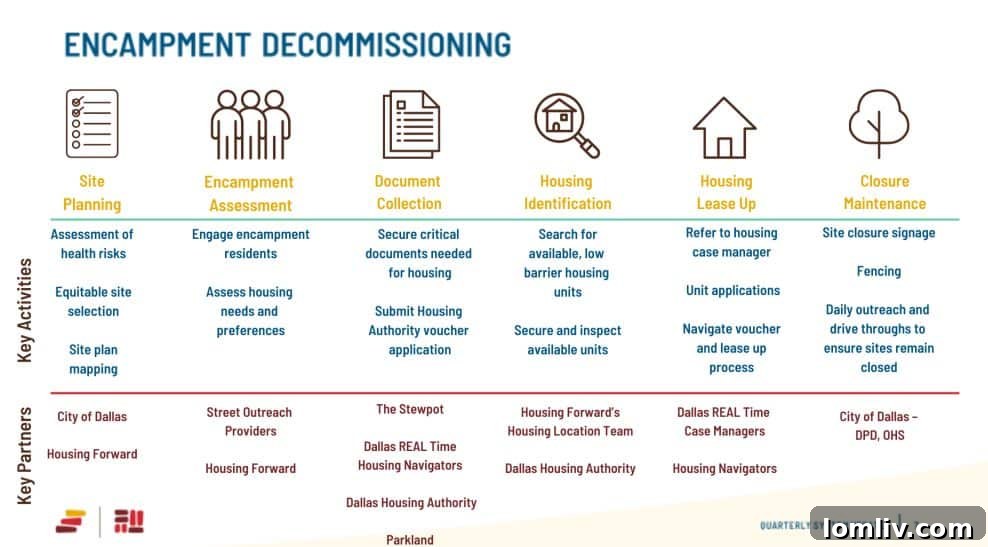
Since its establishment in 2017, Dallas has demonstrated a commitment to addressing its housing and homelessness challenges through a dedicated Office of Housing and Homeless Solutions (OHHS). This vital office coordinates efforts, leveraging federal funds, critical bond funds, and the invaluable contributions of nearly 100 charitable organizations. Their collective mission is clear: to find lasting solutions for housing the homeless population of Dallas.
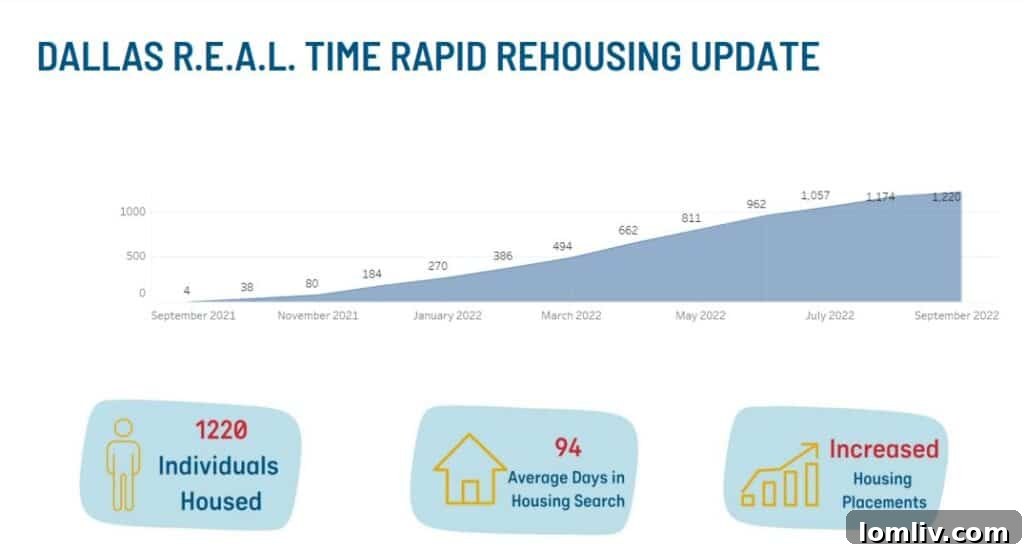
Christine Crossley, Director of Housing and Homeless Solutions, has acknowledged that Dallas has witnessed a notable increase in its homeless population. This surge is primarily attributed to the relentless rise in rental rates across the metroplex and the prolonged economic fallout from the COVID-19 pandemic. Despite these challenges, the city’s Dallas Responsible Equitable Accountable and Legitimate (REAL) Time Rapid Rehousing Program has emerged as a beacon of hope. Crossley previously described the program as “wildly successful” to Daltxrealestate.com in August, a sentiment reinforced in subsequent city council updates.
During an October 24 Housing and Homeless Solutions Committee meeting, Crossley provided a detailed update on the program’s progress, now operating for approximately a year. She emphasized the critical principle guiding their efforts: “When we are housing people, we are doing it in a way that is sustainable. This isn’t a token. This is something that has a real, lasting impact.” She also acknowledged the delicate balance the OHHS must maintain, stating, “It also has to walk a fine line. We have responsibilities to not only our unsheltered neighbors but the citizens of the city who have real concerns as well. We do our best to be transparent about the processes and the time they take.” This transparency is crucial for building trust and ensuring community buy-in for these essential initiatives.
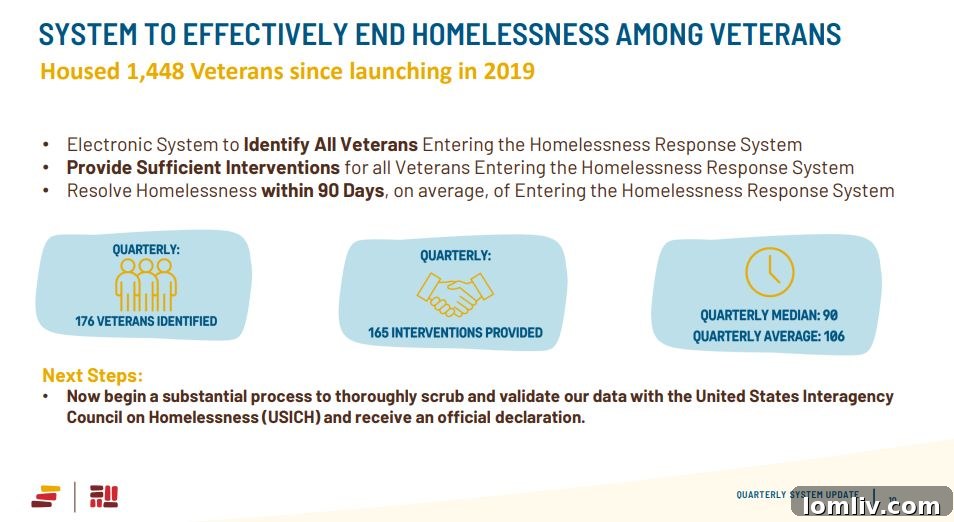
Joli Robinson, CEO of Housing Forward, also addressed the committee, sharing compelling statistics about the REAL Time program’s impact. In a remarkable 12-month period, over 1,220 individuals found stable housing through Dallas REAL Time. Furthermore, the program facilitated the successful closure of nine encampments, transitioning residents into safer, more supportive environments. Robinson highlighted the program’s pivotal role in expanding the city’s capacity and infrastructure for addressing homelessness, yet she also underscored the persistent challenges. “Our front-line providers — our emergency shelter providers and those that are trying to provide shelter for individuals and families — are continuing to feel increased pressure. Some of the COVID assistance has ended. Eviction protections have ended.” This discontinuation of vital support, coupled with rampant inflation and the escalating cost of housing, continues to place immense pressure on both unhoused individuals and the agencies striving to assist them, making Dallas’s coordinated efforts more critical than ever.
Innovative Approaches from Across the Nation
While Dallas navigates its complex homelessness crisis, examining the successes and challenges of other U.S. cities offers valuable insights. According to Housing Futures, two cities lauded for their innovative homeless solutions are Salt Lake City and San Diego, each offering unique models for intervention and prevention.
Salt Lake City set an ambitious goal in 2005: to eliminate homelessness within a decade. By adopting a “Housing First” model, which fundamentally prioritizes providing immediate, permanent housing without prerequisites like sobriety or employment, the city achieved remarkable progress, reducing its homelessness rate by an impressive 91 percent. This approach is founded on the principle that stable housing is the essential foundation upon which individuals can then build towards recovery and self-sufficiency. However, the Housing Futures report notes a key factor contributing to Salt Lake City’s success: “The state is small and the problem is much more contained than a densely-populated state like California.” This highlights the importance of context and scale when attempting to replicate such models.
San Diego introduced “Project 25” in 2010, an innovative initiative that focused on identifying and housing the 25 most frequently utilizing and thus most costly homeless individuals. By providing these individuals with stable housing and comprehensive supportive services, Project 25 demonstrated a significant return on investment, saving the community an estimated $2 million annually. The methodology for measuring these savings was robust, as explained by the Housing Futures report: “They looked at the costs of jails, prisons, medical expenses, hospital stays, and medical rides.” This data-driven approach underscores the economic benefits of investing in supportive housing, transforming high-cost emergency services into preventative care and stable living.
In contrast, other high-profile cities, despite extensive efforts and the allocation of federal dollars, continue to face entrenched homelessness problems with less demonstrable progress. Los Angeles, for instance, has implemented bans on encampments near schools and other public facilities. While intended to address public safety and community concerns, these bans have become a contentious election issue, highlighting the deep social and political divisions surrounding urban homelessness and enforcement policies.
Comparing Dallas’s situation with other major Texas cities further illustrates the regional scope of the problem. Fort Lauderdale, a city where many unhoused individuals migrate seeking warmer weather (though often encountering heavy rain), reported approximately 2,000 homeless people in its Broward County Point-In-Time (PIT) homeless count for 2022. This figure is notably half the number recorded in Dallas’s PIT count. It’s important to note, as officials explained during the recent Housing and Homeless Solutions Committee meeting, that the Dallas count encompasses both Dallas and Collin counties, reflecting a broader service area. Similarly, Houston’s 2022 PIT study reported 3,223 individuals experiencing homelessness across Harris, Fort Bend, and Montgomery counties. These comparisons underscore the significant regional burden shared by Dallas and highlight the critical need for coordinated, scalable solutions across metropolitan areas.
Navigating Public Safety and Compassion: The Median Ordinance Debate
Back within the confines of Dallas City Hall, elected officials are engaged in ongoing efforts to address public safety in neighborhoods and manage the visible aspects of homelessness on city streets. One such measure, a recently approved code amendment, has ignited a fervent debate about its intent and potential impact.
Last week, the Dallas City Council approved an ordinance prohibiting standing and walking in medians. While presented by some as a vital public safety measure, it was strongly critiqued by others, including one councilman, as a thinly veiled attempt to penalize homeless individuals for their circumstances. This ordinance, which empowers police to issue a substantial $500 fine against “median-dwellers” and panhandlers, was passed on October 26, despite vocal opposition from District 7 Councilman Adam Bazaldua.
Councilman Bazaldua expressed profound reservations about the measure, stating, “I think this not only has a level of redundancy because we have ordinances already on our code to enforce people in the roadway for safety concerns. I also think there’s a level of disingenuous intent.” His concerns suggest that the ordinance might be a redundant legal tool, potentially misused to target the unhoused rather than genuinely enhance public safety. This highlights the ongoing tension between enforcing civic order and addressing the root causes of homelessness.
Supporting the public safety argument, Director of Transportation Gus Khankarli presented sobering statistics: 68 pedestrian fatalities occurred last year, with 53 recorded to date in 2022. “We have a trend here that is not very favorable,” he noted, underscoring the urgency of measures aimed at reducing pedestrian accidents. District 12 Councilwoman Cara Mendelsohn further elaborated on the ordinance’s evolution, explaining that initial discussions at the city’s Government Performance and Financial Management Committee (GPFM) on panhandling broadened to encompass general public safety concerns on medians.
Mendelsohn clarified, “GPFM has been working on panhandling for quite some time and I’m proud to say it has launched a program that is compassionate and includes enforcement. That is a completely separate item. This item is about public safety. The idea of this is to protect people on the median. We’re not trying to deter people from having a walkable city, but when you have a six-lane road, it is dangerous for every pedestrian to cross.” She emphasized the city’s commitment to both compassionate assistance for panhandlers and essential safety measures for all citizens traversing busy urban environments.
However, Councilman Bazaldua remained resolute in his stance, doubling down on his assertion that the measure is an egregious attempt to enforce poverty and criminalize homelessness. His impassioned rebuttal resonated with concerns shared by many advocates for the unhoused: “It is extremely disingenuous to stand here and tell us this is about public safety. This is about [Not In My Backyard]ism. This is absolutely despicable. This is not what we were elected to do. We don’t even have law enforcement resources to enforce speeding in our neighborhoods. We can’t let our kids play in our streets because we don’t have the right resources to have patrols just monitoring speeding. But we have the resources to send people out and fine people for standing in a median? This is absurd. We are wrong for this.” His remarks highlight a critical debate within Dallas — the allocation of resources and the fundamental approach to addressing homelessness, questioning whether punitive measures truly solve underlying societal issues or merely displace them.
Towards a Comprehensive Future for Dallas’s Homeless Solutions
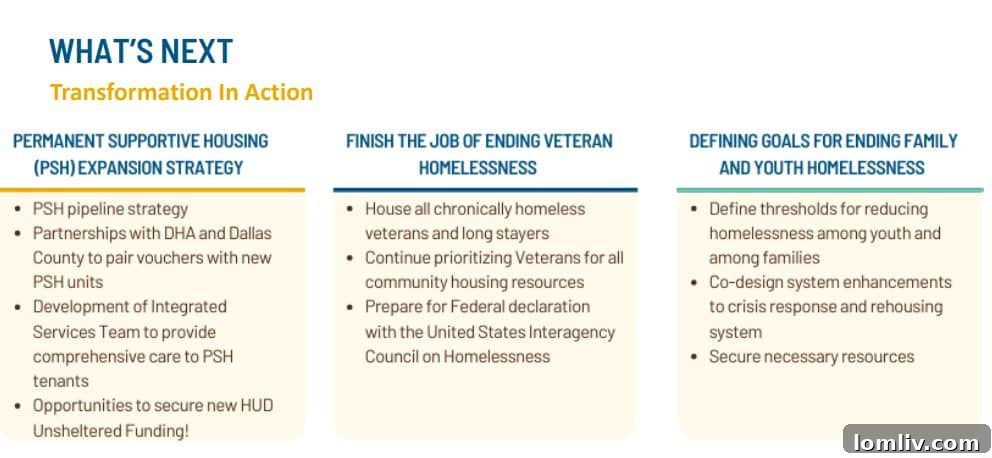
The journey to resolve homelessness in Dallas is undeniably complex, marked by both innovative programs and contentious policy debates. The city’s substantial investment and the dedicated efforts of the Office of Housing and Homeless Solutions, particularly through the successful REAL Time Rapid Rehousing Program, demonstrate a clear commitment to providing sustainable solutions. However, the persistent challenges of economic inflation, escalating housing costs, and the expiration of pandemic-era protections continue to strain resources and exacerbate the plight of vulnerable individuals and families.
Lessons from cities like Salt Lake City and San Diego offer compelling models of how strategic interventions, such as the Housing First philosophy and data-driven initiatives like Project 25, can significantly reduce homelessness and even yield economic benefits. While Dallas faces unique challenges of scale and density, integrating adaptable components from these successful models could be crucial.
The ongoing debate surrounding the median ordinance underscores the delicate balance between ensuring public safety and fostering a compassionate approach to homelessness. It highlights the critical need for policies that address root causes rather than merely penalizing visible symptoms. Moving forward, a truly effective strategy for Dallas will require continuous collaboration between city leadership, dedicated service providers, community stakeholders, and regional partners. By focusing on comprehensive, humane, and evidence-based solutions, Dallas can aspire to create a future where stable housing and support are accessible to all its residents, transforming the landscape of homelessness in North Texas for the better.