For a Dreamer of Houses: An Immersive Journey into the Psychology of Home at the Dallas Museum of Art
The Dallas Museum of Art (DMA) invites visitors to embark on a profound and unique exploration of the concept of “home” through its captivating contemporary art exhibition, “For a Dreamer of Houses.” Drawing inspiration from Gaston Bachelard’s seminal 1958 book, “The Poetics of Space,” this thought-provoking exhibition features a remarkable collection of 54 works that delve into the psychological, emotional, and social dimensions of the places we inhabit. Many of the featured pieces are drawn from the museum’s extensive permanent collection, augmented by significant recent acquisitions that underscore the DMA’s commitment to showcasing leading voices in contemporary art.
A Vision Inspired by Poetics: Curatorial Insights from the DMA
The genesis of “For a Dreamer of Houses” lies in the DMA’s strategic expansion of its contemporary collection. Dr. Agustín Arteaga, the Eugene McDermott Director of the DMA, highlights that these recent additions provided the perfect catalyst for organizing an exhibition that masterfully connects compelling contemporary artworks with an enduringly fascinating philosophical text. Bachelard’s “The Poetics of Space” transcends mere architectural analysis, instead offering a phenomenological exploration of how we experience intimate spaces – how houses shape our memories, dreams, and sense of self. The exhibition brilliantly translates these abstract concepts into tangible, visual experiences.
“With these large-scale and highly immersive new works, along with treasures from the collection that go as far back as 1950, we hope visitors will be introduced to new ways of looking at everyday items to discover much deeper meanings,” Dr. Arteaga explains. This vision underscores the exhibition’s goal: to transform the mundane into the profound, encouraging viewers to reconsider the profound impact of their domestic environments and the objects within them.
The exhibition is meticulously organized to mirror five of Bachelard’s seminal chapters, each focusing on a distinct psychological facet of homes. This structure guides visitors through a narrative arc, inviting them to reflect on how our living spaces are not merely shelters but profound reflections of our innermost selves, our values, our desires, and even our anxieties. By employing forms derived from houses and everyday furniture, the artists explore a rich tapestry of human experience, including universal themes like belonging and alienation, the escapism of fantasy, the complexities of gender roles within domesticity, and the intimate relationship between the human body and architectural space.
Unpacking the Spaces: Featured Artists and Their Visionary Works
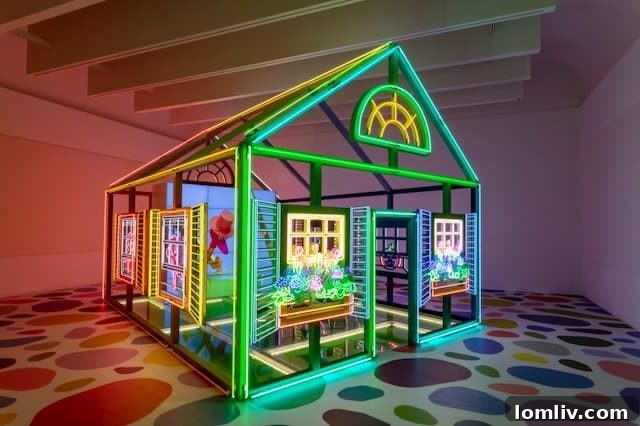
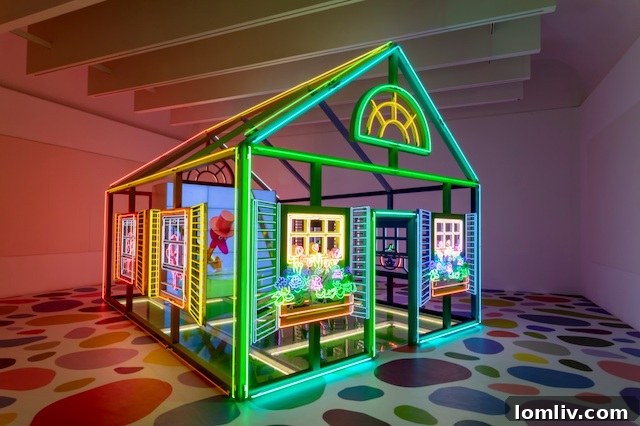
One of the exhibition’s most striking and unforgettable installations is Alex Da Corte’s monumental “Rubber Pencil Devil.” This captivating piece, a neon-framed house, invites visitors to step inside its luminous structure. Once inside, they are enveloped by an array of absurdist videos starring Da Corte himself, presented in a mesmerizing, kaleidoscopic fashion. Da Corte’s work often blurs the lines between pop culture, consumerism, and the uncanny, and “Rubber Pencil Devil” serves as a vibrant, disorienting commentary on the idealized yet often surreal nature of domestic fantasy and media consumption within the home.
Pipilotti Rist’s “Massachusetts Chandelier” offers a vastly different, yet equally powerful, commentary on domesticity and identity. This delicate yet audacious chandelier is crafted entirely from worn women’s undergarments. Rist, known for her vibrant video installations and explorations of the body, femininity, and the private sphere, transforms these intimate, often hidden, objects into a public spectacle of light and form. The piece evokes themes of vulnerability, domestic labor, and the unspoken narratives held within a woman’s personal space, challenging traditional notions of beauty and what constitutes art.
Similarly, Janine Antoni’s “Grape” repurposes everyday domestic items to explore identity, though with a masculine lens. Antoni’s work, meticulously constructed from men’s pants pockets, delves into the subtle ways clothing and personal effects embody gender and memory. Pockets, typically spaces for carrying essentials or hiding secrets, are transformed into a sculptural form, hinting at the unseen lives, desires, and experiences of the men who once wore them, and by extension, the social constructs of masculinity within the home and public sphere.
EJ Hill’s “Desk” brings a potent social and political dimension to the exhibition. This impactful work directly addresses issues of racist violence and educational inequality, echoing the exhibition’s broader theme of how spaces can define, empower, or oppress individuals. Visitors are invited to stand behind the desk, confronting a powerful dedication penned by Samaria Rice, whose 12-year-old son, Tamir Rice, was tragically killed by police. Hill’s piece transforms the desk—a symbol often associated with learning, authority, and bureaucratic processes—into a stark reminder of systemic injustices and a poignant monument to remembrance and advocacy, challenging the idea of home as a safe haven for all.
Further enriching the exhibition’s narrative are works by other prominent contemporary artists. Do Ho Suh, celebrated for his intricate fabric sculptures that re-create architectural spaces from his past homes, offers a profound meditation on migration, memory, and the portability of identity. While a specific work isn’t detailed, his contribution would undoubtedly explore how the concept of home can be both a physical structure and an ephemeral, deeply personal experience carried across cultures and continents, resonating strongly with Bachelard’s ideas of the house as a repository of dreams and memories.
Olivia Erlanger, an artist known for her surreal and often unsettling installations that blend architectural elements with natural forms, contributes to the exhibition’s exploration of domesticity and the uncanny. Her works often create disorienting spaces that challenge the viewer’s perception of comfort and familiarity, pushing the boundaries of what a “home” can be. Francisco Moreno, with his large-scale, dramatic paintings, often depicting elaborate or fragmented interiors, explores the psychological weight and theatricality of domestic environments, perhaps offering a more classical yet unsettling perspective on the architecture of human emotion.
The Immersive Experience: Challenging Perceptions and Fostering Dialogue
Dr. Anna Katherine Brodbeck, the exhibition organizer, articulates the profound curatorial vision: “Artists have long depicted the home as a site for self-discovery, encounter, and community. This exhibition allows us to explore how artists today are engaging with that theme in exciting and ambitious ways, challenging our preconceptions of identity formation and cultural exchange.” This statement perfectly encapsulates the dynamic nature of “For a Dreamer of Houses.” It’s not a passive viewing experience but an active engagement with art that prompts introspection and dialogue.
The immersive quality of many installations, where visitors can physically enter or interact with the artworks, fosters a deeper connection to the themes. This direct engagement allows for a more personal and visceral understanding of how physical spaces shape our psychological landscapes. The exhibition’s careful arrangement and diverse selection of media—from video installations and neon sculptures to intricate textile works and repurposed everyday objects—ensure that every corner offers a fresh perspective on the multifaceted meaning of home.
Through these varied artistic lenses, the exhibition encourages visitors to reflect on their own relationships with their homes. It prompts questions: How do our living spaces define us? What stories do our possessions tell? How do societal structures, cultural expectations, and personal histories intersect within the confines of our dwellings? By presenting a spectrum of interpretations, “For a Dreamer of Houses” celebrates the complexity and universality of the human experience of inhabiting space.
Plan Your Visit: Experience “For a Dreamer of Houses”
Don’t miss the opportunity to experience “For a Dreamer of Houses,” a truly unique and intellectually stimulating exhibition that runs through July 4 at the Dallas Museum of Art. Whether you are an avid art enthusiast, a student of philosophy, or simply curious about the profound impact of our environments, this exhibition offers a rich tapestry of ideas and artistic expressions.
The DMA, a cornerstone of Dallas’s vibrant cultural scene, provides an accessible and engaging environment for all visitors. Adult tickets for “For a Dreamer of Houses” are priced at $9, with thoughtfully structured discounts available for seniors, students, and military personnel, ensuring broad access to this significant cultural event. Children aged 11 and under are welcomed free of charge, making it an ideal outing for families looking to engage younger minds with contemporary art and stimulating concepts. Beyond this special exhibition, visitors are encouraged to explore the DMA’s extensive permanent collections, which span thousands of years of art history and represent diverse cultures from around the globe, making it a full day of artistic discovery.
Immerse yourself in this imaginative journey that explores the very essence of human dwelling and identity. “For a Dreamer of Houses” promises to leave you with a renewed appreciation for the spaces you inhabit and the dreams they foster.