Embracing the Tiny House Movement: Can “Big Things Happen Here” in Small Spaces?
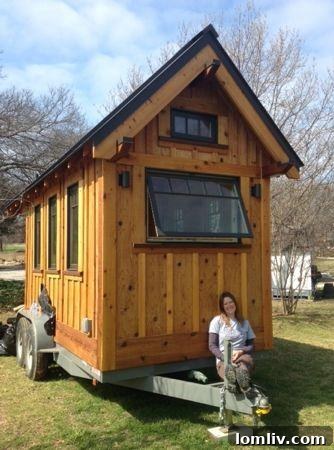
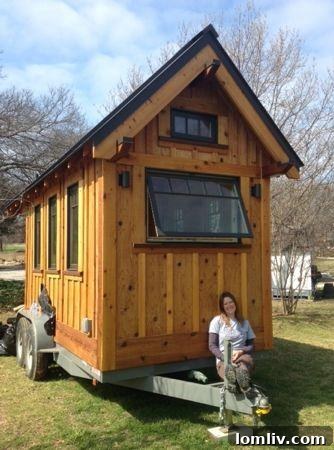
In a world increasingly focused on growth, expansion, and accumulation, a counter-movement is gaining significant traction: the tiny house movement. At its heart, this lifestyle champions minimalism, sustainability, and financial freedom, urging individuals to declutter their lives and prioritize experiences over possessions. One of the most passionate advocates for this shift is BA Norrgard, a Dallas native who has dedicated herself to living small – truly tiny, in a hand-built home – after consciously divesting herself of a mortgage and working tirelessly to inspire others to simplify. Her mission resonates deeply with many, yet it poses an intriguing question, especially in her hometown of Dallas, a city famously proud of its motto: “Big Things Happen Here.” Can a metropolis synonymous with grandeur truly embrace the understated charm and practicalities of tiny living?
Norrgard’s journey is not just about building a small home; it’s about building a smaller, more intentional life. She represents a growing demographic looking to break free from the conventional cycle of debt, excessive consumption, and the relentless pursuit of more. By shedding the burden of a large mortgage and the upkeep of a sprawling property, individuals like Norrgard unlock a freedom that redefines their relationship with space, time, and personal finance. This profound shift encourages a reconsideration of what truly constitutes a fulfilling life. Is it the size of our homes, or the richness of our experiences?
The Philosophy of Living Small: Beyond Square Footage
The essence of the tiny house movement extends far beyond mere dimensions; it’s a philosophy that challenges societal norms and encourages a profound re-evaluation of our values. Living small often translates into a more sustainable lifestyle, reducing one’s carbon footprint by consuming less energy and fewer resources. It fosters creativity in design and organization, pushing residents to think innovatively about multi-functional spaces and efficient storage. Financially, it offers unparalleled freedom, allowing individuals to escape burdensome mortgages, save more, and even retire earlier. This newfound financial agility can open doors to travel, entrepreneurial pursuits, or simply more quality time spent with loved ones.
For many, the appeal of a minimalist lifestyle is the promise of reduced stress and increased focus. With fewer possessions to manage, clean, and maintain, there’s more time and mental energy available for pursuits that truly matter – hobbies, relationships, personal growth, and engaging with the community. It’s about curating a life where every item serves a purpose or brings joy, rather than merely accumulating stuff. This deliberate approach to consumption and ownership leads to a more mindful existence, where the emphasis shifts from what one owns to how one lives and experiences the world.
BA Norrgard’s Vision: A Bed Over My Head and a Clearer Path
BA Norrgard’s platform, aptly named “A Bed Over My Head,” isn’t just a personal blog; it’s a movement. Her advocacy is rooted in her own transformation, having experienced firsthand the liberating power of downsizing. She actively tours with her tiny home, engaging with communities and sharing the practicalities and philosophies behind her choices. Her work aims to demystify tiny living, making it accessible and appealing to a broader audience. She addresses common concerns, provides resources, and inspires people to take concrete steps towards simplifying their own lives, whether that means building a tiny house or simply decluttering an existing one. Her enthusiasm is infectious, and her commitment to helping others find their path to financial and personal freedom is unwavering.
Dallas: Can a City of “Big Things” Embrace Small Ideas?
The juxtaposition of Norrgard’s mission with Dallas’s civic identity is particularly striking. Dallas, a hub of commerce, innovation, and Texas-sized ambition, has traditionally celebrated grandeur. Yet, even in this landscape, there’s a growing undercurrent of individuals seeking alternatives to conventional living. The question isn’t whether tiny houses will replace sprawling estates, but whether the underlying values of simplicity and experience can find resonance within the city’s diverse population. Can Dallasites, known for their entrepreneurial spirit and love for everything “big,” find appreciation in a lifestyle that champions less? The burgeoning interest in sustainable practices, local economies, and unique living solutions suggests that even in Dallas, the appeal of living more intentionally is slowly but surely taking root.
Beyond the Walls: Prioritizing Experiences Over Possessions
Perhaps the more profound question we should be asking ourselves is not just about the size of our homes, but about how we choose to live within them – and outside of them. Can we genuinely appreciate time spent outdoors, fostering a deeper connection with nature, and placing more emphasis on memorable experiences rather than accumulating material possessions? This sentiment was beautifully articulated by Katie Arnold in her compelling essay for Outside magazine, where she reflected on the transformative power of living simply in nature.
Arnold’s essay highlights the inherent simplification that comes with being immersed in the natural world. She writes, “There’s something about living outside on water that simplifies and smoothes the rough edges away. No electronics, no alarms, no deadlines or bills, no toys scattered all over, only a handful of dishes to clean. All the food we need, packed into a few coolers.” This vivid description paints a picture of liberation from the constant demands of modern life, offering a glimpse into a existence where necessities are few and the focus shifts entirely to the present moment and the immediate environment. This isn’t just about rustic living; it’s about recalibrating our priorities and recognizing the profound satisfaction that comes from disconnecting from the artificial and reconnecting with the authentic.
Lessons from Katie Arnold’s “Outside” Essay: Simplification Anywhere
Arnold’s epiphany, however, wasn’t that we all need to move to a remote riverbank. Her critical realization came on the drive home: “But as we pulled into our driveway in Santa Fe, I realized that living well is not merely a matter of location, location, location. We don’t need a river or a tent with a view to simplify and minimize. We can live this way all year long, right where we are. We just have to be smart. We just have to live smaller.” This insight is crucial for the broader adoption of minimalist principles. It suggests that the mindset of simplification isn’t confined to specific environments but can be cultivated anywhere, anytime, with intentional effort. It’s about making conscious choices daily, evaluating what truly adds value to our lives, and bravely letting go of what doesn’t.
Her words encourage us to find the “outside on water” within our own lives, regardless of our physical location. This could mean dedicating more time to outdoor activities, cultivating mindful consumption habits, or simply creating intentional spaces within our homes that promote calm and clarity. The core message is empowerment: we have the agency to simplify and minimize, transforming our lives for the better, right where we are. It challenges the common misconception that a minimalist lifestyle requires a complete overhaul or a move to an idyllic setting, proving instead that it’s a continuous journey of intentional choices and self-awareness.
Styling Your Small Space: Elegance in Compact Living
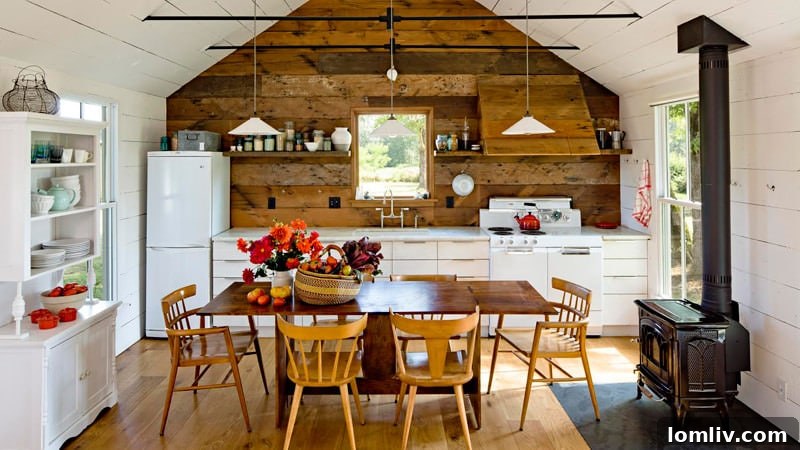
One of the most frequent concerns about tiny living is whether it necessitates sacrificing comfort or style. The answer, as demonstrated by interior designer Jessica Helgerson, is a resounding no. Her tiny home is a testament to the fact that living small can be incredibly chic and sophisticated. Helgerson’s design philosophy proves that compact spaces can be imbued with personality, functionality, and an undeniable sense of luxury. It’s not about how much space you have, but how intelligently and beautifully you use it. Her designs inspire a new appreciation for craftsmanship, quality materials, and smart spatial planning, demonstrating that less can indeed be more when it comes to aesthetics.
Maximizing Function and Aesthetics in Tiny Homes
Achieving style in a tiny home involves thoughtful design principles. It often means investing in multi-functional furniture, like a sofa that converts into a bed, or a dining table that folds away. Storage solutions are paramount, utilizing vertical space, hidden compartments, and clever built-ins. Light colors and ample natural light can make a small space feel larger and more open. Mirrors strategically placed can also create an illusion of depth. High-quality, durable materials and carefully selected decor items can elevate the overall feel, making a small home feel curated and luxurious rather than cramped. Jessica Helgerson’s approach emphasizes that every element in a tiny home must earn its place, contributing both to its utility and its visual appeal. This intentionality in design creates spaces that are not only practical but also deeply personal and inspiring.
Navigating the Practicalities: Tiny Living in Challenging Climates and Lifestyles
The allure of tiny living is clear, but its practical application raises important questions. How does one embrace an “outside” lifestyle during the four or five months of sweltering, unbearable Dallas weather? How does a family of four comfortably and harmoniously live in a space that is less than 1,000 square feet, or even under 500? These are valid concerns that highlight the need for thoughtful adaptation and innovative solutions when considering a truly minimalist lifestyle.
Living small in a climate like Dallas requires strategic planning. This might involve designing tiny homes with exceptional insulation, efficient HVAC systems, and ample shaded outdoor living areas – covered patios, pergolas, or even screened-in porches – that extend the usable living space during cooler months and offer respite during warmer ones. Community-based solutions, such as shared green spaces, common areas for larger gatherings, or access to local parks and recreation centers, can also help mitigate the feeling of confinement and offer alternatives for outdoor activities that might otherwise be challenging in a private, tiny yard.
Overcoming Obstacles to Sustainable Small Living
For families, successful tiny living often hinges on smart design, clear communication, and a shared commitment to the lifestyle. Creating distinct zones within a small home, even if delineated by clever furniture arrangements or sliding partitions, can provide a sense of personal space. Vertical sleeping arrangements, like bunk beds or lofted beds, are common solutions. Furthermore, embracing the outdoors as an extension of the living space becomes critical. Parks, community centers, libraries, and nature trails become integral parts of the family’s daily routine, providing outlets for energy and exploration. It’s not about living *inside* a tiny space all the time, but about viewing the tiny home as a comfortable base from which to explore the wider world. Ultimately, it requires a cultural shift towards valuing experiences and togetherness over individual space and material accumulation.
Perhaps for some, a tiny home might be better suited as a second home or a vacation retreat, offering a temporary escape into simplification without the full-time commitment. However, for a growing number of people, it’s becoming a viable and desirable primary residence, proving that with careful planning, innovative design, and a dedicated mindset, living small can indeed be a sustainable, stylish, and deeply rewarding way of life, even in unexpected places like Dallas.
The Future of Living Small: A Global Trend or Niche Lifestyle?
The tiny house movement is more than a fleeting trend; it represents a significant cultural shift towards mindful consumption, environmental responsibility, and financial empowerment. It challenges us to reconsider the definition of “home” and to distinguish between needs and wants. As urban populations grow and environmental concerns intensify, the appeal of smaller, more efficient living spaces is likely to expand beyond a niche community. Cities worldwide are exploring compact living solutions, and the principles of tiny house design are influencing mainstream architecture and interior design, promoting smarter use of space and resources.
BA Norrgard and Jessica Helgerson are pioneers in this evolving landscape, showing that a life of less can indeed be a life of more – more freedom, more intention, and more style. Their work inspires us to look beyond conventional metrics of success and find contentment in simplicity. The question of whether Dallas can truly embrace this mindset remains open, but the conversation is certainly happening, sparking valuable introspection about what truly makes a life well-lived.
So, we turn the question to you, our readers. Could you imagine yourself living in less than 1,000 square feet? What about challenging yourself further with less than 500? What does “living small” truly look like for you, and what sacrifices or rewards do you envision on that path? Share your thoughts and join the conversation about transforming our approach to home, lifestyle, and happiness.