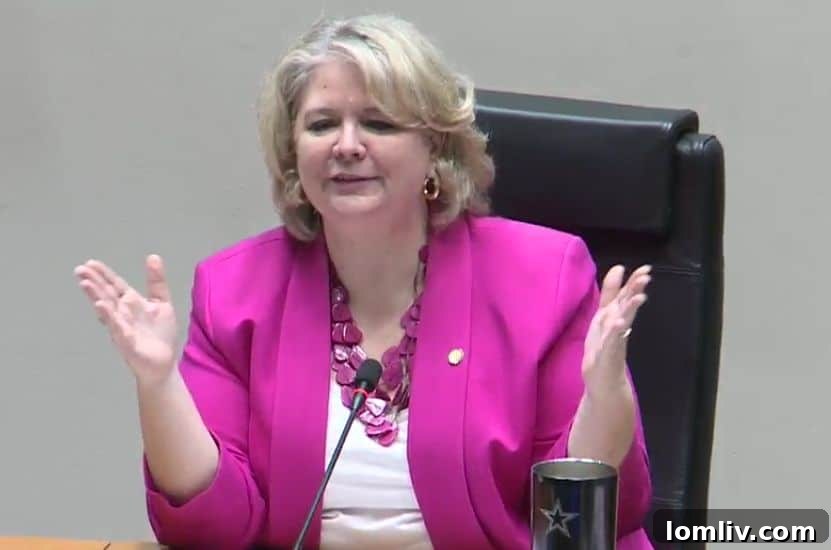
The allocation of funds for affordable housing has emerged as a critical and highly debated topic within the Dallas City Council, particularly in the lead-up to the significant 2024 bond election. During a recent council meeting dedicated to discussing the bond program, District 12 Councilwoman Cara Mendelsohn posed a thought-provoking question that set the stage for intense deliberation: Why should the city commit bond dollars—funds that necessitate issuing debt and incurring substantial interest payments—to affordable housing initiatives when Dallas already has access to over a dozen established mechanisms capable of achieving the very same goals?
Councilwoman Mendelsohn’s direct challenge, while rooted in fiscal prudence, did not immediately resonate with all her colleagues. Several council members swiftly argued that making any meaningful progress on Dallas’s pervasive housing affordability crisis would be virtually impossible without direct public investment. These proponents were quick to offer their own detailed plans for how the proposed bond funds could be strategically deployed to effectively address the diverse housing needs across Dallas.
On January 19, the Dallas City Council held an informal, nonbinding straw vote, indicating their preliminary agreement to proceed with a May bond election and to significantly increase its capacity to $1.25 billion. However, this vote left key decisions pending, specifically regarding which projects would ultimately appear on the ballot and the final monetary allocations for each category. With another crucial briefing scheduled for January 31, the council faces a pressing deadline, as a definitive decision must be made by February 14 to officially call the May election. This tight timeline underscores the urgency and high stakes involved in the ongoing deliberations.
For those interested in reviewing the specifics, Friday’s staff presentation detailing the bond program updates is accessible here, and a complete recording of the council meeting can be viewed here.
Councilwoman Mendelsohn’s Case Against Housing Bond Funding
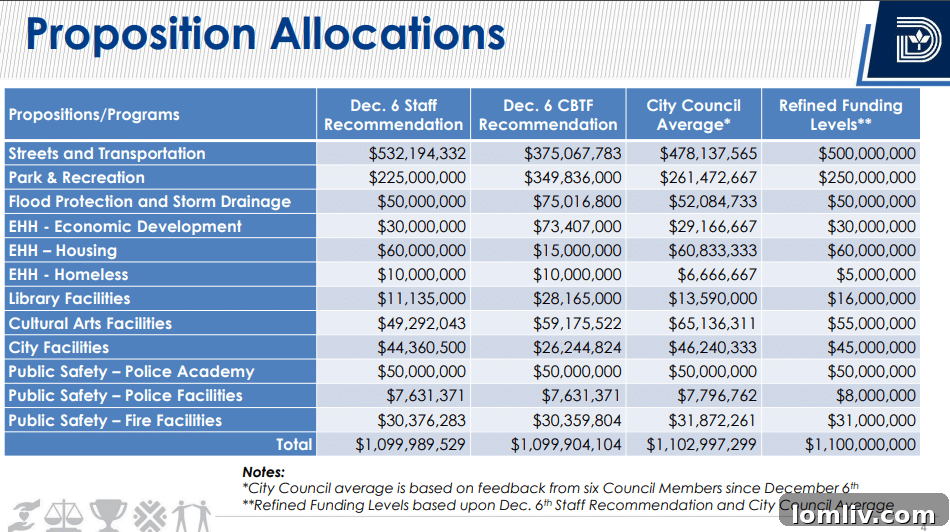
The city staff’s current proposal suggests dedicating $60 million from the bond funds to various housing initiatives. This figure represents a carefully negotiated compromise, falling between the substantial $200 million initially advocated for by leading housing groups, such as the influential Dallas Housing Coalition, and the more conservative $15 million recommendation from the Community Bond Task Force. This wide variance in proposed allocations highlights the fundamental disagreements over the appropriate scale of public investment in housing.
Councilwoman Mendelsohn underscored her concerns by noting a significant historical pattern: Dallas has never previously included a bond proposition specifically for housing. She posited that this historical precedent exists precisely because the city has, for years, effectively relied on a comprehensive suite of more than a dozen existing programs and tools to meet its housing needs, making additional bond-funded initiatives potentially redundant or fiscally inefficient.
While publicly supporting the overarching goal of affordable housing, Mendelsohn consistently champions the principle of funding such projects through the most financially sound and appropriate sources. Her primary concern centers on the long-term financial implications for Dallas taxpayers, specifically the burden of accumulating debt and paying interest on initiatives that, in her assessment, could realistically be supported through the city’s robust annual operational budget.
“Dallas manages a significant $4.6 billion annual budget,” she articulated during Friday’s special council meeting. “Within this substantial financial framework, there are numerous vital areas that undoubtedly warrant funding—many of which, I am confident, the residents present here today would passionately endorse. However, these same citizens often do not participate in our detailed budget meetings. Instead, they appear here to request that we incur debt and subsequently pay interest on it. These are fundamentally divergent financial philosophies. My recurring question remains: Is this an expenditure that genuinely necessitates the issuance of municipal debt, or is it a priority that should instead be consistently integrated into our annual budget and funded on a year-by-year basis?”
Mendelsohn meticulously outlined the extensive range of mechanisms that Dallas currently leverages to foster affordable housing development. These include the strategic use of federal tax credits, various grants, established state mortgage and bond programs, the operation of a dedicated land bank, the management of a Housing Finance Corporation, engagements with the Public Facility Corporation (PFC), the implementation of a fee-in-lieu program, and innovative approaches such as Community Land Trusts. Each of these tools contributes to the city’s comprehensive strategy for enhancing housing affordability without necessarily resorting to additional bond debt.
“There are numerous proven and effective pathways available to cultivate much-needed housing opportunities across our city without the requirement of taking on additional municipal debt,” Mendelsohn concluded, reinforcing her conviction in the efficacy of existing frameworks.
Translating Funds into Homes: The Impact of Bond Allocations
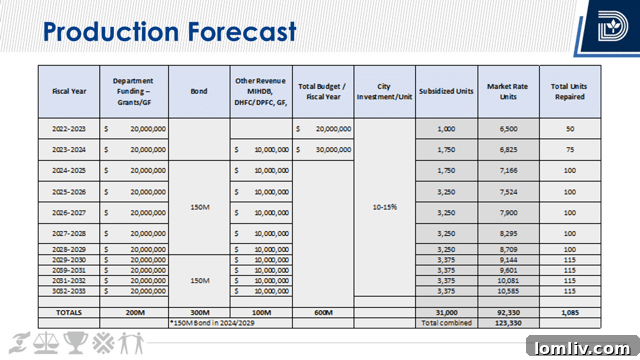
To provide a clearer understanding of the potential impact of the proposed bond allocations, Cynthia Rogers-Ellickson, the Interim Director of Housing and Neighborhood Revitalization, presented tangible projections. She clarified that an allocation of $60 million in bond funds could realistically support the development of approximately 1,150 new affordable housing units. Furthermore, should the council decide on a more substantial investment of $150 million, the projected number of units would significantly increase to 2,876. These concrete figures illuminate the direct relationship between the level of funding and the city’s capacity to expand its affordable housing stock, intensifying the ongoing debate over optimal investment.
Beyond Mendelsohn: Diverse Perspectives from Dallas City Council Members
With the total bond capacity for the upcoming election now boosted by an additional $150 million, the Dallas City Council faces the critical task of meticulously determining which city departments and initiatives will receive enhanced funding beyond their initial proposals. This increased capacity presents new opportunities but also sharpens the debate over which areas warrant the highest priority, with affordable housing remaining a fiercely contended category for additional investment.
Navigating the “Project Pipeline” Paradox in Housing Development
District 1 Councilman Chad West directly addressed a persistent criticism often leveled against housing bond allocations: the perceived lack of a pre-existing “project pipeline” for housing initiatives. “A frequent concern I’ve heard from some colleagues is the apparent absence of dedicated projects ready to absorb housing funds,” West acknowledged. However, he quickly highlighted the intricate, circular nature of this issue, adding, “Conversely, I’ve also heard the equally valid point that those crucial projects are unlikely to materialize in the first place unless developers are confident that the necessary funding is, in fact, secured and available.”
Interim Director Ellickson further elaborated on this dynamic, explaining that the inherent nature of the development process means a traditional, ready-made pipeline—as some council members might envision—simply doesn’t exist. “Our developers absolutely require assurance that funding is accessible before they can embark on the extensive journey of securing financing, engaging subcontractors, and assembling all the complex components essential for successful development deals,” she stated. “It’s practically impossible for them to propose a project slated for three years from now and then ask the City to ‘pipeline’ it while they await the necessary funds. Property acquisitions must happen rapidly, and developers need immediate access to available resources. This is the fundamental reality of the market process and explains why a traditional ‘pipeline’ is often elusive.” Her explanation clarified that the absence of a visible pipeline isn’t a deficit of need or potential projects, but rather a direct consequence of market dynamics and the prerequisite of confirmed funding.

Councilman West proposed a practical approach, suggesting that the city could allocate a portion of the bond funds as a grant towards a specific, pre-existing project, such as one spearheaded by The Real Estate Council. An assistant city attorney confirmed the feasibility of this strategy, provided the city retains control over the funds and the project demonstrably fulfills a clear public purpose. This flexibility offers a potential avenue to efficiently deploy bond funds for immediate and impactful housing solutions.
Leveraging Existing Housing Finance Structures and Federal Opportunities
District 6 Councilman Omar Narvaez put forth another strategic proposal: channeling bond funds through the well-established Housing Finance Corporation. Narvaez highlighted a significant advantage of this direct investment in housing: it signals proactive local commitment to the federal government, often resulting in Dallas attracting even greater federal dollars for housing initiatives. This leveraging effect could significantly amplify the overall impact of local bond funds.
“It would be a grave oversight and a disservice to our community if we failed to allocate funds towards housing,” Narvaez asserted passionately. “By investing meaningfully in workforce housing and substantially increasing its availability across the City of Dallas, we empower our residents to remain rooted and thrive in their communities. For renters, like myself, it would open genuine pathways to homeownership, enabling us to establish deep and lasting roots within this vibrant city.” His argument powerfully articulated the broader community benefits of stable, long-term residency and enhanced quality of life.
The Call for Quality, Diversity, and Equitable Housing Distribution
Deputy Mayor Pro Tem Carolyn King Arnold, while expressing her unwavering support for affordable housing, voiced a critical concern regarding the proposed bond allocations: the lack of granular project specificity and the existing infrastructure’s readiness to accommodate new developments. Her focus extended beyond mere affordability to encompass the quality and diverse types of housing being planned.
“While District 4 is undeniably in urgent need of more housing, the most vocal members of our community are actively advocating for high-quality homes that are not exclusively categorized based on lower-income brackets,” Arnold explained. “Historically, developers have tended to concentrate lower-priced models within our district. We are consistently pushing for homes with higher price points to cultivate a more balanced and diverse housing landscape. Our desire is for opportunities that cater to residents across all income levels and social classes, ensuring that quality housing options are not restricted to just one area but are equitably distributed throughout Dallas.” Her comments emphasized the vital need for thoughtful, inclusive urban planning that promotes diverse, high-quality housing in all parts of the city.
District 5 Councilman Jaime Resendez echoed the sentiment for strategic investment, identifying specific potential projects within his district that could greatly benefit from bond funding, whether through Housing or Economic Development allocations. “The city recently acquired a key property situated near Bruton and St. Augustine roads, which lies precisely on the border of District 5 and District 7,” Resendez noted. “This particular area has historically been in dire need of substantial attention, both in terms of critical infrastructure improvements and the provision of quality housing options.” He concluded by expressing his strong support for funding mechanisms that could unlock the transformative potential of such strategically important sites, addressing long-standing community needs.
Public Voices: Advocates Demand Bold Investment in Housing
The recent Dallas City Council meeting served as a crucial forum for public engagement, with sixty-six registered speakers addressing various potential bond projects. The depth of public interest, particularly concerning affordable housing, was clearly evident, with many passionately advocating for a significant increase in dedicated investment.

Stephanie Champion, a West Dallas resident and the Chief Community Development and Policy Officer for Builders of Hope, robustly countered the argument that Dallas can effectively resolve its affordable housing crisis without “deep and bold public investment.” Her remarks served as a powerful rebuttal to those favoring reliance solely on existing, non-bond mechanisms, highlighting what she perceives as a critical need for direct, substantial funding.
“Other major cities across Texas are significantly outperforming Dallas with their affordable housing bond allocations,” Champion stated, drawing a stark and unfavorable comparison. “As a long-term Dallas resident, I am genuinely embarrassed to observe how minimally we appear to prioritize housing affordability when directly measured against our peer cities in the state.” This sentiment underscored a perceived lack of commitment in Dallas compared to other urban centers grappling with similar housing challenges.
As a prominent member of the Dallas Housing Coalition, Champion expressed profound disappointment that the current housing allocation proposed by city staff—a modest $60 million—is less than half the figure that advocates had earnestly requested. “I had sincerely hoped that the collective strength and persistent advocacy of our coalition, which comprises over 180 dedicated members, would have by now persuaded this body to fully grasp the severe magnitude of the housing crisis confronting our city,” she lamented. “There is a dire and undeniable need for bold, transformative investment in housing if we are to even begin making a tangible impact on the affordability gap that continues to widen and affect countless Dallas residents.” Her impassioned plea underscored the urgency and the significant perceived discrepancy between current proposals and the scale of investment truly needed for a meaningful solution.
Looking Ahead: Shaping Dallas’s Housing Future
The ongoing debate surrounding the 2024 Dallas bond election, particularly the contentious allocation for affordable housing, represents a pivotal moment for the city. It encapsulates a fundamental tension between the principles of fiscal conservatism and the pressing social imperative to ensure equitable and accessible housing opportunities for all residents. Councilwoman Mendelsohn’s arguments, centered on financial prudence and the optimal utilization of existing resources, are undeniably crucial considerations for responsible municipal governance. However, these points are met with equally compelling counter-arguments from other council members and the fervent pleas of housing advocates, who highlight the unique challenges and transformative opportunities that direct bond investment could unlock.
This discussion extends far beyond mere financial figures; it delves into the very fabric of Dallas’s future growth, its commitment to inclusivity, and its long-term ability to retain and attract a diverse workforce essential for economic vitality. The decisions facing the Dallas City Council in the coming weeks will not only determine the immediate fate of specific housing projects but will also send a powerful and enduring message about the city’s comprehensive commitment to addressing one of its most critical urban challenges. As Dallas continues its trajectory of rapid growth, forging a balanced, sustainable, and impactful strategy for affordable housing remains paramount for the well-being of its diverse communities and the economic health of the entire metropolitan area.
The council’s final decisions on the bond program, and specifically on the housing component, will undoubtedly shape the urban landscape of Dallas for years to come, profoundly influencing everything from neighborhood revitalization efforts to broader economic equity. All eyes will remain fixed on the upcoming briefings and the ultimate vote as Dallas endeavors to navigate this complex yet profoundly vital issue, aiming to build a more equitable and prosperous future for all its residents.