Unlocking Value: How Much Apartment Space Can $1,200 Rent You in Texas?
For many renters across the United States, finding an apartment that perfectly balances affordability with adequate living space can feel like a perpetual challenge. However, the dynamic Texas real estate market, particularly the bustling Dallas-Fort Worth (DFW) metroplex, often presents a more optimistic picture. If your monthly rental budget for a DFW apartment stands at $1,200, you might be pleasantly surprised by the options available.
To provide clear insights into this critical question, leading rental platform RENTCafé meticulously analyzed data to determine precisely how much apartment space $1,200 can secure across 109 Texas cities boasting a substantial apartment inventory. Utilizing robust data from Yardi Matrix, this comprehensive study illuminated cities where renters receive the most value – specifically, more square footage for a monthly rent close to the state’s average of $1,176. This research is invaluable for anyone considering a move to Texas or looking to optimize their current rental situation.
Remarkably, for a budget of $1,200, renters in Texas can typically enjoy approximately 25 percent more apartment space compared to the average 711 square feet found in the 100 most populous U.S. cities. This significant difference underscores Texas’s appeal as a state where your rental dollar stretches further, offering enhanced comfort and flexibility whether you’re a single professional, a couple, or a growing family.
DFW’s Rental Landscape: Dallas vs. Fort Worth
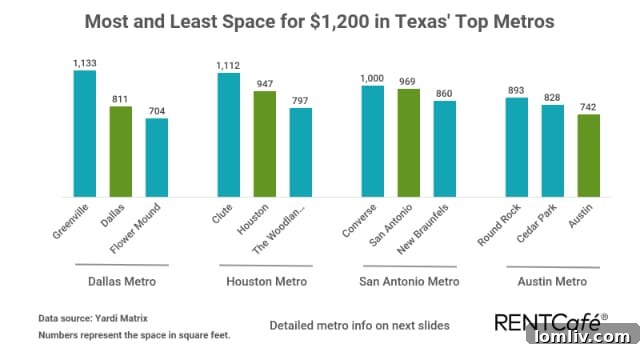
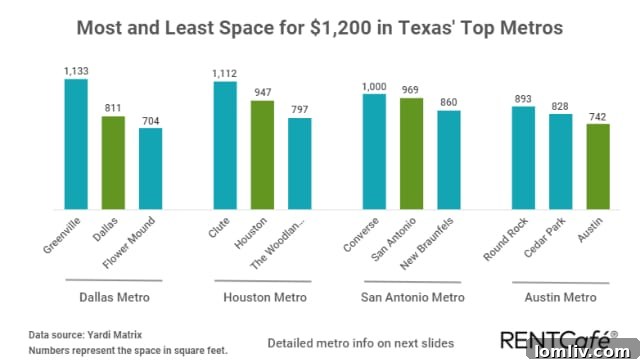
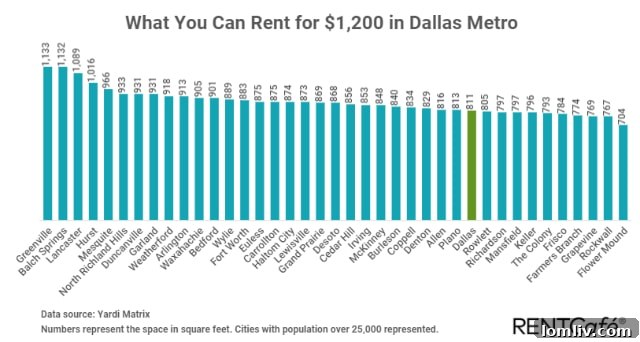
Within the expansive Dallas-Fort Worth metroplex, the available square footage for $1,200 varies slightly between its two major urban centers. In the vibrant city of Dallas, renters can expect to find an average of 811 square feet for their $1,200 budget. This typically translates into a spacious one-bedroom apartment, or potentially a cozy two-bedroom unit in certain neighborhoods, offering ample room for modern living. For those exploring options in Fort Worth, the offerings are even more generous, with the same budget securing approximately 883 square feet. This additional space often allows for larger living areas, more extensive kitchens, or extra room for a home office, a crucial feature in today’s remote work environment.
While both Dallas and Fort Worth provide excellent value, it’s important to note that the state average for square footage at this price point is even higher, standing at 937 square feet. This suggests that while DFW offers competitive options, some other Texas cities present even greater opportunities for maximizing living space for your budget. The slight difference between DFW cities and the state average highlights the higher demand and more developed urban infrastructure in the metroplex.
Top Cities for Maximizing Space on a $1,200 Budget
Beyond the primary urban hubs, RENTCafé’s study pinpointed several Texas cities where renters can truly stretch their dollar for apartment space. The competition for top honors in this category was incredibly close, highlighting numerous hidden gems throughout the state. Leading the pack is Greenville, where renters can acquire an impressive 1,133 square feet for $1,200 per month. Hot on its heels, Balch Springs offers a nearly identical 1,132 square feet for the same budget, trailing by just a single square foot.
These two cities not only offer exceptional value in terms of space but also rank as the ninth and tenth largest in Texas when considering the volume of apartment stock available at the $1,200 price point. Their appeal often stems from their more suburban feel, strong community amenities, and often easier commutes to major employment centers, making them attractive options for families and individuals seeking a quieter lifestyle without sacrificing access to urban conveniences. These areas represent prime opportunities for renters to enjoy significantly larger living environments, often in newer developments, compared to the denser metropolitan cores.
Where Space Comes at a Premium: Flower Mound and Austin
Conversely, the study also identified cities where the same $1,200 budget yields considerably less square footage, primarily due to higher demand, exclusive locations, and a more elevated cost of living. Flower Mound, known for its upscale suburban communities and highly-rated school districts, offers the smallest apartment space for $1,200, with an average of 704 square feet. This reflects its desirability and the premium placed on living within its boundaries.
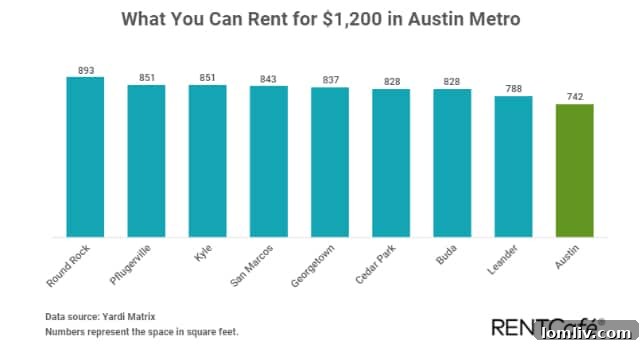
Austin, the vibrant state capital and a booming technology hub, also falls into the category of cities with tighter spaces for the given budget. Here, $1,200 will secure approximately 742 square feet. Austin’s rapidly growing population, driven by a thriving job market and a desirable lifestyle, has consistently pushed rental prices upwards, making larger units more expensive. These figures highlight the economic dynamics at play: highly desirable locations with robust economies and strong community amenities often command higher prices per square foot, a common trend observed in leading urban centers across the nation.
Leveraging RENTCafé for Informed Decisions
Understanding the nuances of the Texas rental market is key to making an informed decision. For prospective renters seeking a more in-depth exploration, RENTCafé provides an invaluable suite of tools and resources. Their website offers additional breakdowns by city, neighborhood, and apartment type, allowing users to drill down into specific areas of interest. Moreover, RENTCafé features an intuitive calculator designed to help individuals determine precisely how much apartment space they can rent based on their specific budget and desired location. This personalized approach empowers renters to find the perfect home that meets both their financial constraints and lifestyle needs.
Beyond simply analyzing square footage, RENTCafé has also conducted a parallel study focusing on the “sweetest mix” of luxury and amenities within Texas’s rental landscape. This report highlights cities and developments that excel in offering spacious layouts, premium amenities like state-of-the-art fitness centers, resort-style pools, and modern co-working spaces, all while maintaining competitive pricing and desirable locations. For those with a slightly more flexible budget or a preference for high-end living, this study offers a compelling guide to finding apartments that offer exceptional value in a luxurious setting, making it easier to define what “luxury” truly means in the Texas rental market.
Other Notable Reports Influencing the DFW Housing & Rental Market
Understanding the rental market requires a broader perspective, often influenced by the dynamics of the homeownership market. Recent reports shed further light on the evolving real estate landscape in Dallas-Fort Worth:
- RE/MAX National Housing Report for April 2021: This comprehensive report highlighted a remarkable surge in the DFW housing market. Home sales in the metroplex jumped an impressive 26 percent over the previous year, signaling robust demand. Concurrently, home sales prices saw a significant increase of 17 percent, pushing the current median home sales price in DFW to $335,000, up from $286,494 a year prior and $323,995 just a month before the report. Perhaps the most striking statistic was the drastic reduction in housing inventory: last year, 23,023 homes were on the market in DFW, a number that plummeted to a mere 7,860 this year. This severe supply-demand imbalance in the homeownership market inevitably exerts upward pressure on rental demand and prices, as many prospective homebuyers are priced out or face limited options, turning to the rental market instead. Explore the full RE/MAX report for more details on DFW home sales trends.
- LendingTree Study on Rent vs. Own: A separate study by the mortgage lending firm LendingTree provided crucial insights into the financial advantages of renting over owning in the Dallas area. According to their analysis, the median cost of renting a home in Dallas is $619 a month less than the expense of paying for a home with a mortgage. The median monthly home rental cost was identified as $1,139, compared to a median homeownership expense of $1,759. This substantial difference highlights that, for many, renting offers a more financially accessible and often flexible living arrangement. Nationwide, the average cost of renting a home is $606 cheaper than owning one, positioning Dallas slightly above the national average in terms of rental affordability relative to ownership costs. This data is vital for individuals weighing their housing options, indicating that renting can be a strategically sound financial decision in the Dallas market, allowing for greater savings or investment opportunities. Discover more about comparing rent vs. owning in major metros through the LendingTree study.
The Texas Advantage: Space, Affordability, and Growth
The Texas rental market, particularly within the dynamic DFW metroplex, continues to offer compelling opportunities for renters. The ability to secure significantly more square footage for a budget of $1,200 compared to national averages, coupled with the insights from various market reports, paints a clear picture. While certain sought-after areas like Flower Mound and Austin command a premium for space, cities like Greenville and Balch Springs present exceptional value, often with close proximity to major economic centers.
The broader economic landscape, characterized by robust job growth, no state income tax, and a diverse range of urban and suburban environments, contributes significantly to Texas’s allure. Understanding the interplay between soaring home prices, dwindling inventory, and the relative affordability of renting versus owning, empowers individuals to make the best housing decisions for their circumstances. Whether you prioritize expansive living space, a vibrant urban lifestyle, or a financially prudent approach to housing, the Texas rental market offers a spectrum of choices, readily illuminated by detailed market analyses from trusted sources like RENTCafé and other prominent research firms.