

The dynamic real estate market constantly presents new opportunities and challenges for investors and homeowners alike. Understanding key trends—from the profitability of home flipping to shifts in median home prices and overall sales volumes—is crucial for making informed decisions. This week, we dive deep into the latest real estate data, examining how specific Dallas-Fort Worth (DFW) zip codes stack up against national home flipping benchmarks, reviewing August’s home sales performance in North Texas, and analyzing broader statewide housing trends across Texas. Join us as we uncover the most recent insights shaping the property landscape.
Decoding Home Flipping Trends: National Averages vs. DFW’s Performance
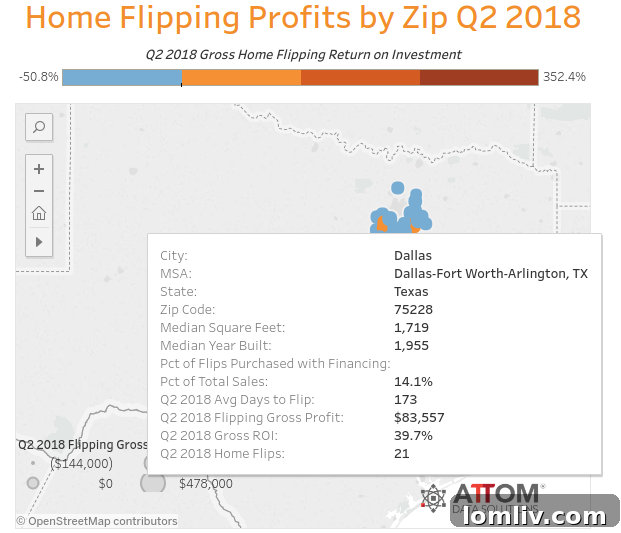
The world of home flipping continues to be a closely watched segment of the real estate market. While the national average gross profit for home flipping settled at approximately $65,520 during the second quarter of 2018, certain areas within Dallas-Fort Worth demonstrated remarkable profitability, significantly outpacing this national figure. According to ATTOM Data Solutions’ Q2 2018 U.S. Home Flipping Report, Dallas’s 75243 zip code yielded an average gross profit of $78,250—a substantial lead over the national average. Even more impressive was the 75228 zip code in Dallas, which reported an average gross profit of $83,557, highlighting pockets of exceptional performance within the DFW metroplex.
Beyond just profit margins, the report also provided critical insights into the operational efficiency of flipping activities. In the 75243 zip code, properties were held for an average of 169 days from purchase to flip, generating a robust 41.5 percent gross Return on Investment (ROI) in Q2. This indicates a relatively swift turnaround time coupled with healthy returns for investors in this particular area. Meanwhile, Fort Worth’s 76131 zip code also showed competitive figures, with a median ROI just under the national average at $62,456. Flippers in this area managed an even quicker turnaround, averaging 150 days from purchase to flip, and securing an impressive 52.7 percent Q2 ROI on their investments. These localized data points underscore the diverse market dynamics present even within a single metropolitan area.
However, not all flipping ventures proved profitable, illustrating the inherent risks involved. A particularly noteworthy case emerged from McKinney’s 75071 zip code, where the average time from purchase to flip extended to 198 days, and, strikingly, the average profit was a negative $7,750. This anomaly suggests potential challenges such as overestimation of market value, unexpected renovation costs, or a slowdown in buyer demand within that specific locale. Such instances serve as a crucial reminder for investors to conduct thorough due diligence and understand micro-market conditions before embarking on flipping projects.
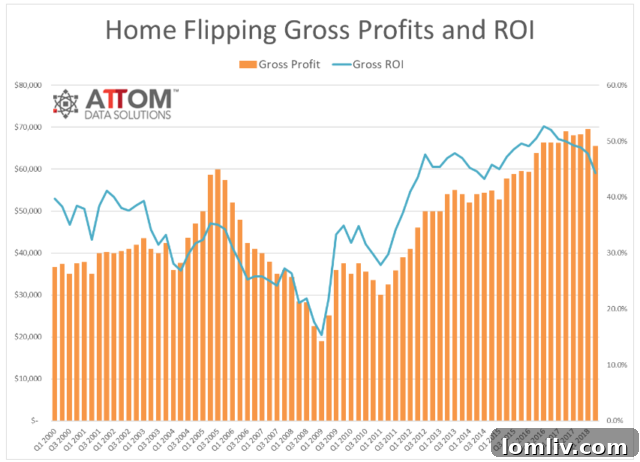
On a national scale, the second quarter of 2018 signaled a notable shift in the flipping market. Homes flipped during this period recorded an average gross ROI of 44.3 percent, a dip from 47.8 percent in the preceding quarter. This marked the lowest average gross flipping ROI since Q3 2014, signaling a tightening market for investors. A total of 48,768 single-family homes and condominiums were flipped in Q2, accounting for 5.2 percent of all sales—a decline from 6.6 percent in Q1. The average profit per flip, while still substantial, also decreased from $69,500 in the previous quarter to $65,520.
Daren Blomquist, senior vice president at ATTOM Data Solutions, offered critical insights into these trends. He noted that a reduction in distressed sales—properties typically acquired at a discount—was limiting flippers’ ability to secure deep discounts on purchases. Concurrently, rising interest rates were shrinking the pool of potential buyers for flipped homes, creating a double squeeze on average flipping returns. Blomquist emphasized that these factors were pushing investors to explore alternative strategies, such as leveraging financing more strategically or seeking out markets where more distressed properties were still available, to achieve more favorable returns. The report further supported this observation, indicating that only 32.3 percent of homes flipped in Q2 were acquired through distressed sales, down from 35.8 percent in Q1, highlighting a significant shift in acquisition strategies within the flipping community.
North Texas Real Estate: Median Prices Rise Amidst Cooling Sales
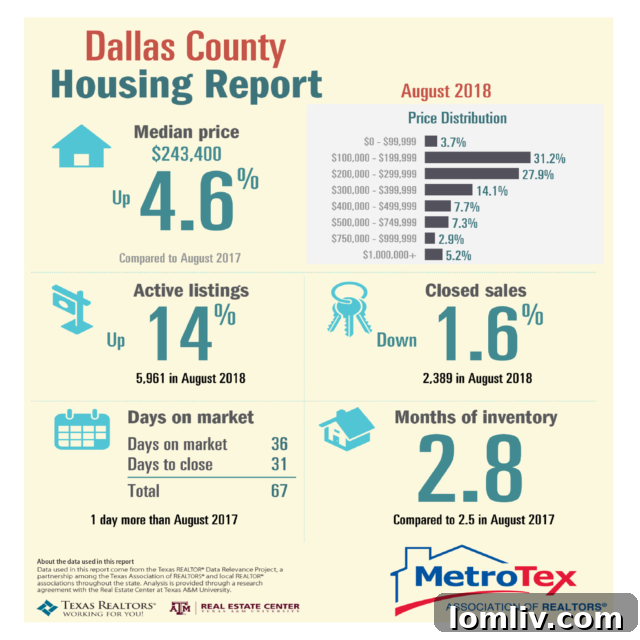
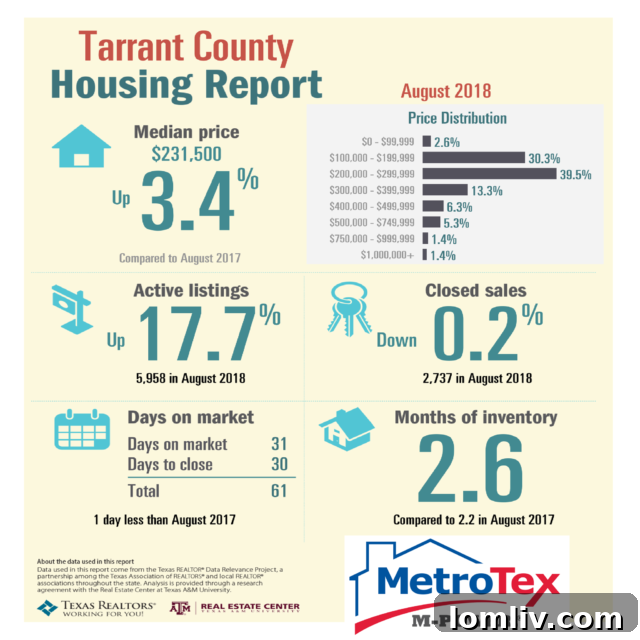
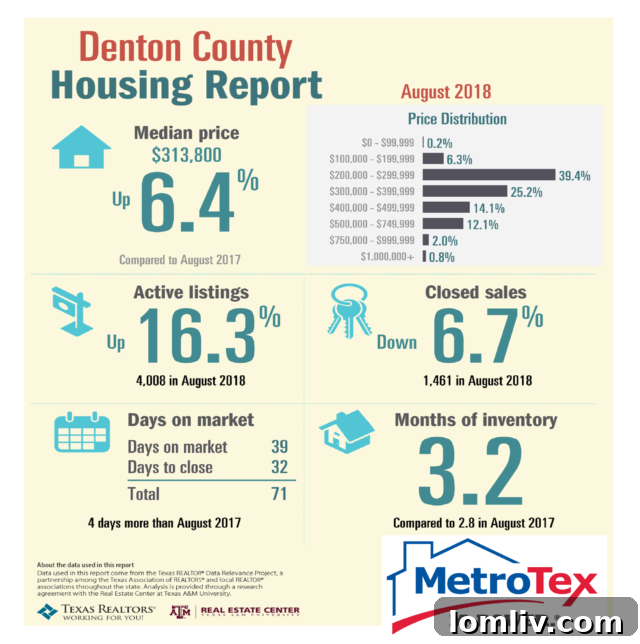
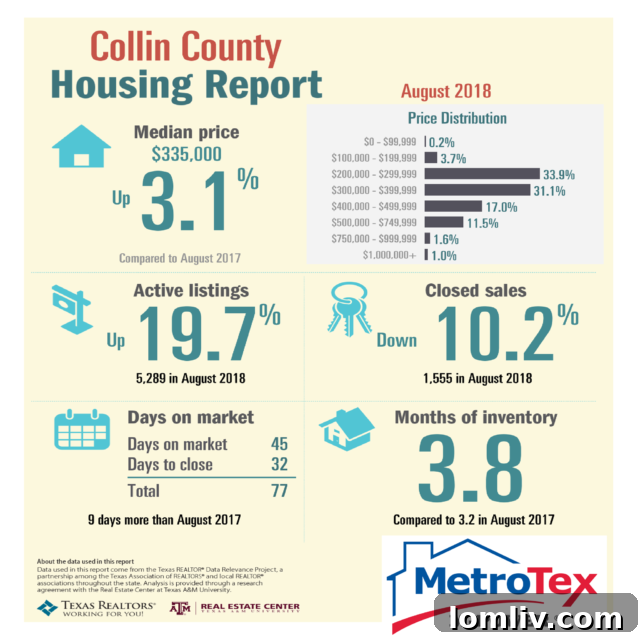
The North Texas housing market presented a mixed picture in August, as revealed by the latest report from the MetroTex Association of REALTORS®. While median home prices continued their upward trajectory across the region, indicating sustained buyer demand and potentially limited inventory, the percentage of closed sales experienced a decline. This divergence suggests a market grappling with affordability challenges and perhaps a slight cooling in transaction volume despite persistent price appreciation. The trend of rising prices coupled with fewer closed sales can often point to a highly competitive market where available homes are quickly bid up, yet the sheer volume of transactions may be constrained by a scarcity of listings or evolving buyer purchasing power.
For prospective homebuyers, this scenario means navigating a market where prices are appreciating, requiring greater financial commitment. For sellers, it reinforces the strong position they hold, often receiving multiple offers for well-priced and well-maintained properties. The MetroTex report provides crucial data points for understanding these regional shifts, offering a snapshot of the delicate balance between supply, demand, and affordability that defines the North Texas real estate landscape. These trends warrant close monitoring for anyone invested in or looking to enter the DFW market.
Texas Housing Market: Sustained Growth in Sales and Prices Statewide
Across the entire state of Texas, the real estate market continued its robust performance, demonstrating sustained growth in both home sales and median home prices during the second quarter of 2018. The 2018-Q2 Texas Quarterly Housing Report, released by the Texas Association of REALTORS®, highlighted these positive trends, reinforcing Texas’s reputation as a dynamic and attractive housing market.
Statewide, a remarkable 100,227 homes were sold in Q2, marking a healthy 2.8 percent increase year-over-year. This consistent growth in sales volume underscores strong demand from a growing population and a thriving economy. Hand-in-hand with increased sales, the median home price across Texas rose by 4.4 percent, reaching $238,000. This appreciation reflects the state’s economic vitality and the competitive environment for home buyers. A significant portion of these transactions—59.4 percent of all homes sold—fell within the $100,000 to $299,999 price range, indicating a strong market for moderately priced homes, which are often sought after by first-time buyers and those seeking affordability.
Analyzing the supply side of the market, active listings saw a modest 0.3 percent increase year-over-year in Q2, totaling 110,300 listings. While an increase in listings is generally positive, the market still exhibited signs of tight inventory. Homes spent an average of 87 days on the market, a slight reduction of one day compared to Q2 2017. This shorter market time suggests that properties, once listed, are being absorbed relatively quickly by eager buyers. Perhaps the most critical indicator of market health, the months of housing inventory, decreased to 3.9 months. This figure is significantly below the desired benchmark of 6 to 6.5 months, which typically signifies a balanced market where neither buyers nor sellers have a distinct advantage. A housing inventory level below 6 months indicates a strong seller’s market, characterized by increased competition among buyers, rapid price appreciation, and often multiple offers for available properties. This sustained low inventory suggests that demand continues to outpace supply across Texas, exerting upward pressure on home values and making it a more challenging environment for buyers, particularly those on a limited budget. These comprehensive statewide statistics paint a clear picture of a flourishing Texas housing market, albeit one where buyers must act swiftly and decisively.