

The landscape of urban development in Dallas is undergoing a significant transformation, particularly within its critical permitting processes. For builders, developers, and residents alike, the once-daunting journey of securing a building permit from the City of Dallas is progressively becoming more efficient and streamlined. City officials have proudly announced a major milestone: the infamous building permit backlog, which previously plagued the city, has been effectively eliminated. This remarkable turnaround signifies a pivotal moment for Dallas’s growth and development trajectory.
This positive shift is the culmination of strategic changes implemented over the past seven months, spearheaded by Andrew Espinoza, who took the helm at Dallas Development Services. His appointment marked a new chapter for a department that had been grappling with severe operational challenges, reflecting a concerted effort by city leadership to address a crisis that had significant economic repercussions.
Prior to these interventions, the permitting system faced a near-disastrous backlog, a direct consequence of a perfect storm of factors. Pandemic-induced delays severely disrupted operations, exacerbating existing inefficiencies. An antiquated record-keeping system proved inadequate for the demands of a rapidly growing city, leading to bottlenecks and errors. Furthermore, onerous, outdated processes created unnecessary hurdles, slowing down every stage of the application review. Last year, frustrated builders reported agonizing delays, often waiting more than ten weeks just to secure a permit, causing project setbacks, financial losses, and a palpable sense of uncertainty within the construction industry.
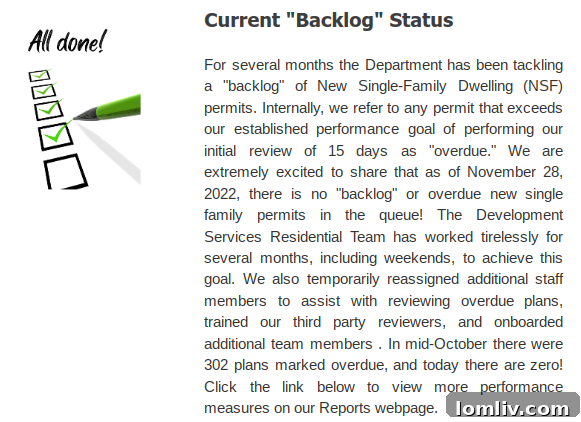
The scale of the improvement is evident in the numbers. In a December report, Espinoza confirmed that there were zero “overdue” new single-family permits remaining in the queue. For Dallas Development Services, the term “overdue” is specifically defined as permit applications that have been held for 15 days or more, awaiting review. This metric serves as a crucial indicator of efficiency and responsiveness. To put this achievement into perspective, just a few months prior, in mid-October 2022, there were 302 plans languishing under the “overdue” status. By December, this figure had dropped to an unprecedented zero, a testament to the dedicated efforts of the Development Services team and the effectiveness of the new strategies.
A Quiet Yet Monumental Achievement for Dallas Development
While the elimination of the permit backlog represents truly monumental news for the Dallas building and real estate sectors, this significant achievement was not broadcast from the rooftops with widespread fanfare. In fact, many in the community, including industry observers, stumbled upon this critical update while researching other minor programmatic changes, such as those related to the Rapid Single-Family VIP Program. This understated approach to publicizing such a vital success highlights a potential area for improvement within the department’s communication strategy.
It’s perhaps for this very reason that Dallas Development Services is now actively advertising for the position of a senior public information officer. A dedicated communications professional could significantly benefit the department by effectively disseminating news of such achievements, fostering greater transparency, and rebuilding public and industry confidence. Enhanced self-promotion would not only acknowledge the hard work of city staff but also inform the community about the ongoing improvements designed to support Dallas’s dynamic growth.
Phil Crone, the Executive Officer of the Dallas Builders Association, has been a vocal critic of the permit backlog in the past, openly expressing concerns about the severe lack of attention given to the issue. He consistently highlighted how builders were losing substantial money and, in many cases, forced to take their valuable projects to neighboring cities with more efficient permitting systems. However, Crone’s role extended beyond criticism; he stepped up in an crucial advisory capacity, actively collaborating alongside Andrew Espinoza and other city leaders. This partnership was instrumental in identifying root causes and collectively devising sustainable solutions to address the permitting crisis.
Commenting on the recent developments, Crone shared his optimistic assessment with daltxrealestate.com, stating, “The city has, by and large, eliminated the backlog of homes in the permitting system.” He attributed this success to a combination of factors: “This is a combination of the marked downturn in inbound permits, but also a direct result of the city’s focus on getting through the acute phase of the permitting crisis. [Andrew] Espinoza and his team deserve a lot of credit for getting to this milestone.” While celebrating the progress, Crone also emphasized the forward-looking imperative: “Over the next several months, we need to keep working on the people, process, and policy improvements that’ll ensure this does not happen again.” His insight underscores the importance of sustained effort to maintain efficiency and prevent future recurrences of the backlog.
Innovating for Speed: The Rapid Single-Family VIP Program (RSVP)
Further demonstrating the city’s commitment to enhancing efficiency, Crone highlighted a recent upgrade to the Rapid Single-Family VIP Program (RSVP) as particularly welcome news for local builders. Launched in September, the RSVP program was a direct response to the urgent need for faster permit turnaround times. Its groundbreaking feature allows qualified builders to bypass lengthy queues and obtain a home construction permit on the very same day the application is filed, a stark contrast to the weeks or months of waiting experienced during the backlog crisis. This rapid review process provides an invaluable advantage for builders, enabling them to initiate projects more quickly, manage timelines more effectively, and reduce overall project costs.
Initially, the program came with a specific stipulation: qualifying projects had to be for new single-family homes no larger than 3,000 square feet. This limitation, while understandable in the program’s early phase as the city tested its capacity, restricted its accessibility for builders working on larger residential projects. The decision to include this initial size constraint likely aimed to manage the program’s initial load and ensure that the rapid review could be effectively delivered for a defined segment of applications.
In a significant expansion announced last week, Andrew Espinoza confirmed that the maximum square footage requirement for the RSVP program has been entirely eliminated. This strategic adjustment opens the program up to a much broader range of projects, directly addressing feedback from the building community. “Our RSVP team will accept applications and review plans for single-family dwellings of any size,” Espinoza stated, underscoring the city’s commitment to inclusive service. He further added, “We want to ensure all Dallas home builders have the opportunity to utilize this service,” signaling a more equitable and comprehensive approach to permit facilitation.
Despite this significant expansion, there remain a few minor hurdles for builders seeking permits with the expedited turnaround time offered by the RSVP program. Crone clarified these exceptions: “The expedited review process will now be available for essentially every new single-family home provided it is not located in a complex [planned development], historic/conservation district, floodplain, or shared-access development.” These exclusions are typically due to the inherent complexities associated with zoning regulations, environmental considerations, or shared infrastructure requirements in such areas, which often necessitate more detailed scrutiny and specialized review processes that extend beyond the rapid review framework.
The Dallas BA executive officer expressed considerable satisfaction that the RSVP program has expanded to include virtually all single-family homes, provided they do not fall into these complicated zoning or environmental situations. “From what I’ve heard, it has been a valuable service to everyone using it who has their ducks in a row and needs a quick turnaround on plan review,” Crone noted. This caveat about “having their ducks in a row” highlights the importance of thorough and complete application submissions from builders, as incomplete documentation can still cause delays, even within an expedited system. For qualifying projects, a minimum $200-per-hour expedited plan review fee is assessed, reflecting the premium service provided for rapid processing.
Sustaining Progress: Competitive Salaries and Employee Retention
The substantial improvements witnessed at Development Services, particularly the elimination of the permit backlog, are a direct result of immense effort. The department reported that its residential team “worked tirelessly for several months, including weekends” to achieve its ambitious goal. Beyond the dedication of existing staff, the department implemented several crucial measures to boost capacity and efficiency. “We also temporarily reassigned additional staff members to assist with reviewing overdue plans, trained our third-party reviewers, and onboarded additional team members,” Espinoza explained. These strategic adjustments were critical in tackling the accumulated backlog and establishing a more resilient review process.

While acknowledging these significant achievements and recognizing them as unequivocally good news for Dallas, Phil Crone emphasized the critical importance of remaining vigilant to ensure the sustainability of these new programs and improved response times. He articulated a key challenge facing the city: “For example, one of their biggest challenges is going to be ensuring the Development Services employees who we count on are paid competitively and are incentivized for productivity and innovation.” This point is particularly salient given the competitive job market and the highly specialized skills required for roles within development services, especially for engineers and urban planners.
Crone specifically pointed to a persistent issue: “In particular, Dallas continues to have significant problems retaining engineers.” The implications of losing skilled engineers are far-reaching, affecting not just permit reviews but also the city’s ability to manage complex infrastructure projects, ensure public safety through rigorous code enforcement, and plan for future growth. He elaborated on the market dynamics at play: “In some cases, the market is dictating that they be paid as much as assistant directors and I think that’s causing some consternation inside City Hall. Regardless, they need to meet the market where it is and ensure top talent isn’t lost to competing cities.” Losing experienced professionals to other municipalities or the private sector due to uncompetitive salaries poses a long-term threat to the department’s ability to maintain efficiency and handle increasing development demands.
The crucial initiatives of ensuring competitive pay and robust employee retention were not overlooked during recent city planning. These issues were addressed during the city’s comprehensive budget process, where funding and policy adjustments were considered to tackle these workforce challenges. Furthermore, an in-depth audit conducted by Matrix Consulting Group also identified staffing and compensation as critical areas needing reform. The sustained focus on these elements—people, process, and policy—will be paramount in solidifying Dallas’s reputation as a city that not only welcomes development but actively facilitates it with efficiency and foresight.