Editor’s Note: This is the third installment in a captivating and hopefully regular series from Jon Anderson, offering an insightful and often humorous look into the intricacies of Dallas high-rise living. Anderson’s unique perspective masterfully blends entertainment with valuable educational content on urban real estate. For those new to the series, you can explore his first installment here and his second installment here.
By Jon Anderson
Special Contributor
Discovering Dallas’ Mid-Century High-Rise Gems: A Journey Through Early Urban Luxury
Dallas, a city known for its dynamic skyline, boasts a rich architectural heritage that often goes unnoticed in its towering modern developments. While today’s luxury high-rises grab headlines, the foundational residential towers of the 1950s and 1960s set the stage for urban living in the Metroplex. These pioneering structures not only introduced a new lifestyle to Dallas residents but also laid the groundwork for the vibrant high-rise market we see today. They represent a fascinating era of architectural ambition and evolving urban desires.
The Dawn of Dallas’ Vertical Living: Buildings of the 1950s and 1960s
The late 1950s marked the beginning of a transformative decade for Dallas real estate, as the city saw the emergence of its very first residential high-rises. These iconic Modernist buildings were designed to offer a blend of sophistication and convenience, catering to a growing demand for elevated urban living. Among these architectural trailblazers were a distinctive quintet of buildings gracefully situated along the scenic Turtle Creek corridor: 3525 Turtle Creek, Turtle Creek North, Park Towers, “21,” and The Gold Crest. Further expanding the city’s vertical landscape, Athena and Preston Tower rose majestically on Northwest Highway, providing similar upscale living opportunities.
With the notable exception of “21,” which was originally developed as low-income housing by HUD, these early high-rises primarily served as upscale pied-à-terres or expansive full-scale residences. They attracted discerning individuals who sought the allure of urban high-rise living without being directly immersed in the then-lifeless downtown core. Their strategic locations offered residents captivating “city lights” views while maintaining a serene distance, striking a perfect balance between city vibrancy and residential tranquility.
A Glimpse into High-Rise History: Co-ops, Condos, and the Housing Act of 1961
It’s an intriguing piece of real estate trivia that these pioneering buildings initially operated as either cooperative apartments (co-ops) or traditional rental properties. The pivotal shift to condominium ownership, a now ubiquitous model, was largely enabled by Section 234 of the Housing Act of 1961. This landmark legislation empowered the Federal Housing Administration (FHA) to insure mortgages specifically for condominiums, democratizing ownership in multi-unit buildings. By 1969, all states had enacted laws governing the creation of condominiums, a movement first spearheaded by Puerto Rico in 1958, with the first continental U.S. condo building emerging in Salt Lake City.
This historical evolution from co-ops and rentals to condominiums left a unique legacy for many of these properties: master meters for utilities. This means that instead of individual utility bills, residents typically receive a single, consolidated bill for electricity, water, and sometimes gas, which is then divided among owners. This portion is usually integrated into the monthly Homeowners Association (HOA) dues. While convenient, this system requires careful consideration when evaluating HOA fees, especially in light of potentially high summer electricity bills in Texas. Prospective buyers should always factor this all-inclusive cost structure into their financial planning.
Featured High-Rise Residences on Turtle Creek
3525 Turtle Creek – Dallas’ Pioneering Residential High-Rise
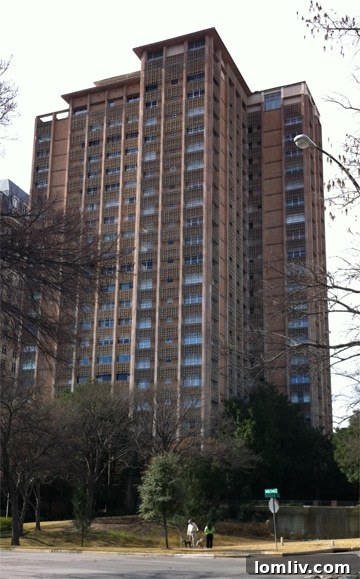
Completed in 1957, 3525 Turtle Creek stands as a testament to Dallas’ early foray into residential high-rise architecture. Affectionately (or perhaps infamously) dubbed the “prison ship” by some, including myself, due to its polarizing concrete lattice exterior, this building is a masterpiece of architect Howard R. Meyer. While my personal aesthetic leans differently, the architectural purists at the National Register of Historic Places, where this building is proudly listed, correctly identify the lattice as a brise soleil – a sun-shading architectural feature that admittedly sounds far more elegant in French, even if its visual impact remains a point of contention for me. Regardless of subjective taste, residents often express deep affection for its unique character, and the views framed by the concrete can be truly spectacular, depending on the floor and orientation.
Beyond its distinctive façade, the units within 3525 Turtle Creek are remarkably spacious. With an original layout of five units per floor, even the smallest one-bedroom residences span nearly 1,200 square feet – a size almost unheard of in today’s high-dollar, space-conscious high-rises. To put this into perspective, the smallest living room in the building measures an impressive 18’ x 23’, rivaling the entire footprint of many modern studio apartments. Consistent with the architectural trends of its era, these units also feature expansive patios, though many have unfortunately been enclosed over the years.
For a long time, the public spaces, including the lobby and pool areas, felt jarringly dated. I vividly recall the elevators, reminiscent of a 1980s disco with their polished stainless steel, brass accents, and theatrical make-up mirror lighting. However, since 2011, a comprehensive capital expenditure plan has been actively updating these common areas, and the transformation has been truly impressive. The building also offers hotel-room-like guest suites for visitors, though these too were in dire need of redecorating; one, I remember, bore an unsettling resemblance to an early American brothel. An interesting historical note: 3525 Turtle Creek once possessed an extensive plot of land, a portion of which was later sold in the early 2000s to make way for the Vendome development.
In my assessment, the HOA dues at 3525 Turtle Creek are notably high, approaching the stratospheric levels seen at luxury properties like the Ritz Residences. While these dues do cover all utilities, the amenity list offered here doesn’t quite match the comprehensive luxury services provided by the Ritz. The term “concierge” service at 3525, for instance, refers more to helpful porters who assist with groceries and package deliveries, rather than a true concierge capable of booking restaurant reservations or securing event tickets. Valet parking is available, but this is more a practical necessity given the distance to the parking structure rather than an added luxury convenience.
In recent years, many units appearing on the market have been estate sales, often presenting in original, rough, or dated condition. For a lattice-loving renovator, however, the sheer amount of space is an unbeatable advantage. Aspiring for open-concept living? Simply removing the wall separating the kitchen from the main living areas in many of these units can instantly transform the space, bringing it squarely into the 21st century. For those eager to delve deeper, Nancy Martinez from Virginia Cook maintains a robust website that is chock-a-block with invaluable information and detailed floorplans – a resource all high-rises should ideally provide.
Turtle Creek North (3701 Turtle Creek): A Hidden Gem for Efficient Urban Living
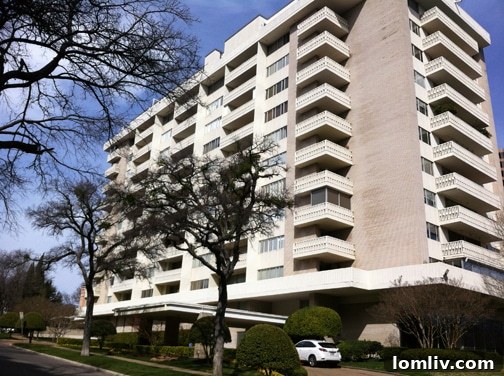
Located at 3701 Turtle Creek, this mid-size high-rise stands out as a genuine gem in the Dallas high-rise landscape. Offering a thoughtful mix of one and two-bedroom units, its residences, while not as sprawling as those in some other buildings of the era, are exceptionally functional and well-suited for comfortable living for individuals or couples. The kitchens feature a partially open-concept design, striking a balance between privacy and modern flow. However, some of the bathrooms are notably compact, and certain layouts, particularly in the G and H units, can be a bit quirky in their configuration. An interesting tidbit for celebrity watchers: Jerry Hall, Mick Jagger’s ex-wife, is rumored to own a unit in this building. While Carolyn Shamis’ offices are conveniently located on the ground floor, many of the listings for Turtle Creek North often seem to be handled by Grant Vancleve at Coldwell Banker.
For those prioritizing value and maximizing their HOA dollar, Turtle Creek North is arguably the ideal choice. The HOA fees are remarkably reasonable, especially considering they cover all utilities – a significant financial advantage in today’s market. The primary drawback to consider is its 2-pipe HVAC system, which means the building operates on either heat or air conditioning exclusively, not a blend of both simultaneously. This can lead to less-than-optimal comfort during those tricky in-between seasons when temperatures fluctuate. For prospective renovators, the building’s solid construction and layout mean there are fewer structural walls that typically need extensive demolition. A significant update can often be achieved by refreshing kitchens, bathrooms, and flooring, with the crucial first step almost always being the removal of the ubiquitous popcorn ceilings.
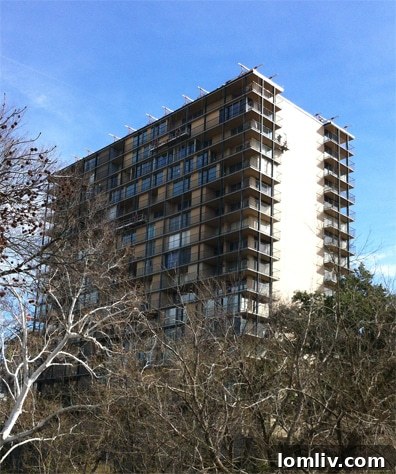
Park Towers (3310 Fairmount): Location, Layouts, and Lessons in Maintenance
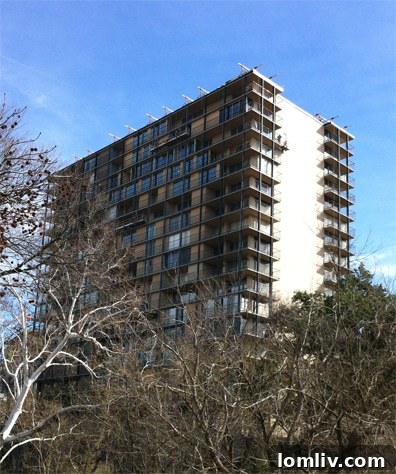
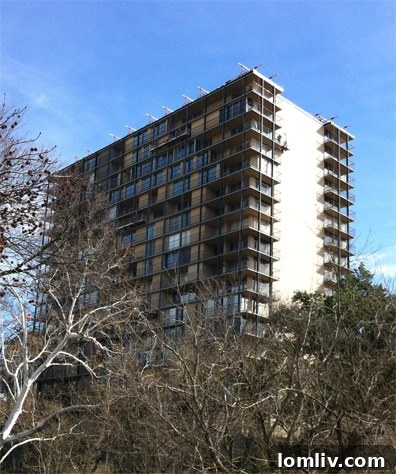
My admiration for Park Towers, located at 3310 Fairmount, is a tale of conflicting affections: I absolutely adore its location and ingenious floorplans, yet I’ve candidly described its exterior to my Realtor, Alan Hopper from Ebby, as resembling a tenement. Originally conceived as a dual-tower development, only one was ultimately constructed – a more common occurrence in real estate history than one might imagine. The building’s façade stands as one of the most glaring examples of the often-questionable 1970s and 80s trend of enclosing spacious balconies. While such enclosures at 3525 Turtle Creek are discreetly hidden behind its concrete lattice, and those at Athena on Northwest Highway maintain a degree of uniformity, Park Towers’ haphazard mix of balcony sizes, colors, and depths unequivocally earns my “tenement” label. What once proudly displayed ribbons of continuously flowing balconies now presents a disjointed appearance, resembling a collection of disparate sheds tacked onto the building.
Despite its exterior challenges, the building’s location is truly unparalleled – it’s absolute heaven. Park Towers is strategically sandwiched between the scenic Katy Trail, the verdant Reverchon Park, and is literally spitting-distance from Turtle Creek itself, placing residents within easy reach of their tonier neighbors at the Stoneleigh and Mansion Residences. However, prospective buyers should be aware that the pristine views from Park Towers are currently in flux. A recently completed Gables mid-rise apartment building has already obstructed city views for lower-floor residents, and plans for a future, decidedly deeee-luxe high-rise on the north side will undoubtedly further impact views, particularly for north-facing units.
The units, with six per floor, are predominantly two-bedroom layouts. The corner units offer side-by-side bedrooms, while the middle pairs feature a more desirable split-bedroom configuration. Adding a unique twist, the building includes three stories designated as “penthouses,” which accommodate three-bedroom units. While the concept of multiple stories comprising a “penthouse” might strike one as oxymoronic, akin to “jumbo shrimp,” many residents undoubtedly savor the added prestige of uttering “penthouse” to their assembled peers at a Zodiac lunch. A crucial caveat for potential buyers: Park Towers is a prime example of a building that, as referenced in my previous column, postponed necessary maintenance, a decision that eventually came back to haunt its residents. Just a couple of years ago, owners were hit with a heart-stopping special assessment amounting to approximately $30,000 per unit! While the building may have caught up on its deferred maintenance, owners must remain vigilant and guard against short-term thinking when it comes to capital improvements.
For renovators, anticipate facing interiors that are likely outdated in every conceivable aspect, along with the dreaded (and often shudder-inducing) popcorn ceilings that were so prevalent in the era.
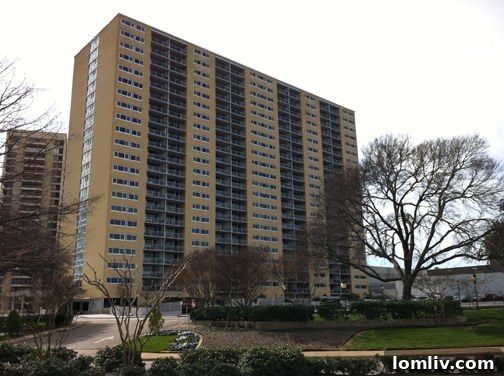
“21” (3883 Turtle Creek): A Unique Starter High-Rise with a Rich History
Situated at 3883 Turtle Creek, “21” stands as a true anomaly on the otherwise tony and exclusive Turtle Creek corridor. Its name, “21,” directly corresponds to the number of stories it rises, making it an unmistakable landmark. By far the largest residential building of its era, “21” houses approximately 400 units – a scale that remained unrivaled until the 1998 Renaissance, which packed around 600 units onto its plot. With 18 units per floor, the residences range in size from a compact 667 square feet to a more generous 1,337 square feet, with the majority falling into the 750- to 850-square-foot range. This contrasts sharply with the nearly 1,200 square feet of a one-bedroom at 3525 Turtle Creek, highlighting “21’s” focus on more efficient, accessible living, even offering a three-bedroom unit at 1,337 square feet.
The primary drawbacks of living in “21” often revolve around its design choices aimed at maximizing unit count. Residents frequently point to the microscopic bathrooms, which are so compact they’ve been humorously described as allowing one to sit on the toilet, have a leg in the tub, and still brush their teeth at the sink, often accompanied by the typhoon flush characteristic of grade-school facilities. Another significant consideration is the building’s communal laundry facilities; the prohibition against in-unit washers and dryers is so stringent that rumors persist of five-figure fines for attempting to install them. For many, the days of sharing laundry rooms with strangers are a distant memory they’d prefer not to revisit. Conversely, some units surprisingly feature excellent closet space, a welcome amenity in smaller living environments.
A few years ago, the building’s exterior underwent a comprehensive overhaul, dramatically enhancing its curb appeal and making it look better than ever. With its relatively modest prices for the prestigious Turtle Creek address, “21” has carved out a unique niche as the quintessential “starter-home in the sky” for singles and young professionals looking to embrace urban living in a prime location without the prohibitive costs associated with more exclusive properties.
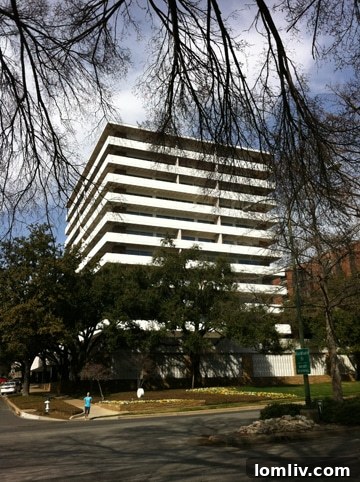
Gold Crest (3601 Turtle Creek): Dallas’ Exclusive Mid-Century Sanctuary
The Gold Crest, located at 3601 Turtle Creek, is often considered Dallas’ best-kept secret in the high-rise landscape. Built in 1964, this exclusive building comprises only 54 units, a scarcity that translates into an incredibly limited market presence, with typically just one or two listings appearing per year, often only after a probate sale. It stands as a strikingly beautiful 11-story structure, a masterpiece by renowned architect George Dahl, enveloped in elegant white bands of sweeping, continuous patios. From the units I’ve had the discreet pleasure of experiencing (huuuush!), a defining luxurious feature is that every single room boasts direct access to these expansive patios, blurring the lines between indoor and outdoor living.
The residences at Gold Crest are designed with true luxury in mind, ranging from 1 to 3 bedrooms and offering generous living spaces spanning approximately 1,000 to 4,000 square feet. Many units showcase original, smartly designed features such as true walk-in closets and bathrooms equipped with a separate tub and shower – amenities that speak to the thoughtful planning of its era. Over the years, some units have been skillfully combined to create even grander living environments, yet thankfully, the integrity and charm of the iconic patios have been meticulously preserved.
Predictably, the HOA dues at Gold Crest are on the pricier side. This is partly attributable to the building’s intimate size, which limits the ability to widely spread operational costs among a larger number of units. However, consistent with other premium buildings of its era, these dues are comprehensive, covering all utilities and even providing access to a guest suite for residents’ visitors. A word of caution for potential buyers: I’ve heard tales of a particularly intractable and potentially challenging HOA board, so conducting thorough due diligence and understanding the building’s governance is highly recommended before making a commitment.
For renovators, while acquiring a unit at Gold Crest may involve a patiently-waited-for opportunity, the reward is immense. These properties are prime candidates for a complete gut renovation, promising to transform into a truly fabulous, breathtakingly luxurious modern residence while retaining the timeless charm of its mid-century origins.
Looking Ahead: The Evolution of Dallas High-Rise Living
The residential high-rises of the 1950s and 1960s laid an indispensable foundation for Dallas’ urban development. These buildings, each with its distinct character, architectural quirks, and evolving amenities, represent more than just concrete and steel; they embody a pivotal era when Dallas began its journey skyward, embracing a new form of luxury and urban connectivity. From the grand scale of 3525 Turtle Creek to the exclusive allure of Gold Crest, these structures continue to offer unique living experiences steeped in history, proving that quality and thoughtful design endure through decades.
Stay tuned for the next installment of Jon Anderson’s compelling series, where he will continue to explore the remaining iconic buildings from this pivotal era, further uncovering the rich tapestry of Dallas’ high-rise residential history.