Texas State Representative Victoria Neave Faces Lawsuit Over $26,000 in Unpaid Property Taxes
Texas State Representative Victoria Neave, representing District 107 which includes vital communities in East Dallas and Mesquite, is currently embroiled in a significant legal dispute with Dallas County. The prominent Democrat legislator has been sued for a substantial amount exceeding $26,000 in delinquent property taxes on her residential property located on Abrams Road. This legal action has drawn considerable attention, sparking conversations about the financial accountability of elected officials and the transparency expected in public service.
Understanding the Dallas County Lawsuit: Key Details of the Tax Arrearage
Documents officially filed on a recent Tuesday brought to light the specifics of the financial delinquency, revealing that Representative Neave is in arrears to the tune of $26,760.73. The lawsuit explicitly names both Victoria Neave and Mark Scott Jr., identified as her former law partner and ex-fiancé, highlighting their joint responsibility for the property’s outstanding tax obligations. This legal proceeding underscores the rigorous nature of property tax collection in Texas, where failure to make timely payments can lead to severe consequences, escalating from penalties to court actions. For an individual holding public office, such a lawsuit introduces an additional layer of public scrutiny, intertwining personal financial matters with their professional reputation and constituents’ trust.
The implications of this legal challenge are far-reaching. Property taxes are a cornerstone of local government funding, directly supporting essential services that benefit the community, such as public schools, infrastructure projects, and emergency services. When a state representative faces allegations of non-payment, it raises serious questions about their personal fiscal management and, by extension, their capacity to oversee public funds and uphold legal statutes. The Dallas County Tax Assessor-Collector’s office, tasked with enforcing these crucial revenue collections, follows a strict process that can lead to accumulating late fees, legal suits, and ultimately, the potential auction of the property to satisfy the debt. This stringent approach serves as a reminder of the paramount importance of property tax compliance for all residents, including those in positions of power.

The Abrams Road Property: A Web of Contradictions and Disclosure
Public Officials and Protected Property Records
The initial report from the Texas Monitor brought to light a fascinating aspect concerning the Abrams Road property’s public records. It was observed that the names of Neave and Scott were not readily visible on Dallas Central Appraisal District records. This was attributed to a specific provision within Texas law, meticulously designed to safeguard the residential addresses of certain public officials, including prosecutors and elected representatives, from being publicly accessible due to security concerns. Given Mark Scott Jr.’s previous role as an assistant County prosecutor and Neave’s current status as a State Representative, it is highly probable that they availed themselves of this protective measure to maintain privacy.
However, the subsequent filing of the property tax lawsuit against both individuals inadvertently bypassed this privacy shield, rendering the Abrams Road address a matter of public record. This development highlights a persistent tension between the need for security for public figures and the fundamental democratic principle of transparency. While the intent behind such protective legal provisions is understandable, their practical application can sometimes lead to unforeseen public disclosures through the legal system, bringing private details into the public eye.
Conflicting Statements: Ownership and Responsibility
In the wake of the lawsuit’s public filing, Representative Neave chose to respond via email to the Texas Monitor, opting out of a direct interview. In her statement, she candidly acknowledged the situation: “Despite my best efforts to make payments, I take full responsibility for being in arrears. I am expediting the process to put the house back on the market and am working on settling the past due balance as soon as possible.” This response indicated an acceptance of the debt and a clear intention to resolve the matter, strongly suggesting her continued connection to the property.
The narrative took an unexpected and perplexing turn when Mark Scott Jr. was approached for comment. Scott reportedly denied any current ownership of the property, stating unequivocally, “No, I sold that home in 2015; this is news to me.” He elaborated further, emphasizing his detachment: “I take care of business. I moved on, have another house, and am not aware of this [lawsuit].” This assertion directly contradicts the claims made in the ongoing lawsuit and introduces significant ambiguity regarding the actual ownership and financial responsibilities linked to the Abrams Road residence.
Further compounding the complexity, official Dallas County property tax records present a different account. These records clearly indicate that the last recorded change of deed for the property occurred in 2011, when both Neave and Scott jointly acquired the home. Moreover, a campaign finance disclosure submitted by Representative Neave as recently as last year continued to list her as a co-owner of the property with Scott. These official records directly dispute Scott’s claim of having divested his share in 2015, thereby deepening the mystery surrounding the true nature of the property’s ownership and the allocation of its associated financial burdens. The stark discrepancies among public records, Scott’s public statement, and Neave’s admission of responsibility create a convoluted and challenging picture for both the public and legal authorities to fully decipher.
The Financial Realities of a Texas State Legislator
To fully grasp the financial context surrounding Representative Neave’s predicament, it is essential to examine her declared income streams. According to official state financial documents, her primary and consistent sources of income are her law firm and her state legislative salary. The compensation for a Texas State Legislator is set at a modest $600 per month. In addition to this base salary, legislators receive a per diem allowance of $190 for each day the legislature is officially in session. When factoring in the typical legislative session schedule, this income can amount to approximately $33,800 annually during periods when the legislature is actively meeting.
While this income provides a foundational living, managing a high-value asset such as the Abrams Road home – especially one with a contentious ownership history and a substantial outstanding tax bill – can undoubtedly pose considerable financial strains. Representative Neave’s financial disclosures also indicate that this property is listed as her sole investment, with her overall reported debt load being less than $110,000. This information, when considered alongside the property’s market value and the significant delinquent tax amount, suggests a potentially precarious financial balance, or perhaps, an oversight in managing her assets. A pertinent question then emerges: how did such a substantial tax delinquency accumulate, and what measures, if any, were taken to prevent it, given her declared financial standing?
A Detailed Look at the Abrams Road Home’s Real Estate Journey
The Abrams Road residence has a documented and somewhat complex history on the real estate market, marked by several attempts to sell the property over the years. This transactional past further contributes to the ambiguity surrounding its ownership and occupancy. According to MLS (Multiple Listing Service) records, the property was initially listed for sale in 2015 with an ambitious asking price of $1,495,000. At that time, Lydia Kennemore of Central Metro Realty managed the listing. Intriguingly, the Dallas Central Appraisal District concurrently valued the home at a considerably lower $660,000, revealing a substantial disparity between the listed price and the official appraisal. The asking price was subsequently reduced to $899,000, but despite this adjustment, the listing ultimately expired on November 11, 2016, without a successful sale.
A second attempt to sell the home commenced in May 2017, this time handled by Jan Stell of Ebby Halliday Realty. The property was listed for $750,000. This revised price point appeared to be more in line with comparable properties in the area, which ranged between $750,000 and $830,000. Despite this more realistic pricing strategy, this listing also expired without a sale on September 30, 2017. The repeated failures to sell the property, even after significant price reductions, raise questions regarding its market appeal, potential hidden issues, or the actual urgency and coordination of the sellers.
The Question of Residency: Who Occupies the Abrams Road Home?
Adding another layer of complexity to this unfolding saga is the unresolved question of who currently resides at the Abrams Road property. Public records indicate that when Representative Neave was arrested for driving while intoxicated (DWI) in 2017, her driver’s license listed her address as the White Rock Apartment Villas. Furthermore, prior to this incident, she had publicly stated that she moved out of the Abrams Road home following her separation from Mark Scott Jr. and that the property was being prepared for sale.
Given these documented statements and official records, it remains highly ambiguous as to who, if anyone, has been occupying the Abrams Road residence since Representative Neave’s reported departure. This lack of clarity further complicates the determination of responsibility for the property’s upkeep, maintenance, and, crucially, its ongoing financial obligations, including the accumulating property taxes. The elusive residential status of either co-owner at the property contributes significantly to the overall murkiness and uncertainty of the entire situation.
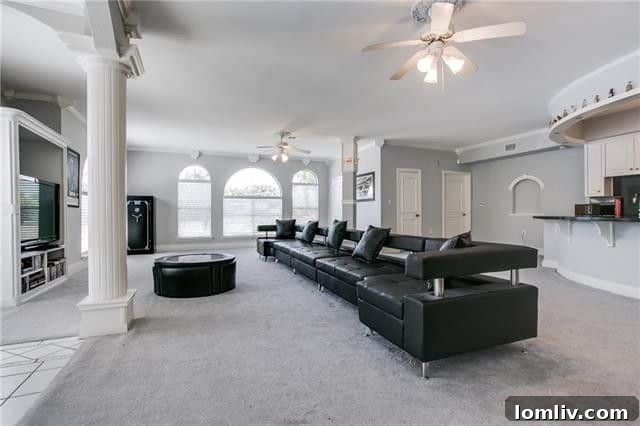
A Tour Inside: The Opulent Features of the Abrams Road Residence
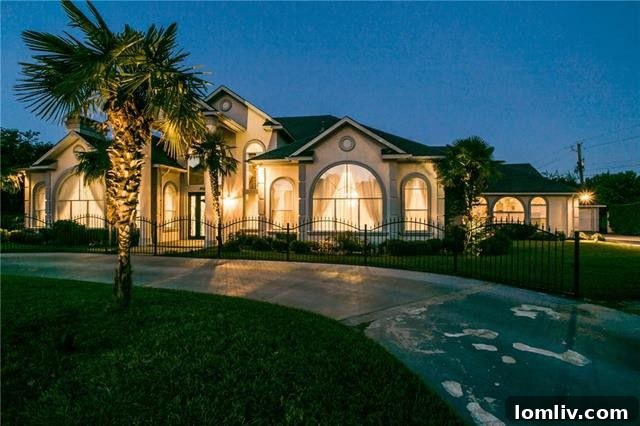
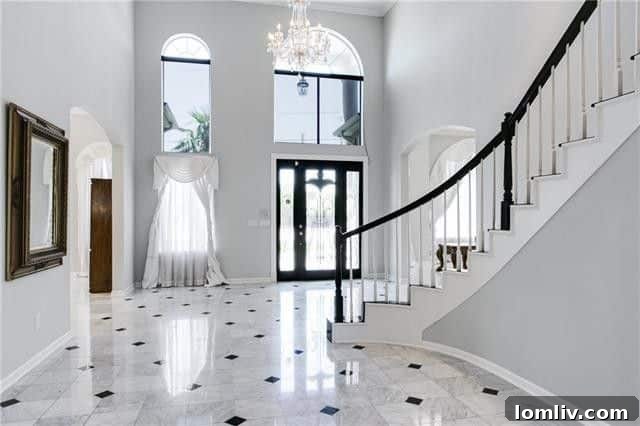
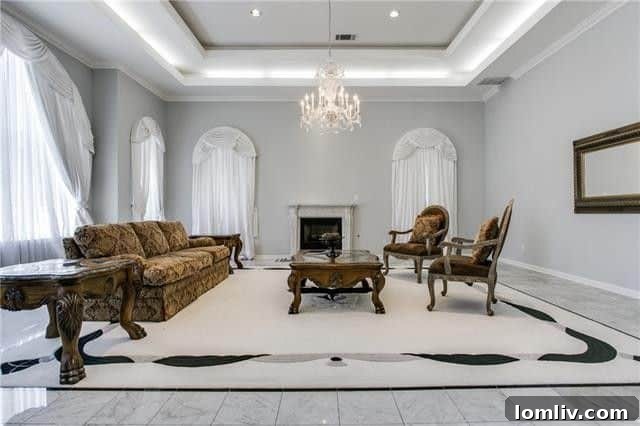
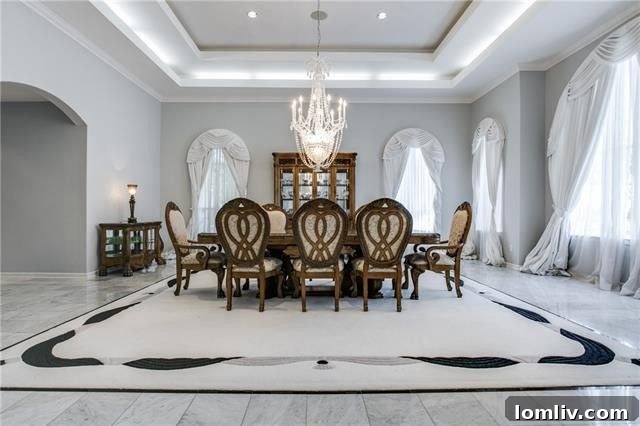
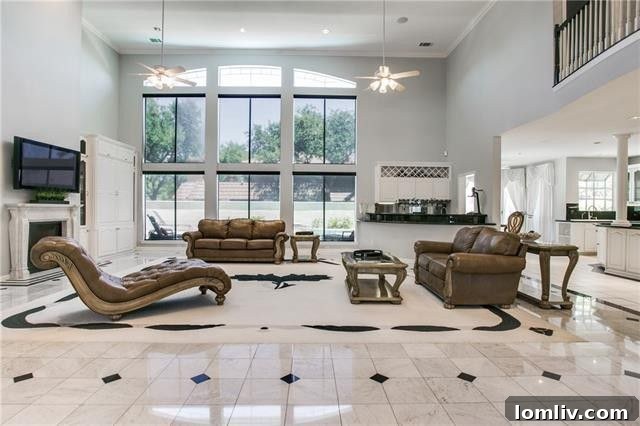
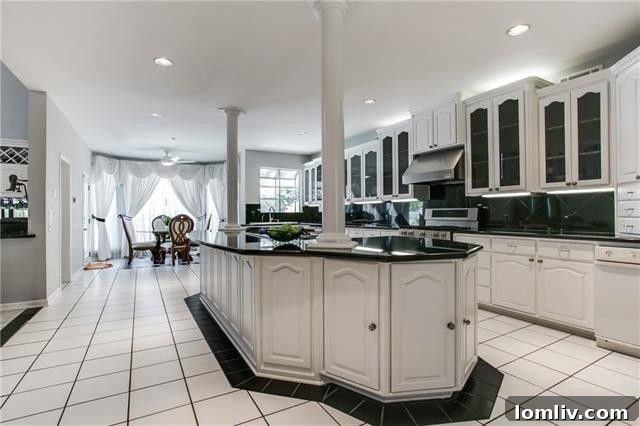
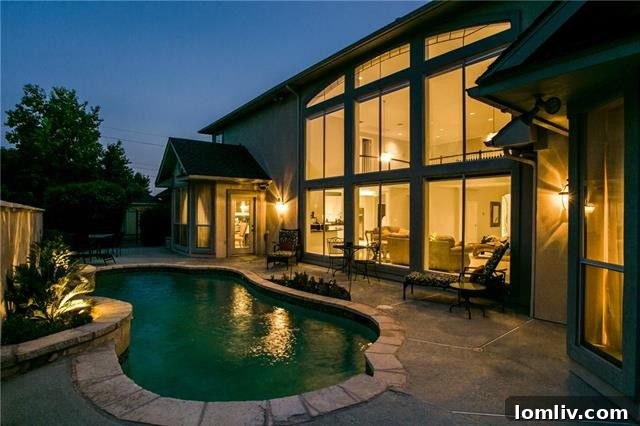
Despite its intricate legal and financial entanglements, the Abrams Road home itself presents an impressive and luxurious profile, as evidenced by numerous photographs still accessible on various prominent real estate platforms, including Realtor.com. Previous listings eloquently describe a residence characterized by grandeur, sophistication, and an abundance of high-end amenities:
“Step into a true vacation retreat, greeted by majestic palm trees lining the exterior, setting an immediate tone of luxury and tranquility. Upon entering, guests are welcomed by a grand marble entry, featuring a sweeping staircase that serves as a stunning focal point, complemented by elegant columns and an exquisite chandelier, creating an unforgettable first impression. The heart of this luxurious home is its grand kitchen, meticulously designed to accommodate large gatherings and delight culinary enthusiasts. It boasts a generously sized island, equipped with a state-of-the-art five-burner gas cooktop, making it a chef’s dream. The kitchen seamlessly flows into a spacious den, complete with a full wet bar, perfect for entertaining guests or enjoying a relaxed evening. This versatile residence offers the ultimate convenience of a master suite located on the ground floor, with the exceptional potential for a second master suite upstairs, providing flexible living arrangements for diverse family needs. Beyond the utility room lies an expansive game room, often referred to as a ‘man cave,’ offering ample space for recreation, relaxation, and entertainment. This area is exceptionally well-appointed with its own full kitchen, including a freestanding gas oven and range, making it ideal for hosting independent events, extended family living, or even as a separate guest suite. The downstairs master suite, thoughtfully positioned at the rear of the house for privacy, features a serene sitting area and a majestic fireplace adorned with a classic marble mantel. Its accompanying master bath is a sanctuary of indulgence, complete with a huge jetted tub and a contemporary shower enclosed with a sleek glass door. A ‘Texas-sized’ closet, offering extensive storage solutions and meticulous organization, further enhances the master suite’s appeal. Additional well-appointed bedrooms and a dedicated office space are conveniently located on the upper level, ensuring privacy, comfort, and functionality for all residents. This exceptional home truly offers a unique blend of timeless elegance, modern comfort, and extensive amenities, presenting an unparalleled living experience that feels like a permanent vacation.”
Potential Consequences and the Path Forward for Representative Neave
The procedure for property tax collection in Dallas County is both explicit and rigorous. Property taxes are mandated to be paid by January 31st each year. A failure to adhere to this deadline initiates a series of escalating penalties, commencing with substantial late fees. Should the taxes remain unpaid, the county is legally empowered to file a lawsuit against the property owner(s) to recuperate the outstanding balance. The ultimate and most severe consequence for persistent non-payment can be the foreclosure and subsequent auction of the property, a critical measure designed to ensure that municipalities can collect the necessary revenues to fund essential public services.
For State Representative Victoria Neave, this lawsuit represents not only a significant financial challenge but also a formidable political obstacle. As an individual holding elected office, her personal financial conduct is routinely subjected to public scrutiny, and a lawsuit for unpaid taxes can profoundly impact public perception, erode trust, and potentially affect her standing among constituents. Her stated commitment to “expediting the process to put the house back on the market” suggests an active effort to resolve the financial entanglement, most likely through the sale of the property to cover the accumulated arrears. However, the property’s previous history of failed listings indicates that this might not be a swift, straightforward, or guaranteed solution.
The unfolding situation surrounding Representative Neave’s Abrams Road home starkly highlights the inherent complexities that can emerge when personal financial matters intersect with public life, particularly for those entrusted with elected office. The discrepancies in ownership claims, the challenges encountered in attempting to sell the property, and the ongoing legal battle with Dallas County create a compelling and intricate narrative that is poised to continue drawing considerable attention from both the general public and keen political observers. The eventual resolution of this case will not only determine the fate of the Abrams Road property but may also carry broader implications for Representative Neave’s political career and her capacity to effectively serve her constituents in District 107.
Bethany Erickson contributed to this report.