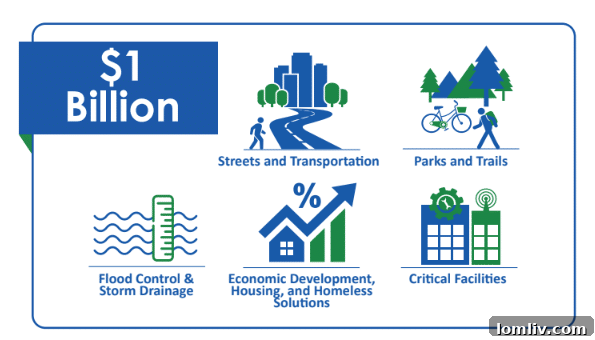
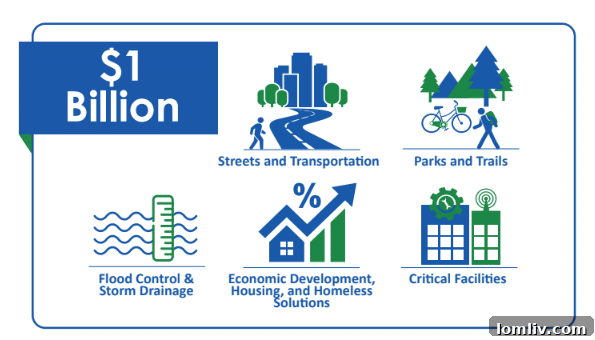
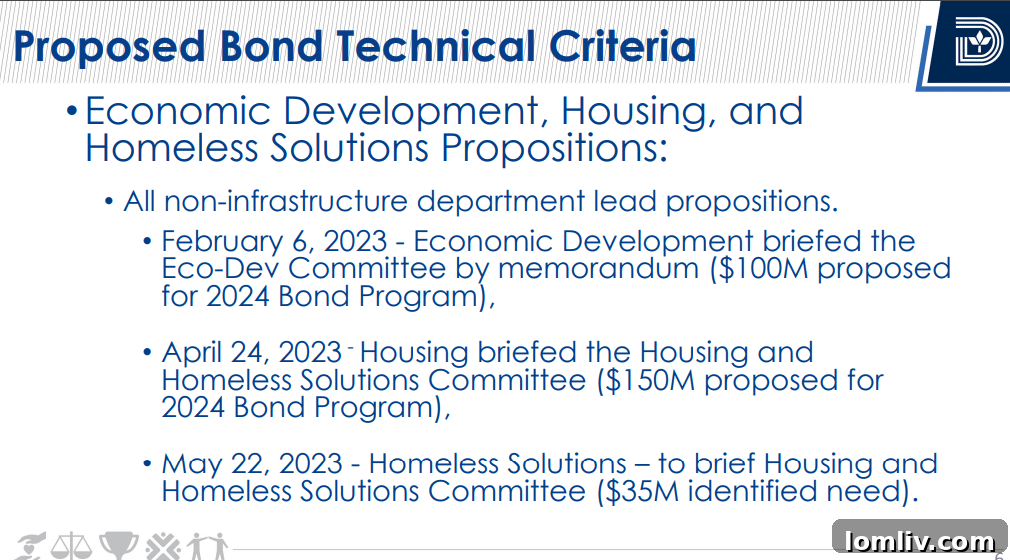
Dallas stands at a pivotal moment, with city leaders embarking on the crucial project selection phase for the highly anticipated Dallas 2024 Bond Election. This grand fundraising initiative aims to inject a staggering $1 billion into vital urban infrastructure and community-centric projects, promising to reshape the city’s landscape for years to come. The ambitious bond program is meticulously designed to address a diverse range of needs, from enhancing foundational services like streets, parks, and storm drainage to fostering critical areas such as economic development, housing, and essential critical facilities. The preliminary proposals from individual departments underscore the city’s commitment to strategic investment, allocating approximately $150 million towards comprehensive housing solutions, $100 million for robust economic development initiatives, and a dedicated $35 million to innovative solutions for the homeless population. These allocations reflect a data-driven approach to tackling some of Dallas’ most pressing challenges, ensuring that the bond’s impact is both broad and deeply felt across the community.
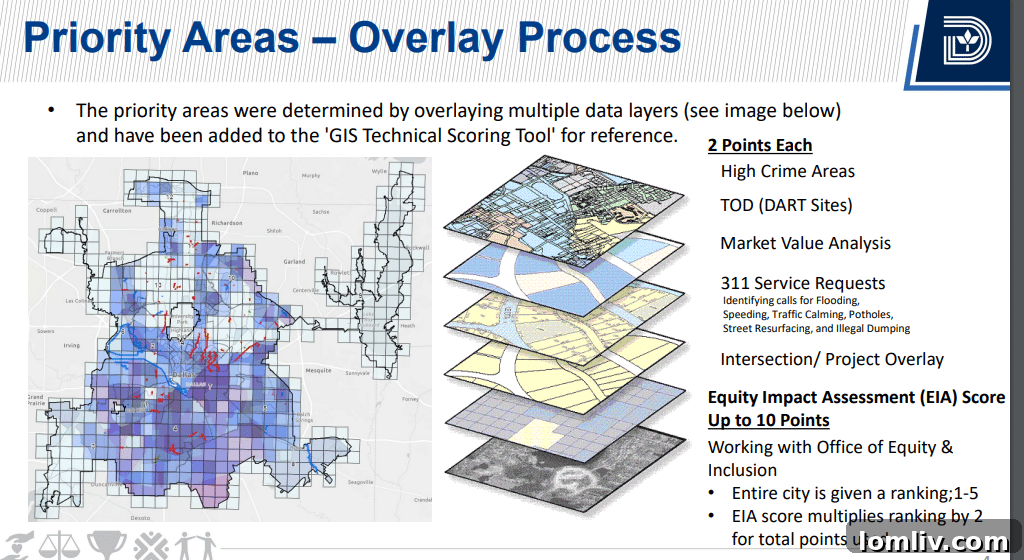
The journey towards the Dallas 2024 Bond Election officially commenced this month with the inaugural meeting of a council-appointed task force, signalling a significant step in the rigorous review process of potential projects. This esteemed body, known as the Community Bond Task Force, is spearheaded by Arun Agarwal, the respected president of the Dallas Park and Recreation board. Their primary mandate involves a thorough evaluation of proposed projects, culminating in comprehensive recommendations presented to the City Council. The meticulous work of the task force is crucial in ensuring that every dollar from the bond is invested wisely and effectively, aligning with the long-term vision for Dallas. Jennifer Nicewander, serving as the interim director of Bond and Construction Management, provided the council with an in-depth briefing on the technical criteria guiding project selection and the precise scoring methodology applied to initiatives listed within the city’s extensive needs inventory. This presentation highlighted the transparency and systematic nature of the evaluation process, a cornerstone of public trust in such a significant financial undertaking. The entire process unfolds within an intense and carefully orchestrated timeline, all leading up to the ultimate decision-making point: the bond election scheduled for May 2024, where Dallas residents will cast their votes on the city’s future.
Early discussions among council members are delving deeply into the underlying philosophy of the bond program, exploring the fundamental reasons why bond funds are the most appropriate mechanism for these investments, as opposed to other available sources. District 13 Councilwoman Gay Donnell Willis articulated this sentiment powerfully, emphasizing the city’s inherent “covenant with our residents.” She elaborated that this covenant revolves around ensuring essential public safety, maintaining drivable roads and alleys, and enhancing the overall quality of life for every citizen – aspects that directly influence their daily lives. Willis highlighted that these core services often lack alternative, dedicated funding streams, making bond funds indispensable for their sustained improvement and maintenance. This perspective frames the bond not merely as a financial instrument but as a commitment to fulfilling the city’s foundational obligations to its inhabitants, ensuring that basic infrastructure and safety remain paramount. It’s a testament to the belief that investing in these areas is an investment in the social contract between the city and its people, fostering stability, security, and communal well-being.
Housing Priorities in Dallas’ 2024 Bond Election: Building for Present and Future Residents
The strategic allocation of funds towards housing within the Dallas 2024 Bond Election has sparked vital discussions among city council members, particularly concerning the overarching philosophy of urban growth and resident retention. District 12 Councilwoman Cara Mendelsohn brought to light recent reports indicating a decline in Dallas’ population, a trend that profoundly influences her perspective on bond investments. While acknowledging the prevailing “philosophy we keep talking about is building for people who might be moving here,” Mendelsohn offered a distinct counter-argument. She emphasized that the city would be drawing tax dollars from its current residents, asserting that their existing quality of life must be prioritized to encourage them to stay. “I have a different philosophy,” she stated, “We’re going to be taking tax dollars from people who do live here and they need a higher quality of life so they also stay here.” This viewpoint underscores the competitive landscape Dallas faces, with numerous nearby suburbs offering alternative lifestyles and amenities. Mendelsohn passionately argued that by providing well-maintained parks, superior roads, and more frequently open libraries, Dallas becomes a more attractive and livable city for its present inhabitants. These investments, she contends, are critical in fostering resident loyalty and preventing outward migration. “There are a lot of reasons to choose Dallas,” she concluded, “but we also need to invest in ourselves,” highlighting the imperative of internal improvements for long-term urban vitality and sustained community growth. This debate encapsulates a core tension in urban planning: balancing the needs of a growing metropolis with the crucial task of nurturing and retaining its existing population.
Further solidifying the focus on critical social needs, Councilwoman Mendelsohn also vocally advocated for a specific allocation of at least $15 million directly earmarked for initiatives aimed at housing the homeless. This targeted funding reflects a recognition of the urgent humanitarian and social imperative to address homelessness within the city, ensuring that the bond program extends its reach to the most vulnerable populations. Concurrently, District 5 Councilman Jaime Resendez underscored another critical aspect of infrastructure development: the imperative of improving streets currently in disrepair. Resendez articulated a compelling economic argument, stating, “Improving unimproved streets can help raise the tax base.” He pointedly highlighted that the districts most affected by significant percentages of unimproved streets are predominantly located in southern Dallas – an area frequently discussed for targeted investment and revitalization. Resendez passionately linked street improvements to broader development goals, posing the question: “Would improving an unimproved street help spur development in terms of housing?” He then answered his own query, affirming, “I would assume it would [invite the opportunity to build in a neighborhood].” This perspective frames infrastructure investment not just as a matter of convenience but as a potent catalyst for economic growth, property value appreciation, and increased housing opportunities, particularly in historically underserved areas. “I’m just highlighting this because this is an opportunity to do the things that we talk about, big picture-wise … increasing the opportunity for housing development. I think it needs to be a priority,” Resendez concluded, emphasizing the bond’s potential to translate high-level aspirations for equitable development into tangible, on-the-ground improvements that directly benefit residents and enhance the city’s economic vitality.
Beyond discussions centered on housing and other immediate urban necessities, council members collectively prioritized a critical yet often overlooked area: information technology (IT) investments. They strongly advocated for IT to be listed as a distinct, separate item within the 2024 Bond Election program, rather than being broadly grouped under the “facilities” category. This crucial discussion emerges in the stark aftermath of a devastating ransomware attack that significantly compromised city websites, creating widespread difficulties for residents attempting to secure permits, make essential online payments, and access vital city information. The attack served as a potent, real-world demonstration of the vulnerability of outdated or underfunded IT infrastructure and its direct impact on citizen services and trust. By demanding a separate allocation, the council acknowledges that modern city operations are inextricably linked to robust, secure, and efficient digital systems. Investing in cutting-edge cybersecurity measures, upgrading outdated hardware and software, and ensuring the resilience of online portals are no longer optional but essential components of a well-functioning urban environment. This move signals a forward-thinking approach, recognizing that a city’s digitalnervous system is as critical as its physical infrastructure in serving its residents effectively and maintaining public confidence in an increasingly digital world. The emphasis on IT security and modern systems is a proactive step to prevent future disruptions and ensure seamless public service delivery.
Timeline For Dallas’ 2024 Bond Election: A Roadmap to Progress
The journey towards the final approval and implementation of the Dallas 2024 Bond Election is meticulously structured, with several important upcoming dates that outline the comprehensive process of public engagement, financial assessment, and governmental decision-making. Each stage in this detailed timeline is critical, ensuring transparency, public input, and a fiscally responsible approach to shaping Dallas’ future investments.
- May/June 2023 — This initial phase involves crucial Council briefings that delve into the technical criteria for project selection and evaluation. Simultaneously, a monthly outreach campaign is launched, designed to inform residents about the bond program and solicit early feedback. This period sets the strategic groundwork for the entire initiative.
- May-September 2023 — This intensive period is dedicated to widespread community engagement. The Community Bond Task Force holds multiple meetings (May, June, and August) to review projects and gather expert insights. Complementing these, town hall meetings are scheduled for September, offering a direct platform for residents to voice their concerns, suggest projects, and provide invaluable community input.
- September 2023 — This month marks a pivotal financial milestone. The Budget and Management Services department undertakes the critical task of finalizing the overarching themes for the bond program and determining the city’s precise bonding capacity. This financial assessment ensures that the proposed projects are aligned with the city’s fiscal health and long-term sustainability.

- September/October 2023 — Following the financial review, this period sees the finalization of the city needs inventory briefing. Crucially, a briefing for the City Council takes place to select the optimal size and define the overarching goals for the bond program, integrating both technical assessments and community feedback.
- September/October 2023 — In parallel, the City Council receives an updated financial capacity briefing. This update is based on the certified property values for Tax Year 2023, providing the most current financial data to inform their decisions regarding the bond’s scope and feasibility.
- October 2023-May 2024 — This extended phase is dedicated to continuous community stakeholder engagement. It ensures that dialogue remains open and transparent throughout the process, allowing for ongoing feedback and adaptability as the bond program takes shape.
- November 2023 — The Community Bond Task Force reaches a critical juncture, finalizing its comprehensive list of recommended projects. These recommendations, along with proposed bond program themes and the financial capacity assessment, are then formally presented to the City Council, representing the culmination of months of detailed work.
- December 2023 — A significant public milestone occurs with a City Council briefing provided by both the city manager and the task force chair, presenting the draft proposed 2024 Bond Program. This is immediately followed by a vital public hearing, designed to receive comments and feedback from residents on the detailed proposals.
- January 2024 — Should additional public input be deemed necessary, another public hearing is scheduled to ensure all voices are heard. Concurrently, the City Council receives a final briefing on the recommended bond program, incorporating all feedback and updated information.
- January 2024 — This month marks the ultimate governmental decision point. The City Council officially finalizes the bond program, confirming the list of projects and allocations. Following this, they formally call for the election, setting the stage for the public vote in May 2024.
- May 2024 — The process culminates with the Bond Election. Dallas residents will go to the polls to cast their votes, deciding on the future investments that will shape their city’s infrastructure, services, and overall quality of life for years to come. This democratic act empowers the community to directly influence the trajectory of Dallas’ development.