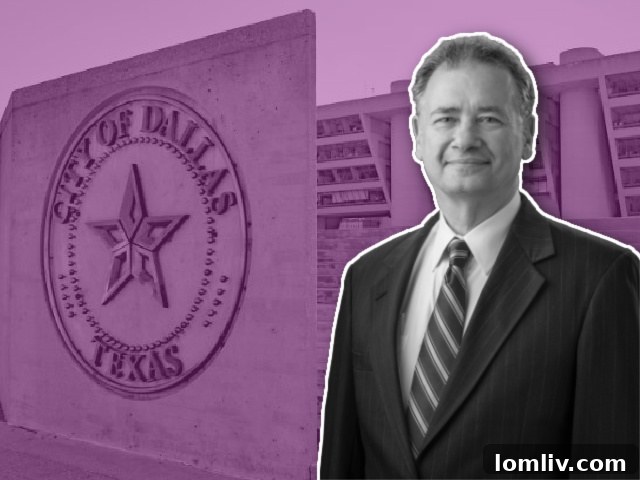
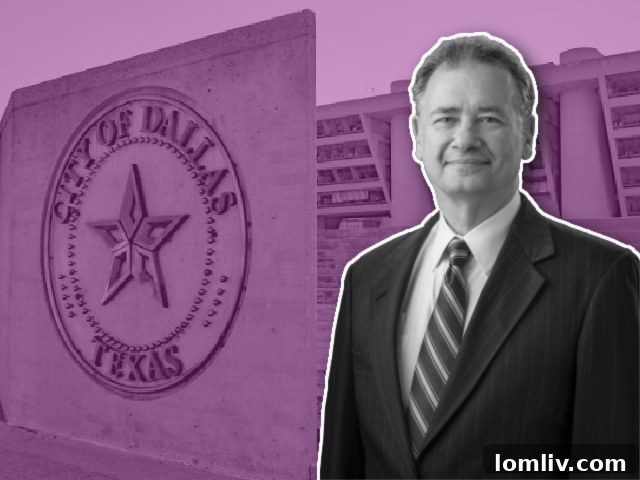
The corridors of Dallas City Hall are abuzz with speculation as the Dallas City Council prepares to finally conduct the long-anticipated performance evaluation of City Attorney Chris Caso. This critical review, which has already faced two postponements following a pair of closed-session meetings, signals a period of significant uncertainty for one of the city’s highest-ranking legal officials. The repeated delays have only intensified scrutiny and raised questions about the stability of the city’s legal leadership during a time of complex municipal challenges.
Anonymous sources within Dallas City Hall, who spoke on condition of anonymity due to the sensitive nature of personnel matters and their official positions, revealed to daltxrealestate.com that a discernible lack of trust has been expressed by some council members regarding the City Attorney’s performance. These internal murmurs suggest that Caso, whose annual salary positions him among the most highly compensated officials at 1600 Marilla, is widely expected to retire or otherwise vacate his demanding position within the next 60 days. Such a departure would undoubtedly send ripples through the city’s legal department and ongoing policy initiatives.
Caso’s tenure has been notably characterized by his central involvement in several high-profile legal battles, most notably the city’s controversial and prolonged efforts to regulate and ultimately shut down local poker rooms. These cases represent a complex interplay of state law interpretation, local ordinance enforcement, and business interests. The Dallas City Council is scheduled to receive confidential advice from its legal team on the intricacies of these poker room lawsuits during an upcoming closed session, highlighting the critical nature of these legal challenges and their potential impact on the city’s legal standing and public image.
Navigating Delays and Dissatisfaction: The Path to Caso’s Evaluation
The timeline of Chris Caso’s performance evaluation tells a story of repeated deferrals and an escalating sense of urgency. His review was initially slated for August, alongside assessments for other key city officials, including City Manager T.C. Broadnax, City Secretary Bilierae Johnson, and Dallas City Auditor Mark Swann. However, for reasons that remain largely undisclosed to the public, Caso’s evaluation was unilaterally postponed to January. Following an extensive closed-session meeting on January 11, the council once again voted to defer Caso’s evaluation, pushing it further back to January 25. These consecutive delays have fueled widespread speculation and underscored the perceived sensitivity surrounding the City Attorney’s status.
The role of a City Attorney in a sprawling metropolis like Dallas is multifaceted and critically important. This office serves as the chief legal advisor to the City Council, the City Manager, and all city departments, guiding them through complex legal landscapes ranging from land use and zoning to public safety and financial contracts. The trust placed in the City Attorney’s office is paramount for effective governance and sound decision-making. A reported “lack of trust” among council members, therefore, is not merely a personnel issue but a matter that can potentially undermine the very foundation of legal guidance the city relies upon for its daily operations and long-term strategic planning. A transition in such a pivotal role, especially under these circumstances, demands careful consideration and strategic planning to ensure continuity and stability for the city.

Dallas City Attorney’s High-Profile Legal Opinions and Their Impact
Dallas city officials typically maintain a strict policy of not commenting on personnel matters, a practice that generally shields internal deliberations from public view. In adherence to journalistic standards, we reached out to City Attorney Chris Caso via email for his comments on the ongoing situation. As of the time of publication, we had not received a response. The silence, in this context, only adds to the atmosphere of anticipation and reinforces the gravity of the situation unfolding at City Hall.
The trajectory of high-profile government figures can often be unpredictable, and public speculation, while intense, does not always align with ultimate outcomes. A notable parallel can be drawn from the experience of City Manager T.C. Broadnax. Last year, many observers and political pundits widely expected Broadnax to conclude his tenure at Dallas City Hall amid similar scrutiny and performance evaluations. However, contrary to expectations, he not only retained his position but was subsequently offered a three percent raise, a decision that underscored the complex dynamics and often surprising turns within city politics. This precedent serves as a reminder that while rumors circulate, the final decisions often hinge on intricate political negotiations and assessments that may not be immediately apparent to the public.
Chris Caso, who earns an annual salary of $325,000, has been a fixture in the city’s legal department for several years. He officially assumed the role of City Attorney in 2020, having previously served in an interim capacity for two years prior to his permanent appointment. His long-standing presence underscores his deep institutional knowledge of Dallas’s legal challenges and administrative framework, making any potential departure a significant transition for the city’s legal operations.
The Battle Over Poker Rooms: A Deep Dive into Dallas’s Legal Quandary
The city’s ongoing legal battles concerning poker and card rooms are a prime example of the contentious and complex issues Caso’s office has managed. The Wednesday executive session agenda specifically outlines discussions on a series of critical legal issues pertaining to these lawsuits. These cases collectively represent a significant legal headache for the City of Dallas, highlighting disagreements over interpretation of state law and the authority of municipal bodies. The listed cases include:
- Champions Dallas LLC v. City of Dallas and Board of Adjustment: This case likely challenges the city’s zoning or regulatory decisions affecting a specific poker establishment.
- KBKM Entertainment LLC d/b/a Dallas Poker Club v. City of Dallas and Board of Adjustment: Another challenge against the city, potentially disputing the legality of the ban or previous permitting.
- Fifty-Two Social and Dining LLC and SB Capital LLC d/b/a Sportsbook Poker Club v. City of Dallas, Megan Wimer, and David Session: This lawsuit names specific city officials, suggesting allegations of malfeasance or improper conduct related to the poker room regulations.
- Andres Espinoza, in his official capacity as Building Official of the City of Dallas v. Board of Adjustment (Texas Card House): This case indicates an internal city dispute, possibly regarding a building official’s decisions challenged by the Board of Adjustment or vice versa, specifically concerning the prominent Texas Card House.
- Andres Espinoza, Director and Chief Building Official for Development Services Department of the City of Dallas v. Board of Adjustment of the City of Dallas (Shuffle 214): Similar to the previous entry, this case points to internal friction or differing interpretations of regulations between city departments regarding another card room, Shuffle 214.
- City of Dallas v. Badger Tavern, LP, 1676 Regal JV, and 1676 Regal Row, Dallas, Texas: This directly initiated lawsuit by the City of Dallas signifies its proactive enforcement efforts against establishments allegedly operating in violation of city ordinances.
These lawsuits stem from a critical pivot in the city’s policy. In 2021, the City of Dallas initially approved the operation of poker rooms, issuing various certificates of occupancy that allowed these businesses to flourish. However, the city subsequently reversed its stance, implementing a ban and asserting that the state law on gambling had been misinterpreted, and consequently, the original certificates of occupancy were issued erroneously. This abrupt reversal led to significant legal challenges from affected businesses, accusing the city of arbitrary enforcement and creating an unstable regulatory environment. The outcome of these cases could set important precedents for how Dallas interprets and enforces state laws and manages its permitting processes moving forward.
Beyond Poker: A Spectrum of Legal Challenges Facing Dallas
The poker room controversy is just one facet of the broader legal landscape confronting the Dallas City Attorney’s office. This year has seen the emergence of other significant legal matters that underscore the diverse and often contentious issues a major metropolitan legal department must navigate. These include debates surrounding the operating hours of strip clubs, which involve balancing business interests with public safety and quality-of-life concerns, and the city’s contentious panhandling ordinance. Opponents of this ordinance vehemently allege that it is not a solution to homelessness but rather a punitive measure designed to punish the city’s vulnerable homeless population, raising significant civil liberties and humanitarian concerns. These legal battles highlight the delicate balance between urban development, social welfare, and individual rights within the city.
Further complicating the legal horizon for Dallas is a brewing battle over short-term rentals (STRs). The proliferation of platforms like Airbnb and VRBO has led to significant debates in urban centers across the nation, and Dallas is no exception. Issues such as neighborhood disruption, housing affordability, and regulatory oversight have brought STRs to the forefront of the city’s policy discussions. A contentious debate over their regulation, encompassing everything from zoning restrictions to taxation, is widely expected to culminate in significant legal action. This impending legal challenge will require the city’s legal team to navigate complex property rights issues, local governance powers, and the economic impacts of the sharing economy, setting the stage for another potentially defining legal battle for the City of Dallas.
The potential departure of City Attorney Chris Caso marks a pivotal moment for Dallas. It comes at a time when the city is grappling with an array of complex legal challenges, from the specifics of poker room legality to the broader implications of short-term rental regulations and policies affecting its most vulnerable populations. The successor to this crucial role will inherit a demanding portfolio, requiring not only exceptional legal acumen but also a deep understanding of municipal governance, political dynamics, and community needs. The stability and integrity of the City Attorney’s office are indispensable for maintaining public trust and ensuring that Dallas continues to grow and thrive on a legally sound foundation.