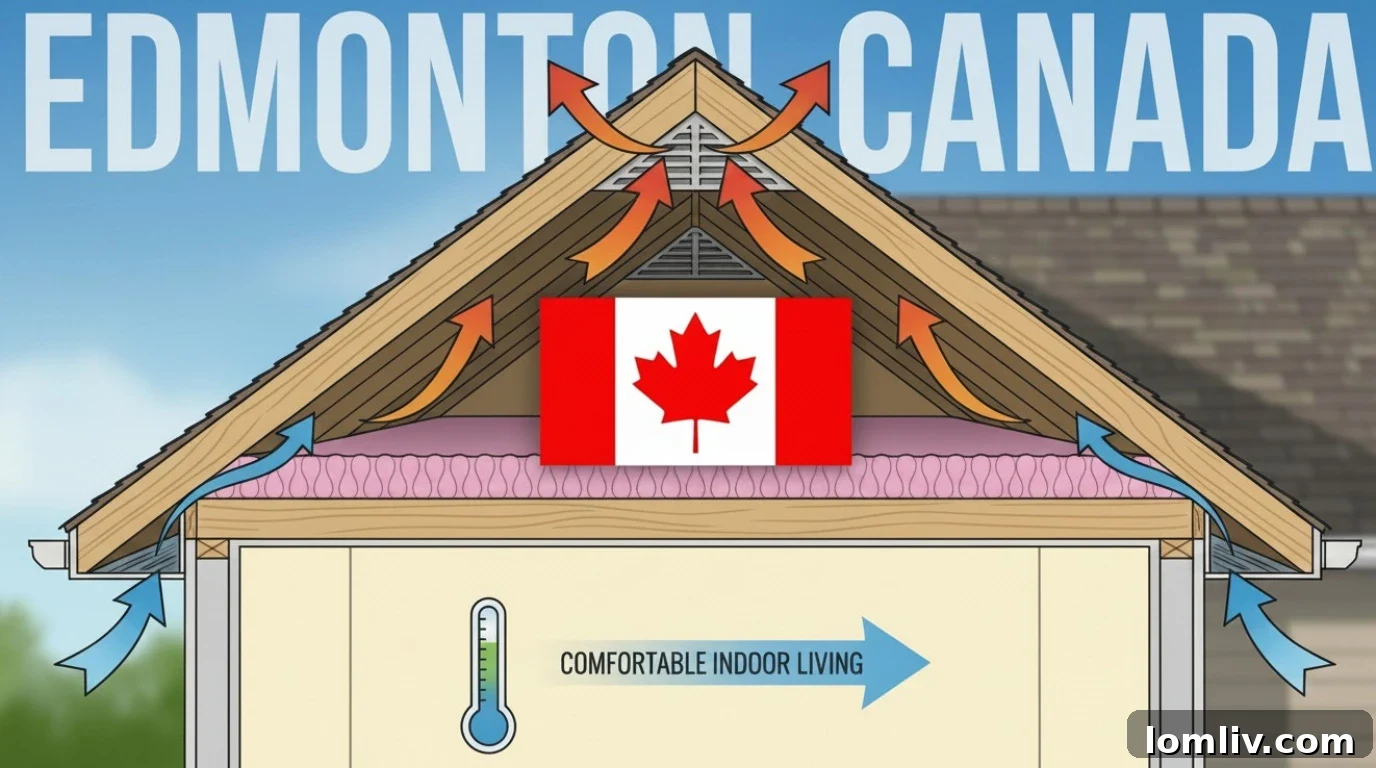
Attic ventilation is a fundamental yet frequently underestimated component of maintaining a healthy, comfortable, and energy-efficient home, especially within the distinctive climate of Edmonton. Far from a mere accessory, adequate attic ventilation plays a critical role year-round, expertly managing temperature during scorching summer heatwaves and diligently controlling humidity throughout our harsh, freezing winters. Neglecting this crucial aspect can lead to significant structural damage to your roof, framing, and even impact your home’s interior.
Many homeowners may not fully grasp the profound impact that optimized airflow in their attic can have. Enhancing this often-overlooked area directly translates into superior indoor comfort and can dramatically reduce the strain and workload on your entire HVAC (Heating, Ventilation, and Air Conditioning) system. This isn’t just about comfort; it’s about safeguarding your investment and optimizing your home’s operational efficiency.
In Canada, residential building standards emphasize the importance of proper ventilation. According to the National Building Code of Canada, all homes must adhere to the essential “1/300 rule.” This mandate stipulates that there should be at least one square foot of net free ventilation area for every 300 square feet of enclosed attic space. Adhering to this code-compliant standard is not just a regulatory requirement; it’s a practical upgrade that delivers substantial long-term benefits to the overall health, longevity, and performance of your home.
Investing in or upgrading your attic ventilation system represents a smart, proactive approach to home maintenance that yields dividends in comfort, energy savings, and structural integrity for years to come.
Mastering Temperature Regulation: Keeping Your Home Cool and Consistent
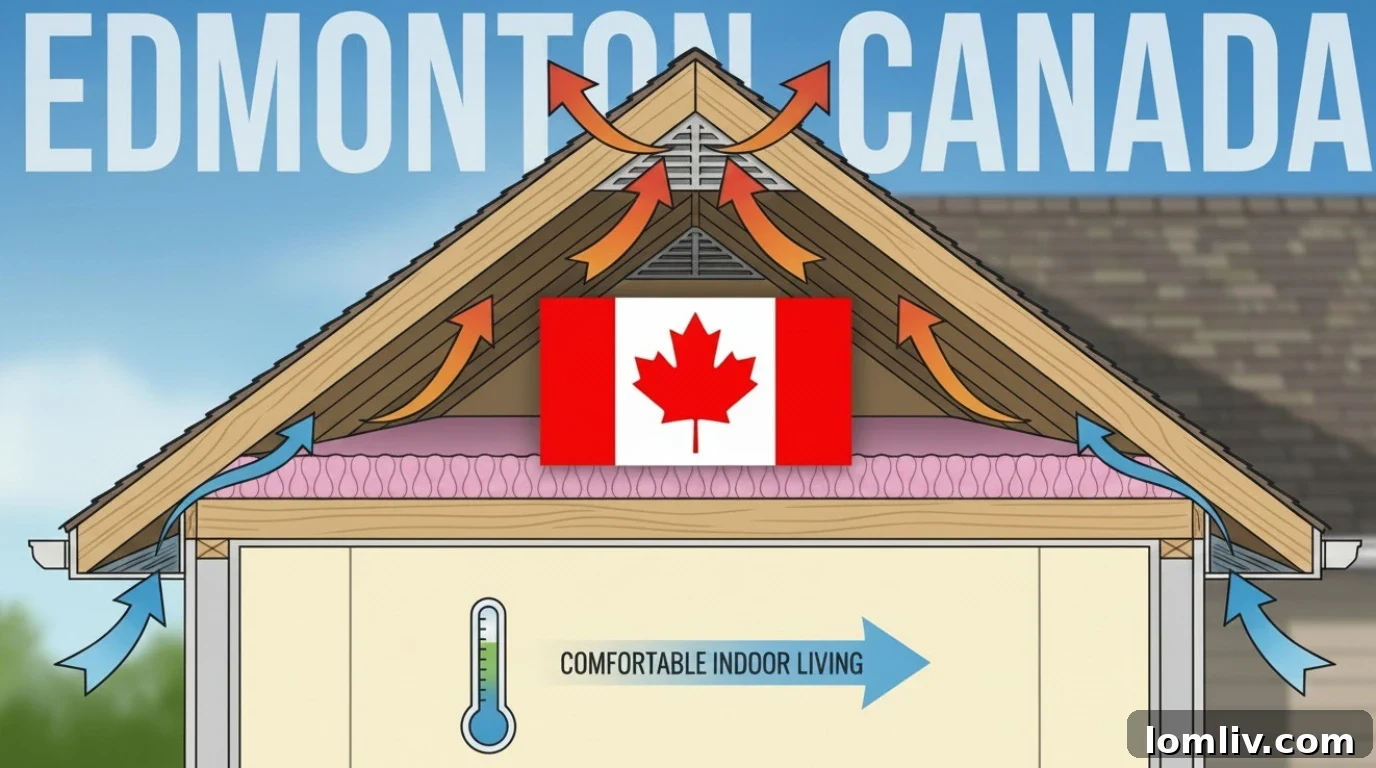
One of the most immediate and tangible benefits of proper attic ventilation is its capacity for effective temperature regulation. During Edmonton’s hot summer days, attics can become superheated, reaching temperatures far exceeding the ambient outdoor air – often by as much as 20-30 degrees Fahrenheit. This intense heat, trapped within the attic space, acts like a giant thermal radiator, gradually radiating downwards into the living spaces below. The result? Uncomfortable indoor temperatures, especially on upper floors, and an HVAC system that constantly struggles to keep up, leading to higher energy consumption and increased wear and tear.
Effective attic ventilation works by creating a continuous, natural airflow. Cooler, fresh air is drawn in through strategically placed intake vents, typically located in the soffits beneath the eaves of the roof. As this cooler air enters, it pushes the superheated, less dense air out through exhaust vents, which are usually positioned higher on the roof, such as ridge vents or static vents. This convection process effectively flushes out excess heat, preventing it from accumulating and transferring into your home. By allowing this heat to be removed efficiently, indoor temperatures are noticeably lowered, significantly reducing the workload on your air conditioning in Edmonton and leading to considerable savings on your monthly utility bills.
Beyond general comfort, keeping the attic cooler is crucial for preventing uneven temperatures throughout the house. Upper-level bedrooms are notoriously difficult to cool, primarily because heat naturally rises. A poorly vented attic exacerbates this issue, acting as an insulating blanket that traps heat above these rooms. This creates uncomfortable hot spots and forces residents to crank up the AC, often over-cooling lower levels in an attempt to find relief upstairs. Good ventilation mitigates this problem by establishing a more uniform temperature distribution across all levels of your home, ensuring that your cooling efforts are more effective and your entire household enjoys consistent comfort.
This natural cycle of drawing fresh air in and expelling hot air out is a passive yet powerful mechanism. It not only enhances daily comfort during Edmonton’s hot periods but also makes your overall energy consumption much more efficient throughout the prolonged summer season, extending the life of your cooling systems.
Essential Moisture Control and the Fight Against “Attic Rain”
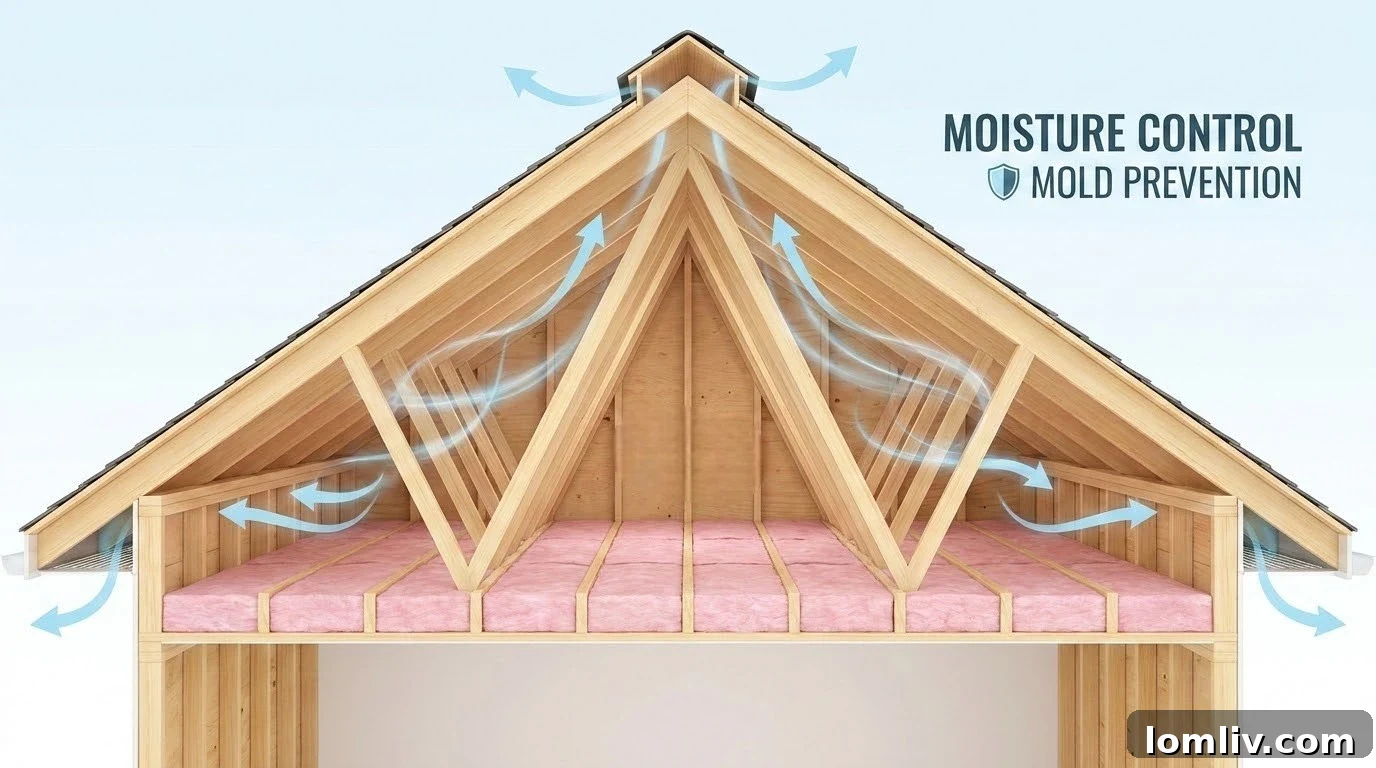
While temperature regulation is vital in summer, attic ventilation arguably becomes even more critically important for winter moisture management in Edmonton’s climate. Our daily lives generate a surprising amount of warm, moist air through activities like cooking, showering, doing laundry, and even breathing. This humid air naturally rises and, if unvented, can find its way into the attic space.
During the deep Alberta freezes, the consequences of this trapped moisture can be severe. When warm, humid air from the living space infiltrates a poorly vented, cold attic, it comes into contact with the frigid underside of the roof deck. This immediate temperature drop causes the moisture to condense and freeze, forming thick layers of frost. Over time, this frost can accumulate to significant levels. The real trouble begins when the weather warms up, perhaps during a mild spell or a sudden Chinook wind event. This rapid temperature increase causes the accumulated frost to melt quickly, leading to a destructive local phenomenon colloquially known as “attic rain.” This isn’t external precipitation; it’s moisture that originated inside your home, condensed in your attic, and is now raining down onto your insulation, ceilings, and personal belongings.
Proper, continuous airflow through a well-designed attic ventilation system is the best defense against this damaging cycle. By constantly circulating air, the system efficiently clears out this excess moisture before it has a chance to condense and freeze. This proactive moisture removal protects your attic’s insulation, preventing it from becoming saturated and losing its thermal effectiveness. It also safeguards the wooden framing, rafters, and roof sheathing from rot, decay, and structural damage, thereby preserving the integrity of your entire roofing system and house structure.
Beyond structural concerns, moisture buildup can significantly impact your indoor air quality. Poor ventilation creates a damp, stagnant environment within the attic, which is an ideal breeding ground for mold and mildew growth. Once established, these fungal spores can easily make their way from the attic into your living spaces through various air pathways, potentially triggering allergies, respiratory issues, and other health problems for your family. Homeowners can foster a healthier indoor environment simply by ensuring their soffit and exhaust vents are clear, unobstructed, and functioning correctly. Regular inspections of your roof and attic for proper venting can save you from discovering massive condensation issues down the road, which are often far more extensive and costly to repair than a simple plumbing leak.
Boosting Energy Efficiency: Significant Savings Year-Round
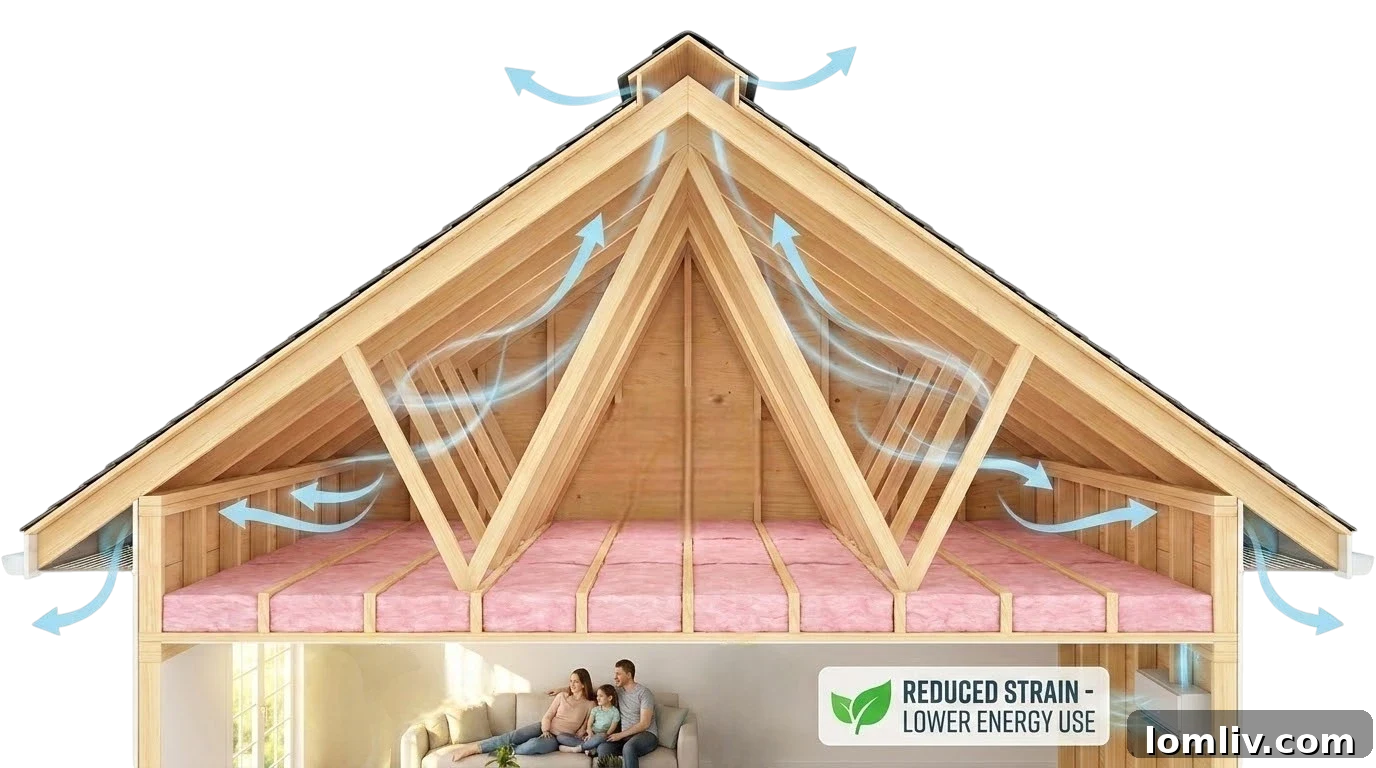
The direct correlation between proper attic ventilation and enhanced energy efficiency cannot be overstated. By proactively managing temperatures and moisture within the attic space, ventilation dramatically decreases the demand on your HVAC unit throughout the year, leading to substantial energy savings and a reduced carbon footprint. In summer, homes with inadequate attic ventilation experience trapped heat that constantly permeates into the living areas. This forces the air conditioner to cycle on more frequently, run for longer durations, and work harder to achieve and maintain desired indoor temperatures. The result is inevitably higher electricity bills and accelerated wear on expensive cooling equipment.
A well-vented attic, however, allows for continuous airflow, facilitating the natural expulsion of superheated air. This keeps the attic cooler, which in turn reduces the heat load on your ceilings and insulation, allowing your home to remain cooler naturally. By mitigating this significant source of heat gain, your air conditioner operates less often and more efficiently, directly translating into lower monthly energy expenditures and an extended operational lifespan for your cooling equipment. The principle applies in reverse during colder months; while insulation is key to keeping heat *in*, proper ventilation ensures that any moisture that bypasses the insulation (from indoor humidity) is removed, preventing insulation from becoming damp and losing its R-value, thereby preserving its thermal performance.
Supporting these claims, data from authoritative sources like Natural Resources Canada (NRCan) consistently suggests that a comprehensive approach to home energy efficiency—which includes sealing air leaks, adding appropriate insulation, and critically, ensuring adequate ventilation—can lead to significant annual savings on both heating and cooling costs for homeowners. This integrated strategy works synergistically: insulation slows heat transfer, air sealing stops uncontrolled air movement, and ventilation manages the remaining heat and moisture effectively.
This approach works hand-in-hand with other energy-efficient measures, such as upgrading your attic insulation to meet Alberta’s rigorous recommended R-50 to R-60 standards. While robust insulation is crucial for keeping the harsh winter cold out and retaining conditioned air inside, proper ventilation ensures that this insulation remains dry and effective, preventing moisture buildup that can compromise its performance and lead to energy loss. It’s an essential part of a holistic energy management strategy that pays off both environmentally and financially.
Robust Roof and Structural Protection: Preserving Your Home’s Integrity
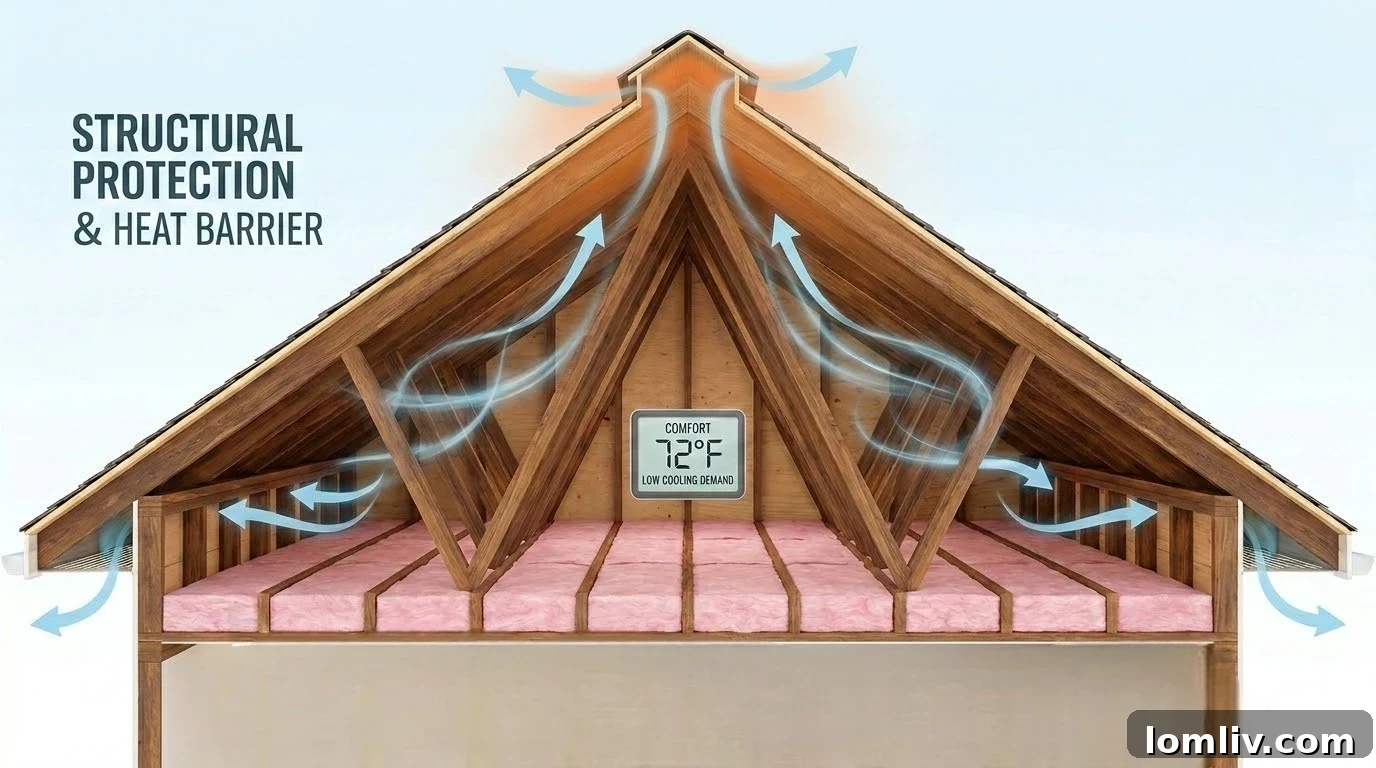
Beyond comfort and energy savings, proper attic ventilation is absolutely critical for safeguarding the long-term health of your roof and the entire structural integrity of your house. The attic acts as a buffer between your living space and the outdoors, and its condition directly impacts the longevity of your most vital exterior components.
During the summer, the extreme heat trapped in a poorly ventilated attic literally bakes your roof from the inside out. This internal heat accelerates the aging process of asphalt shingles, causing them to become brittle, blister, crack, and curl prematurely. The protective granules on the shingle surface can also detach faster, exposing the asphalt base to direct UV radiation and further shortening its lifespan. What might have been a 20-30 year roof could require replacement in half that time, leading to significant, unexpected expenses for the homeowner.
In contrast, the colder months present a different but equally destructive threat: ice dams. If the attic is too warm due to inadequate ventilation, it heats the roof deck. This warmth melts the snow on the higher parts of the roof. As this melted water runs down the roof slope, it reaches the colder eaves, which are typically unheated by the attic. Here, the water refreezes, forming a solid ridge of ice—an ice dam. As more snow melts and runs down, it gets trapped behind this ice dam, pooling on the roof. This standing water, unable to drain, is then forced under the shingles by capillary action and hydrostatic pressure, leading to severe roof leaks, damaged ceilings, insulation saturation, and potential structural rot in the roof deck and wall framing. A properly ventilated attic, by maintaining an attic temperature closer to the frigid outside air, prevents the snow from melting unevenly and thereby minimizes the formation of these destructive ice dams.
A balanced system of intake (soffit) and exhaust (ridge or static) vents works together to create continuous airflow, eliminating these thermal and moisture stressors. This constant air exchange reduces the temperature extremes on the roof decking and prevents moisture accumulation, thereby maximizing the lifespan of your roofing materials and protecting the structural components of your home. By preventing premature degradation and costly issues like leaks and rot, investing in adequate attic ventilation saves you from expensive and disruptive repairs or full roof replacements down the road, ensuring your home remains sound and secure for decades.
In conclusion, adding or upgrading your attic ventilation is not merely a home improvement project; it is a straightforward yet profoundly effective strategy to enhance your daily comfort and provide robust, long-term protection for your property. It expertly regulates summer temperatures, diligently controls winter moisture to prevent “attic rain,” significantly lowers your energy bills, and critically preserves the lifespan and integrity of your roof and entire home structure.
Far from being a luxury or an optional add-on, proper attic airflow is a fundamental requirement for any code-compliant and well-maintained Edmonton home. It forms the unseen backbone of your home’s thermal and moisture management system. Taking the time to evaluate, maintain, or upgrade your attic vents today will provide invaluable long-term benefits, securing your comfort, saving you substantial money on energy and repairs, and ultimately shielding you from major structural repairs and premature deterioration in the years to come. Ensure your Edmonton home is equipped with the ventilation it deserves for optimal performance and peace of mind.