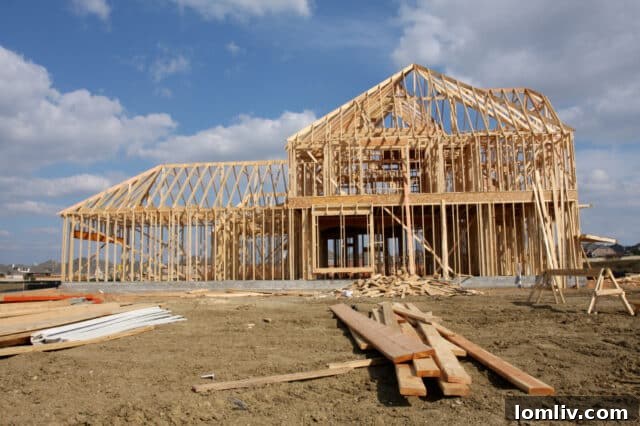
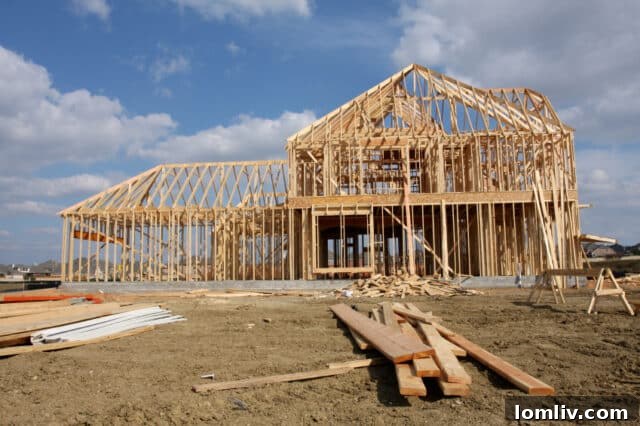
The remarkable growth of the Collin County housing market has been a defining characteristic of North Texas for well over a decade, consistently drawing new residents and businesses to its thriving communities. Across the sprawling landscape, developers have been aggressively acquiring land, and builders have been working tirelessly to construct new homes at an unprecedented pace. This robust activity has been underpinned by a dedicated workforce, creating a dynamic economic engine that has transformed towns like Frisco, Celina, and Prosper into nationally recognized hubs of rapid expansion. Yet, despite this seemingly unstoppable momentum, a critical indicator – residential building permits – is now signaling a significant moderation in this growth trajectory. These permits, which serve as a foundational metric for new home construction, are increasingly reflecting the pressures of a challenging macroeconomic environment. A combination of nationwide labor shortages, soaring material costs, and persistent global supply-chain disruptions are collectively slowing the pace of development across most of Collin County, prompting a reevaluation of the region’s immediate housing outlook.
For potential homebuyers, real estate investors, and those simply observing the vibrant North Texas market, understanding these underlying shifts is more crucial than ever. The previously held assumption of continuous, unhindered growth is now being tempered by the practical realities faced by the construction industry. The aspiration of owning a newly built home in a highly sought-after Collin County community, while still strong, is frequently accompanied by longer waiting lists and significantly extended construction timelines. This evolving scenario necessitates a detailed examination of current data and expert insights to accurately comprehend the present state and anticipate the future direction of housing development in one of America’s fastest-growing regions.
Evidence of this emerging slowdown became particularly apparent in January, as the number of residential building permits registered a notable decline across several key Collin County suburbs. This trend was highlighted by Addison-based Tomlin Investments, a prominent firm that not only meticulously tracks new home construction data throughout North Texas but also operates as a developer, offering a unique dual perspective on market dynamics. Their findings underscore a concerning shift, particularly for areas that have historically been at the vanguard of the region’s explosive expansion. The decrease in permit issuance is not merely an abstract statistical point; it represents a tangible challenge for builders striving to bring much-needed housing inventory to market in an intensely competitive environment.
Among the municipalities most affected by this deceleration were Celina, Frisco, Little Elm, and Prosper – all communities that have experienced extraordinary population and housing booms in recent years. These cities collectively observed a sharp drop in the issuance of residential building permits at the start of 2022 when compared to the corresponding period in the previous year. This decline carries substantial weight because residential building permits are an indispensable precursor for any new construction to proceed. They are specifically required for the construction of one- or two-family detached homes on individually platted lots, essentially serving as the official authorization for builders to commence work. Consequently, a reduction in these permits directly translates to fewer new homes breaking ground, which, in a high-demand market like Collin County, inevitably exacerbates the existing housing supply shortage and contributes to upward pressure on prices for the limited available inventory.
Residential Building Permit Trends | Tomlin Investments Analysis
| City | January 2022 | January 2021 | Percentage Change |
| Denton | 209 | 77 | 🔺 171% |
| Anna | 99 | 53 | 🔺 87% |
| Sherman | 54 | 32 | 🔺 69% |
| Melissa | 89 | 59 | 🔺 51% |
| McKinney | 140 | 180 | 🔻 22% |
| Prosper | 70 | 126 | 🔻 44% |
| Frisco | 181 | 346 | 🔻 48% |
| Celina | 151 | 309 | 🔻 51% |
| Little Elm | 82 | 187 | 🔻 56% |
A more detailed examination of the residential building permit data clearly illustrates the significant scale of the slowdown experienced in these once-booming North Texas communities. Celina, frequently highlighted as a quintessential “boomtown” within Collin County due to its unparalleled growth, reported a substantial 51 percent decline in permits, falling dramatically from 309 permits issued in January 2021 to a mere 151 in January 2022. This considerable reduction vividly underscores the severe logistical and economic bottlenecks currently impeding new construction in an area where housing demand consistently and overwhelmingly exceeds available supply.
Frisco, another economic powerhouse and a major center for North Texas development, was similarly affected, experiencing a 48 percent drop in permits, from 346 down to 181 during the identical reporting period. Prosper also recorded a significant 44 percent decrease, with permits falling from 126 to just 70. Little Elm registered the most precipitous decline among these rapidly expanding cities, with a dramatic 56 percent reduction in permits, plummeting from 187 to 82. Even McKinney, a more established and larger urban center within Collin County, observed a discernible 22 percent drop in permit issuance. This widespread decline across both newer growth areas and more mature cities indicates that the challenges are not isolated but rather represent a broader regional trend impacting the entire Collin County housing market.
The practical and human ramifications of this construction slowdown are deeply felt by prospective homeowners. The acute scarcity of new homes has intensified competition to unprecedented levels, creating an incredibly challenging environment for buyers. Celina Mayor Sean Terry recently provided a poignant illustration of this struggle in an interview with NBC5. He recounted receiving a desperate phone call from a resident: “I had a lady call me the other day begging to help her find a house in Celina or Prosper, either one.” Mayor Terry further emphasized the severity of the supply shortage from a builder’s perspective, noting, “Every builder she called, ‘we have a waiting list of 1,000 people,’ ” This powerful anecdote perfectly captures the profound imbalance between an overwhelming market demand and the severely constrained pace of new construction, leaving thousands of eager buyers in a prolonged state of anticipation.
Interestingly, this slowdown was not universal across all North Texas cities. Denton, for instance, presented a stark contrast by bucking the prevailing trend entirely, reporting an impressive 171 percent increase in residential building permits. Its numbers surged from 77 in January 2021 to 209 in January 2022. Similarly, the cities of Anna, Sherman, and Melissa also demonstrated robust growth in permit issuance, experiencing healthy increases of 87%, 69%, and 51% respectively. This divergence suggests that while many parts of Collin County are contending with significant headwinds, other areas might be benefiting from distinct market dynamics, a greater availability of developable land, or perhaps are attracting builders who are strategically shifting their focus away from the more constrained and high-cost hotspots within Collin County. These burgeoning communities could very well represent the next frontier of North Texas housing growth, as developers seek more accessible and less costly opportunities to expand their housing inventory.
Compounding the housing crunch is the significant lengthening of construction timelines. Ted Wilson, a highly respected housing analyst with Residential Strategies Inc., informed NBC5 that the typical duration for completing a new home has stretched considerably. What historically took an average of 130 to 140 days has now expanded to approximately 219 days. This nearly two-month extension in the construction period means that fewer homes are reaching completion within a given timeframe, further tightening an already constricted supply. This delay is a direct consequence of the widespread labor shortages plaguing the construction industry, impacting everything from skilled tradesmen like electricians and plumbers to general laborers. Simultaneously, the unpredictable nature of global supply chains for essential building materials – ranging from lumber and steel to windows, appliances, and fixtures – creates recurring bottlenecks that force builders to constantly adjust schedules, leading to costly inefficiencies and prolonged project durations.
Chad Tschetter, Area President for M/I Homes, a prominent national homebuilder with a significant presence in North Texas, candidly articulated the intricate challenges developers confront in the current climate. Despite ambitious plans, the actual capacity for new construction is severely constrained. He revealed that M/I Homes, even with intentions to open a new community in Celina, can currently only commence the construction of six homes per month. This severely restricted output stands in stark contrast to the overwhelming demand, strikingly evidenced by the staggering 2,000 people already on their waiting list for homes in that specific area. This single example powerfully illustrates the profound disconnect between the robust market demand and the harsh realities of limited construction capacity.
Tschetter further elaborated on the core reasons behind the observed permit drops in well-established growth areas. “To see Celina, Frisco, McKinney’s permits drop is not a surprise,” he stated to NBC5. He cited two predominant factors: “One, they don’t have as many lots on the ground right now, so we can’t sell as many homes and the supply chain is still a big problem for us.” This direct insight from a leading builder underscores the formidable dual challenge of land scarcity and material availability. In highly desirable and mature growth areas like Frisco and McKinney, readily developable land is becoming increasingly rare and consequently more expensive. Even when suitable land is identified, the intricate bureaucratic processes involved in platting, zoning approvals, and securing necessary infrastructure can be protracted and complex. Concurrently, the volatile nature of the global supply chain means that even with approved permits and available land, builders face immense difficulties in acquiring the requisite components to complete homes on schedule, leading to fewer new starts and considerably extended build times.
The ramifications of this prolonged construction slowdown extend far beyond individual homebuyers and builders. For the broader Collin County economy, a sustained reduction in new housing starts could signal a moderation in job growth within the construction sector and its numerous related industries, such as real estate, financial services, and retail. It also has significant implications for housing affordability, potentially pushing prices for existing homes even higher as demand continues unabated against a backdrop of limited new supply. Local governments, which rely heavily on property taxes generated by new developments, may also experience a slower rate of revenue increase, potentially impacting the funding available for critical public services and vital infrastructure projects. Effectively addressing these complex and interconnected issues will necessitate collaborative efforts among developers, local policymakers, and community leaders to identify innovative solutions that can overcome the present challenges and ensure the long-term, sustainable growth of Collin County.
As Collin County continues its dynamic evolution, the current dip in residential building permits serves as a crucial, albeit challenging, indicator of the economic headwinds impacting its robust construction industry. While the allure of North Texas and its promising future remains exceptionally strong, the path to meeting the burgeoning housing demand is undeniably becoming more complex and nuanced. The market is demonstrating adaptability, with some builders potentially redirecting their focus to areas with fewer constraints, while others are working diligently to navigate persistent supply chain disruptions and critical labor shortages. For prospective residents, a clear and comprehensive understanding of these intricate market dynamics is absolutely essential for making informed decisions within what remains one of the nation’s most competitive and highly sought-after real estate markets. The compelling story of Collin County’s remarkable housing growth is far from concluded, but it is unequivocally entering a new and more demanding chapter.