CityMAP: Paving the Way for a Connected and Sustainable Dallas
Last night, I had the privilege of attending the inaugural public roundup for the groundbreaking CityMAP project. For those unfamiliar with this initiative, much like myself until very recently, CityMAP stands as a monumental framework designed to address Dallas’s escalating traffic challenges and foster comprehensive neighborhood revitalization. This ambitious project, meticulously developed over the past 15 months, draws heavily on invaluable input from leading traffic experts and engaged local residents. What sets CityMAP apart from previous urban planning endeavors, such as the widely criticized, crony-driven Preston Center plan, is its unwavering commitment to research and data-driven solutions, prioritizing the genuine needs of the city over narrow self-interest. This dedication to transparent, evidence-based planning is a beacon of hope for Dallas’s future urban development.
Deep Dive into Data: The Foundation of CityMAP’s Vision
Indeed, the sheer volume and depth of research underpinning CityMAP are nothing short of impressive. For those seeking a concise overview, a comprehensive 15-page summary is readily available. However, for enthusiasts of granular detail and exhaustive analysis, a formidable 351-page report serves as an authoritative guide. This extensive document delves into every conceivable aspect of Dallas’s urban landscape, from intricate traffic flow patterns and multimodal transportation analyses to socio-economic impacts and historical infrastructure challenges. It’s a testament to the thoroughness that has gone into understanding the complex interplay between our highways, neighborhoods, and the daily lives of residents. This robust data forms the bedrock upon which CityMAP’s strategic recommendations are built, ensuring that proposed solutions are not just theoretical, but practically applicable and impactful. As someone who believes in understanding the full picture, I delved into both the summary and the detailed report, absorbing the wealth of information provided.
Before proceeding, I want to manage expectations. My perspective on CityMAP is largely positive, recognizing its thoughtful approach and potential for transformative change. While I do harbor a specific query regarding one plan component and identify one scenario that strikes me as utterly perplexing—or, to borrow a more expressive term, ‘doolally’—these are minor points within an otherwise commendable blueprint. But, this is the internet, and a little teaser always encourages deeper engagement, so you’ll have to read on to discover my specific points of contention.
Dallas’s Rapid Growth: A Call for Urgent Action and Strategic Planning
The urgency behind CityMAP cannot be overstated. Dallas is bracing for an unprecedented surge in its population. Forecasts indicate an additional 220,000 residents between 2015 and 2020, with another quarter-million projected each decade leading up to 2050. These raw figures translate into a dramatic increase in our urban footprint; our current population of 2.4 million is expected to swell to 3.31 million by 2050—a staggering 40 percent rise. Concurrently, the broader Metroplex area is projected to expand by 3.7 million, pushing its total population to over 10 million. While this growth signifies a vibrant, expanding region with burgeoning economic opportunities and cultural diversity, it also brings significant challenges. Beyond enhancing the diversity of our communities, this demographic boom will inevitably exacerbate traffic congestion, leading to increased air pollution, longer commute times, and a considerable decline in the overall quality of urban life, potentially transforming our roadways into a perpetual “hookah of exhaust fumes” if left unchecked. CityMAP aims to proactively address these issues, safeguarding Dallas’s future liveability.
Mitigate, Not Eradicate: CityMAP’s Strategic Approach to Traffic
Recognizing these impending challenges, CityMAP has meticulously researched and identified a range of strategic levers that can be pulled over the coming decades. The project focuses on optimizing the existing highway infrastructure surrounding the Dallas city core, aiming to significantly dampen the inevitable snarl of future traffic. It’s crucial to understand the philosophy here: the goal is to *mitigate*, not *eradicate*, traffic. Given the relentless influx of new residents—from the ‘tude-y Californians’ to the ‘chilly Yankees’ seeking new opportunities and a better quality of life—a complete elimination of traffic congestion is simply not a realistic outcome. Instead, CityMAP champions a pragmatic approach, seeking to make traffic manageable, improve flow, and enhance the overall efficiency of our transportation networks. This involves strategic upgrades, intelligent traffic management systems, and fostering multimodal transportation options to improve the daily commute for millions, ensuring Dallas remains an attractive place to live and work.
Key Corridors for Impact and Revitalization
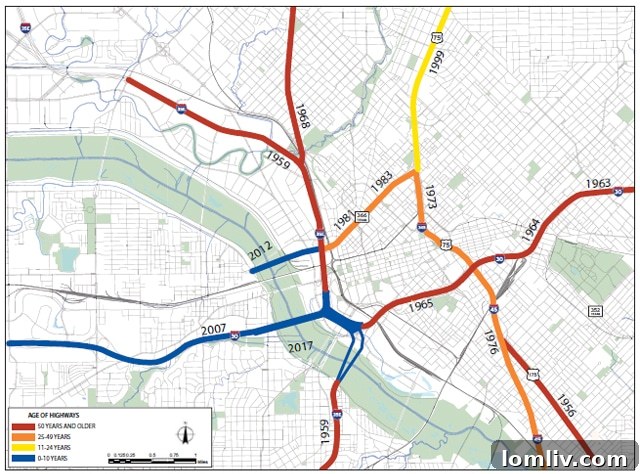
The CityMAP study pinpoints several critical highway corridors as having the most significant potential for impactful intervention and revitalization. These areas, many of which date back over four decades, represent the arteries of Dallas that are most strained and most in need of modern solutions to better serve a growing population and reconnect fractured neighborhoods:
- I-30 between I-35E and I-45: This vital stretch, constructed in 1965, forms the backbone connecting the city core with The Cedars neighborhood. Revitalizing this segment is crucial for bridging historically separated communities and enhancing downtown connectivity, creating a more cohesive urban fabric.
- I-30 between I-45 and Bass Pro Drive, and US 80 from I-30 to FM 460: Built in 1963-64, these sections serve areas like Fair Park and the edges of Deep Ellum. Modernizing these routes can unlock new economic potential, improve access to significant cultural and entertainment venues, and stimulate local development.
- Potential Relocation of I-30 between I-35E and I-45 to South Dallas: This ambitious proposal suggests a significant shift, offering the potential to reclaim valuable urban land for community development, create new green spaces, and better integrate South Dallas into the city’s economic and social landscape.
- I-35E from Reunion Boulevard to US 67, and US 67 from I-35E to I-20: These corridors, dating back to 1959, impact the Dallas Zoo area and beyond. Improvements here could dramatically improve commuter experiences and accessibility to key attractions, fostering tourism and local engagement.
- I-35E from Reunion Boulevard to Oak Lawn Avenue: Also built in 1959, this section is critical for reconnecting the rapidly evolving Design District with downtown. Re-envisioning this stretch can foster walkability, promote mixed-use development, and create a more cohesive urban environment.
- I-45/US-75 separating the city core and Deep Ellum: Constructed in 1973, this barrier has long divided vibrant areas. Strategies here could focus on bridging this divide, fostering seamless movement between downtown and Deep Ellum’s cultural hub, and unlocking new development opportunities.
A Legacy of Division: Understanding Dallas’s Highway History
It’s essential to remember that Dallas’s extensive network of highways, often described as a “noose” around the city, was conceived and constructed during an era when the scale and complexity of today’s Dallas were seemingly unimaginable. This mid-20th-century urban planning philosophy, prevalent in cities worldwide, prioritized the automobile above all else. Highways were carved directly through existing neighborhoods, often with devastating consequences for the communities they bisected. Much like railroad tracks of an earlier era, these superhighways created stark divisions, often establishing a definitive “wrong side of the tracks”—or, in this case, the highway—segregating communities, limiting access, and impeding organic urban growth. This historical context is vital for understanding the deep-seated scars that CityMAP aims to heal, transforming barriers into connectors.
For instance, the original design of I-30, cutting a swathe through the city, might be likened to a “dagger-nailed finger scraping across grandma’s birthday cake”—a seemingly thoughtless act that left lasting marks on the urban fabric, creating enduring divisions. Similar narratives apply to many other encircling highways. I-45, for example, was arguably built to facilitate transit from Houston to Dallas, and then US-75 was intended to whisk travelers further north to Oklahoma. The unintended, yet significant, consequence of this car-centric approach was the profound amputation and isolation of parts of South Dallas, which, in the planning priorities of the time, was perhaps even viewed as an acceptable, if not beneficial, outcome for some stakeholders, despite its detrimental impact on local communities.
An interesting exception to this trend, or at least one with a different historical impact, is I-35E. When it was initially developed, areas like Victory Park were primarily industrial zones, and the Design District comprised warehouses and manufacturing facilities. Indeed, the area now known as Riverfront Boulevard was historically named Industrial Boulevard for a reason. In this context, placing a major highway through the middle largely served to improve transportation logistics for the burgeoning industrial businesses lining the riverside, facilitating commerce rather than immediately disrupting established residential communities. However, even this “exception” now presents new challenges. The contemporary drive to integrate the Design District and transform it into a vibrant, mixed-use area stems from a recent cultural shift towards a “pseudo chic-erie of ‘authentic living'”—a desire, perhaps, to borrow from Edina Monsoon, for a lifestyle so organic that one might expect to eat food with the dirt still on it. This movement underscores the imperative to reverse decades of car-centric planning and reconnect these areas for pedestrian and community-focused development, promoting a more holistic urban experience.
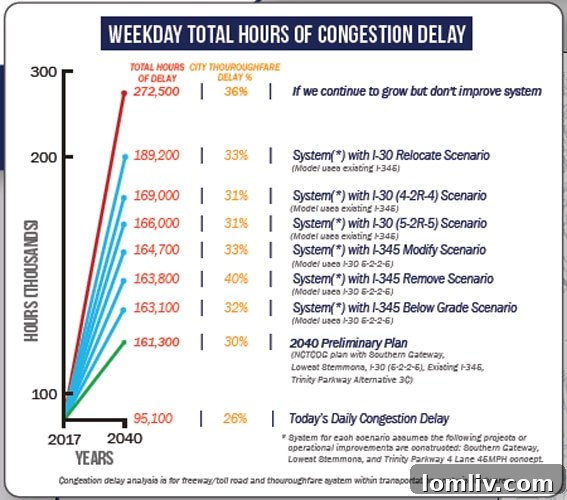
The stakes are high. Without decisive action and visionary urban planning, Dallas risks spiraling into a future where congestion becomes unbearable, where residents are reduced to “wearing Depends and ordering highway Domino’s by drone” merely to cope with ever-increasing hours trapped in traffic. CityMAP offers a lifeline, a meticulously researched path forward to prevent such a dystopian outcome and secure a more liveable, breathable, and connected Dallas for generations to come.
Beyond Trenching: Advocating for Fully Covered Highways to Heal Urban Scars
Many of CityMAP’s proposed scenarios thoughtfully incorporate methods for expanding and submerging roadways, moving them out of immediate sight. This approach, which involves digging trenches and lowering highways, represents a significant step in the right direction towards improving urban aesthetics and reducing direct impact. However, I believe there’s an even more transformative solution that deserves full consideration and potentially greater investment. When I envision “burying something,” I picture not just digging a hole and dropping an object in, but rather *covering it up completely*. While many of CityMAP’s recommendations involve trenching the roadway, they often propose only partial covering in select areas, akin to the successful but localized model of Klyde Warren Park, rather than a continuous, expansive deck park that could truly re-stitch the urban fabric.
Undeniably, comprehensive highway covering is an expensive undertaking. The initial capital outlay can be substantial. But so what? The long-term benefits and the profound positive impact on urban fabric, community health, and economic development make it the unequivocally right answer. Consider the inherent problems with ground-level or elevated highways: they function as formidable physical, visual, and auditory barriers. This means they are inherently difficult for pedestrians to cross, they mar the aesthetic appeal of our cityscape with concrete structures and ceaseless movement, and they inflict constant noise pollution and air quality issues on adjacent communities. They effectively sever neighborhoods, creating psychological and physical divides that hinder walkability and community cohesion.
By fully submerging and covering highways, we achieve a paradigm shift in urban connectivity and livability. Not only do we make these once-impenetrable barriers significantly easier to cross, creating seamless transitions between districts, but we also drastically reduce their visual and auditory intrusiveness. Imagine a Dallas where highways are buried and meticulously covered, transforming them into not just traversable, but truly *attractive and silent* urban spaces. This approach doesn’t merely mitigate problems; it actively *heals* the deep-seated scars that decades of highway construction have inflicted upon our city. Fully covered highways create invaluable new green spaces, foster vibrant mixed-use developments, and seamlessly reconnect communities, unlocking immense potential for pedestrian-friendly environments, cultural integration, and enhancing the overall quality of life for all Dallas residents. The successful model of Klyde Warren Park, which transformed a highway trench into a beloved urban oasis and economic engine, serves as a powerful testament to the transformative power and long-term return on investment of such bold urban infrastructure projects.
Stay tuned for part two of this analysis, where I will offer more specific thoughts and detailed insights on some of the individual plan options presented within the CityMAP project. (To be frank, many of the proposals are so well-conceived that they require little to no additional advocacy from me, but certain aspects warrant closer examination.)
Connecting with Dallas’s Urban Landscape and Real Estate
Remember: While high-rises, HOAs, and renovation projects typically define my primary focus within the Dallas real estate landscape, I also hold a deep appreciation for the delicate balance between modern and historical architecture, particularly as it intersects with the YIMBY (Yes In My Backyard) movement—advocating for thoughtful, sustainable development. My passion lies in understanding and communicating the nuances of urban development and its profound impact on community life. If your organization is interested in hosting a Candysdirt.com Staff Meeting event, a dynamic discussion focusing on urban trends, real estate, and community engagement, I would be delighted to collaborate and share insights. In 2016, my writing was honored with both Bronze and Silver awards from the prestigious National Association of Real Estate Editors, reflecting a commitment to insightful and engaging content that informs and inspires. Whether you have an compelling urban planning story to share, a fascinating real estate trend to discuss, a community initiative to highlight, or even a unique marriage proposal idea, please feel free to reach out. You can connect with me directly via email at [email protected]. I look forward to hearing from you and continuing the conversation about Dallas’s exciting and evolving future.