Caroline Rose Hunt: A Dallas Icon Who Built an Empire and Reshaped a City
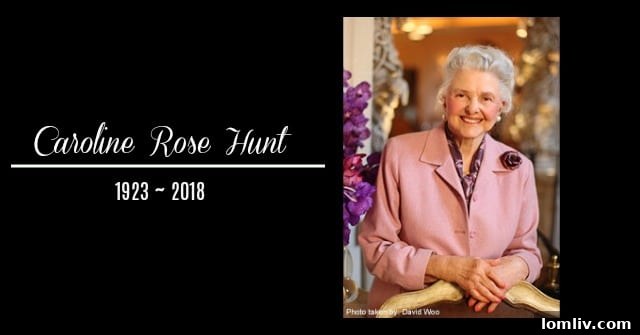
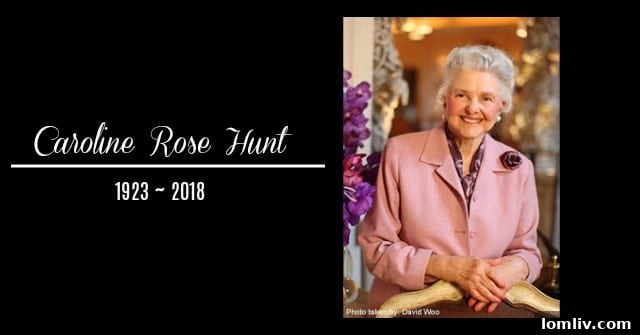
Dallas mourns the passing of a true visionary, Caroline Rose Hunt, who died at the age of 95. An extraordinary figure, Hunt was not only the daughter of the legendary oil wildcatter H.L. Hunt and an heiress to an oil fortune, but she also forged her own indelible legacy, transforming the urban landscape of Dallas and pioneering a new standard in luxury hospitality. Her influence on the city, particularly the vibrant Uptown district, is immeasurable, earning her a revered place in Texas history.
Caroline Rose Hunt’s remarkable life was a tapestry woven with diverse achievements. She was a prolific philanthropist, a renowned hotelier, a published author, a shrewd real estate investor, and an adventurous world traveler. Known for her gourmet palate and entrepreneurial spirit, she balanced these demanding roles with her devotion as a mother of five, grandmother of 19, and great-grandmother of 23. At one point, her business acumen and strategic investments led her to be recognized as the richest woman in America, a testament to her unparalleled success and keen business sense.
Her passing on a Tuesday night followed a stroke she suffered on Halloween, October 31st. Our heartfelt condolences and deepest sympathies go out to her beloved family during this difficult time. Caroline Rose Hunt’s departure leaves a significant void, but her legacy continues to inspire generations.
“My mother changed the complexion of the city,” recalled her only daughter, Laurie Harrison. “She bought land in an area that nobody wanted to be in and created The Mansion on Turtle Creek. She took something that was historical and made it useful and beautiful. She took 13 acres that was a car lot and created The Crescent — one of the most beautiful Philip Johnson buildings in America. My mother lived three or four lifetimes in one. She was something else.”
Indeed, Caroline Rose Hunt was truly “something else.” Her impact on Dallas real estate was monumental, rivaling her father H.L. Hunt’s prowess in finding oil with her own innate ability to discover undervalued land and transform it into architectural masterpieces and thriving commercial hubs. Her vision was not merely about building structures, but about cultivating elegance, fostering community, and setting a benchmark for urban development that continues to define Dallas’s most prestigious districts. I had the distinct honor of interviewing her in 2010 for an article commemorating The Crescent’s 25th anniversary, gaining insight into the mind of a true pioneer.
The Genesis of Uptown: From Vision to Reality with The Crescent
In the early 1980s, as Dallas was experiencing a significant influx of new residents, including my own family, the city’s commercial and retail landscape was predominantly concentrated in NorthPark and the northern suburbs such as Valley View Mall, Prestonwood, and the newly opened Galleria. However, a profound shift was on the horizon, largely spearheaded by Caroline Rose Hunt. It was during the mid-80s, a period marked by economic uncertainty and a struggling real estate market, that Hunt and her Rosewood Corporation embarked on a venture that would redefine Dallas.
She acquired several blocks of what were then old automobile dealerships just north of downtown Dallas. At that time, the area that would eventually become the vibrant Victory Park district was a distant dream, and the route to downtown was often described as less than desirable, reminiscent of the utilitarian stretches of Harry Hines Boulevard. Despite the pervasive skepticism and the challenging economic climate, Caroline Hunt envisioned something grand: a monumental mixed-use development that would stand as a beacon of luxury and sophistication.
The ambition of The Crescent project was astounding, especially given the financial constraints of the era. When capital was scarce and banks were hesitant to lend, Hunt pressed forward, initiating the excavation of one of the largest holes ever seen in Dallas. This massive undertaking was for a 5-level, 4,100-space underground parking facility, a component that alone contributed significantly to the project’s estimated $400 million cost, making it one of the most expensive developments in Dallas history. By 1986, The Crescent celebrated its grand opening with a gala event, a lavish affair that brought much-needed excitement to a city starved for spectacular gatherings.
Redefining Luxury Retail and Commercial Real Estate
Launching an upscale development during a severe recession, when Dallas was hit harder than many other regions, presented formidable challenges. Securing high-end tenants was particularly difficult. In a strategic move demonstrating her unwavering commitment to the project’s success, Caroline Hunt personally acquired the luxury retailer Stanley Korshak to ensure its timely opening as the anchoring department store within The Crescent. This bold decision underscored her dedication to her vision and her willingness to overcome obstacles through decisive action.
The Crescent’s strategic location in what was then a transitional area north of downtown, poised to become Uptown, proved to be a magnet for both prominent financial firms and upscale retailers. This influx dramatically shifted Dallas’s financial epicenter from its traditional Main Street roots to the burgeoning Uptown district. The influence of The Crescent extended far beyond its limestone walls, catalyzing a profound enhancement in the quality and prestige of the surrounding neighborhood, which flourished rapidly in its wake. Today, The Crescent commands some of the highest commercial rents in Dallas, a testament to its enduring allure and prime location. The structure itself, a marvel of timeless beauty, underwent a tasteful update a few years ago, ensuring its continued relevance and appeal. Its immediate vicinity now boasts the venerable Ritz-Carlton Residences and hotel, with The Crescent’s own $225 million McKinney and Olive tower standing prominently nearby, further solidifying the district’s reputation as a hub of luxury and commerce.
The ripple effect of Hunt’s vision is evident throughout Uptown. To the northwest, Gabriel Barbier-Mueller’s Harwood International district, developed after The Crescent, spans 16 blocks and includes iconic structures like the $150 million, 31-story Azure condominium built in 2006. The narrative is clear: there was no “Uptown” as we know it today until Caroline Rose Hunt dared to build it, establishing the foundational elegance and economic dynamism that define the area.
Caroline Hunt built The Crescent to endure, a monument to architectural excellence and classical design. Collaborating with world-renowned architects Philip Johnson and John Burgee, she conceived a neo-French classical aesthetic for The Crescent, a subtle nod to the historic architectural styles found in Galveston. The complex masterfully integrates three distinct towers: a contiguous 19-story central tower flanked by two 18-story side towers, all gracefully arranged in a crescent-shaped contour that gives the development its iconic name.
The sheer scale and meticulous craftsmanship of The Crescent are breathtaking. The entire complex is clad in acres of exquisite Indiana limestone, utilizing more of this distinguished material than even the Empire State Building. Inside, the grand lobby areas are adorned with ten different types of opulent marble, creating an ambiance of sophisticated luxury. The complex’s roof is a masterpiece in itself, featuring the largest cut slate roof in the world, composed of 250,000 slate tiles meticulously installed by highly skilled craftsmen. The exterior is further embellished with an impressive $6 million worth of ornamental cast aluminum metal, intricately shaped into decorative balconies, elegant trellises, and robust railings, adding a layer of intricate beauty to its stately facade.
A Rich Heritage: The Hunt Family Legacy
According to Cheryl Hall of The Dallas Morning News, Caroline Hunt was born in El Dorado, Arkansas, to H.L. Hunt and his wife Lyda Bunker. She was the third child of what was known as H.L.’s ‘first family,’ which included her late brothers Hassie, Nelson Bunker, and Lamar Hunt; her late sister, Margaret Hunt Hill; and her only surviving full sibling, William Herbert Hunt.
Following H.L. Hunt’s discovery of the colossal East Texas oilfield, a geological marvel that cemented his fortune, the family relocated first to Tyler and then, in 1938, to Dallas, settling in the now-famous Mount Vernon estate along White Rock Lake. The legendary J.R. Ewing character from the hugely popular TV series Dallas was famously modeled after H.L. Hunt, highlighting the family’s iconic status and influence.
The patriarch, H.L. Hunt, once reputed to be the world’s richest man, later married Ruth Ray, who became the mother of Dallas billionaire Ray Hunt and his three sisters. Caroline Hunt’s life and business ventures were undoubtedly shaped by this formidable family legacy, but she carved her own path, distinguished by her unique vision and leadership.
In the early 1980s, even as The Crescent was taking shape, Caroline Hunt’s Rosewood Corporation strategically began acquiring a tract of land just north of downtown, a move that would not only anchor the company’s signature Crescent development but also pave the way for other prominent projects like Rosewood Court, further cementing her real estate footprint in Dallas.
At its zenith in the late 1980s, her personal net worth soared to approximately $1 billion, an amount equivalent to more than $2 billion in today’s currency. Her vast portfolio of assets at that time included not only The Crescent but also the exquisite Rosewood Mansion on Turtle Creek and the iconic Hotel Bel-Air in Los Angeles, properties that epitomized luxury and impeccable taste.
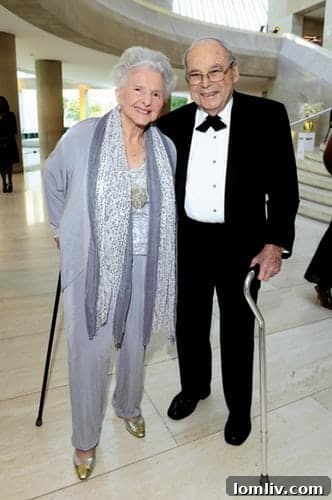
Throughout her long life, Caroline Hunt experienced the loss of two husbands, Loyd Sands and Buddy Schoellkopf, as well as her longtime companion, Charles Simmons, who passed away nearly eight years prior. In her most recent years, she found companionship with Robert Brackbill Sr., who is set to celebrate his 100th birthday next summer, illustrating her enduring spirit and zest for life.
The Rosewood Brand: An Enduring Symbol of Elegance
Indeed, she remained vibrant and engaged, divorcing Buddy Schoellkopf in 1987. Known simply as Caroline in the elite circles of Dallas and the Park Cities, she held a special place in the hearts of her grandchildren and great-grandchildren, who affectionately called her “Moozie.” This personal touch reflected a woman who, despite her immense public persona, cherished her family above all.
“The city of Dallas has been the recipient of the results of my Aunt Caroline’s love of beauty,” shared Dallas billionaire businesswoman and philanthropist Lyda Hill, whose mother, Margaret Hunt Hill, was Caroline’s sister. “Rosewood’s projects are elegant with superb architecture and art that reflect her grace and sense of style. The renovation of the Mansion on Turtle Creek preserved a beautiful old home and gave Dallas a grand hotel. The Crescent development renewed a deteriorating area on the north side of downtown and produced a shining star that became a beautiful entry into downtown Dallas.”
Prominent developer Lucy Billingsley aptly described Caroline Hunt as having been “raised in the age of steel magnolias — beautiful, charming and powerful.” Billingsley further emphasized that Hunt’s meticulous “eye for excellence and beauty, and her ability to deliver on both, created the magic of the Rosewood brand.” This magic wasn’t just about luxury; it was about an unwavering commitment to quality, a sophisticated aesthetic, and a dedication to creating experiences that transcended the ordinary.
Caroline Hunt’s foundational education included graduating from the prestigious Hockaday School in 1939. She continued her studies at Mary Baldwin College in Staunton, Virginia, for her first two years of college, ultimately earning a Bachelor of Arts degree in English from the University of Texas. Intriguingly, her first professional role within the formidable family oil business was in the mailroom of Hunt Oil, a humble beginning that underscored her readiness to learn the business from the ground up, regardless of her privileged background.
Her foray into the hospitality sector began with the acquisition of the historic Sheppard King Mansion on Turtle Creek Boulevard. With her unparalleled vision, she transformed this elegant residence into the iconic Rosewood Mansion on Turtle Creek, which quickly evolved into one of the most luxurious and esteemed hotel brands worldwide. After 42 years of dedicated ownership and global expansion, she made a strategic decision to sell Rosewood Corp. in 1989. When her daughter, Laurie Harrison, now 62 and an executive director at Rosewood Corp., questioned her mother’s decision to part with the family’s crown jewels, she received a quintessential piece of Caroline Hunt’s well-honed business philosophy.
“She goes, ‘Laurie, I told you, don’t get emotionally tied to any one line of business,’” Harrison recounted. “‘Business is cyclical. And now is the time to sell. We’ve got a Chinese [tycoon] getting ready to overpay. Besides that, you children can buy it back for 30 cents on the dollar in about 15 years.’” This anecdote perfectly encapsulates her pragmatic approach to business, her foresight into market cycles, and her enduring confidence in her family’s future prospects.
A Lasting Legacy and Family Ties
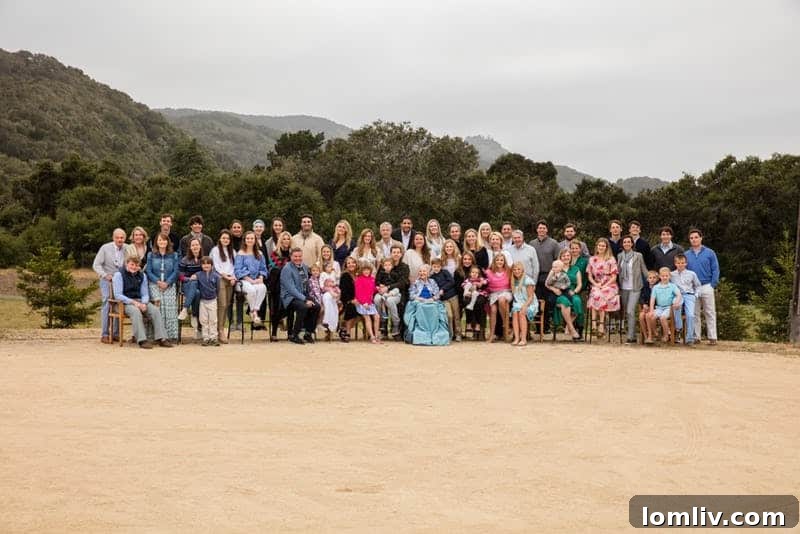
Caroline Rose Hunt’s profound impact on Dallas and the luxury hospitality industry will forever be celebrated. She is survived by her devoted son, Stephen Hunt Sands, and his wife, Marcy; her loving daughter, Laurie Sands Harrison; her son, Patrick Brian Sands, and his wife, Kristy; her daughters-in-law, Nancy Sands Esber and Gayle Sands. She also leaves behind her brother, William Herbert Hunt, and her half-brother, Ray Hunt, as well as her half-sisters, Ruth June Hunt, Swanee Hunt Ansbacher, and Helen Hunt Hendrix.
The family also mourns the earlier loss of two of her sons, David Sands and John Bunker Sands, both of whom succumbed to cancer. Mrs. Hunt’s extraordinary legacy is further carried on by her 19 cherished grandchildren and 23 beloved great-grandchildren, ensuring that her spirit and influence will continue for generations to come.
Funeral services are pending, and details will be shared by the family. Caroline Rose Hunt’s life was a testament to vision, elegance, and an unwavering commitment to excellence, leaving an indelible mark on all who knew her and on the city she so profoundly shaped.