Oh, if these walls could talk. The storied past of 2801 Wycliff Avenue in Dallas whispers tales of glamour, innovation, and an era of unparalleled aviation elegance. Indeed, the secrets and vibrant gossip that must have permeated the very fabric of this iconic building would undoubtedly create a fascinating bestseller. For those ready to listen to the echoes of its magnificent history, this legendary Dallas landmark, once celebrated as the Braniff International Hostess College, is once again on the market, offering a unique opportunity to own a piece of aviation and architectural heritage.
Constructed in the pivotal year of 1968—a year globally recognized for profound cultural shifts, from The Beatles’ groundbreaking White Album to Richard Nixon’s presidential election and the widespread embrace of mini-skirts—the Braniff International Hostess College emerged as a symbol of modernity and progress. Towering five stories high and encompassing an impressive 60,000 square feet, its striking presence quickly established it as a significant city landmark. Its architectural and historical importance has since been formally acknowledged, earning it a prestigious listing on the National Register of Historic Places, solidifying its place in American history.

Flying High: The Golden Era of Braniff International Hostess College
During its heyday, Dallas-based Braniff International Airways was not merely an airline; it was a cultural phenomenon, a true darling of the fiercely competitive airline industry. Its reputation for innovation, vibrant aesthetics, and unparalleled service set it apart, making it an aspirational brand both domestically and internationally. If you doubt its legendary status, consider the comprehensive and exceptionally stylish training provided to its “hostesses”—the term used before “flight attendants” became common. These dedicated women were not just employees; they were ambassadors of Braniff’s sophisticated image.
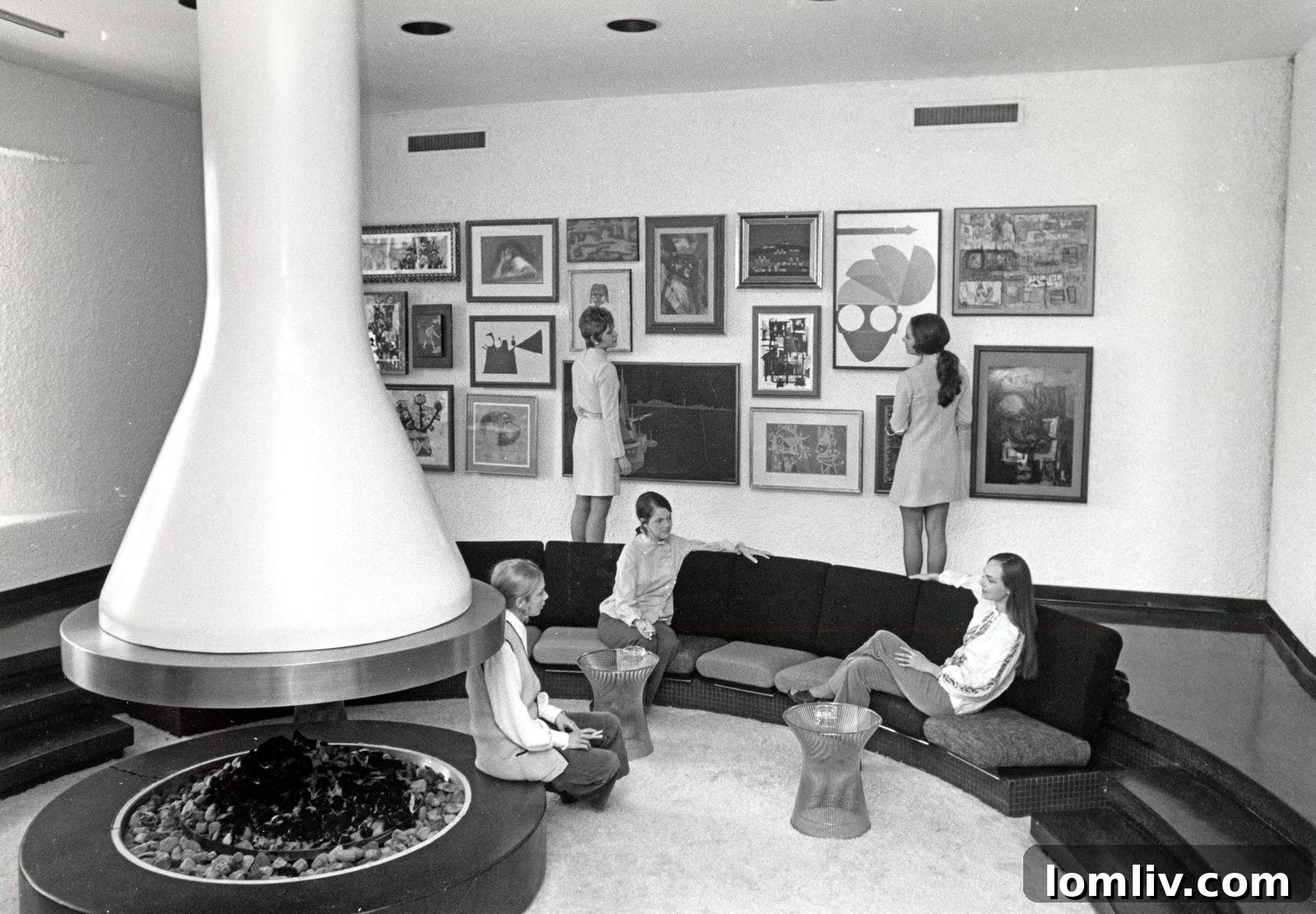
The Braniff International Hostess College served as a luxurious home-away-from-home for these aspiring hostesses during their rigorous multi-week training programs. The facility itself was a masterpiece of mid-century modern design, perfectly encapsulating the “groovy” spirit of the late 1960s. At its heart was a spectacular sunken living area, a signature feature of contemporary design, complete with a sleek, modern metal fireplace that served as a focal point for social gatherings and study breaks. This space was designed not just for function but to inspire, fostering a sense of community and pride among the trainees.

Yvonne Crum, a veteran of the skies who transitioned from hostess to flight attendant and eventually retired after 46 years of dedicated service, vividly recalls the college’s unique atmosphere. “You could have people there, and you could see what was going on,” she reminisces, highlighting the open and inviting nature of the common spaces. Although Crum herself underwent her initial training sharing a room with three others at a Holiday Inn, she frequently visited the hostess college for refresher courses and professional development. She unequivocally viewed the college as a monumental leap forward in training facilities, a stark improvement over the more modest accommodations experienced by earlier generations of flight attendants. The comprehensive curriculum covered everything from safety procedures and emergency protocols to etiquette, grooming, and customer service, all meticulously crafted to uphold Braniff’s impeccable standards.
“It was all so modern and pristine,” Crum added, underscoring the cutting-edge design and meticulous upkeep of the facility. The contrast between the college’s luxurious environment and her initial training experience was not lost on her colleagues. “Those of us who had been four to a room at the Holiday Inn were jealous,” she openly admitted, articulating the widespread admiration and envy among those who didn’t get to call the Wycliff Avenue building their temporary home during their formative training years. The Braniff International Hostess College didn’t just train hostesses; it immersed them in the brand’s glamorous identity, preparing them not just for a job, but for a lifestyle that captivated the public’s imagination.
Beyond Cool: Braniff’s Unforgettable Style and Iconic Uniforms
Braniff International was synonymous with bold, groundbreaking style, a philosophy that extended far beyond its hostess college. The airline revolutionized air travel aesthetics with its “End of the Plain Plane” campaign, famously painting its aircraft in a kaleidoscope of “jelly-bean” colors—bright, vivid hues like baby blue, orange, pink, green, and lavender. This audacious move transformed the mundane into the magnificent, making Braniff planes instantly recognizable and celebrated across the globe. But even more captivating than the colorful fleet were the hostesses themselves, who, upon graduating from the college, took to the skies adorned in uniforms that were truly works of art, designed by legendary fashion figures.
The initial collection of flight attendant uniforms was conceived by none other than the iconic Italian designer Emilio Pucci. His creations for Braniff were a symphony of vibrant colors, echoing the airline’s audacious palette with lavender, pink, orange, and green dominating the designs. These uniforms were not just attire; they were fashion statements, often featuring distinctive geometric patterns and innovative accessories like transparent “space helmets” for inclement weather, further cementing Braniff’s reputation for futuristic flair. These Pucci designs quickly became emblematic of the airline’s “air-stripes” style, turning every hostess into a runway model above the clouds.
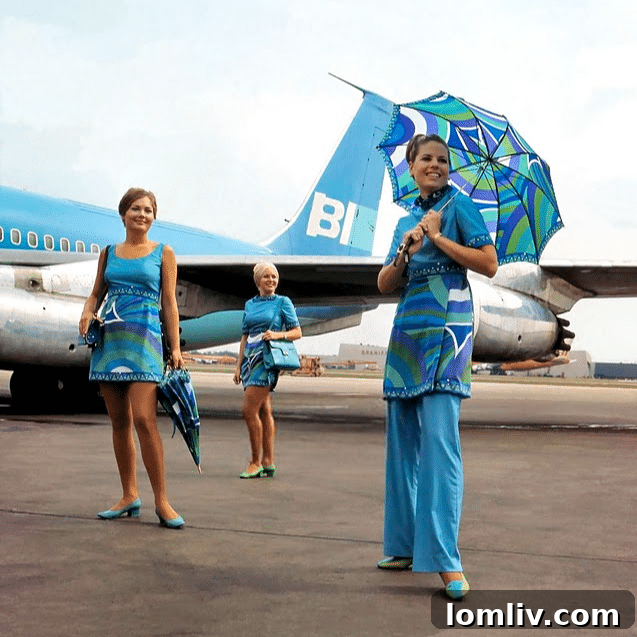
As tastes evolved, Braniff continued its tradition of design innovation. Later, the airline commissioned another titan of American fashion, Halston, to design new uniforms. Halston’s vision brought a sleeker, more understated elegance to the skies. His designs featured more subtle color palettes, often incorporating his instantly recognizable “H” logo fabric, reflecting a shift towards a more sophisticated yet still distinctively modern look. These uniforms were designed for comfort, practicality, and undeniable style, allowing the hostesses to perform their duties with grace while embodying the airline’s refined image. The collaboration with such high-caliber designers underscored Braniff’s commitment to excellence in every aspect of its operation, from aircraft design to crew presentation.
Securing a position as a Braniff hostess was an extraordinarily coveted job, a testament to the allure and prestige associated with the airline. The role transcended mere employment; it inspired popular culture, fueling public curiosity and even inspiring works like the famous tell-all book, “Coffee, Tea or Me?” published in 1967, which offered a peek into the glamorous world of air hostesses. Moving into the state-of-the-art dormitory and training facility near Dallas Love Field was the definitive beginning of a lifestyle perceived by many as nothing short of glamorous. The campus was not just a place of learning but a crucible where ordinary women were transformed into polished, professional representatives of a groundbreaking airline.
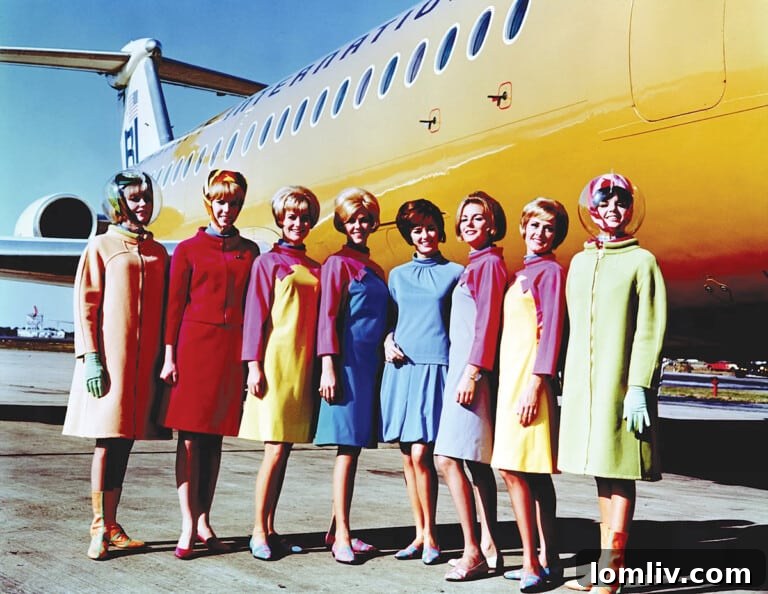
Maintaining an impeccable and eye-catching appearance was an integral part of the comprehensive course work at the Braniff International Hostess College. The training emphasized meticulous attention to detail, ensuring that every hostess embodied the airline’s pristine image. Daily “flight check-ins” involved rigorous inspections, where everything from nylons and shoes to hair styles was scrutinized with a professional “twirl around.” This strict adherence to grooming standards ensured that every hostess presented a unified, elegant, and memorable appearance, aligning perfectly with Braniff’s high-fashion brand identity.
Yvonne Crum further elaborated on the distinctive nature of the uniforms: “The Pucci uniform was a little on the wild side,” she acknowledged with a smile, recalling the daring design choices. “The colors were just outrageous.” This “outrageous” quality was precisely what made Braniff, and its hostesses, so unforgettable, carving out a unique niche in the competitive airline industry and leaving an indelible mark on fashion and aviation history. The legacy of these uniforms, and the women who wore them, continues to be celebrated as a high point of mid-century design and airline glamour.
Prepare For Turbulence: The End of an Era and the Building’s Future
The vibrant, dynamic era of Braniff International Airways, despite its groundbreaking innovations and immense popularity, was ultimately vulnerable to the shifting tides of the airline industry. By the late 1970s, significant changes were on the horizon, most notably with the Airline Deregulation Act of 1978. This landmark legislation fundamentally altered the economic landscape for airlines, fostering increased competition by removing government controls over fares, routes, and market entry. While intended to benefit consumers, deregulation plunged many established carriers, including Braniff, into a fiercely competitive environment for which they were ill-prepared.
Braniff’s ambitious expansion plans in the wake of deregulation, coupled with rising fuel costs and an economic recession, proved unsustainable. The airline, once the epitome of glamour and innovation, found itself in a precarious financial position. Despite efforts to adapt and survive, Braniff International was permanently grounded in 1982, marking a poignant end to its golden age and a significant moment in aviation history. The closure sent shockwaves through the industry and left a void that was never truly filled by another airline quite like it. The Braniff International Hostess College, once a bustling hub of training and camaraderie, fell silent, its purpose rendered obsolete.
Since the airline’s demise, the former home of Braniff hostesses has embarked on a journey of its own, witnessing multiple changes in ownership, a common fate for large, specialized commercial properties. It has been bought and sold, bought and sold again, each transaction sparking renewed interest in its potential. Most recently, the building was reportedly destined to be transformed into a hotel, a vision that many felt was fitting for its historical significance and unique architecture. However, the unforeseen challenges presented by a global pandemic likely impacted those ambitious redevelopment plans, leading to a pivot in strategy. The decision was ultimately made for the property to be placed back on the market, offering a fresh opportunity for a new owner to redefine its legacy.

Centurion American, the prominent real estate development firm that acquired the building in 2019, has since listed the property with Davidson Bogel Real Estate. While the exact asking price remains undisclosed, the intrinsic value of this Dallas landmark extends far beyond mere monetary figures. For aviation enthusiasts, history buffs, and former flight attendants like Yvonne Crum, the facility and all its rich history are truly priceless. Its listing on the National Register of Historic Places further enhances its appeal and potential, suggesting a future that honors its past while embracing new possibilities.
The building’s architectural integrity and its storied past make it an attractive prospect for a variety of uses. It could potentially be reimagined as luxury residential units, boutique hotel accommodations, a creative office campus, or even an educational institution, perhaps one dedicated to hospitality or aviation history. The challenge and opportunity for the next developer will be to sensitively integrate modern functionality with the preservation of its distinctive mid-century modernist aesthetic and historical character. Its strategic location in Dallas, a vibrant and growing metropolis, also adds to its inherent value, offering accessibility and visibility for any future venture.
“It was so iconic,” Crum reflected, her voice tinged with nostalgia for a bygone era. “It was so different to have all the flight attendants to be able to go there. It was a great time in aviation. It was a different time, passengers appreciated everything and flight attendants loved being there.” Her words encapsulate the profound impact the Braniff International Hostess College had on the lives of countless women and on the airline industry itself. It was more than just a training facility; it was a symbol of innovation, style, and a golden age of air travel when the journey was as glamorous as the destination. As this remarkable building awaits its next chapter, its walls undoubtedly hold a treasury of memories, ready to inspire its new custodians to create a future as distinguished as its past.