The Shifting Landscape of the American Dream: An In-Depth Look at Economic Mobility
The pursuit of the American Dream — the deeply held belief that hard work and perseverance can lead to a better life, irrespective of one’s starting point — remains a foundational ideal in the United States. However, recent groundbreaking research suggests that this dream is becoming increasingly complex and elusive for many, profoundly influenced by the very neighborhoods in which children are raised. A monumental collaborative effort between the US Census Bureau, Harvard University, and Brown University has shed crucial light on this intricate issue through the development of the Opportunity Atlas. This innovative, interactive digital tool meticulously tracks the economic trajectories of an astonishing 20 million American children, born in the mid-1980s, offering an unprecedented, granular view into how childhood environments profoundly shape adult outcomes and overall economic mobility.
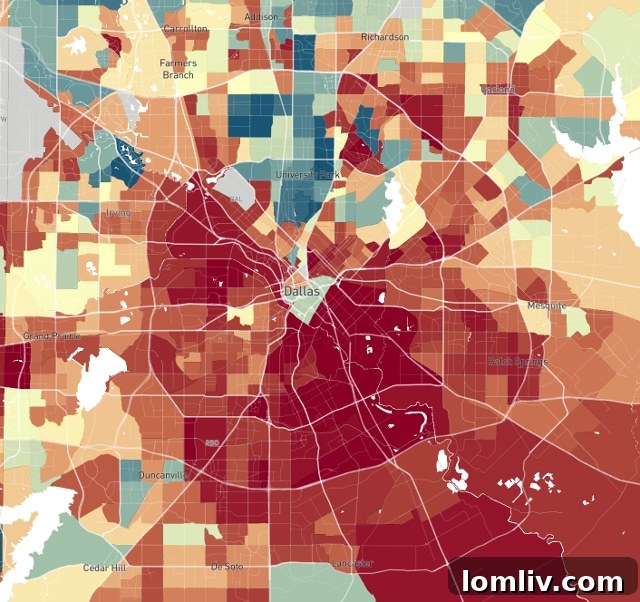
The Opportunity Atlas transcends the limitations of traditional statistical reports; it is a dynamic, visual map that overlays a wealth of socioeconomic data onto each of the country’s 70,000 Census tracts. These tracts, typically encompassing around 4,200 residents, serve as micro-communities for detailed analysis. Researchers painstakingly compiled and analyzed diverse data points, including parental income level, racial demographics, gender, and even local incarceration rates. This comprehensive approach allows for an exceptionally granular understanding of the intricate web of influences that contribute to or hinder an individual’s journey towards economic prosperity. This monumental study offers invaluable insights for policymakers, community leaders, urban planners, and individuals grappling with the persistent challenges to achieving true intergenerational economic mobility.
Beyond Simple Metrics: Unraveling the “Secret Sauce” of Opportunity
One of the most compelling, and arguably perplexing, conclusions drawn from the Opportunity Atlas is that while a neighborhood’s average income level is undeniably a significant indicator of future success, it is far from the sole determinant. The data revealed striking and often counter-intuitive disparities: neighborhoods with comparable average incomes, frequently located in close geographical proximity, produced dramatically different economic and social outcomes for the children raised within them. This observation underscores the profound complexity of socioeconomic development and strongly suggests that simplistic policy interventions or blanket solutions are highly unlikely to yield the desired transformative results.
Indeed, as Bethany Erickson’s earlier examination of this issue highlighted, there isn’t a single “eureka” moment or a magical policy lever that can instantaneously reverse decades of entrenched economic disadvantage and dramatically alter the economic trajectories of a neighborhood’s children. Instead, the findings consistently point to an intricate interplay of factors – a kind of “secret sauce” – that shapes opportunity. This elusive “secret sauce” encompasses a blend of tangible resources, such as quality schools and safe public spaces, alongside intangible social dynamics like community cohesion, collective efficacy, and positive peer networks. This complex blend makes the task of precisely identifying, understanding, and successfully replicating truly effective environments a significant challenge. However, recognizing these nuances is absolutely paramount for developing targeted, effective interventions that foster genuine upward mobility rather than superficial, short-lived improvements.
The Core Levers: Hope, Stability, Despair, and Identity
The researchers identified several major levers that exert considerable influence over a child’s future economic prospects. These include an interconnected set of factors that shape the very fabric of their upbringing:
- Neighborhood Income (Hope): This represents the ambient level of economic prosperity and resource availability within a community. Higher income neighborhoods typically translate into demonstrably better access to quality education, safer streets, healthier environments, and an overall atmosphere that fosters aspirations, growth, and a palpable sense of “hope” for a brighter future. This contrasts sharply with resource-deprived areas where opportunities feel scarce.
- Two-Parent Households (Familial Stability): While acknowledging the diverse and valid forms of family structures, the data consistently points to a strong positive correlation between growing up in a two-parent household and improved economic outcomes for children. This often signifies greater familial stability, consistent emotional and financial support systems, and access to more comprehensive resources and guidance, all of which contribute significantly to a child’s long-term well-being, educational attainment, and overall developmental success.
- Rates of Incarceration (Despair): Conversely, neighborhoods plagued by high rates of incarceration signal profound systemic challenges and contribute to an oppressive atmosphere of “despair.” The absence of incarcerated parents or primary caregivers creates immense disruptions in family units, drastically reduces household income, and can tragically perpetuate cycles of poverty and exposure to anti-social behavior across generations, severely limiting a child’s pathways to opportunity and hindering healthy development.
- Race and Gender: Beyond these profound socioeconomic factors, the study emphatically reaffirms the persistent and significant impact of a child’s race and gender on their economic journey. Systemic inequalities, deeply entrenched historical biases, and prevailing societal norms continue to play an undeniably powerful role in shaping access to quality education, equitable employment opportunities, and overall life chances, even when other socioeconomic variables appear to be controlled or minimized.
Deconstructing Incarceration: Challenging Assumptions on Race and Gender
The granular incarceration data presented by the Opportunity Atlas offers some of the most thought-provoking and, at times, discomforting insights, particularly when examining disparities across gender and race. For instance, the stark and consistent difference in incarceration rates between men and women, even when other socioeconomic variables appear similar or identical, raises critical questions for societal analysis. Why are exponentially fewer women incarcerated compared to men, even when both genders may face similar socioeconomic challenges or reside in the same disadvantaged areas? This persistent disparity prompts a deeper exploration into a multitude of factors, including differing societal expectations for men and women, the types of crimes each gender is more commonly involved in, potential judicial biases in sentencing, and the distinct pathways men and women might navigate within the broader criminal justice system.
Furthermore, the data decisively challenges simplistic, monolithic assumptions about racial disparities in incarceration. While it is widely and correctly acknowledged that a generations-long focus on policing and surveillance in minority communities has contributed significantly to the disproportionately high incarceration rates for Black individuals, the Opportunity Atlas reveals layers of complexity even within this critical narrative. Why, for example, do Hispanic individuals in the same geographically circumscribed, often economically struggling neighborhood not experience nearly the same levels of incarceration as their Black neighbors? This nuanced finding suggests that the issue is not merely a straightforward bias against “darker” skin tones, but rather a more intricate web of intersecting historical, social, economic, and systemic factors that manifest differently across various racial and ethnic groups, demanding a more precise and empathetic understanding.
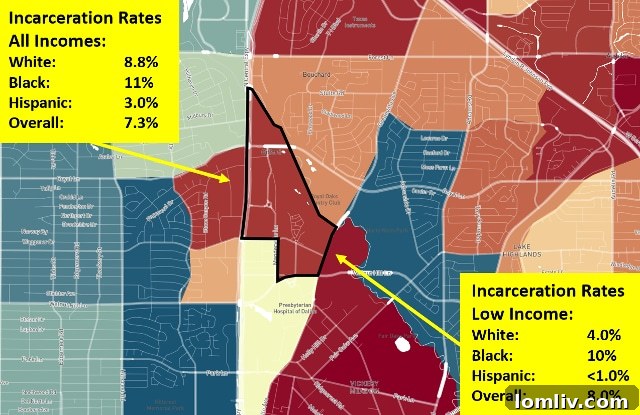
This critical point is vividly illuminated when factoring in Caucasian prison rates within specific locales. If we consider the data from the Vickery Park area, often presented as a compelling microcosm of urban dynamics, the Opportunity Atlas presents a somewhat counter-intuitive yet vital finding: Hispanics are, in fact, the least jailed group in this particular context. Specifically, low-income Hispanics in this area are incarcerated at a rate roughly one-quarter that of whites and approximately one-third that of whites across all income levels within the same geographic boundaries. Such detailed, localized statistics effectively debunk the simplistic myth of a uniform bias purely based on generalized racial categories and unequivocally highlight the critical need for granular data analysis to uncover the specific, often localized, drivers of incarceration disparities, which are frequently far more complex and multifaceted than broad, national assumptions might suggest.
The Geography of Opportunity: Investing in Future Generations
Beyond meticulously identifying the multifaceted causes of socioeconomic disparity, the Opportunity Atlas also powerfully demonstrates the stark reality of “adjacencies of very different areas.” It graphically illustrates how a mere street, a few blocks, or even an invisible boundary can separate neighborhoods with vastly divergent life outcomes and future prospects for their residents. For instance, in a compelling example provided by the data, an incarceration rate of 1.6 percent in a Census tract to the south contrasts sharply with a rate of 3.5 percent in a tract immediately to its north. This profound geographical specificity offers a compelling argument for highly targeted interventions, suggesting that even relatively “small moves” in terms of policy and strategic investment could potentially “reap big benefits” for residents, altering life trajectories in significant ways.
However, these crucial rewards inevitably come with a measurable cost. The median household income in the higher-opportunity tract is $30,000, which is significantly higher than the $19,000 recorded in the lower-opportunity area. This economic disparity translates into a tangible difference of approximately $325 per month in average rent between these proximate areas. This quantifiable difference raises a critical and pressing question for municipalities, charitable organizations, and social welfare agencies: Is it a worthwhile and effective investment to subsidize housing for low-income families in higher-opportunity areas, knowing with a high degree of certainty that their children are significantly more likely to achieve higher adult incomes and, crucially, ultimately move out of the perpetual cycle of needing assistance? From a holistic, intergenerational perspective focused on sustainable social mobility, the answer appears to be a resounding “yes.” If assistance is to be provided, strategically directing it to environments where it will have the most profound, lasting, and self-sustaining impact across multiple generations is not just an act of compassion, but an economically rational and deeply effective approach to community development.
Breaking Cycles: The Intergenerational Impact of Social Behaviors
Extending this crucial long-term perspective, we must courageously confront another challenging and sensitive question revealed by the data: Does the disproportionately high incarceration rate among Black men, leading to a greater prevalence of single-parent households, contribute to the perpetuation of anti-social behaviors and chronic disadvantage across generations? While inherently complex and fraught with social sensitivity, the accumulating evidence strongly suggests a significant correlation. The home environment plays an undeniably powerful and formative role in shaping a child’s development, and mirrored behaviors—whether positive or negative—often transcend generations, becoming deeply ingrained patterns. Issues such as alcoholism, domestic abuse, patterns of victimhood, and other anti-social behaviors can indeed become learned behaviors, deeply embedded in the familial and community dynamics, creating cycles that are incredibly difficult to break.
Addressing these deeply ingrained and often destructive patterns requires far more than purely economic solutions; it necessitates comprehensive, multi-faceted social and psychological support systems. Breaking these insidious cycles demands a concerted, society-wide effort to provide consistent positive role models, offer robust educational and mentorship programs from early childhood, and actively create supportive community structures that can effectively counteract negative influences. Investing proactively and substantially in these crucial areas is fundamental for fostering an environment where children, regardless of their family’s past challenges, can genuinely thrive, develop resilience, and ultimately forge healthier, more productive futures for themselves and their communities.
Dallas: A Case Study in Unequal Growth
The dynamic city of Dallas offers a compelling local lens through which to examine these national socioeconomic trends and disparities. Despite experiencing remarkable economic growth, often touted as one of the highest in the nation with a staggering 40 percent job increase between 1990 and 2010, Dallas continues to grapple with persistent and widespread poverty. A significant portion of its long-term poor population regrettably remains stuck in the lowest economic quartile, unable to meaningfully participate in the city’s prosperity. This striking paradox begs a critical question for urban planners and community leaders: If the Dallas economy is booming, why are so many local residents still falling behind?
The answer, as revealed by economic analysis, lies fundamentally in the nature of this growth. The vast majority of the new jobs created during this period did not primarily translate into increased training or hiring opportunities for existing, often less-skilled, local residents. Instead, many of these higher-skilled, better-paying positions attracted a new influx of educated and experienced workers from out of state. This phenomenon has created a distinctly layered economy: while Dallas’s aggressive corporate headquarters poaching strategy has undoubtedly boosted the city’s overall economic output and elevated its national profile, it has inadvertently added a new, higher-tier layer of better-qualified, higher-paid workers on top, without adequately elevating the economic standing and opportunities of many long-term Dallas residents. For genuine, equitable economic mobility to take root locally, corporations operating within the city must prioritize training and hiring initiatives from within the existing Dallas community, ensuring that the city’s impressive growth truly benefits everyone, not just new arrivals or the already privileged.
The Elusive “Secret Sauce”: Beyond Monetary Solutions
While I am a firm believer in the undeniable power of vast datasets to enlighten and inform policy, the “secret sauce” revealed by the Opportunity Atlas remains largely obscured by the sheer volume of numbers. It compels us to ask a fundamental question: When all measurable socioeconomic factors appear to be equal or nearly so, why do children’s outcomes still vary so dramatically across similar communities? As emphasized earlier, a significant portion of this enigma lies in the intangible yet profoundly impactful elements I refer to as hope, familial stability, and, conversely, despair. These are not merely abstract economic indicators but fundamental, deeply interwoven components of the social fabric that shape individual and community destinies.
Undoubtedly, increased financial resources can have a profound and positive impact on these crucial concepts. Money can provide access to better housing, higher-quality education, superior healthcare services, and safer neighborhoods, all of which contribute to a more hopeful and stable environment. However, these deeper, more intrinsic issues are also inextricably woven into the very fabric of families and neighborhoods, intricately shaped and reshaped over decades by evolving cultural norms, profound historical events, and complex community dynamics. For instance, spousal abuse, a deeply destructive behavioral pattern, does not simply cease with an increase in household income or a change of residential address. It often requires a generational shift, a conscious decision by a child who grows up witnessing such patterns to actively break that learned cycle. As a society, we often struggle profoundly with the complex and challenging task of effectively teaching, fostering, and reinforcing such transformative concepts, highlighting the significant limitations of purely economic interventions in addressing deeply rooted social maladies.
The Imperative of Early Intervention and Integrated Communities
Extensive prior research consistently demonstrates that the earlier a child is removed from a poorly performing environment, the more profound and positive the impact on their eventual life outcomes and adult income potential. A “poorly performing” environment can encompass a wide and distressing range of factors, from severe economic hardship and material deprivation to the pervasive presence of abuse, neglect, or other detrimental social behaviors that undermine healthy development. Regardless of the specific challenges present, the consistent key to catalyzing positive change lies in consistently modeling successful, healthy, and resilient behaviors for children from their earliest years.
Just as one only becomes truly fluent in French by speaking it every single day, not just occasionally, children learn and internalize behaviors, social norms, and coping mechanisms through constant exposure, repetition, and reinforcement within their daily lives. This powerful principle underscores the critical importance of actively creating and sustaining environments where positive role models, healthy social norms, and ample opportunities for growth are not only present but also prevalent and consistently accessible to all children. Ultimately, what this extensive body of research, once again, seems to point to is that society is optimally served by neighborhoods that are genuinely mixed on every level—economically, racially, culturally, and socially. This vibrant and integrated societal structure was, in fact, the predominant model for millennia until the relatively recent and destructive phenomena of intense urban and suburban segregation began to take hold and entrench itself a few short decades ago.
Concentrated poverty, isolated and neglected, inevitably breeds generational disadvantage, offering severely limited avenues for upward mobility and perpetuating insidious cycles of despair and hopelessness. Conversely, concentrated wealth, often disconnected and privileged, can lead to generations increasingly detached from the realities of broader humanity, fostering a disdain for those with less that, regrettably, grows with unsettling ease and self-justification. Such profound segregation, existing at both extremes of the socioeconomic spectrum, profoundly corrodes essential social cohesion, undermines the collective well-being of society, and ultimately diminishes the potential of the entire nation.
Navigating the Path Forward: Beyond “Opportunity Bargains”
Unfortunately, one of the primary recommendations stemming from this otherwise illuminating research does not explicitly advocate for a return to more integrated neighborhoods in the traditional, holistic sense. Instead, the report proposes strategies primarily focused on identifying and encouraging population movement to “opportunity bargain” areas—locales where positive outcomes for children consistently exceed what might typically be predicted by their raw economic norms. Additionally, it emphasizes the importance of figuring out how to rigorously replicate the success of better-performing areas within existing underperforming communities, essentially transplanting models of success.
While these recommendations possess a certain logical appeal from a theoretical standpoint, they present significant practical, ethical, and sociological challenges. As previously discussed, understanding, capturing, and effectively embedding the nuanced, often intangible “secret sauce” of successful communities is an incredibly difficult task to recreate artificially or systematically engineer. Furthermore, a strategy involving the “full-bore colonization” of marginally better-performing areas with transplanted residents, with the simplistic hope that success will merely “rub off” through proximity, carries a substantial and inherent risk. Such an approach could easily dilute the very positive social effects, community bonds, and established dynamics of the original community, creating new tensions, potential resentments, and quite possibly undermining the organic social capital that initially made the area successful, rather than fostering genuine integration, sustainable growth, and widespread, equitable opportunity for all residents.
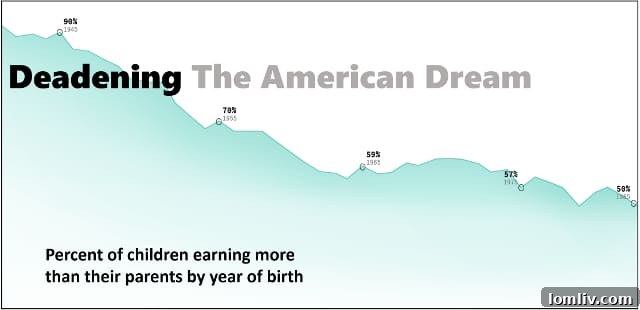
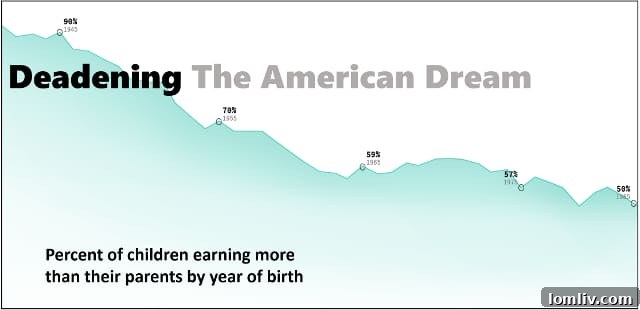
Ultimately, reversing the alarming and ever-increasing trend of children being economically less-advantaged than their parents – a complex challenge that has proven remarkably difficult to solve, despite the relative simplicity of its initial emergence – will require a profound and systemic societal shift. It will necessitate a collective and unwavering commitment to equity, a deep understanding that true and lasting progress demands genuine, sustained investment in all communities, and perhaps, most challenging of all, a willingness from those who currently possess too much to contribute a little more towards building a truly equitable, opportunity-rich, and inclusive future for all American citizens.

About the Author: My professional focus often centers on high-rises, the intricate governance of homeowners’ associations (HOAs), and the multifaceted world of property renovation. However, my passion extends deeply to appreciating both modern and historical architecture, always viewed through the vital lens of balance against dynamic urban movements like YIMBY (Yes In My Backyard), which passionately advocates for more housing development to address affordability and supply. My commitment to insightful real estate commentary has been consistently recognized by the National Association of Real Estate Editors, an esteemed organization that honored my writing with three Bronze awards in 2016, 2017, and 2018, along with two prestigious Silver awards in 2016 and 2017. If you have a compelling story to share, a unique perspective to offer, or even a marriage proposal to make, please feel free to reach out directly via email at [email protected]. You’re welcome to search for me on Facebook and Twitter, though you might find the digital trail somewhat elusive!