The Rise of YIMBY: Advocating for Smarter Urban Growth
In the intricate landscape of urban planning and community development, two opposing philosophies often clash, shaping the future of our cities. On one side stand the long-established Not-in-My-Backyard (NIMBY) advocates, whose immediate inclination is often to resist new development or change within their neighborhoods. Their concerns, sometimes rooted in a desire to preserve existing community character, property values, or quality of life, have historically dominated local discussions, often leading to stagnated growth and increased housing costs. However, a powerful counter-movement is rapidly gaining momentum: the Yes-in-My-Backyard (YIMBY) movement. Born out of a growing housing crisis and the urgent need for sustainable urban solutions, YIMBYs are increasingly making their voices heard, challenging traditional resistance with a forward-thinking vision for vibrant, inclusive, and affordable cities.
The YIMBY movement isn’t simply about saying “yes” to any development; it champions intelligent urban design and strategic growth. At its core, YIMBYism advocates for increased urban density, a greater variety of multi-income housing options, robust public transit systems, and the creation of walkable and bikeable urban environments. This philosophy seeks to emulate the dynamic, interconnected “urban scene” found in more mature and highly functional cities like New York or Chicago, where proximity, efficiency, and diverse communities thrive. It’s a call for urban areas to evolve into more livable, economically viable, and environmentally responsible spaces for all residents.
Reclaiming the Urban Village: A Historical Perspective
Strikingly, many of the YIMBY goals represent a deliberate return to how towns and cities naturally evolved and operated before the widespread adoption of the automobile and the subsequent rise of suburban sprawl. The very term “urban village” used by YIMBY proponents harks back to an era when limited transportation necessitated the centralization of basic living needs. In these pre-automobile days, communities were designed for convenience and self-sufficiency, with housing, commerce, and services all located within close proximity. This natural centralization fostered genuine mixed-use environments, encouraging a vibrant social fabric where people of diverse economic backgrounds lived and worked side by side. Consider the blacksmith who lived above his forge, purchasing goods from the baker across the street, whose children might be tutored by a local scholar residing nearby. Such interdependent communities were the norm, fostering both economic vitality and social cohesion.
However, the advent of cheap land, widespread car ownership, and certain societal attitudes ushered in an era of expansive sprawl. This shift fundamentally altered urban landscapes, decentralizing services and mandating reliance on personal vehicles for nearly all daily activities. Alongside this physical dispersion, a less tangible but equally damaging phenomenon took root: economic xenophobia.
Xenophobia is broadly defined as a fear or dislike of anything or anyone perceived as foreign or different. Applied to urban contexts, Economic Xenophobia manifests as a fear of those perceived as economically different, particularly concerning the integration of varied income levels into existing neighborhoods. This condition often stems from individuals being shielded within homogeneous social bubbles, where a single viewpoint, type, or class of people dominates. In urban planning, economic xenophobia frequently translates into exclusionary zoning practices, resistance to affordable housing projects, and a general reluctance to embrace the diverse housing needs of an evolving population. It prevents the natural, historical mixing of different economic strata that once characterized thriving urban centers.
The YIMBY Vision: Reclaiming the Urban Core
The YIMBY movement fundamentally advocates for concentrating development into vibrant, walkable cores rather than perpetuating endless outward expansion. This philosophy champions the idea that a dense, well-planned urban environment is inherently more efficient and provides a higher quality of life. For instance, in a climate like Texas, with its scorching summers, the choice becomes clear: do we prefer a refreshing plunge into a deep, integrated pool of urban amenities, or merely splashing our feet in a vast, shallow reflecting pond of warm, ankle-deep suburban sprawl? The latter, a metaphor for the endless, car-dependent subdivisions, offers diminishing returns in terms of community, convenience, and sustainability.
Texas, with its abundant, historically inexpensive land, significant oil reserves, and a general lack of natural boundaries (like mountains or coastlines that constrain growth in other states), has unfortunately become a prime example of the “drive until you can afford it” sprawl model. Beyond its few tight urban cores, much of the Texas urban landscape is characterized by a seemingly endless flatscape of one-to-three-story buildings, only occasionally punctuated by the sudden, somewhat incongruous rise of taller structures. The Dallas urban core, for example, has long found itself constricted by a complex network of major highways—I-35E, I-45/US 75, I-30, and Woodall Rodgers—a veritable “noose of highways” that has only recently begun to loosen its grip, allowing for more intensive development to seep into areas like Uptown and The Cedars. This pattern of development comes with significant costs: increased traffic congestion, longer commute times, higher infrastructure expenses, and a greater environmental footprint, all of which underscore the urgent need for a shift towards more sustainable YIMBY-inspired solutions.
Insights from the Inaugural YIMBY Conference
The YIMBY movement, once a collection of disparate local efforts, solidified its national presence with its first-ever conference recently hosted in Boulder, Colorado. This landmark event brought together an inspiring cohort of 150 neighborhood representatives from cities spanning the globe, from Auckland, New Zealand, to Austin, Texas. The gathering served as a powerful platform for sharing strategies, successes, and challenges, yielding several critical takeaways that are highly relevant for cities like Dallas grappling with rapid growth and housing shortages.
Seattle’s Alarming Housing Imbalance
One particularly stark illustration of the urban housing crisis came from a Seattle-based presenter, who encapsulated that city’s profound problems with a single, sobering sentence: “Seattle is adding 40 new people a day, 35 jobs and … 12 homes.” This alarming imbalance highlights a pervasive issue in many thriving urban centers. When population and job growth far outpace housing development, the consequences are severe: skyrocketing housing costs, increased homelessness, displacement of long-term residents, longer and more congested commutes, and a tangible decline in overall quality of life. For a city like Dallas, which experiences significant population growth, this Seattle anecdote serves as a potent warning, prompting a critical self-assessment of its own development numbers and policies.
The Economics of Urban Development: Build Fast, Stay Affordable
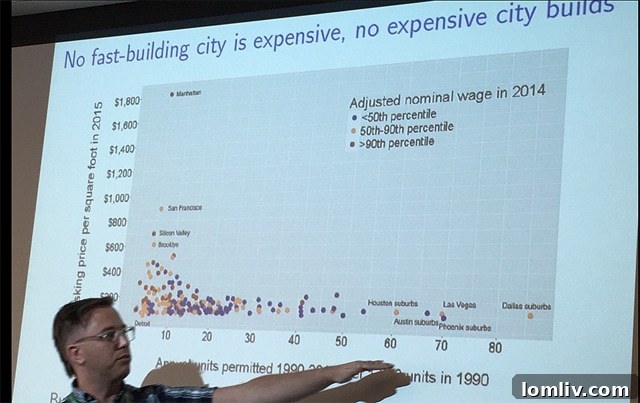
Another compelling insight emerged from the conference: “No fast-building city is expensive, no expensive city builds.” This statement was powerfully illustrated by a slide that plotted average residential housing costs against annual building permits. The vertical axis represented the average cost per square foot of residential housing in 2015, while the horizontal axis showcased a city’s average annual residential building permits since 1990. While the exact scale was not perfectly discernible, the trend was unmistakable. Manhattan, for example, was positioned in the upper left quadrant, with residential costs soaring to around $1,800 per square foot and a remarkably low number of building permits issued. This represents a city with extremely high demand but severe regulatory and physical constraints on new construction, leading to stratospheric prices.
In stark contrast, at the other end of the spectrum, cities and their sprawling suburbs like Austin, Houston, and the Dallas suburbs—along with Phoenix and Las Vegas—were clustered in the lower right. These areas exhibited a significantly higher volume of building permits (comparatively speaking) and maintained average residential costs under $200 per square foot (primarily in their suburban areas, not necessarily their dense urban cores). This data underscores a fundamental economic principle: where supply is allowed to meet demand, prices tend to remain more accessible. It highlights the critical role of streamlined permitting processes, flexible zoning, and proactive development policies in fostering more affordable urban environments. Conversely, restrictive zoning, extensive bureaucratic hurdles, and strong community opposition in established, high-demand areas inevitably lead to escalating housing crises.
Sprawl vs. Density: The Atlanta-Barcelona Contrast
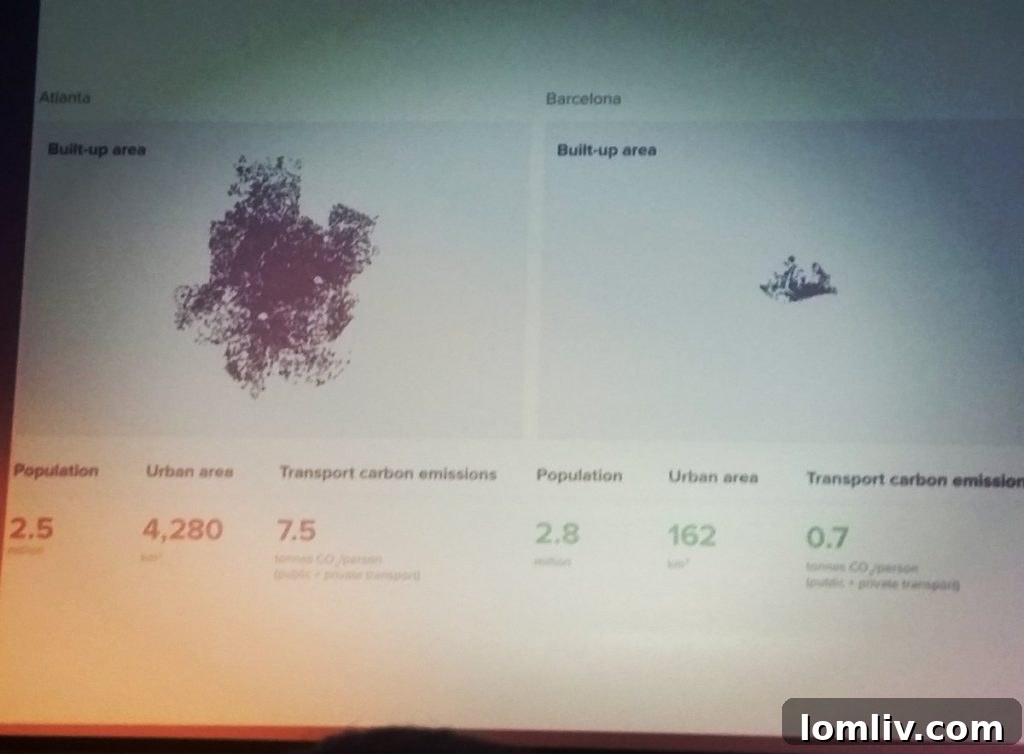
The environmental and lifestyle implications of urban sprawl were vividly demonstrated through a striking comparison between Atlanta, USA, and Barcelona, Spain. Visually, Atlanta’s vast, diffuse footprint on the left contrasted sharply with Barcelona’s compact, dense urban form on the right. Despite having remarkably similar populations—approximately 2.5 million for Atlanta and 2.8 million for Barcelona—their geographical footprints diverge dramatically. Barcelona efficiently occupies just 162 square kilometers (58 square miles), a testament to dense, integrated planning. Atlanta, on the other hand, sprawls over an astonishing 4,280 square kilometers (1,652 square miles). This massive difference in land use has profound consequences. Unsurprisingly, Atlanta’s car-centric development results in it emitting 10 times the transit-related CO2 emissions compared to Barcelona. Beyond just carbon output, sprawl consumes vast tracts of natural habitat, strains infrastructure budgets, and necessitates extensive energy use for heating, cooling, and transportation.
From a personal standpoint, having experienced rush hour traffic in both cities, the contrast in quality of life is palpable. One can comfortably imagine being well into a third leisurely cocktail, enjoying the vibrant atmosphere overlooking the Mediterranean in Barcelona, while Atlanta commuters are still stuck in gridlock, frustrated at their steering wheels. This stark comparison vividly illustrates the direct correlation between urban density, environmental sustainability, and the everyday well-being and leisure time of city residents.
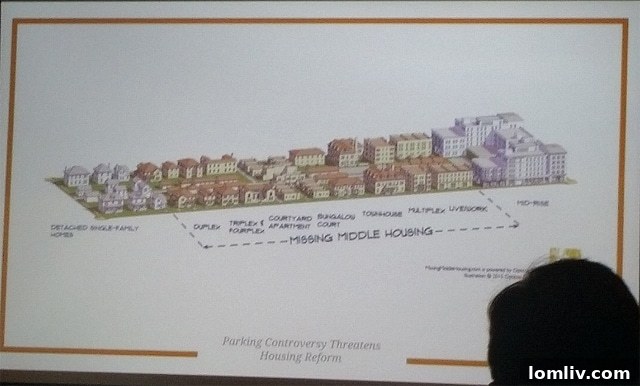
Embracing the “Missing Middle” for Gradual Density
A crucial concept often overlooked in the density debate is the importance of scale and gradual transitions in building height. The “Missing Middle” refers to a range of multi-unit housing types that are compatible in scale and form with detached single-family homes, but offer a greater diversity of housing options and increased density. These include duplexes, triplexes, fourplexes, townhouses, courtyard apartments, and small multiplexes. Often, single-family homeowners fear the immediate imposition of looming high-rises directly adjacent to their properties. The Missing Middle concept addresses this by advocating for a gradual increase in building height and density, ensuring that no building feels overshadowed by a disproportionately taller neighbor. This approach fosters a more harmonious urban fabric, providing density without jarring visual disruption.
These housing types were common in pre-WWII neighborhoods but have been largely eliminated by modern single-family zoning laws. By reintroducing Missing Middle housing, cities can provide more affordable options for a wider range of incomes, cater to different household sizes, and create more walkable neighborhoods without dramatically altering existing neighborhood character. In areas of Dallas, existing residential setback requirements do offer some protection and guidance in shaping these discussions, helping to limit severe height differentials. However, a more proactive embrace of Missing Middle zoning reforms could unlock significant potential for sensitive, community-friendly density across the city.
Navigating Stereotypes and Driving Inclusivity
Any growing social movement, if it is to achieve its full potential, must engage in critical self-reflection. The observations made at the inaugural YIMBY conference, while potentially uncomfortable, are vital for informing the movement and helping it overcome potential blind spots. It’s imperative for YIMBYs to minimize these shortcomings to ensure their message resonates with the broadest possible audience and truly takes root in diverse communities.
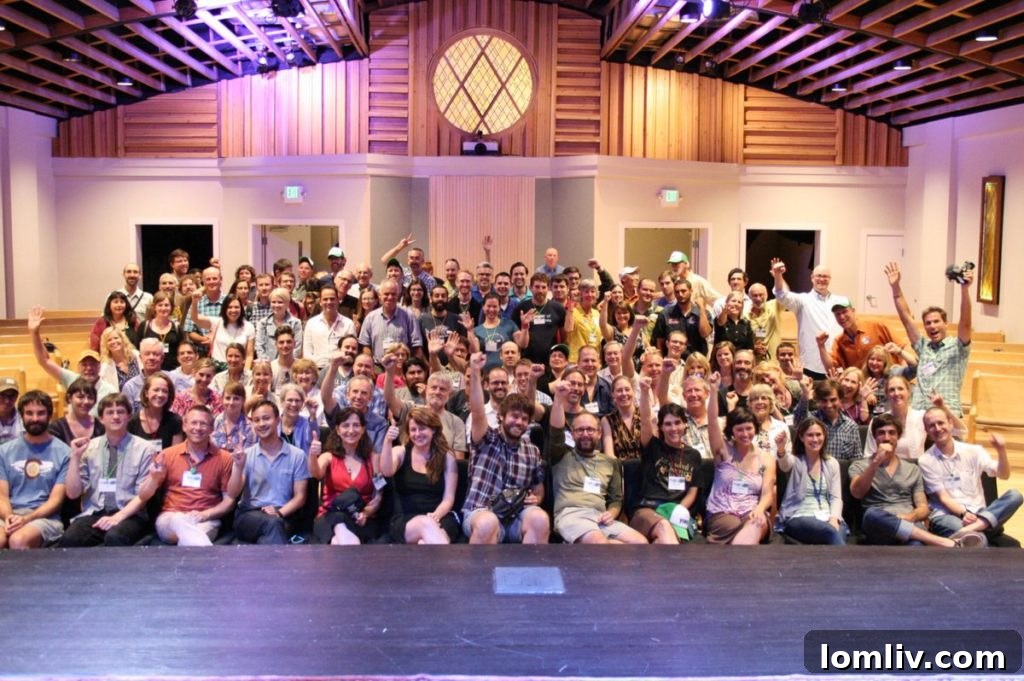
While giving credence to stereotypes can be problematic, it’s also true that many often have a basis in observed facts. Similar to many movements that champion ideals of inclusion and diversity, the YIMBY movement’s membership at the conference heavily skewed towards college-educated, higher-income, male Caucasians. This demographic reality, while perhaps reflecting the early adopters of many advocacy groups, presents a significant challenge for a movement striving for equitable urban outcomes. While there were certainly more women present than at an average tech conference, visible minority representation was notably low. This demographic imbalance is critical because a movement advocating for diverse housing and inclusive communities must itself embody diversity to truly understand and address the multifaceted needs of all residents, avoiding the pitfalls of unintended consequences or a narrow perspective. The directness of one session titled, “Men, Shut-up,” highlighted an awareness of this internal imbalance. One could imagine a session titled “Quiet, Caucasians” might have been a silent meditation, further underscoring the point. The core principle remains: if you truly aspire to advocate for inclusion and diversity in urban planning, your own movement must demonstrate and actively practice genuine inclusivity and diversity within its ranks.
Understanding YIMBY Motivations and NIMBY Resistance
The driving force behind the YIMBY movement often comes from younger generations, though retirees and individuals from all walks of life are increasingly joining their ranks. These advocates are not merely idealistic; they are driven by practical necessities. They seek housing that is both appropriate and affordable for local workers across a variety of professions and income bands, particularly in cities where population growth consistently outpaces the construction of new housing units. Their vision includes high-service neighborhoods teeming with activity spaces, cultural amenities, and crucially, viable carless transit options. While not the tie-dyed hippies of yesteryear, their idealism regarding community and sustainable living is not far removed. This youthful enthusiasm, often unencumbered by past precedents and eager to explore innovative solutions, has historically served as a powerful incubator for new ideas and societal shifts. From an urban engineering and social planning perspective, this is precisely as it should be, as these younger generations will ultimately bear the longest burden of living with the outcomes of today’s planning decisions.
Conversely, NIMBYs are often stereotyped as older, more conservative individuals primarily concerned with protecting their established property values and the existing character of their neighborhoods. While studies consistently show that individuals tend to become more resistant to change as they age, making this stereotype partially true, the conference also exposed a fascinating nuance: some of the fiercest opposition to YIMBY-ism originates from historically free-thinking, liberal university towns like Berkeley, California, and Cambridge, Massachusetts. This phenomenon highlights a complex challenge. Even in areas populated by a significant number of individuals who might intellectually agree with the broader principles of social equity, environmental sustainability, and affordable housing, there remains a powerful and often visceral current of “not right here.” This “not here” attitude often stems from concerns about increased traffic, school overcrowding, parking shortages, changes to neighborhood aesthetics, or a perceived loss of local control, even when those concerns are balanced against the greater good. Bridging this gap requires not just advocacy but deep empathy, recognizing and addressing legitimate concerns while making a compelling case for the collective benefits of thoughtful growth.
Towards a “Maybe In My Backyard” Consensus
Dallas, like many burgeoning metropolitan areas, is facing an undeniable housing crisis. The demand for housing far outstrips supply, leading to rapidly increasing costs that squeeze out essential workers, stifle economic diversity, and threaten the city’s long-term vibrancy. The most sustainable and equitable path forward involves building housing that is not only affordable for local workers across all professions and income bands but is also strategically located. This means prioritizing developments near robust public transit options to minimize commuting times and reduce reliance on personal vehicles. Furthermore, housing should be integrated into neighborhoods rich with social activities, green spaces, and community amenities, encouraging less driving and fostering a more active, connected lifestyle.
In essence, the YIMBY vision for Dallas harks back to the functional, community-centric urban model of a century ago, but reimagined with contemporary amenities. Picture the efficiency and intimacy of an old-world urban village, now enhanced with ubiquitous Wi-Fi, the convenience of a Starbucks on every corner, and the appeal of an “authentic” farm-to-table burger joint or a vibrant local market. This isn’t about erasing history; it’s about building upon it in a way that serves the needs of today’s diverse population and safeguards the environment for future generations. Achieving this progressive urban future hinges on a critical dialogue and genuine collaboration between YIMBYs and NIMBYs. The only truly sustainable way forward is if those who have historically resisted development can open their minds and hearts to the possibilities, ultimately reaching a consensus rooted in the understanding and acceptance of a “Maybe In My Backyard.” This spirit of compromise, dialogue, and mutual understanding is essential for transforming urban aspirations into tangible realities.
Remember: My expertise lies in high-rises, homeowners associations (HOAs), and renovation projects. However, my appreciation for urban development also extends to understanding the crucial balance between preserving modern and historical architecture and embracing the progressive ideals of the YIMBY movement. If you’re interested in hosting a Candysdirt.com Staff Meeting event, I’m always eager to connect. My writing was honored in 2016 with both Bronze and Silver awards from the National Association of Real Estate Editors, a testament to my commitment to insightful real estate commentary. Have a compelling story to share, a perspective to offer, or even a marriage proposal to make? Feel free to reach out via email at [email protected].