Unmasking Condo Square Footage: The Critical Discrepancies Every Buyer Must Understand
In the intricate world of real estate, the adage “you get what you pay for” holds true, but it’s often more accurate to say, “you pay for what you think you’re getting.” This distinction becomes critically important when purchasing a condominium, where seemingly minor discrepancies in reported square footage can lead to significant financial implications. For potential condo owners, especially in dynamic markets like Dallas, understanding precisely what constitutes “living space” is not just a detail—it’s a financial imperative.
A common pitfall buyers encounter revolves around the treatment of exterior spaces, particularly balconies. Across various real estate markets, there’s a lack of universal standardization in how these areas are factored into a property’s total square footage. For instance, in many popular markets, including the Hawaiian Islands, an exterior balcony or lanai is often counted as part of the overall living space. This means a condo advertised as 1,000 square feet might include a 200-square-foot balcony, making the true interior, climate-controlled living area only 800 square feet. Yet, the price-per-square-foot calculation would still be based on the full 1,000 square feet, effectively making you pay a premium for open-air space.
Dallas, however, historically operates under a different convention. When a Dallas condo is listed as 1,000 square feet, this typically implies 1,000 square feet of enclosed, heated, and air-conditioned space. Balconies, under this traditional interpretation, are often considered a desirable amenity that comes “free” or, at the very least, are not included in the primary square footage calculation used for pricing. This stark contrast highlights a crucial point: while a 200-square-foot balcony might elevate a Hawaii condo’s listing to 1,200 square feet, an identical unit in Dallas would generally remain listed at 1,000 square feet of interior space, with the balcony as an uncounted bonus.
The Financial Ripple Effect: Why Every Square Foot Counts
The method by which square footage is calculated is far from a mere technicality; it directly underpins the property’s valuation and, consequently, its selling price. Real estate transactions within a specific building or complex tend to adhere to a relatively narrow range of dollars per square foot. While factors such as unit condition, specific location within the building, views, and floor level certainly influence pricing, the foundational metric of price per square foot remains paramount. You won’t find vastly disparate price-per-square-foot valuations for comparable units within the same luxury high-rise.
This is precisely where inconsistencies in square footage reporting can lead to significant overpayments for buyers and potentially prolonged market times for sellers. Imagine a situation where one realtor includes balcony space in their square footage calculation, while another, for a truly comparable unit, adheres to the Dallas norm of reporting only interior, enclosed space. A buyer evaluating a unit listed with an inflated square footage—because it includes a balcony—might perceive it as a better deal at a certain price per square foot, when in reality, they are paying for less usable interior space than they anticipate.
A Concrete Example of Cost Discrepancy
Let’s revisit our hypothetical 1,000-square-foot unit, featuring a 200-square-foot balcony, located in a building where the market rate is around $300 per square foot for interior space. If a realtor mistakenly or intentionally includes the balcony in the total square footage, they might list the property as 1,200 square feet. At $300 per square foot, this would result in a list price of $360,000. However, if the price were based on the true interior space of 1,000 square feet (the Dallas norm), the correct list price would be $300,000. This means the buyer could unknowingly be paying an extra $60,000 for space that isn’t typically factored into the core valuation—a substantial sum that impacts everything from mortgage payments to property taxes and future appreciation.
The fundamental issue here isn’t necessarily which method is “right,” but rather the critical need for consistency and transparency. If all properties in a given market or building consistently include balconies, then the playing field is level. Similarly, if none do, that’s also acceptable. The problems arise from a mixed approach, which creates confusion, allows for misrepresentation, and ultimately harms both buyers (who overpay) and sellers (whose inaccurately priced units may languish on the market, eventually selling for less than they might have if priced correctly from the outset).

Navigating the Due Diligence Maze: How to Verify Condo Square Footage
Given the potential for significant financial missteps, robust due diligence is essential for any condo buyer. Here’s a comprehensive approach to verifying the actual square footage of a unit:
1. Consult DCAD Records: Your First Line of Defense
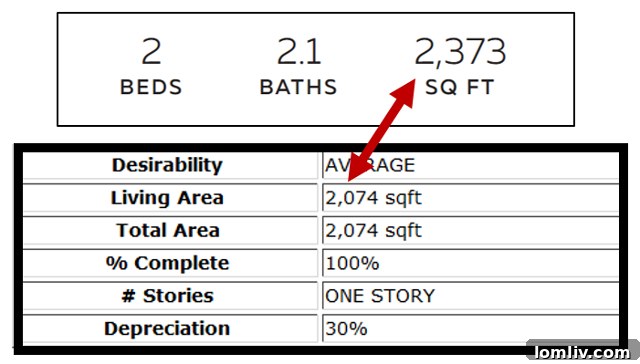
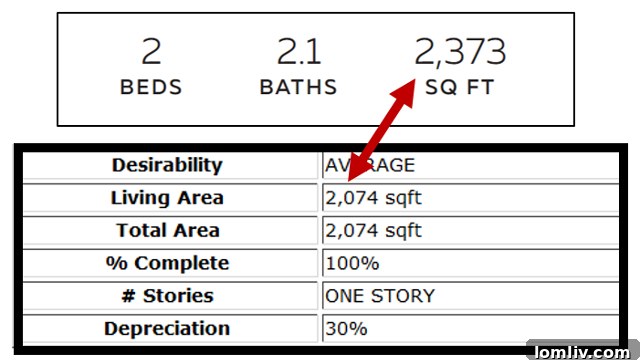
The Dallas Central Appraisal District (DCAD) is often the initial and most crucial resource. DCAD records provide publicly available information on property appraisals, including reported square footage. Begin by looking up the specific unit’s address on the DCAD website. Compare the square footage listed by DCAD with the square footage advertised in the real estate listing. If there’s a discrepancy, this immediately signals a red flag that requires further investigation. While DCAD records are generally reliable, they are not infallible and may not always reflect the most recent changes, especially if permits were not properly filed or updates are pending.
It’s worth noting that if a balcony has been enclosed—transformed into an interior, conditioned space—it might be reflected in DCAD records, but this isn’t guaranteed. Building modifications, particularly older ones, don’t always trigger an immediate update in public appraisal records. This means you cannot solely rely on DCAD to identify all enclosed spaces.
2. Investigate Comparable Units and Building History
If DCAD records don’t align with the listing, or if you simply want a second layer of verification, compare the unit’s reported square footage with identical units on floors above or below it. Be mindful that some buildings feature varying floor plates on different levels, so ensure you’re comparing truly comparable units. Additionally, inquire with the building manager or HOA about the unit’s original configuration. They often possess floor plans or historical records that can confirm whether the unit has undergone any structural changes, such as balcony enclosures or expansions.
3. Visual Inspection and Aerial Views
When you visit the property, visually inspect the exterior. Look up at the building or use online tools like Google Street View or satellite imagery to see if any balconies in that particular stack of units appear to be enclosed. This can provide a quick visual cue if structural changes have occurred that might affect the usable interior space. An enclosed balcony will typically feature windows or walls where an open railing once stood.
4. Professional Measurement: The Ultimate Safeguard
If, after consulting DCAD, comparing units, and conducting visual inspections, you remain in doubt about the true square footage, the most definitive step is to insist on a professional measurement of the unit. A certified appraiser or professional measurer can provide an accurate, unbiased calculation of the interior living space. The seller should be prepared to explain any significant discrepancies between their listing and DCAD records or a professional measurement. While DCAD is a strong indicator, a professional measurement offers legal and practical certainty, especially for high-value transactions.
Beyond Balconies: Other Sources of Square Footage Confusion
Square footage discrepancies aren’t solely confined to balconies. Other structural modifications can also lead to confusion. For instance, some units may have been expanded by purchasing a portion of an adjacent unit, or conversely, a unit might have been reduced in size by selling a section to a neighbor. Unlike the more subtle issue of balcony enclosure, these types of reconfigurations typically involve formal property line adjustments and are generally (if done legally) a matter of public record. Because these changes are usually documented, the impact on the overall price calculation should be transparent and accounted for in the property’s recorded dimensions, mitigating the ‘trickery’ associated with undisclosed balcony inclusions.
The Stoneleigh Anomaly: A Case Study in Public Record Lag
The challenges of accurate square footage reporting are particularly evident in properties with complex histories, such as redeveloped buildings. A notable example is The Stoneleigh in Dallas. When this iconic building first received construction approval, its original floor plans and unit sizes were filed with DCAD. However, a change in ownership and development direction led to a significant redesign. The new developer decreased the total number of units by making individual units substantially larger. This type of large-scale reconfiguration presents a unique challenge for public records.
Anecdotal evidence from listing agents suggests that DCAD records for The Stoneleigh do not always reflect these post-redevelopment configurations. Some units are now larger than DCAD reports, while others are smaller. This creates a fascinating dilemma for unit owners and presents potential pitfalls for buyers.
Owners of units that DCAD believes to be smaller than their actual size have little incentive to correct the public record, as an increase in recorded square footage would almost certainly lead to higher property taxes. Conversely, owners of units that DCAD records indicate are larger than their actual size also have reasons to remain silent. While a correction might theoretically decrease their taxes, having a higher reported square footage (even if inaccurate) can be used to justify a higher selling price, based on the inflated number. This scenario underscores the critical importance of a buyer’s due diligence, as relying solely on public records in such cases could lead to significant miscalculations of value and tax implications.
Protecting Your Investment: Transparency is Key
Whether you’re a seller aiming for a fair market price or a buyer seeking true value, the accuracy of reported square footage is paramount. For sellers and their realtors, presenting precise measurements from the outset establishes trust and streamlines the sales process. An over-priced listing, even if seemingly justified by inflated square footage, often takes longer to sell and may eventually require price reductions, ultimately diminishing the seller’s return. Conversely, accurate square footage empowers buyers to make informed decisions, ensuring they pay a justifiable price for the actual living space they acquire.
In cases where a listing openly states that the square footage does not align with DCAD records, this should trigger immediate and thorough investigation. Such a disclosure is a candid admission of a discrepancy, and understanding its root cause—be it a legally unrecorded renovation, an enclosed balcony, or an administrative oversight—is fundamental to assessing the property’s true value and avoiding unforeseen costs or complications down the line. In real estate, knowledge truly is power, especially when it comes to the numbers that define your investment.

Remember: High-rises, HOAs, and renovation are my areas of expertise. I also have a keen appreciation for modern and historical architecture, often viewed through the lens of the YIMBY movement. If you’re interested in hosting a Candysdirt.com Staff Meeting event, I’m your go-to expert. My writing has been recognized by the National Association of Real Estate Editors, earning two Bronze awards (2016, 2017) and two Silver awards (2016, 2017) in 2016 and 2017. Have a compelling story to share, or perhaps a significant proposal to make? Feel free to reach out via email at [email protected].