Navigating the Lone Star Landscape: Deep Dive into the 2021 Texas Homebuyers and Sellers Report
Texas has long been a beacon for opportunity, drawing in new residents with its robust economy, diverse culture, and appealing lifestyle. This continuous influx of people, coupled with unique market dynamics, has created a particularly competitive and vibrant housing sector. Understanding this complex environment is crucial for anyone looking to buy or sell property in the state. The annual 2021 Texas Homebuyers and Sellers Report, meticulously compiled by Texas Realtors, serves as an invaluable resource, offering a comprehensive snapshot of the trends, demographics, motivations, and perceptions shaping the state’s real estate market.
This report, which meticulously analyzes real estate transactions occurring between July 2019 and June 2020, brings to light several key findings. Perhaps most striking is the revelation that in a market characterized by high demand and escalating prices, Texas homebuyers are now requiring significantly higher incomes to secure a home. This trend underscores the evolving landscape of homeownership affordability across the state, demanding a closer look at the economic factors at play.
The Crucial Role of Income and Affordability in the Texas Housing Market
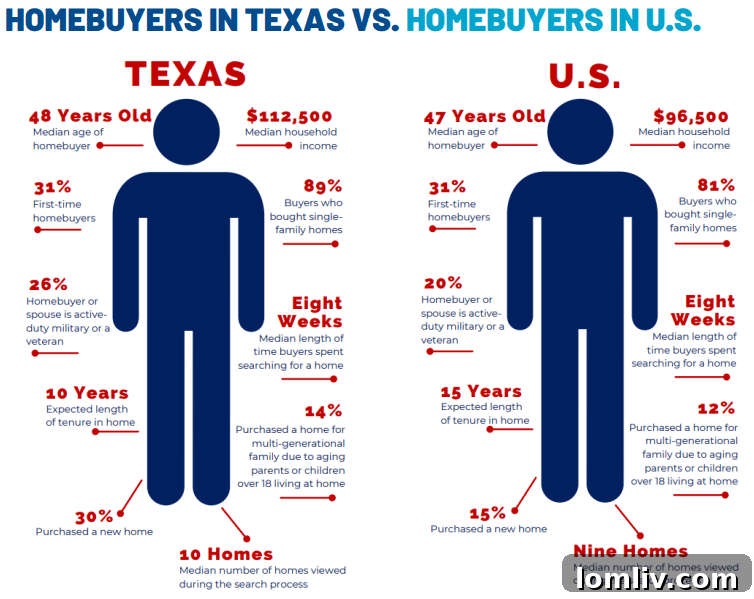
The report unequivocally highlights the increasing financial demands placed on prospective homeowners in Texas. In 2020, the median household income for Texas homebuyers soared to an impressive $112,500. This marks a substantial increase from $95,500 in 2019, and it significantly outpaces the national median homebuyer income of $96,500. While this rise in income among buyers might initially seem like a positive indicator of prosperity, it simultaneously reflects the escalating cost of homeownership in the state.
This upward trajectory in required income correlates directly with the dramatic surge in property values. By the first quarter of 2021, the median home sales price in Texas reached a record-breaking $274,300. This figure represents an increase of over 13 percent compared to the same period a year prior, illustrating the rapid appreciation of real estate assets across the state. Such aggressive price growth, fueled by robust demand and limited inventory, inevitably pushes the financial bar higher for those aspiring to enter the housing market.
Marvin Jolly, the respected chairman of Texas Realtors, acknowledged these complex dynamics in the report. “The increase in household income is encouraging as well as the broader base of diversity in homebuyers,” Jolly stated. He further elaborated on the challenges: “Even with higher income levels, buyers are experiencing one of the most challenging markets in history right now, as the supply of homes for sale in most areas of Texas is extremely low. Although median household incomes continue to rise, median home prices have risen aggressively.” This statement encapsulates the core paradox of the current Texas housing market: while buyers may have more disposable income, the cost of homes is rising even faster, creating an ongoing affordability squeeze.
The implications of this affordability gap are far-reaching. It means that while Texas continues to attract high-income earners, many middle-income families may find themselves increasingly priced out of desirable neighborhoods or even entire cities. This trend could lead to shifts in demographic distribution and put pressure on local governments to address housing shortages and support affordable housing initiatives. Understanding these income and price dynamics is fundamental to grasping the full picture of Texas’s real estate landscape.
Visualizing the Texas Real Estate Landscape
The original report includes various data visualizations to illustrate these trends. While dynamic slideshows are excellent for presentations, for a comprehensive web article, static images often provide clarity and ease of access to information. Here are some key visual insights into the Texas housing market:
Key Insights into Texas Homebuyers: Demographics and Motivations
The 2021 report paints a vivid picture of the typical Texas homebuyer, revealing shifts in demographics and consistent preferences. These insights are vital for real estate professionals, policymakers, and anyone interested in the social fabric of the state.
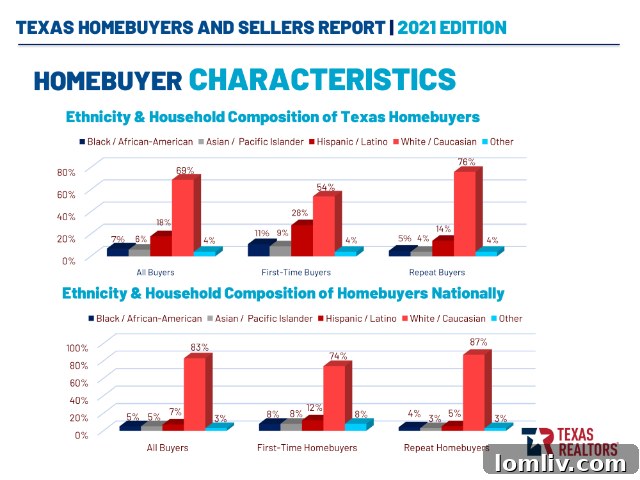
- Increasing Diversity: One of the most significant findings is the growing diversity among Texas homebuyers, a trend that distinguishes Texas from national averages. The percentage of buyers identifying as Hispanic/Latino increased from 14 percent to 18 percent year-over-year. Similarly, Black/African-American homebuyers rose from 5 percent to 7 percent, and Asian/Pacific Islander buyers increased from 4 percent to 6 percent. Concurrently, the proportion of White homebuyers saw a decrease from 78 percent to 69 percent during the reporting period. This growing multicultural presence enriches the Texas real estate market and reflects the broader demographic shifts occurring within the state. It suggests a more inclusive market and highlights the need for diverse language and cultural competencies within the real estate industry.
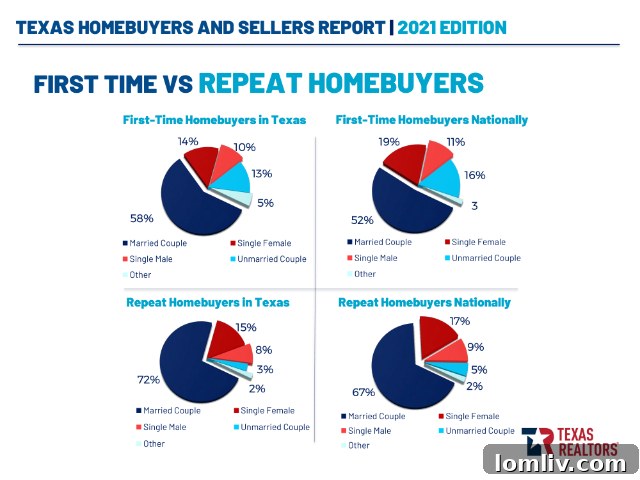
- Household Composition: Married couples continue to dominate the buyer demographic, accounting for a robust 68 percent of transactions. This reflects the traditional family unit’s strong presence in homeownership. However, single females represent a significant 15 percent of buyers, underscoring the increasing independence and financial power of women in the market. Single males followed at 9 percent, with unmarried couples making up 6 percent. These figures indicate varied household structures contributing to Texas home sales, each with unique needs and purchasing considerations.
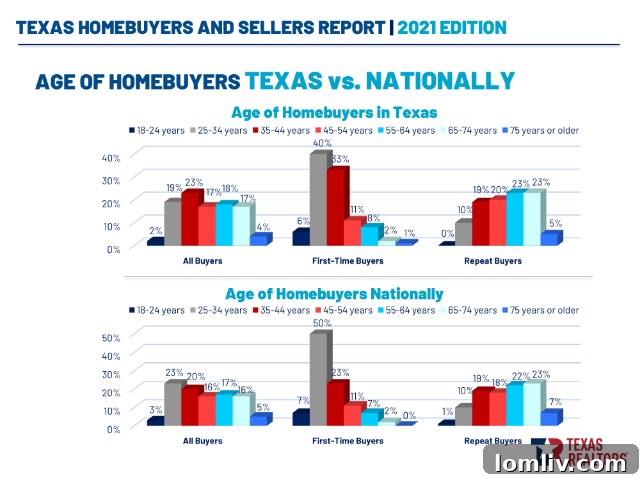
- Youthful Shift: The median age of Texas homebuyers registered at 48, a notable four-year decrease from the previous year. This suggests a younger demographic is increasingly entering the homeownership market in Texas, possibly attracted by job opportunities, lower cost of living compared to coastal states, and the overall economic dynamism of the state. Younger buyers often bring different priorities, such as proximity to urban centers, access to technology, and a preference for modern amenities, influencing housing development and design.
- Consistent First-Time Buyers: Despite the competitive market and rising prices, the percentage of first-time homebuyers remained steady at 31 percent. This consistency is encouraging, as first-time buyers are crucial for market vitality. However, it also implies that while the demand from this segment is constant, they face considerable hurdles in securing a home, often requiring higher down payments or more aggressive offers to compete with repeat buyers. Programs and resources supporting first-time homebuyers remain essential in this challenging environment.
These demographic shifts and consistent buyer profiles provide critical data for stakeholders looking to understand and serve the diverse needs of the Texas population in their pursuit of homeownership.
Decoding the Texas Home Seller Profile: Motivations and Market Performance
Understanding the motivations and experiences of home sellers is just as crucial as analyzing buyers, as their decisions directly impact the supply side of the market. The 2021 Texas Homebuyers and Sellers Report offers valuable insights into why Texans choose to sell and the financial outcomes they experience.
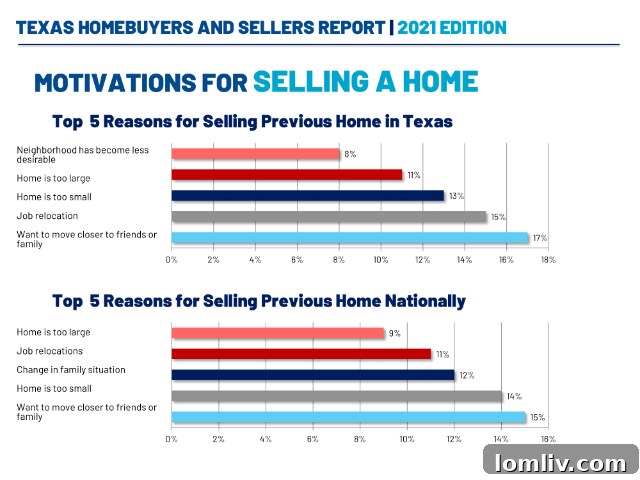
- Primary Selling Motivations: The leading reason for Texans to put their homes on the market was to move closer to friends or family. This highlights the strong community and family ties prevalent in Texas, and perhaps the impact of life events or changes in family structure. This was closely followed by job relocations, reflecting the state’s dynamic job market and the mobility of its workforce. A desire for a larger home was the third most popular reason, indicating growing families or an aspiration for more space and amenities as incomes rise. These motivations reveal a blend of personal, professional, and lifestyle factors driving seller decisions.
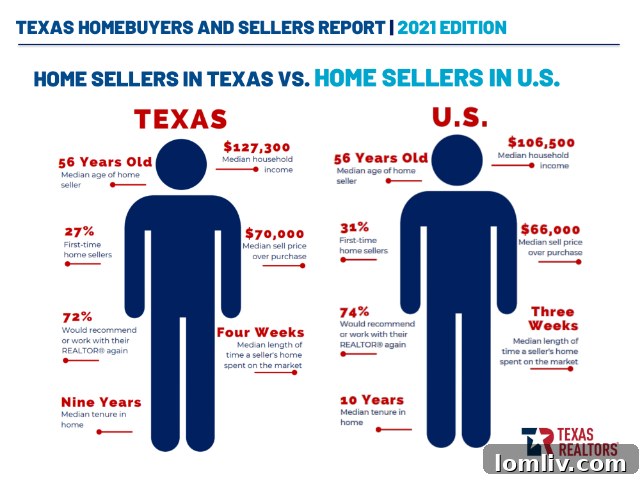
- Length of Homeownership: On average, Texas home sellers had resided in their properties for a median of nine years. This substantial tenure suggests that homeownership in Texas is often a long-term investment, allowing homeowners to build significant equity over time. Such a long holding period contributes to financial stability and wealth accumulation for many Texans. When sellers eventually decide to move, they often do so from a position of financial strength due to appreciation over nearly a decade.
- Significant Equity Gains: A compelling financial takeaway from the report is the substantial equity gain realized by sellers. The median sales price of homes was $70,000 more than what sellers originally paid for their properties. This robust profit margin underscores the strong appreciation of real estate values in Texas, making homeownership a highly lucrative investment for many. These gains provide sellers with substantial capital, which can then be reinvested into a new home, used for retirement, or for other financial goals.
- Rapid Market Speed: The Texas market continues to be exceptionally fast-paced, with homes spending a median of just four weeks on the market. This short duration from listing to sale is indicative of incredibly high buyer demand and a persistent shortage of inventory. For sellers, this means a strong negotiating position, often receiving multiple offers and selling above asking price. For buyers, it signifies the need for swift action, pre-approvals, and often waiving contingencies to compete effectively.
These findings collectively demonstrate a seller-friendly market where properties move quickly and yield significant returns, reflecting the overall health and competitiveness of the Texas real estate environment.
Navigating the Future of Texas Real Estate: Challenges and Opportunities
The insights from the 2021 Texas Homebuyers and Sellers Report paint a clear picture of a dynamic and highly competitive market. While the state’s economic growth continues to attract new residents and bolster incomes, the corresponding surge in home prices presents ongoing challenges for affordability. The increased diversity among homebuyers is a testament to Texas’s inclusive appeal, yet it also underscores the need for real estate services that cater to a broader spectrum of cultural and linguistic backgrounds.
For potential homebuyers, navigating this market requires strategic planning, including robust financial preparation, working with experienced real estate agents, and often being prepared to act quickly. Understanding the specific market conditions in different Texas cities and regions is also crucial, as localized trends can vary significantly. First-time buyers, in particular, may need to explore various down payment assistance programs and consider properties that offer growth potential.
For sellers, the current environment presents a golden opportunity to capitalize on significant equity gains and a rapid sales process. However, even in a seller’s market, proper pricing, home staging, and effective marketing remain essential to maximize returns. Sellers also need to consider their next steps, as finding a replacement home in the same competitive market can be a challenge.
Looking ahead, the sustainability of these trends will depend on various factors, including interest rate fluctuations, continued population growth, and the ability of new construction to meet demand. Policymakers and real estate developers will play a critical role in addressing inventory shortages and ensuring that Texas remains an accessible and attractive place for diverse communities to achieve homeownership dreams. The 2021 Texas Homebuyers and Sellers Report serves as an essential compass, guiding us through the complexities and opportunities that define the vibrant Texas housing market.