The future of Interstate 345, a critical yet contentious artery dissecting Downtown Dallas and Deep Ellum, remains a subject of intense debate and scrutiny. Despite a recent network outage leading to the cancellation of a Dallas City Council briefing on 2023 transportation priorities, the momentum for an independent study into the highway’s fate has only grown. Key stakeholders, including prominent architecture and urban planning organizations, have amplified their calls for a more holistic and community-centric approach to this monumental infrastructure decision.
At the heart of the current discourse is the Texas Department of Transportation’s (TxDOT) proposed “hybrid” design for I-345. This plan, which has been in development since TxDOT announced its intent in 2019 to “address the needs of I-345 and the traveling public as they plan for current and future development,” aims to revitalize the corridor. However, experts from the American Institute of Architects (AIA) Dallas recently voiced strong critiques, asserting that TxDOT’s design is based on an “now-obsolete traffic study and growth projections.” This fundamental disagreement underscores the urgency for a re-evaluation of the data and underlying assumptions guiding such a significant urban transformation project.
Dallas City Council Calls for Independent Review of I-345 Alternatives
In a powerful demonstration of local concern, five Dallas City Council members — Chad West, Paul Ridley, Jesse Moreno, Gay Donnell Willis, and Paula Blackmon — recently filed a five-signature memo on April 10. This formal request urged the city manager to commission an independent study to thoroughly examine the multifaceted impacts of removing Interstate 345, as well as a comprehensive analysis of all other viable alternatives. This action signifies a crucial pivot in the conversation, moving beyond TxDOT’s singular proposal to consider broader urban development, economic, and social implications for the Dallas metropolitan area.
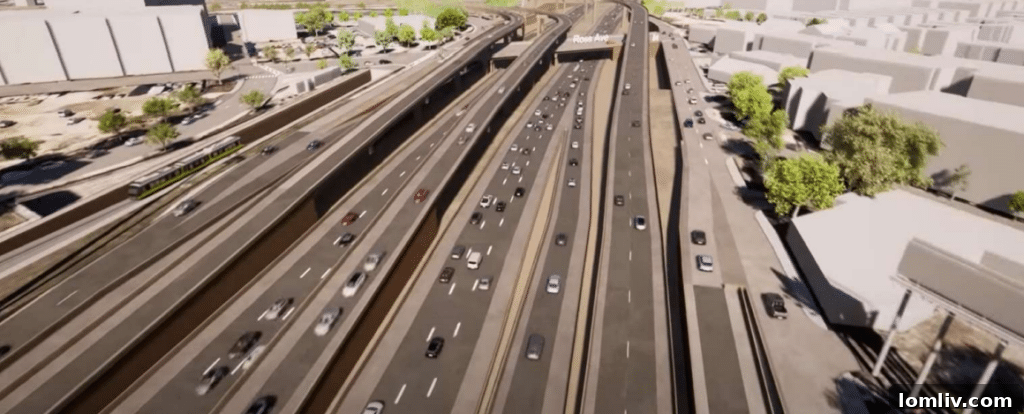
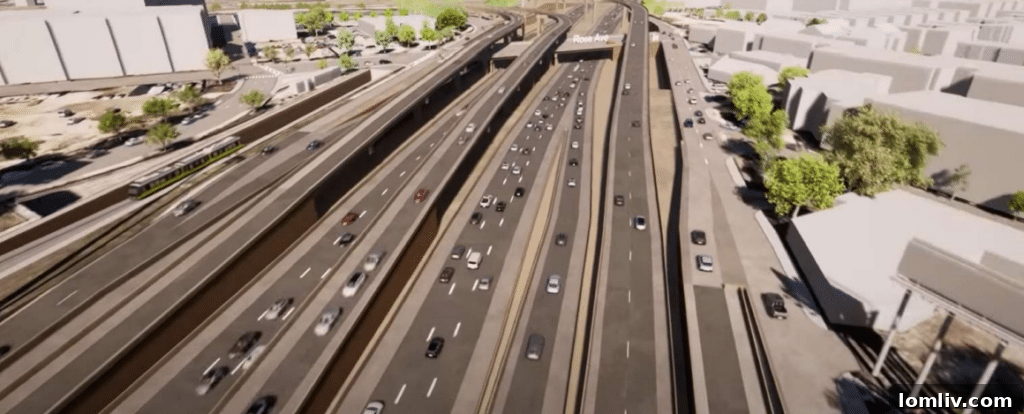
TxDOT’s preferred solution, often referred to as the “hybrid trench” option, envisions trenching the 1.4-mile highway segment that currently separates downtown Dallas from the vibrant Deep Ellum district. Under this proposal, existing streets would be reconnected with overhead bridges, creating what TxDOT anticipates will be a more integrated urban landscape while maintaining vehicular throughput. The department is actively seeking support from the Dallas City Council, a critical step before it can pursue the necessary funding for this extensive undertaking. However, the council’s memo indicates a desire for due diligence and a deeper understanding of the project’s long-term ramifications before committing to such a significant resolution of support.
Councilman Chad West Advocates for Holistic Urban Planning
Councilman Chad West, a vocal proponent of a more comprehensive evaluation, emphasized his concerns in an interview with daltxrealestate.com. He stated that his memo specifically requests the city manager to “pump the brakes on signing a resolution of support,” highlighting a growing sentiment that the city should not rush into a decision that will shape Dallas for generations to come. West critically observed that “City staff and the Regional Transportation Council are all acting in lockstep supporting the TxDOT-driven alternative, the hybrid ‘trench’ option that would treat I-345 much like Woodall Rogers [Freeway], beneath the deck park.”
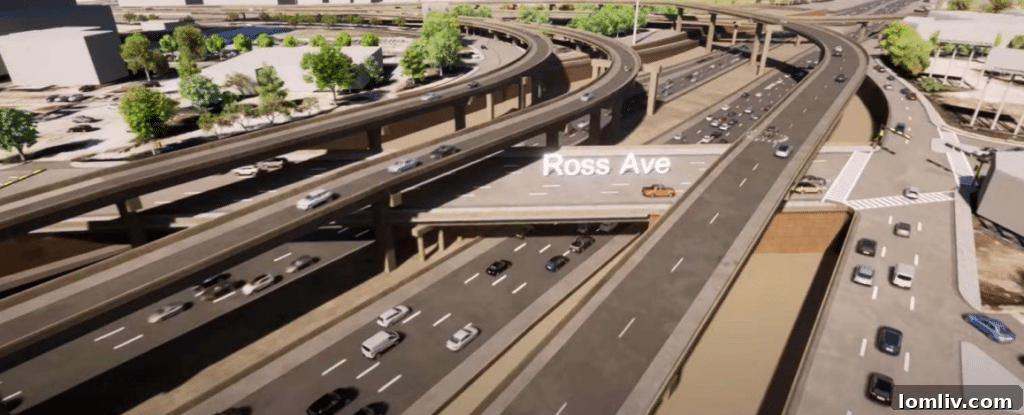
While acknowledging that this trench option might offer some benefits by reclaiming certain sections of real estate around I-345 and facilitating downtown traffic flow, West raised a crucial point regarding the impartiality of the underlying studies. He asserted that “It might very well be the best option, but the only study provided by staff to support this conclusion was designed by TxDOT to support TxDOT’s foregone conclusion.” This implies a potential bias in the data and analysis, primarily focused on traffic engineering metrics rather than a broader understanding of urban dynamics.
West further elaborated on this perceived “foregone conclusion,” pointing out that the current analysis predominantly relies on input from traffic engineers. He argued that a decision of this magnitude demands insights from a far wider range of experts, including economists to assess long-term financial impacts and development potential, housing experts to understand implications for residential growth and affordability, environmentalists to evaluate ecological footprint and sustainability, and urban planners to envision a cohesive and livable urban fabric. Such a multidisciplinary approach is considered best practice in contemporary urban development, ensuring that infrastructure projects align with a city’s broader vision and goals.
To address these concerns, Councilman West’s memo explicitly directs city staff to “retain a consulting firm to analyze all options in conjunction with the city’s adopted policies such as Vision Zero [and] the Economic Development Policy.” Vision Zero, for instance, aims to eliminate traffic fatalities and serious injuries, a goal that could be significantly impacted by the design of I-345. Similarly, the city’s Economic Development Policy seeks to foster sustainable growth and create vibrant commercial and residential areas. West passionately articulated his belief that “we, as elected officials for Dallas, have a fiduciary duty to make our decision on this generational issue with independent data that considers the priorities of our city, and not just TxDOT.” This statement underscores the profound responsibility local leaders bear in shaping their city’s future, advocating for decisions rooted in comprehensive, impartial analysis rather than narrow, agency-specific objectives.
AIA Dallas Delivers Critical Structural Assessment of TxDOT’s Plan
Further solidifying the calls for a reassessment, the American Institute of Architects Dallas (AIA Dallas) delivered a detailed critique of TxDOT’s proposal. An extensive memo issued on April 17 by AIA Dallas Executive Director Zaida Basora and Board President Kate Aoki lauded the City Council’s proactive request for further, independent study. Their seven-page document meticulously outlines several critical aspects of TxDOT’s design that necessitate additional scrutiny to ensure any final solution aligns with the City’s broader design guidelines and urban aspirations.


The memo specifically identifies five key areas demanding deeper investigation:
- Width of the open highway trench: Concerns about the sheer scale of the proposed trench and its continued role as a significant urban barrier.
- Elevated and obstructive interchanges and connections: Analysis of how these structures might impede urban connectivity and visual aesthetics, particularly at critical junctions.
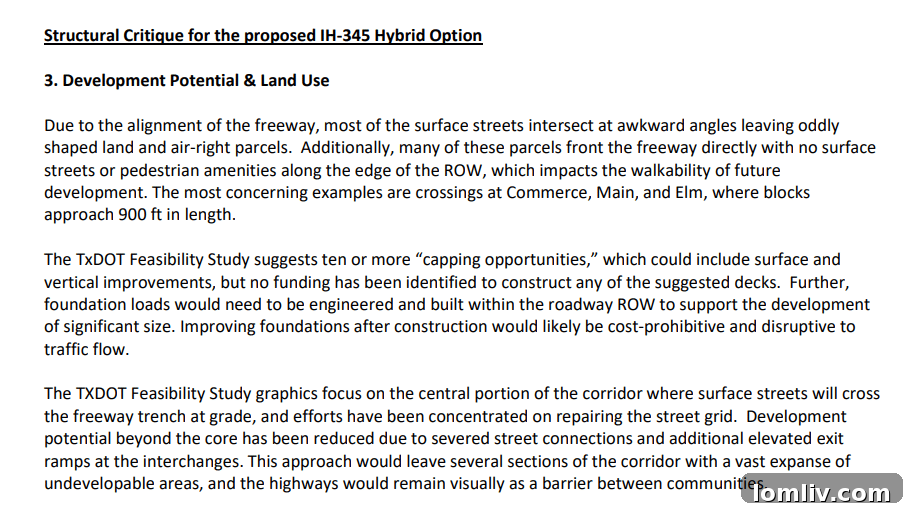
- Development potential and land use: An assessment of the true capacity for new development and how different designs could unlock or restrict economic growth in surrounding areas.
- Surface roadway network: Examination of the impact on local street grids, traffic patterns, and the integration of pedestrian and cycling infrastructure.
- Pedestrian experience and connectivity: A focus on ensuring a human-centric design that prioritizes walkability, safety, and seamless movement for residents and visitors between previously divided neighborhoods.
Basora and Aoki’s structural critique of TxDOT’s preferred hybrid option delves into the specifics, offering a stark assessment: “While a depressed roadway is an improvement from an elevated tangle of elevated highways and ramps, the proposed depressed highway continues to sustain physical and visual barriers between the downtown communities.” This statement acknowledges a slight improvement from the existing elevated structure but argues that the trench option falls short of truly reuniting the urban fabric. They further elaborated on the alarming scale of the proposed trench, noting that “According to preliminary road section drawings from TxDOT (section A-A at trenched portion), the highway trench appears to be over 180 feet wide – more expansive than the width of a football field.”
This immense width, combined with the proposed ten or more lanes – some even featuring multi-level configurations – raises serious concerns about the trench’s ability to foster genuine urban reconnection. As Basora and Aoki argue, such a design would effectively “divid[e] the downtown and eastern neighborhoods even further.” For urban planners and architects, the goal is often to create human-scale environments that encourage pedestrian activity, foster local businesses, and seamlessly integrate different parts of the city. A highway spanning over 180 feet wide, even if depressed, presents an almost insurmountable obstacle to achieving these objectives, perpetuating the very urban fragmentation it purports to solve.
The Path Forward: A Generational Decision for Dallas
The pressing question now remains: when will the City of Dallas formally act on the City Council’s urgent request for an independent study? The stakes are exceptionally high, as the chosen path for I-345 will profoundly dictate the urban, economic, and social landscape of this critical corridor for the next seven decades and beyond. This is not merely a transportation project; it is a foundational decision about the identity and liveability of Dallas itself. The debate transcends traffic flow, touching upon issues of community cohesion, economic vitality, environmental sustainability, and the everyday experience of residents and visitors.
Councilman West, in an email update to his constituents on April 18, reiterated the ongoing nature of this vital discussion. His personal reflection highlights the human impact of the proposed design: “I would personally rather walk under the current raised highway than navigate this proposed mega-highway as a pedestrian.” This sentiment powerfully underscores the critics’ argument that TxDOT’s plan, despite its attempts at improvement, may inadvertently create a more hostile environment for pedestrians and local connectivity. The distinction between merely moving cars and fostering a vibrant, walkable urban core is central to the disagreement.
Furthermore, West’s call for broader engagement is critical: “I have not heard the real estate and business community speak up on this issue and hope that they do so soon.” The long-term economic prosperity of downtown Dallas and Deep Ellum, including property values, development opportunities, and the attraction of new businesses and residents, hinges on a design that fosters growth rather than creating new barriers. The real estate and business sectors have a significant vested interest in ensuring that the I-345 project maximizes urban development potential and enhances the overall attractiveness of these key districts. Their input, alongside that of urbanists, environmentalists, and community advocates, is essential for a truly comprehensive and equitable decision.
The I-345 conundrum serves as a microcosm of larger urban challenges facing cities across the nation: how to balance the demands of regional mobility with the imperative to create livable, connected, and sustainable urban environments. Dallas stands at a crossroads, with an opportunity to either perpetuate an auto-centric planning paradigm or embrace a bold, forward-thinking vision for its downtown core. The request for an independent study is not merely a procedural step; it is a plea for thoughtful consideration, diverse expertise, and a commitment to ensuring that the future of I-345 genuinely serves the long-term well-being and aspirations of the entire Dallas community.