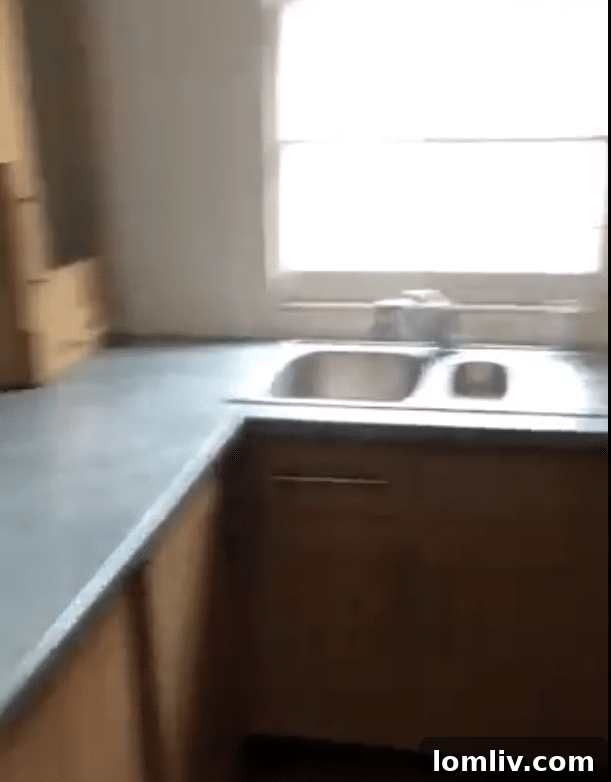

In the vast and varied world of real estate, we often encounter properties that challenge our perceptions of conventional design. While our infamous “Wednesday WTF” series typically spotlights egregious architectural blunders or puzzling home layouts across entire houses, every so often, a single detail emerges that is so uniquely perplexing it demands a spotlight of its own. This week, we delve into an apartment feature that has captivated the internet, sparking both amusement and bewilderment: a kitchen with a most unconventional back exit.
Prepare to have your understanding of kitchen functionality and apartment design profoundly altered. What began as a brief video clip quickly evolved into a viral sensation, forcing us all to collectively ponder the creative, albeit questionable, decisions that sometimes shape our living spaces. This particular revelation isn’t just a quirky anomaly; it’s a testament to the sheer ingenuity – or perhaps audacity – behind some multi-family dwelling designs, with its kitchen standing out as the epicenter of this architectural enigma.
The Unbelievable Reveal: A Door Beneath the Kitchen Countertop
The saga began with a tweet from James Wilkes, who succinctly captured the essence of his bewildering discovery: “Viewed a flat today and I don’t think I’ll ever be able to stop thinking about the back door…” At first glance, such a statement might not immediately conjure images of architectural oddities. A back door? What could be so extraordinary about that? Many apartments feature back entrances for convenience or emergency access. However, the accompanying video swiftly clarified that this was no ordinary back door. It was, in fact, an extraordinary, almost surreal, access point.
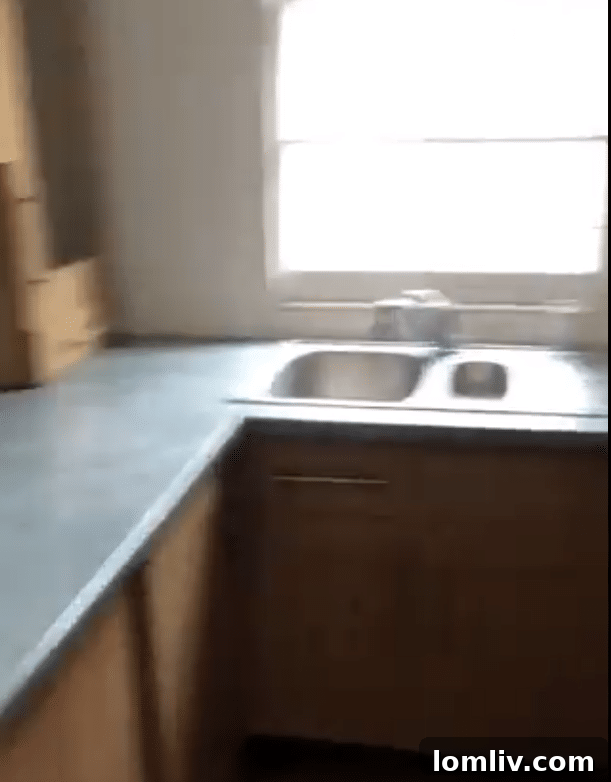
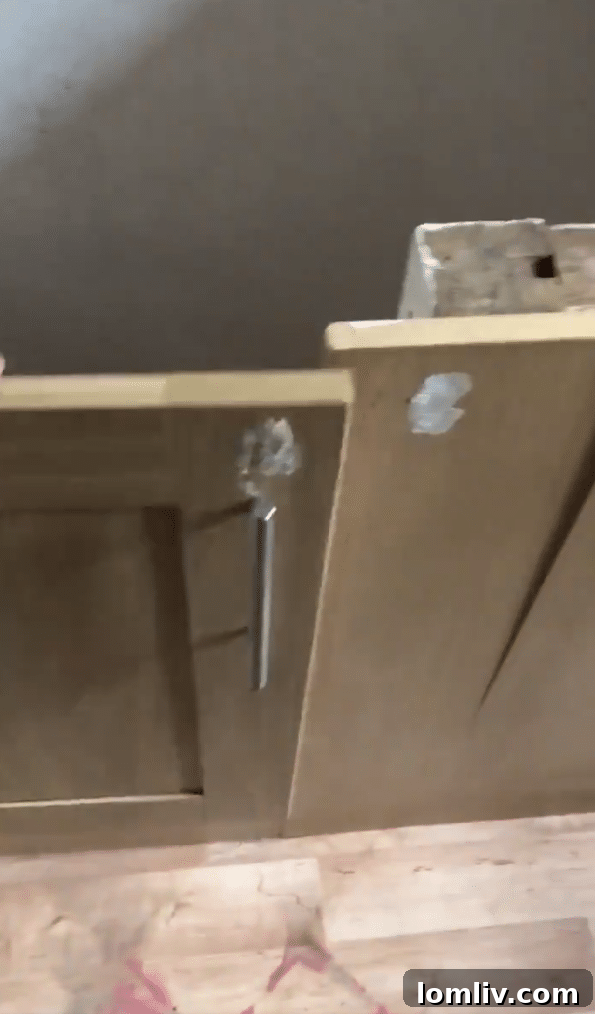
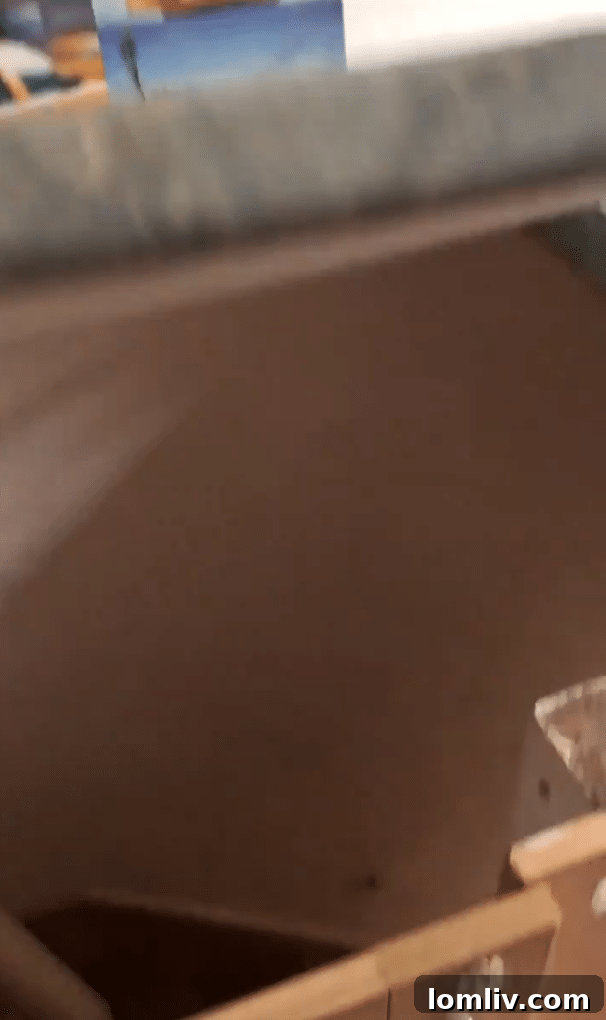
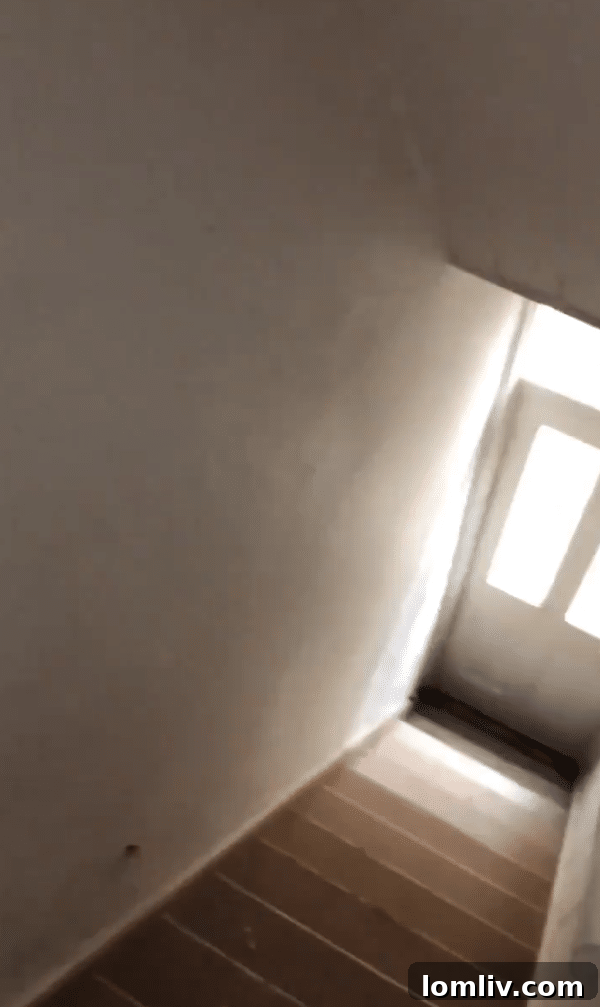
For those who may have missed the original viral content, or for whom the concept still feels too outlandish to fully grasp, allow us to present the evidence. The initial clip, which spread like wildfire across social media platforms, showed a seemingly normal, albeit compact, kitchen. Then, the camera pans to reveal a segment of the base cabinetry – only it’s not a cabinet. It’s a door. A proper, full-height door, integrated into the lower half of the kitchen counter run, leading directly to what can only be assumed is the apartment’s rear exit. The sheer audacity of its placement leaves viewers speechless.
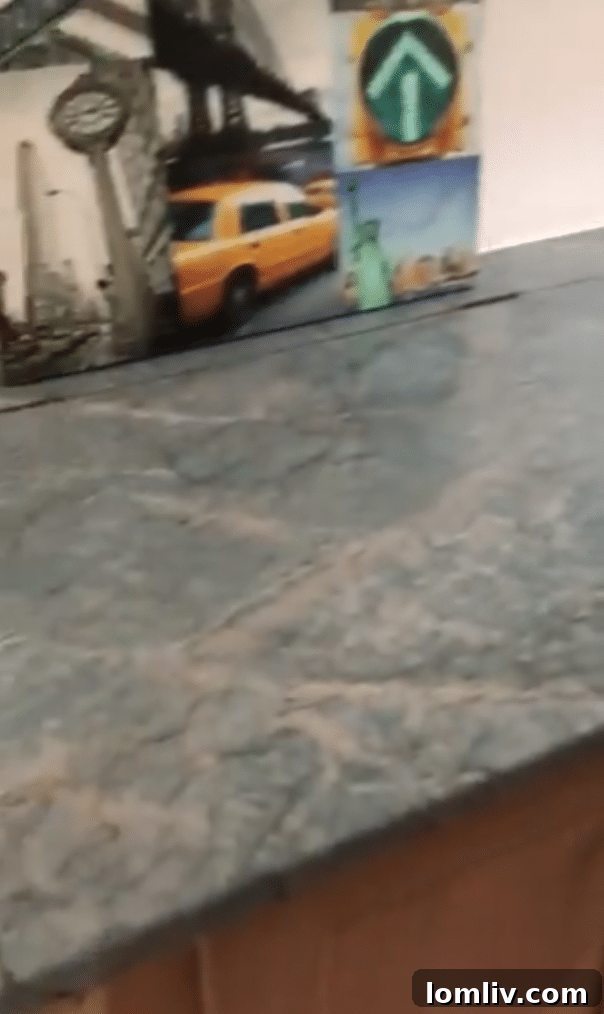
If the rapid-fire reveal in the video clip left you blinking in disbelief, you’re not alone. The speed at which the camera traverses this peculiar scene can make it easy to miss the crucial details that define its utter uniqueness. To truly appreciate the scale of this design marvel (or mistake), we need to break it down frame by frame, akin to a storyboard that meticulously illustrates the journey from a standard kitchen view to the jaw-dropping realization of a secret passage disguised as a cabinet.
-

There -
is
-
a door -
underneath the counter
Is This a Trend? The Puzzling Prevalence of Hidden Kitchen Exits
Upon witnessing such an unusual design, a natural first reaction is to assume it’s a one-off. Surely, this must be some charmingly eccentric feature, perhaps born from the creative renovation of an older property, or a quirky solution in a highly unusual building. It feels like the kind of design quirk you might find in a converted single-family home, where original structural elements were creatively repurposed into a multi-unit dwelling. This unique arrangement would, in that context, make it an isolated incident, a rare gem of architectural eccentricity.
However, the internet, in its infinite wisdom and ability to connect disparate experiences, quickly revealed that this particular brand of architectural oddity might not be as singular as one might hope (or fear). No sooner had the original tweet garnered significant attention than another user chimed in, posting a similar video of a strikingly similar “back door” arrangement in a different apartment. This second revelation immediately shifted the conversation from a singular oddity to a potential, albeit baffling, design trend.
This raises a deluge of questions that resonate deeply within the realms of real estate, interior design, and even home security. Is this truly “a thing”? Are there more apartments out there featuring kitchens that incorporate hidden access to a back door, tucked away beneath an otherwise functional countertop? What is the rationale behind such a design choice? Is it for space-saving? Emergency egress? Or simply a creative way to integrate a necessary exit into a compact footprint? Moreover, and perhaps most critically, how secure are these installations? A hidden door, while novel, could present unforeseen vulnerabilities. The implications for both daily living and potential security breaches are profound, leaving many to ponder the true intent and impact of such an unconventional architectural decision.

Navigating the Digital Maze: The Pitfalls of Searching for “Hidden Backdoors”
Driven by an insatiable curiosity to understand the origins and prevalence of this peculiar kitchen design, I embarked on a deep dive into the internet’s vast archives. My mission: to uncover any established design trends, historical precedents, or practical guides related to kitchens with concealed exits. However, a word of caution to anyone who might feel similarly inspired: choose your search terms wisely. My initial foray into Google with phrases like “hidden backdoor in kitchen” quickly veered into territories far removed from residential architecture. Trust me on this one; the internet has a way of interpreting seemingly innocuous phrases with entirely different, and often NSFW, connotations. Navigating past the digital noise to find relevant information was, to say the least, an adventure in itself.
Once I managed to refine my search parameters and steer clear of unintended rabbit holes, I did stumble upon various articles and forums discussing secret doors and hidden compartments in homes. For instance, I found an interesting article published by Makezine in 2015, detailing creative ways to integrate secret doors and clever hiding spaces within a house. This piece explored everything from bookcase doors to false wall panels, showcasing the enduring human fascination with concealment and surprise within one’s living environment. However, this article predates the recent viral explosion of the kitchen counter door by several years, and it was written well before the global pandemic shifted our collective perspective on home design and utility. In a post-pandemic world, where many of us have spent unprecedented amounts of time sequestered indoors, boredom has arguably driven many to scrutinize every nook and cranny of their homes. My own children, for example, have certainly made it their personal mission to discover every single potential hiding spot, real or imagined, much to my playful exasperation. This renewed focus on interior spaces makes the discovery of a truly hidden, functional door all the more intriguing.
Practicality vs. Peculiarity: Deconstructing the Design Debate
The online discourse surrounding these hidden kitchen doors quickly became a vibrant battleground of opinions. Commenters were sharply divided, creating a fascinating spectrum of perspectives ranging from outright condemnation to effusive praise for the design’s perceived genius. On one side, proponents argued that this was an incredibly clever and resourceful use of space, particularly in compact urban apartments where every square inch is precious. They suggested it could serve multiple functions: an ingenious emergency exit, a discreet service entrance, or simply a novel way to provide backyard access without sacrificing an entire wall in an already small living area. For those living in densely populated cities, where spatial constraints dictate much of interior design, any solution that appears to maximize utility, even if unconventional, can be seen as a triumph of ingenuity. It offers a unique character, a talking point, and potentially, a surprisingly functional element that blends seamlessly into the kitchen aesthetic.
However, the opposing camp raised significant and valid concerns. Critics lamented the substantial loss of valuable counter space and base cabinet storage, which is often at a premium in smaller kitchens. Imagine trying to prepare a meal or store your essential kitchen gadgets when a significant portion of your under-counter area is occupied by a door frame and hinges. This arrangement inherently compromises the functionality of the very heart of the home, transforming what should be a highly efficient workspace into a logistical challenge. Furthermore, the aesthetics were questioned; while designed to be discreet, the presence of a door under the counter can look awkward or out of place, breaking the visual flow of the kitchen cabinetry. The debate boils down to a fundamental question: does the perceived advantage of a hidden exit outweigh the very real drawbacks of sacrificing critical kitchen utility and potentially compromising security? What is your take on this peculiar design choice?
The Security Conundrum: A Hidden Entrance, A Hidden Risk?
Beyond the debates on aesthetics and practicality, the security implications of a hidden kitchen door cannot be overlooked. A back door, by its very nature, can be a point of vulnerability if not properly secured. When that door is also concealed, it introduces another layer of complexity. Is a door integrated into cabinetry as robust as a standard external door? Does it feature the same locking mechanisms and reinforced frames? The very idea of a “secret” entrance, while charming in a fictional spy novel, can be unsettling in a real-world residential setting. It raises questions about ease of access for intruders, especially if the design isn’t up to robust security standards. For residents, it might mean constantly second-guessing the integrity of their kitchen, turning a place of comfort and culinary creativity into a source of low-level anxiety. Property owners and tenants alike would need assurances that such an unconventional exit doesn’t become an unintentional invitation for unwelcome guests.
Architectural Intent: Unraveling the ‘Why’ Behind the Design
To truly understand this phenomenon, we must ponder the architectural intent. Why would someone design a kitchen in this manner? Was it an extreme space-saving measure in an incredibly tight footprint, where the only viable path for a back exit intersected directly with the kitchen? Could it be a creative solution to circumvent a challenging building code or an unusual property line? Perhaps it was the result of a renovation, where an existing structure forced a highly unconventional approach to create a functional apartment layout. In older buildings converted into multi-family units, architects and designers often face formidable challenges, leading to imaginative, if sometimes bizarre, solutions. This hidden door could be a relic of such a conversion, a compromise born out of necessity rather than a deliberate design flourish. Or, in a more whimsical scenario, could it be the brainchild of an architect with a penchant for the unexpected, aiming to inject a unique, conversation-starting element into an otherwise ordinary living space? Unraveling the ‘why’ could offer crucial insights into whether this is an isolated incident or a reflection of broader trends in compact urban living design.
Marketing the Unconventional: Crafting a Real Estate Listing for a Kitchen with a Secret Door
Now, let’s consider this from a real estate professional’s perspective. How exactly would one describe such a feature in a property listing? Marketing real estate is all about highlighting key features and benefits, painting an attractive picture for potential buyers or renters. But how do you spin a “door under the kitchen counter leading to the back” into a desirable amenity? Would it be positioned as a “unique space-saving solution,” an “innovative design feature,” or an “unconventional access point”? Perhaps “a conversation-starting kitchen with a discreet rear exit.” A seasoned real estate agent would need to leverage every ounce of creative copywriting skill to present this without sounding like a disclaimer or a flaw. Phrases like “cleverly integrated egress point” or “multi-functional kitchen with unexpected utility” might attempt to put a positive spin on the conundrum. Yet, the challenge remains: for most buyers, a kitchen is a place for cooking, dining, and gathering, not for navigating an obstacle course to reach the garden. The listing would undoubtedly spark curiosity, but whether that curiosity translates into genuine interest or outright dismissal would largely depend on the buyer’s adventurous spirit and their tolerance for architectural eccentricities.
Imagine a prospective buyer’s reaction during a viewing. Initially charmed by the apartment’s overall feel, they then approach the kitchen, only to discover this surprising hidden door. Would their eyes widen in delight at the novelty, or narrow in confusion and concern? It’s a feature that demands explanation, often requiring the agent to delve into its presumed benefits, such as offering an emergency exit or a convenient shortcut for taking out the trash. The success of selling such a property would hinge on finding a niche buyer who appreciates the unconventional, who prioritizes unique character over traditional convenience, or who simply finds the idea of a secret passage undeniably cool. This kitchen’s peculiar exit serves as a powerful reminder that in real estate, every property tells a story, and some stories are far more outlandish than others.
Beyond the Back Door: A Wider Look at Apartment Design Innovation and Challenges
Ultimately, the saga of the hidden kitchen door transcends a mere viral video; it’s a fascinating case study in the broader challenges and innovations in modern apartment design, particularly in an era of increasingly compact urban living. As populations grow and space becomes a luxury, architects and developers are constantly pushed to redefine functionality within limited footprints. This pursuit of efficiency often leads to ingenious solutions, such as convertible furniture, multi-purpose rooms, and clever storage hacks. However, it also sometimes results in design choices that, while creative, might raise eyebrows, provoke debate, or even compromise traditional notions of comfort and security. The hidden kitchen door stands as a prime example of this tension between innovative space utilization and practical everyday living.
It prompts us to reflect on what we truly value in our homes. Do we prioritize maximized space at any cost, or are there fundamental design principles and conveniences that should never be sacrificed? The internet’s reaction, split between admiration for ingenuity and critique of impracticality, mirrors the ongoing dialogue within the design community itself. What might be deemed a “Wednesday WTF” by some could be hailed as a stroke of genius by others. This bizarre kitchen feature, therefore, is more than just an oddity; it’s a catalyst for conversation about the future of residential design and the ever-evolving definition of what makes a house, or indeed, an apartment, a home. So, what’s your verdict? Is this hidden kitchen door a brilliant innovation, a regrettable compromise, or simply a bewildering architectural mystery waiting to be solved?