

In an era defined by rapid technological advancement, there’s a growing appreciation for the wisdom of past practices, particularly in sustainable living and urban planning. The re-emergence of concepts like vibrant, mixed-income communities and walkable city designs, which were commonplace for millennia before the automobile era, illustrates this perfectly. It seems humanity is on a cyclical journey, consistently learning from and rectifying past deviations from sustainable principles. This rediscovery of timeless wisdom extends deeply into the realm of energy and environmental stewardship, bringing to light the incredible foresight of pioneers who were “green” long before the term entered popular lexicon.
One such visionary was William Armstrong, a true environmental pioneer of the 1860s. His extraordinary commitment to sustainability at his Cragside estate in Northumberland, England, was decades ahead of its time. Beyond merely appreciating nature, Armstrong actively shaped it, planting an astonishing 7 million trees across his property. More significantly, he was a fervent advocate for renewable energy at the very dawn of the electrical age. He boldly declared that coal “was used wastefully and extravagantly in all its applications” and predicted that Britain’s coal reserves would be exhausted within 200 years – a remarkable forecast given the industrial dependence on fossil fuels at the time. His vision wasn’t limited to hydropower; Armstrong also championed solar power, calculating that a mere single acre in sunny climates could generate energy equivalent to 4,000 horses toiling for nine hours a day. This deep understanding of resource limits and alternative energy sources positions Armstrong as an unsung hero of the modern environmental movement.

Cragside stands as a monument to Armstrong’s innovative spirit. In 1868, it became the world’s first home to be lit by hydroelectricity, making history in the adoption of clean energy. The estate introduced its first arc lamp in 1878, followed by its first incandescent lamp in 1880. The moment of switching on that initial incandescent light was deemed so momentous that Armstrong chose the youngest servant, 10-year-old pageboy Andrew Crozier, for the task. His rationale was simple yet profound: Crozier, being young, would remember the event for the longest time, carrying the legacy of this groundbreaking innovation into the future. Armstrong’s intuition proved correct, as Crozier lived until 1956, a living testament to Cragside’s pioneering role in electrification.
Built in the 1860s amidst the dramatic landscapes of Northumberland, England, close to the Scottish border, Cragside was more than just an elegant country house; it was a living laboratory for sustainable technology. William Armstrong possessed an exceptional understanding of the immense power of water. He was not only a prolific inventor of armaments but also an ingenious engineer of hydraulic machinery. He leveraged the natural water features of his expansive property to create an unparalleled system of energy generation. By installing a dynamo driven by water, he established what is widely recognized as the world’s first hydroelectric power station right on his estate.
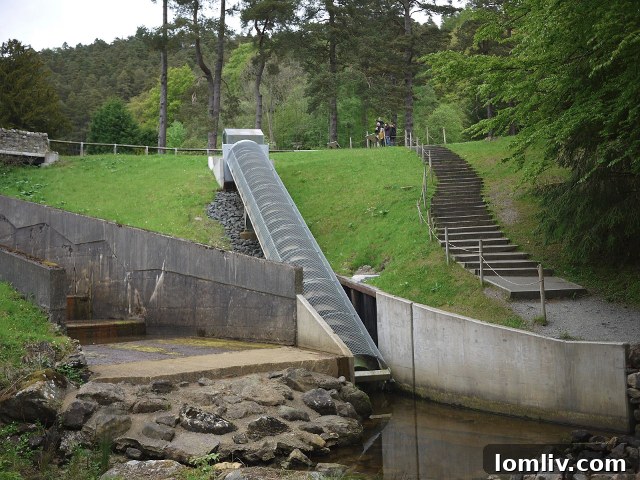
Initially, Cragside’s pioneering hydroelectric system produced a modest 925 candlepower, sufficient to power 37 lights, though only nine could operate simultaneously. A rough modern estimate places this output at something less than 20 watts – a stark contrast to today’s energy demands. Yet, for its time, this was revolutionary, providing clean, on-demand lighting that surpassed anything available. Today, Cragside continues its legacy of sustainable energy, generating a substantial 12,000 watts of power, which now covers approximately 10 percent of the estate’s considerable electrical needs. This evolution from a modest innovation to a continuously optimized system highlights the enduring potential of localized, renewable power.
Beyond the mere curiosity of Cragside’s historical innovations, Armstrong’s experience underscores a fundamental truth about being an innovator: you are often entirely on your own. Cragside’s power generation was entirely self-contained, a necessity born partly from its remote location and primarily because, at the time, no electrical grid existed to connect to. This isolated self-sufficiency was a common characteristic for all pioneering electrically powered homes and businesses across the globe. Similarly, early telephone installations were strictly for internal communication within a single building or a complex of connected structures, simply because municipal, national, or international telephone lines had not yet been established. This historical parallel illuminates a fascinating cyclical pattern, suggesting that this era of energy self-sufficiency, once a necessity, may very well be the future of electricity, driven by new motivations.
California’s Bold Step: A Blueprint for Sustainable Energy
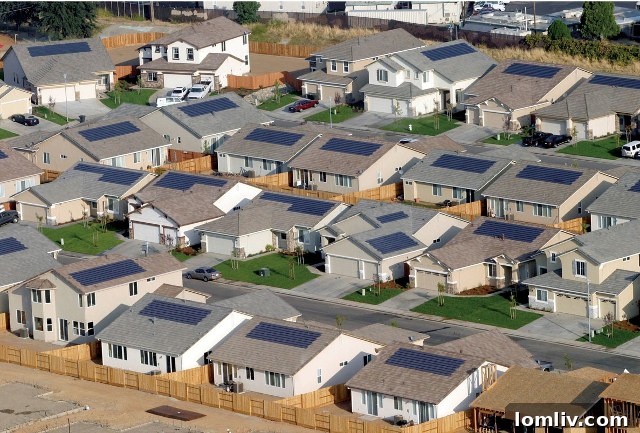
The concept of individual power generation, pioneered by Armstrong, is gaining unprecedented traction today. Last week, California announced a landmark regulation requiring solar panel installations on all new homes constructed after 2020. This groundbreaking mandate signifies a profound shift towards sustainable living and a strategic move to decentralize energy production. This growing “forest” of solar-powered homes, each capable of generating its own electricity and even decoupling from the traditional electric grid, represents a modern-day reversion to the Cragside model of energy independence. What was once expensive, rare, and self-contained evolved into cheap, centralized grid electricity, and is now beginning to cycle back towards individual power generation that is ultimately proving more cost-effective and resilient than a vast, centralized grid.
The new Californian regulations are comprehensive, requiring either rooftop solar panels on individual homes or a centralized solar array that serves multiple residences within a development. Each new home will be mandated to generate a minimum of two to three kilowatts of power, with the exact requirement varying based on the home’s size and energy needs. It’s important to note that most modern residential solar installations typically provide two to three times this minimum capacity, enabling homeowners not only to meet their own energy demands but also to sell excess power back to the utility companies through net metering programs. This creates a symbiotic relationship where homeowners become micro-producers within the broader energy ecosystem.
While the initial cost of installing solar panels is estimated to raise the price of a new home by $8,000 to $12,000, increasing average mortgage costs by approximately $40 per month in an already high-cost state, the long-term benefits are overwhelmingly positive. Industry experts and homeowners alike view this as a significant boon, anticipating that it will effectively halve customers’ energy bills in the long run. For buyers unable to afford the outright purchase of solar panels, long-term, fixed-cost leasing options will be available, eliminating worries about unpredictable and ever-increasing energy costs. This provides a double benefit, particularly for those on fixed incomes, ensuring predictable and affordable energy for decades. Currently, California constructs about 80,000 new homes annually, and a significant 15,000 of these already voluntarily incorporate solar power, demonstrating a clear market readiness for this transition.
However, achieving true solar independence and self-sufficiency extends beyond mere panel installation; it necessitates robust battery storage solutions. These systems are crucial for storing surplus power generated during daylight hours, making it available for use when the sun isn’t shining – at night, on cloudy days, or during an eclipse. Iconic innovations like Tesla’s Powerwall immediately come to mind, but leading manufacturers such as Panasonic, Samsung, and LG Chem also offer sophisticated household battery systems. Crucially, much like the cost of solar panels, the prices for these advanced energy storage solutions continue to drop rapidly, making comprehensive home energy independence an increasingly attainable reality for the average homeowner.

The Evolving Landscape: What Happens to the Grid and Utility Companies?
This widespread adoption of localized, renewable energy inevitably prompts questions about the future of the traditional power grid and the utility companies that operate it, especially concerning older homes and businesses that remain dependent on the established infrastructure. To understand this transition, it’s helpful to look at historical parallels. Did you know that during the infancy of electricity, buildings were constructed and lighting fixtures were manufactured well into the 20th century that incorporated both gas flames and electric lights? This “dual-fuel” approach allowed for redundancy and adaptation during a period of technological transition, much like the current energy landscape.
For the foreseeable future, most new homes, even with solar installations, will be designed to remain connected to the central power grid. However, as the demand for grid-supplied electricity diminishes in the coming decades due to increased individual generation, I anticipate a transformative shift: utility companies will evolve from being primary producers and transmitters of electricity to becoming essential service operations. As individual homes increasingly generate their own power, they will still require reliable partners to finance, install, maintain, and service this new energy infrastructure. This is precisely where today’s electric companies can find their future. By shedding the massive overhead associated with creating and transmitting centralized power, they can pivot towards profit-rich service models, potentially delivering higher margins while retaining and repurposing their skilled workforce.
The benefits of a decentralized power system extend far beyond economics and environmental sustainability. It inherently offers unparalleled resilience and security. For instance, the threat of large-scale terrorist attacks on a centralized electrical grid, which could cripple entire regions, becomes significantly mitigated with a distributed network. Furthermore, major natural disasters would no longer lead to devastating blackouts across entire cities or vulnerable island nations, such as Puerto Rico, which experienced prolonged power outages after hurricanes. A localized energy approach ensures that even if one segment fails, others can continue to function, providing critical stability.

Indeed, the grid itself may undergo a decentralizing transformation. In dense urban centers, high-rise buildings are unlikely to meet all their electrical needs with rooftop solar alone. While advancements in building-integrated photovoltaics, vertical axis wind turbines, and eventually electricity-generating coatings for larger buildings will help, these structures will still require an electrical boost, likely from a local, more robust microgrid. Additionally, essential municipal needs like street lighting, traffic signals, and public transportation infrastructure could be configured using smaller, more localized, and highly resilient systems. The services required to manage and maintain these complex, partially self-sufficient operations will look dramatically different from today’s expansive, all-encompassing grid architecture.
The anxieties expressed by traditional utility companies regarding this shift are understandable, but ultimately, they reflect a fear of the unknown rather than an existential threat. Their market is unequivocally changing, and their primary challenge lies in strategically navigating this future profitability. This situation mirrors the communications industry’s struggle when cell phones began replacing traditional landlines. Just as savvy communications companies eventually acquired nascent cellular operations and adapted their business models, today’s electrical utilities, currently prone to more “whining” than forward-thinking, will inevitably begin to acquire innovative solar service companies and fundamentally transform their operational strategies to thrive in this new energy landscape.
William Armstrong, 150 years ago, presciently predicted the demise of coal within 200 years. Had he lived to see the petroleum age, he would have likely included that resource in his forecast. While we haven’t strictly “run out” of coal or petroleum, we are undeniably at the precipice of discarding them, driven by a factor Armstrong could not have foreseen: the exponential rise of renewable energy technology. In 2000, the U.S. generated a mere five megawatts of power from solar sources. By 2017, this figure had exploded to an astonishing 42,600 megawatts. Projections indicate that by 2024, approximately 14 percent of all U.S. electricity will originate from solar power. This is not a trend that is slowing down; it is a rapidly accelerating revolution in energy production.
Consider this compelling proposition: if solar panels were an option in a new home, would you be willing to pay an additional $8,000 to $12,000 upfront for the potential benefit of never receiving an electricity bill again? Extensive research strongly suggests “yes.” A comprehensive 2015 report jointly published by the U.S. Department of Energy and Lawrence Berkeley National Lab revealed that homebuyers are prepared to pay an additional $3 to $4 per watt of power a home generates. With the national average for residential solar installations hovering around 5,000 watts, this translates to identical homes with solar power selling for an impressive $15,000 to $20,000 more than their non-solar counterparts. This unequivocally means that the investment made in solar technology is not just an expense but a significant value-add that is fully recuperated upon the sale of the property, making it an economically savvy decision. California is clearly on the right track towards a sustainable and energy-independent future. The pertinent question remains: What about other regions, like Texas?

Remember: High-rises, HOAs, and renovation projects are my primary focus. However, I also deeply appreciate modern and historical architecture, always balancing these with the vital YIMBY movement’s principles for sustainable urban growth. In both 2016 and 2017, the esteemed National Association of Real Estate Editors recognized my writing with two Bronze (2016, 2017) and two Silver (2016, 2017) awards. Do you have an intriguing story to share, or perhaps a momentous marriage proposal to make? Feel free to shoot me an email at [email protected]. You’re welcome to look for me on Facebook and Twitter, though you might find me elusive!