Renzo Piano’s Architectural Saga: From Dallas Glare to London’s Sky-High Setbacks
Renzo Piano, the visionary Pritzker Prize-winning architect, consistently commands attention with his distinctive blend of technological prowess and aesthetic sensitivity. The year 2015, in particular, stood out as a testament to his enduring influence, showcasing significant milestones that reinforced his status as a global architectural giant. The much-anticipated opening of his redesigned Whitney Museum of American Art in New York City was met with widespread critical acclaim, lauded for its thoughtful integration into the urban fabric and its innovative exhibition spaces. Concurrently, his firm was honored with a place among the finalists vying for the prestigious commission to design the Obama Presidential Library, further solidifying his position at the apex of contemporary architecture. These achievements underscore Piano’s ability to conceptualize and execute structures that are not only architecturally significant but also culturally resonant.
The Dallas Glare Dispute: A Complex Reflection on Urban Coexistence
Despite a year of high-profile triumphs, Piano’s illustrious career has not been without its contentious chapters, particularly concerning one of his earlier, equally celebrated works: the Nasher Sculpture Center in Dallas. This tranquil haven for modern and contemporary sculpture, designed by Piano, has unfortunately been at the heart of a protracted and highly publicized dispute. The conflict arises from the towering presence of its neighbor, Museum Tower, a residential skyscraper completed in 2012. The reflective glass facade of Museum Tower, in certain lighting conditions, creates an intense, debilitating glare that has been likened to a “death ray” or “sunburn problem.”
The consequences of this architectural interaction have been severe and multifaceted. Artworks within the Nasher’s galleries have been exposed to potentially damaging levels of sunlight, threatening their preservation. The meticulously landscaped garden, an integral part of the Nasher experience, has suffered significant harm, with plants scorching under the intense reflections. Moreover, the glare has created an uncomfortable and at times blinding environment for visitors and staff, detracting from the serene and contemplative atmosphere Piano so carefully crafted. This unintended side effect sparked a multi-year battle between the two institutions, highlighting the unforeseen challenges that can arise when monumental structures are built in close proximity within a dense urban core.
The search for a resolution proved exceptionally difficult. For years, both parties engaged in discussions, exploring various mitigation strategies. However, these efforts ultimately stalled in August 2015, leaving the fundamental issue unresolved. Renzo Piano himself has publicly stated the immense difficulty, if not outright “impossible” nature, of making significant architectural adjustments to the Nasher building to offset the glare without fundamentally compromising its original design integrity. This impasse underscored a critical dilemma: when the vision of one architectural masterpiece inadvertently compromises another, who bears the responsibility, and what are the limits of adaptation? The Dallas glare dispute remains a poignant case study in urban planning, architectural ethics, and the complex realities of building in shared city spaces.
London’s Sky-High Setback: The Paddington Pole Controversy
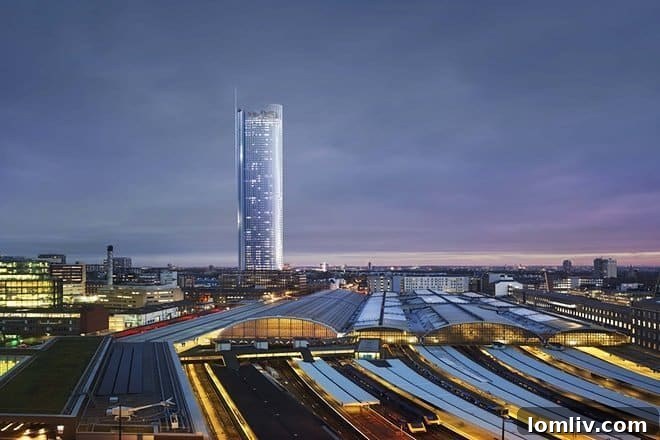
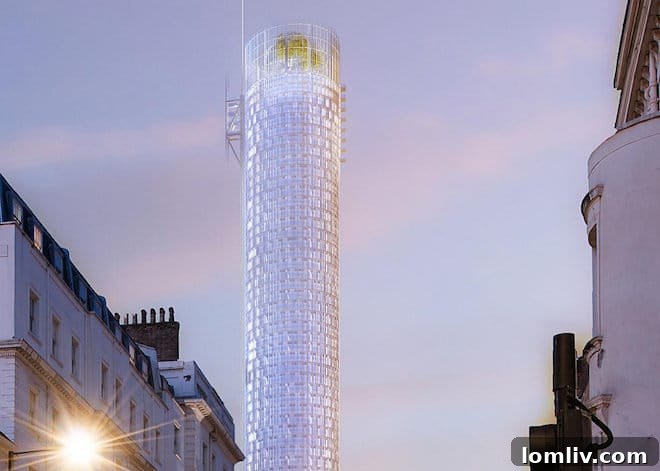
Echoing the challenges faced in Dallas, Renzo Piano encountered a different, yet equally formidable, form of resistance in London. The dynamic capital, constantly evolving, has seen a surge in ambitious high-rise developments in recent decades. However, this vertical expansion frequently ignites passionate debates concerning the preservation of London’s historic skyline and character. Piano’s proposal for a striking 72-story cylindrical skyscraper in West London, playfully (or pejoratively) dubbed “The Tube” or “Paddington Pole,” became the focal point of intense local opposition. Ultimately, this pressure led to the project’s withdrawal from the planning process in early 2016, marking a significant setback for both the architect and the developer.
The developer behind the Paddington Pole was Irvine Sellar, a prominent figure in London real estate and a long-standing admirer and collaborator of Piano. Their previous partnership resulted in the iconic The Shard, which, since its completion, has become London’s tallest building and an undeniable landmark. The Shard’s success fueled Sellar’s ambition for another transformative project, one that would redefine the Paddington area. The proposed £600 million (approximately $927 million) “Tube” tower was envisioned as the anchor for a comprehensive redevelopment of the area surrounding Paddington Station, a vital transport hub. The ambitious scheme included a substantial 200,000 square feet of modern office spaces, a vibrant array of restaurants and retail outlets, new public piazzas designed to enhance urban connectivity, and a significant contribution of 691 new residential homes. Furthermore, the plan incorporated a crucial upgrade: a new Bakerloo Line tube station, promising improved public transport infrastructure for the area.
Despite its grand scale and potential benefits, the Paddington Pole quickly became a lightning rod for public dissatisfaction. The prevailing sentiment, as reported byCurbed, was that the tower was simply “too tall” and constituted an inappropriate intrusion on neighboring developments and the broader urban fabric. The withdrawal of such a high-profile project, as The Architects’ Journalheadlined, signaled a growing public and professional resistance to unrestricted vertical development in one of the world’s most historically rich cities.
The Battle for London’s Soul: Voices Against the Pole
The opposition to the Paddington Pole was robust and multifaceted, drawing criticism from a diverse coalition of architects, heritage organizations, and local residents. The primary objection centered on the skyscraper’s immense height and its potential to irrevocably damage the distinctive character and historical integrity of the Paddington area. Critics argued that the 72-story structure would overwhelm existing architectural heritage, including the iconic Grade I listed Paddington Station, and disrupt the visual harmony of the surrounding conservation areas.
Among the most prominent voices of dissent were celebrated architects such as Terry Farrell, Ed Jones, and Francis Terry. Terry Farrell, a highly respected figure in urban planning and design, was particularly vocal, lambasting Piano’s design as “piecemeal and opportunistic.” Farrell advocated for a more sensitive, integrated, and mid-rise approach to the Paddington redevelopment, one that would better respect the existing context and community needs. He even presented his own conceptual alternative, underscoring the deep professional disagreement over the appropriate scale and design for such a sensitive site.
Powerful heritage preservation bodies, including the Victorian Society and Historic England, also weighed in with significant objections. They highlighted the tower’s potential to cast an overshadowing presence over historic landmarks and erode the area’s unique sense of place. The prominent Skyline Campaigner, Barbara Weiss, a tireless advocate against inappropriate high-rise development, expressed strong concerns that the project plans had been “rushed,” lacking sufficient consideration for their long-term impact on the city’s invaluable heritage. These voices, collectively, formed a formidable barrier against the proposal.
The public’s response was equally decisive. An online petition against the “72-storey Paddington Super Tower” rapidly gathered over 1,800 signatures, demonstrating a broad and passionate community concern. Furthermore, Westminster City Council, the local planning authority responsible for approving the development, received more than 800 comments on the application, with the overwhelming majority expressing strong hostility and urging rejection. This significant outpouring of public opposition and critical feedback ultimately pressured developers Irvine Sellar and Great Western Developments to withdraw their initial plans.
The developers subsequently announced their commitment to a comprehensive revision of the entire project, with the intention of resubmitting a new proposal to Westminster Council that would presumably address the extensive concerns raised. This pivotal moment underscored Londoners’ growing sensitivity to their beloved historical skyline, signaling a collective desire to safeguard its unique character against what many perceive as incongruous and overly dominant modern structures. The “Die Shard II” slogan, often heard during protests, powerfully encapsulated this sentiment, reflecting a fear of repeating the scale of The Shard without adequate contextual consideration.
Lessons from the Urban Canvas: Balancing Innovation and Preservation
Renzo Piano’s experiences with the Nasher Sculpture Center’s glare and the withdrawn Paddington Pole project offer profound lessons in the complex world of contemporary urban architecture. They illustrate that even for the most renowned “starchitects,” the process of building in dense, historically rich cities involves navigating a delicate balance between innovative design, functional necessity, and deeply ingrained public sentiment regarding heritage and context. The “karma” experienced in these instances is not mystical, but rather the tangible consequences that arise when ambitious architectural visions interact with existing urban fabrics, community expectations, and the broader cultural appreciation for a city’s unique identity.
The London case, in particular, highlights a potential shift in urban planning philosophy. It emphasizes the increasing importance of extensive public consultation, context-sensitive design, and a deeper respect for the architectural legacy that defines a city. The power of collective action and advocacy, demonstrated by the coalition of architects, heritage groups, and local residents, proved instrumental in shaping the outcome of a major development. As global cities continue to expand and modernize, the challenge remains to foster innovative architecture that serves future needs while harmoniously integrating with, and enhancing, the invaluable heritage of the past. This ongoing dialogue between progress and preservation is central to defining the character of our urban landscapes for generations to come.