Every week, the meticulous professionals at Green Scene Home Inspections empower Daltxrealestate.com readers with invaluable insights into property inspection. Join us for “Upon Closer Inspection” to see what the experts see.
Embarking on the journey of homeownership is an exciting prospect, but it comes with the vital responsibility of due diligence. When evaluating a prospective home, we consistently advise clients to pay paramount attention to several critical areas: the roof, plumbing, electrical systems, HVAC (heating, ventilation, and air conditioning), and, perhaps most importantly, the foundation. These components represent the major “big-ticket” items within any property. Should any of them exhibit significant issues, you could be facing substantial and costly repairs down the line.
For those buying a home in the vibrant and ever-growing North Texas region, the conversation around foundation issues takes on an even greater significance. Given the unique geological and climatic conditions of this area, foundation problems are not merely a possibility but almost a given in many properties. Therefore, as you navigate the housing market in North Texas, scrutinizing the foundation should be at the very top of your inspection checklist.
Understanding Why North Texas Foundations Are Prone to Issues
The prevalence of foundation problems in North Texas is largely attributable to the region’s distinctive geological makeup and fluctuating weather patterns. The expansive clay soils common throughout DFW are notorious for their reactivity to moisture. During periods of heavy rainfall, these soils absorb water and expand significantly, exerting immense pressure on a home’s foundation. Conversely, during the prolonged droughts often experienced in Texas summers, these same soils dry out, contract, and pull away from the foundation. This constant cycle of expansion and contraction creates immense stress on structural components, leading to movement, cracks, and ultimately, foundation instability.
Furthermore, the age of many homes in the DFW area also plays a role. Older homes, built decades ago, may not have benefited from the advanced engineering and construction techniques employed today to mitigate foundation stress. While modern construction aims to account for soil movement, no foundation is entirely immune to the relentless forces of nature over time. Understanding these underlying factors helps home buyers appreciate the necessity of thorough foundation inspections.
Key Warning Signs of Foundation Problems: What to Look For
During your initial walkthroughs and especially during a professional inspection, several tell-tale signs can indicate foundation distress. Being aware of these indicators can empower you to make more informed decisions.
Exterior Indicators of Foundation Issues
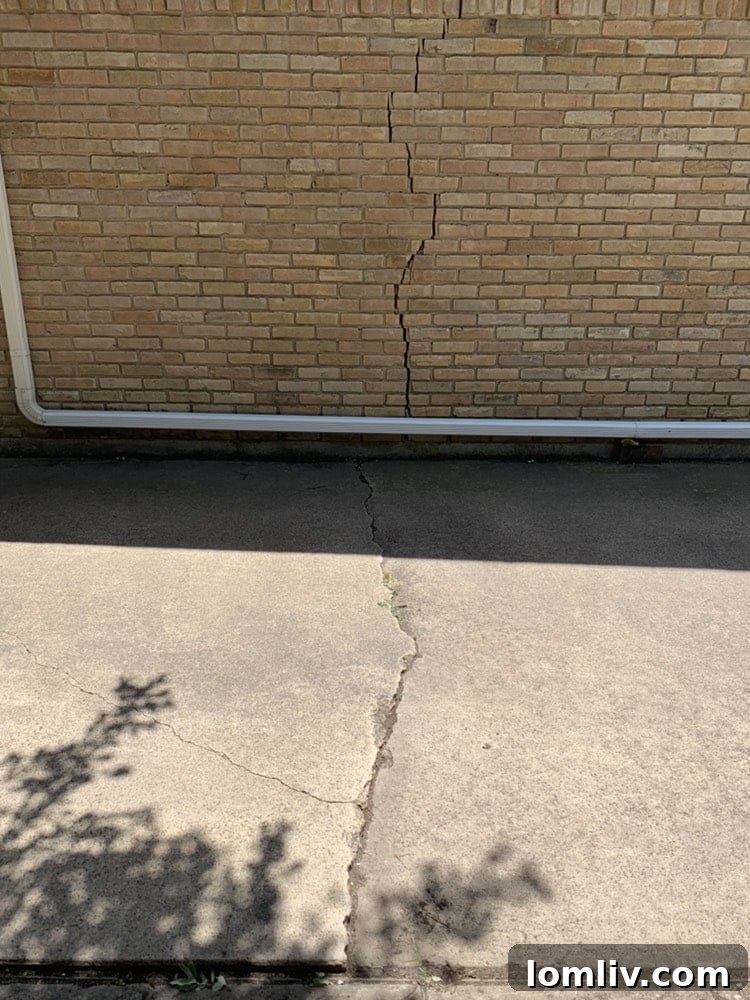
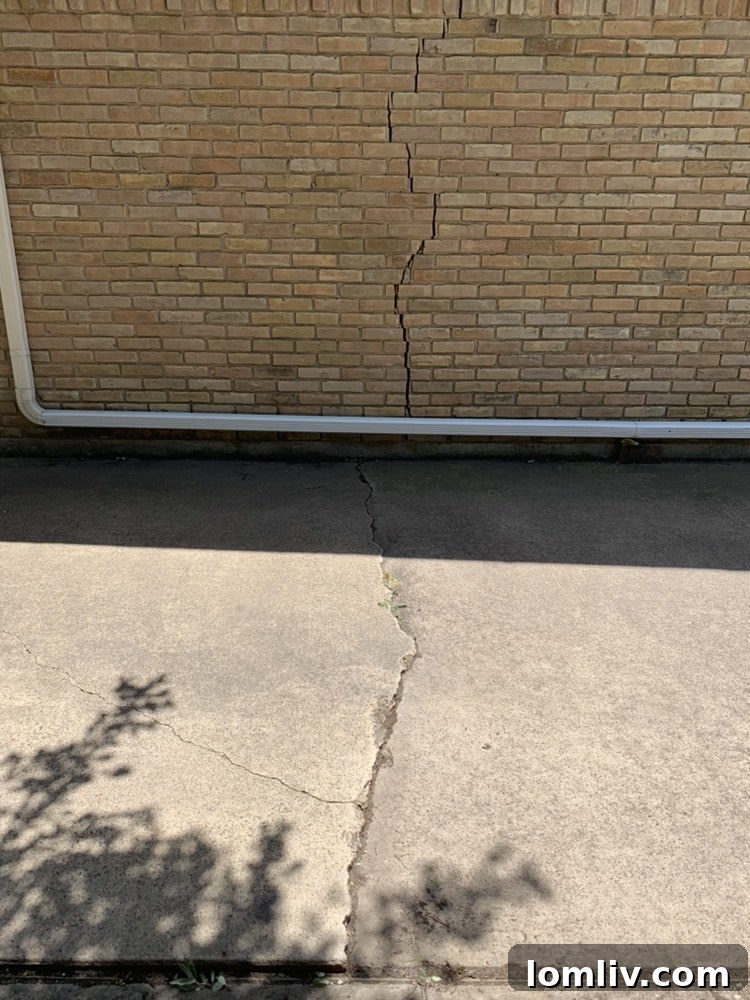
- Cracks in Bricks or Siding: As seen in the accompanying image, a vivid example of a “deflection crack” in the brickwork is a serious red flag. These cracks, often appearing diagonally or in a stair-step pattern, are direct evidence of movement in the underlying foundation. The same forces can cause cracks to appear across driveways, walkways, or patios adjacent to the house. Sometimes, a hidden issue, such as a water line leak, can saturate the soil in a specific area, causing localized movement.
- Gaps Around Windows and Doors: Visible gaps between window frames, door frames, and the exterior brick or siding can suggest that the house frame is shifting due to foundation movement.
- Separation of Fascia Boards or Chimneys: Look for separation where the roofline meets the walls, or if a brick chimney appears to be pulling away from the house structure.
- Evidence of Water Pooling: Improper drainage around the perimeter of the house can lead to water saturation, exacerbating soil expansion and contraction. Look for standing water or discoloration on the foundation itself.
Interior Indicators of Foundation Issues
- Uneven Floors: One of the most common and noticeable signs of foundation movement is uneven flooring. Our inspector demonstrates this “highly scientific test” in the video below, highlighting how a simple visual check can reveal significant problems. Floors that slope, sag, or feel bouncy in certain areas suggest that the underlying support system has shifted.
- Cracks in Drywall or Plaster: Pay close attention to cracks appearing in interior walls, especially above doorways, around window frames, or where walls meet ceilings. These often start as hairline cracks and can widen over time, indicating structural stress.
- Sticking Doors and Windows: If doors and windows no longer close or latch properly, or if they stick when opening or closing, it’s a strong sign that the door or window frame has become warped or misaligned due to foundation shifting.
- Separating Trim or Molding: Baseboards, crown molding, and other decorative trim may pull away from walls or ceilings, creating visible gaps as the structure moves.
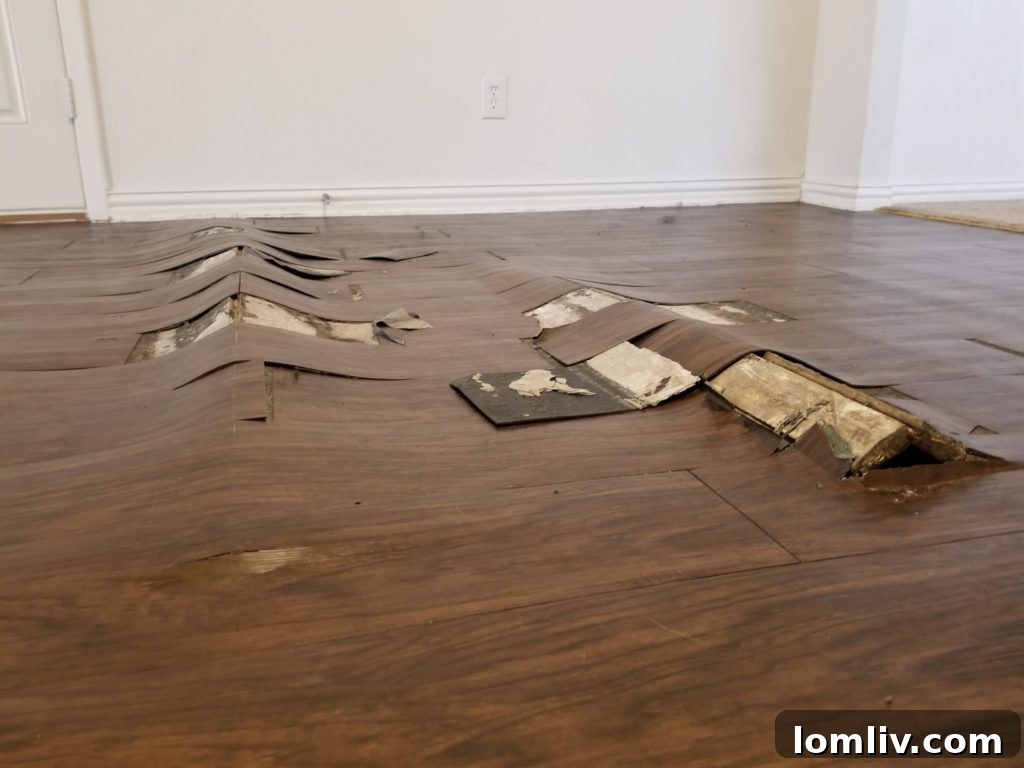
- Floor Buckling and Water Stains: As shown in the image below, severe floor buckling is a dramatic symptom. This is often caused by a leak under a slab foundation, such as a sewer or water line leak. The continuous moisture saturates the soil, causing localized expansion and upward pressure, resulting in the floor literally buckling. These repairs can be incredibly time-consuming, disruptive, and costly.
Another indicator of foundation movement is when the floors are out of level. Watch as our Inspector demonstrates this highly scientific test in the video below, offering a clear visual example of what to look for.
Sometimes, the root cause of an issue isn’t natural soil movement but rather previous contractors or do-it-yourself repairs undertaken without a comprehensive understanding of the home’s foundation system. Incorrect alterations or additions can inadvertently compromise the structural integrity. In the following video, our inspector collaborates with a seasoned foundation expert to uncover and address a complex problem within a pier-and-beam home, illustrating the depth of knowledge required for proper diagnosis and repair.
Two Principal Kinds of Foundations in DFW Homes
In the Dallas-Fort Worth metropolitan area, homes are generally built upon one of two primary foundation types: pier-and-beam or concrete slab. Each type has its unique characteristics, advantages, and common vulnerabilities.
Pier-and-Beam Foundations
Predominantly found in homes constructed in the 1960s or earlier, a pier-and-beam foundation offers a distinct structural approach. This system is comprised of sturdy footings, also known as piers, which are driven deep into the ground and secured by robust concrete bases. Connecting these piers are horizontal beams that support the floor joists and the rest of the home’s structure. A key feature of pier-and-beam foundations is the presence of a crawlspace beneath the house, providing accessible space between the ground and the first floor. This crawlspace allows for relatively easier access to plumbing, electrical wiring, and HVAC ductwork for inspections, maintenance, and repairs. However, pier-and-beam foundations can be susceptible to issues like sagging beams, wood rot due to moisture, and pest infestations within the crawlspace if not properly maintained and ventilated.
Slab Foundations (Slab-on-Grade)
Homes built after 1970 most commonly feature a concrete slab foundation, often referred to as a “slab-on-grade” foundation. This design involves pouring a thick, reinforced layer of concrete directly onto a prepared base of compacted soil or gravel. For enhanced structural integrity and to combat the stresses of soil movement, steel tension rods (rebar or post-tension cables) are embedded within the concrete. While slab foundations are generally cost-effective to construct and offer excellent protection against pests, they present unique challenges when issues arise. Because the plumbing and electrical lines are often encased within or run directly beneath the slab, accessing them for repairs can be highly invasive, requiring jackhammering through concrete. They are particularly vulnerable to localized soil movement and plumbing leaks directly beneath the slab, which can lead to significant hydrostatic pressure and floor buckling.
The Critical Role of a Professional Home Inspection
While visual inspections by a potential buyer are helpful for identifying obvious red flags, nothing can replace the expertise of a certified home inspector. Professionals from Green Scene Home Inspections possess the trained eye, specialized tools, and in-depth knowledge to identify subtle signs of foundation distress that an untrained individual might overlook. They go beyond surface-level observations, using tools like levels, moisture meters, and sometimes even thermal cameras, to detect hidden issues. A comprehensive inspection report will detail the foundation’s condition, highlighting any concerns and recommending further evaluation by a structural engineer if warranted. This objective assessment is invaluable, providing leverage for negotiations or peace of mind for your investment.
Proactive Measures: Maintaining Your Foundation’s Health
For homeowners and prospective buyers alike, understanding preventive measures can significantly extend the life and stability of a foundation:
- Proper Drainage: Ensure gutters are clean and downspouts extend at least five to ten feet away from the foundation to direct rainwater away from the house. The ground should slope away from the foundation at least six inches over ten feet.
- Consistent Soil Moisture: In expansive clay soils, maintaining consistent moisture levels around the foundation can mitigate extreme expansion and contraction. This may involve careful watering during dry periods, using soaker hoses a safe distance from the foundation, or installing root barriers for nearby trees.
- Tree and Shrub Management: Large trees or shrubs too close to the foundation can draw excessive moisture from the soil, causing it to contract. Consult an arborist about root barriers or appropriate planting distances.
- Prompt Leak Repair: Address any plumbing leaks, both inside and outside the house, immediately. Even small, undetected leaks can cause significant damage to the foundation over time, particularly with slab foundations.
Conclusion: Your Foundation, Your Future Home’s Integrity
The foundation is undeniably the backbone of any home. In a region like North Texas, where environmental factors pose constant challenges to structural integrity, a diligent approach to understanding and inspecting a home’s foundation is not just recommended—it’s essential. By recognizing the warning signs, understanding the types of foundations, and most importantly, relying on the expertise of seasoned professionals like those at Green Scene Home Inspections, you can safeguard your investment and ensure that your future home stands on solid ground. Don’t let a hidden foundation issue turn your dream home into a financial burden; empower yourself with knowledge and professional guidance.