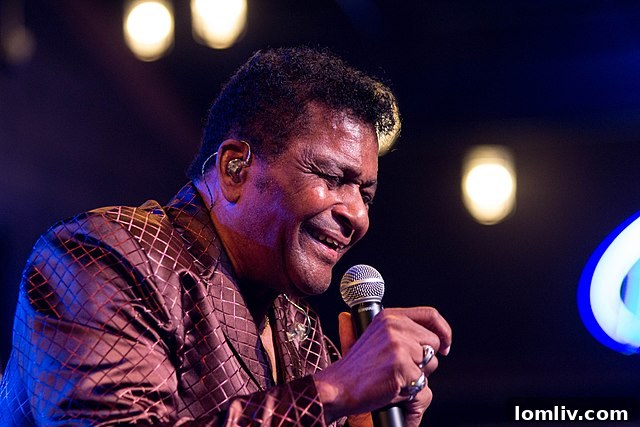
The world of country music, and indeed the broader cultural landscape, bid a sorrowful farewell to one of its most pioneering and beloved figures, Charley Pride. Just weeks before his untimely passing, this legendary artist, whose presence was sometimes glimpsed by residents of Preston Hollow and North Dallas at local haunts like Texaco, the Forest/Preston 7-Eleven, grocery stores, or St. Monica’s Church, received one of the industry’s highest accolades: the Willie Nelson Lifetime Achievement Award at the Country Music Association Awards in Nashville.
This honor was not just a recognition of his unparalleled musical career but a historic moment, as Charley Pride became the very first Black artist to receive the award since its inception in 2012. His extraordinary talent and enduring appeal kept him actively touring and performing almost until his final days, a testament to his passion for music and his loyal fanbase.
For many, Charley Pride was more than just a distant star; he was a cherished local presence. Many would often drive past his distinctive, low-slung Frank Lloyd Wright-style home with its metal roof on Northaven Road, a sprawling estate spanning over 8,500 square feet with eight bedrooms. One couldn’t help but wonder if inside, the country icon was strumming his guitar in his studio, perhaps imparting his wisdom and love of music to his beloved grandchildren, enriching their lives with melodies and stories.
Charley Pride, though 86, carried himself with a vitality that belied his age. His passing on Saturday, December 12, of complications from COVID-19, sent shockwaves through the music community and beyond, reminding everyone of the fragility of life and the immense legacy he leaves behind. His contributions transcended entertainment, breaking barriers and paving the way for future generations.
Even those who were only recently introduced to the rich tapestry of country music over the past few decades could not help but fall under the spell of his mesmerizing voice. His velvet baritone, a signature sound that effortlessly floated like silk threads, possessed a unique ability to soothe and comfort, captivating audiences with every note. His distinct style made him instantly recognizable and eternally cherished.
From the mid-1960s through the late 1980s, Charley Pride stood as one of country music’s most prominent and successful stars. His remarkable career yielded an astounding 52 Top 10 country hits, an impressive 29 of which soared to the coveted number one spot on the charts. Beyond his country success, more than a dozen of his iconic songs, including timeless classics like “Kiss an Angel Good Mornin’” and “Is Anybody Goin’ to San Antone,” successfully crossed over to the pop charts, demonstrating his broad appeal. His immense influence and undeniable talent were recognized through his induction into both the esteemed Grand Ole Opry and the Country Music Hall of Fame. A recipient of four Grammy Awards, Pride’s record sales are estimated at a staggering 70 million units worldwide – a figure that placed him above any other artist at RCA Records, save for the legendary Elvis Presley himself. This incredible achievement solidified his status as a true music giant.
From Sharecropper’s Son to Superstar: The Journey of Charley Pride
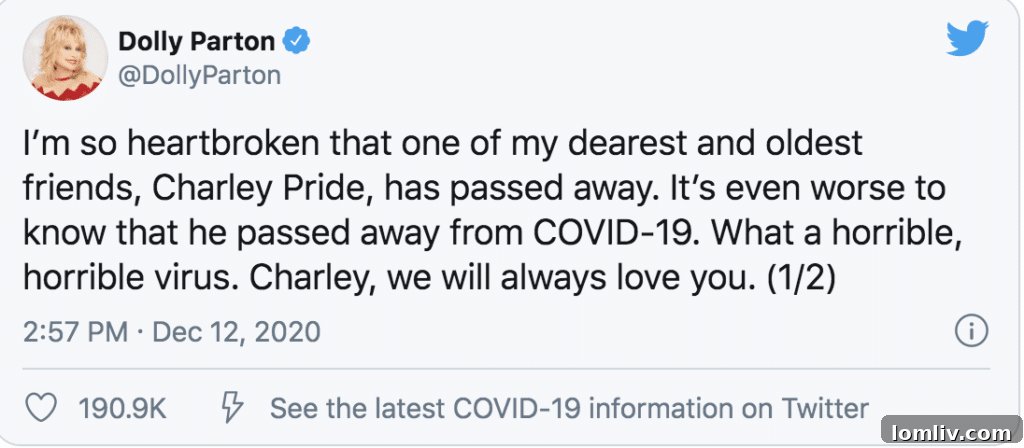
Born on March 18, 1934, in Sledge, Mississippi, Charley Pride’s humble beginnings as a sharecropper’s son only make his ascent to becoming the first Black superstar in country music all the more remarkable. His life story is a powerful testament to perseverance, talent, and breaking through societal barriers. His passing prompted an outpouring of tributes from across the music industry, with fellow legends like Dolly Parton expressing their grief and admiration on social media, fondly recalling him as one of her “dearest and oldest friends.”
Baseball Dreams Paved the Way to Dallas
Charley Pride’s path to musical stardom was anything but direct. Before picking up a guitar and captivating millions with his voice, his primary ambition lay on the baseball field. From a young age, Pride harbored a passionate dream of playing in the Negro Leagues. At the tender age of 16, his immense baseball talent was evident, leading him to play organized games in the Iowa State League. He then advanced to professional play in the Negro American League, showcasing his skills as both a pitcher and an outfielder for various teams, including the notable Memphis Red Sox.
Despite his undeniable athletic prowess, fate had a different plan. In 1958, while still pursuing his baseball aspirations, Pride ventured into the recording studio. He cut a professionally recorded demo at the legendary Sun Studios, an institution that had previously launched the careers of musical giants like Elvis Presley. Several takes were recorded for a song titled “There’s My Baby (Walkin’),” an adaptation of the 1957 pop hit “The Stroll” by The Diamonds. At this early stage, Charley was still honing his vocal identity, and while the demo didn’t immediately propel his music career forward, it was a crucial, early step on a path that would eventually redefine country music.
After a two-year stint serving in the Army, Charley’s journey continued, taking him to Montana in 1960 to play for the Missoula Timberjacks. Life then led him to work at a smelter operated by the Anaconda Mining Company, where he continued to play semi-pro baseball for the East Helena Smelterites. In 1961, he even tried out for the Los Angeles Angels, demonstrating his unwavering commitment to baseball. However, after just two weeks in camp, he returned to Helena, where he found himself performing in local night clubs, a seemingly small pivot that would have monumental implications for his future.
From Nightclubs to Nashville: A Country Music Pioneer Emerges
Prior to these nightclub performances, Pride’s musical career was largely confined to singing on bus trips between baseball games. He possessed no formal musical training, yet his innate talent shone through. He taught himself to play the guitar at the age of 14, famously purchasing his first instrument – a Silvertone – from a Sears Roebuck catalog. While balancing the rigorous schedule of working at the smelter by day and singing in nightclubs by night, Pride’s distinctive voice and burgeoning talent began to catch the attention of established country stars. These crucial connections eventually led to an invitation to Nashville, the heart of country music, effectively signaling the conclusion of his serious baseball career. Though he left professional baseball behind, Pride’s love for the sport never waned; he continued to enjoy practicing and pitching with professional teams, including the Texas Rangers, throughout his life, even participating in sessions as recently as a decade before his passing. This enduring connection exemplified his passion and versatility.
The decision to move to Dallas in the 1970s was a strategic one for Charley Pride, driven by geographical convenience. Dallas offered the ideal proximity for his extensive travel needs, particularly to Nashville, where his music career flourished. More importantly, it provided a stable and fulfilling life for his wife, Ebby Rozene Cohran Pride, and their children, offering access to excellent schools and a supportive community. A few years after their relocation, the Prides acquired their magnificent North Dallas estate, a property that not only featured a tennis court but also an indoor swimming pool, reflecting the success and comfort they found in their adopted city.
An Enduring Legacy and Impact
Charley Pride’s stature extended far beyond the music industry. He cultivated friendships with several U.S. presidents, including Gerald Ford, George H.W. Bush, George W. Bush, and Bill Clinton, for whose inauguration he proudly performed. These high-profile connections underscored his widespread appeal and the respect he commanded across various spheres of influence. His ability to connect with people from all walks of life, coupled with his immense talent, made him a truly exceptional figure.
The Prides remained deeply rooted in Dallas for over 50 years, making it their cherished home. His legacy as a barrier-breaking Black artist in country music is immeasurable, inspiring countless individuals and reshaping perceptions within the genre. He not only achieved commercial success but also opened doors and challenged norms, proving that talent knows no color or creed. His powerful voice, engaging stage presence, and unwavering kindness left an indelible mark on everyone he encountered.
Charley Pride’s extraordinary life and career are celebrated by his loving family. He is survived by his devoted wife, Ebby Rozene Cohran Pride, his three children, five cherished grandchildren, and two adored great-grandchildren. His memory lives on through his timeless music, the countless lives he touched, and the enduring legacy of a man who truly sang his way into the hearts of millions, forever changing the face of country music.