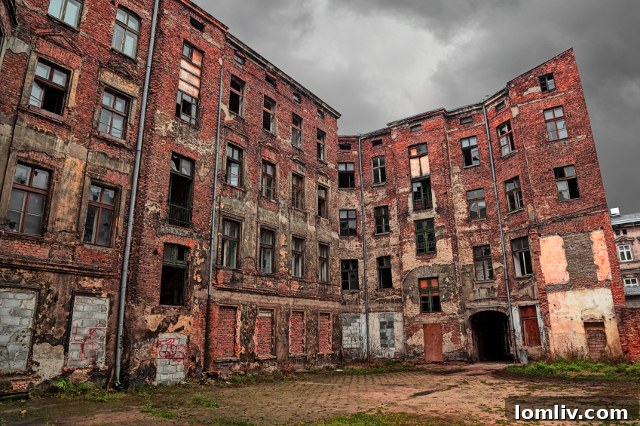
In the dynamic world of architecture and urban development, the concept of a building’s longevity is often measured by its physical endurance. Yet, as renowned architect Bjarke Ingels eloquently puts it, a structure’s true lifespan is dictated not just by its materials, but by its sustained relevance to the community it serves. This profound insight, gleaned from an interview titled “Different Angles,” resonates deeply with ongoing discussions about sustainable design and the future of our built environment. Ingels shared a striking anecdote about a 2,750-year-old synagogue in northern Iraq. Despite millennia of continuous use, this ancient edifice fell into dereliction within just 50 years when cultural shifts prompted its congregation to relocate. Its physical form remained, but its purpose vanished, demonstrating that even the most enduring structures are vulnerable to the ebb and flow of societal needs.
This powerful example underscores a critical challenge for architects and developers today: how to create buildings that not only stand the test of time structurally but also remain adaptable and valuable across generations. The key, Ingels suggests, lies in designing for “relevance,” which frequently translates into the capacity for repurposing. This forward-thinking approach is not just an architectural ideal; it’s becoming an economic and environmental necessity in an increasingly resource-conscious world.
The imperative for adaptable architecture is already manifesting in various sectors. Consider the transformation of commercial real estate. What were once considered “white elephants” – colossal, century-old buildings with vast, continuous floor plates – are now experiencing a renaissance. The Chicago Tribune highlighted this trend, reporting on the renewed desirability of these historic structures, often former warehouses for titans like Montgomery Ward and Marshall Fields, or disused government facilities such as Chicago’s old central post office. We are talking about floors ranging from 50,000 to an astounding 260,000 square feet, equivalent to a sprawling six-acre expanse.
These architectural giants, once challenging to lease, have found new life thanks to the evolving demands of modern businesses, particularly in the tech sector. Companies are increasingly seeking collaborative work environments that foster proximity and interaction among teams. Matt Ward of Newmark Knight Frank articulated this shift, stating, “This thinking of different floor, different planet is finding its way into every boardroom. The idea of us getting out of our offices and being together is seen as a necessity in today’s business.” This desire for contiguous, open spaces where entire departments can work side-by-side has endowed these once-problematic buildings with fresh relevance and immense value within their urban communities. Their inherent spaciousness, previously a drawback, has become their greatest asset, showcasing how unforeseen needs can revive forgotten structures through creative repurposing.
Parallel shifts are also observable in the multi-family residential sector, particularly in growing urban centers like Dallas. While single-family homes have generally trended towards larger footprints (with cyclical exceptions), multi-family units appear to be shrinking. Even the most casual observer or prospective renter in Dallas over the past six years will have noticed an proliferation of smaller, often “poky” apartments, with average unit sizes continually decreasing. This trend raises pertinent questions about long-term sustainability and resident satisfaction.
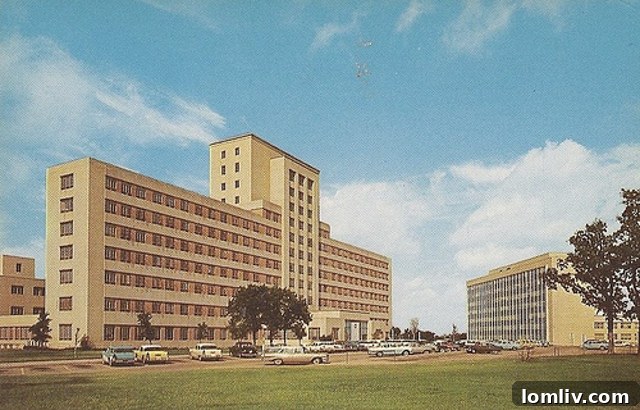
An illuminating example of repurposing within Dallas surfaced on February 10, when the Dallas Morning News reported on developer Sam Ware’s ambitious plans for the former Parkland Hospital campus. This project proposes a mixed-use redevelopment that includes both residential and commercial components. Notably, one residential segment envisions 700-800 apartments averaging a mere 300 square feet, while another touts condos averaging a more spacious 1,000 square feet. This contrast highlights the ongoing debate within residential development regarding optimal unit sizes.
While small apartments are not entirely new – many 1970s complexes on Cedar Springs Road in Dallas offered compact living spaces – the sheer volume of these diminutive units in the current construction cycle is unprecedented. This raises a crucial question: are these ephemeral trends driven by market conditions and affordability, or do they signal an enduring shift towards smaller living quarters for multi-family residents? While definitive answers remain elusive, a strong argument can be made for the former. Most individuals opt for smaller units primarily due to affordability constraints. As younger generations, particularly Millennials and Gen Z, advance in their careers and financial standing improves, their aspirations for more expansive living spaces are likely to reassert themselves, mirroring historical patterns of upward mobility and housing preferences.
If, as many indicators suggest, the current surge in tiny apartments is indeed a transient phenomenon, what then becomes of their future? Are these simply 25- to 30-year buildings, designed with the expectation of being demolished and replaced by structures more aligned with a future era? The construction methods and materials often employed in these developments give the impression of short-term investment, built to “cash out” and be torn down. This approach, however, presents significant environmental and economic challenges, and its long-term viability is far from certain.
The global population is projected to swell from 7.4 billion to 9.7 billion by 2050 – an increase of 2.3 billion people. Can we realistically accommodate this growth without a far stricter, more sustainable management of our natural resources, including fundamental building materials? Consider sand, a seemingly ubiquitous resource vital for concrete, which forms the backbone of modern construction. Most people overlook its importance unless they’re at the beach. Yet, in 2016, the New York Times reported on impending shortages. Desert sand, with its fine, rounded grains, is unsuitable for concrete, which requires coarser river and ocean sand to bind effectively. These critical aggregates are being depleted at an alarming rate. To illustrate the scale, China alone consumed more sand between 2011 and 2013 than the entire United States did in the 20th century. Sand is just one component among many. This looming scarcity is likely a driving force behind the renewed interest in sustainable and renewable alternatives, such as mass timber, which is increasingly capturing the imagination of architects for high-rise construction.
In a future defined by resource constraints and environmental imperatives, the concept of “disposable buildings” becomes increasingly untenable. It is easy to foresee a time when demolition and landfilling will be not only environmentally irresponsible but also prohibitively expensive. Building materials will have to be meticulously reused, recycled, or upcycled, rather than simply discarded. In such a scenario, a significant proportion of today’s short-sighted, rapidly constructed buildings will not be torn down but will instead demand repair and thoughtful repurposing. This future reality necessitates a paradigm shift in how we design and build today.
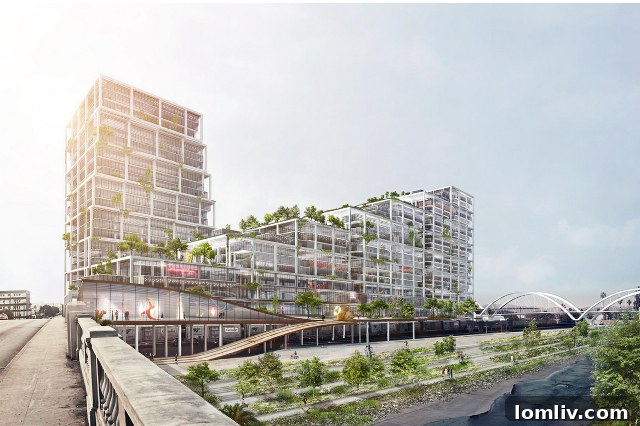
Designing for Longevity: The Adaptive Building Approach
Given these future challenges, it is crucial for developers to critically examine their blueprints and ask tough questions about a building’s inherent adaptability. How can a structure be designed from its inception to accommodate unforeseen changes in use and demand? While residential buildings will likely remain residential, the way people live within them is constantly evolving. Therefore, the concept of “elasticity” must be a fundamental principle in architectural planning.
For instance, if we anticipate that some apartment buildings might transition to condominiums in the future, are the units designed with optimal flexibility in mind? If current unit sizes prove to be incongruous with future preferences, intelligent placement of structural columns, support walls, and plumbing systems can facilitate graceful combination or separation of units. Strategically locating plumbing stacks along unit perimeters, rather than bisecting the middle of a living space, offers far greater flexibility for future reconfigurations. This foresight minimizes costly and disruptive renovations down the line, enhancing the building’s long-term value and market appeal.
To quantify the impact of such design choices, I analyzed the rates of unit combination in two approximately 50-year-old buildings, both initially apartments that later converted to condos. One building featured units averaging 1,700 square feet, while the other averaged 750 square feet. Over time, the building with larger units saw about 7 percent of its units reconfigured by combining all or part of neighboring units. In stark contrast, the building with smaller units experienced closer to a 20 percent combination rate, often involving three or even four units merging into a larger living space. This data clearly suggests that building elasticity is not just a theoretical concept; it translates into tangible adaptability and long-term utility.
This principle of “elasticity” was a key factor when I recognized 3525 Turtle Creek for its exemplary floor plans. Built in 1957, architect Howard Meyer could not have foreseen the modern trend of open-concept living. Yet, his design thoughtfully placed structural columns and key utilities as far out of the way as possible. This seemingly simple decision implicitly encouraged and enabled a future of open-concept spaces, demonstrating how timeless design principles can transcend contemporary trends.
Beyond futureproofing, designing for change offers immediate benefits. In established, owner-occupied neighborhoods, the construction of large, new apartment buildings often meets with resistance and disdain. Residents worry about transient populations, increased traffic, and potential decreases in property value. Management companies can exacerbate these concerns through unresponsive practices, fostering a perception that renters treat security deposits as “get out of jail free” cards. However, what if developers engaged with neighbors, presenting not only the project’s immediate proposed use but also illustrating how the building could adapt to shifting market priorities? Would community opposition be softened if residents viewed a new apartment complex as a potential stepping stone to an owner-occupied future? Imagine the possibilities if initial plans included provisions for unit combinations, allowing a building to evolve from a collection of smaller units suitable for college students into larger, family-friendly homes over time. Such a visionary approach could transform community perception, fostering collaboration instead of contention.
While long-term, “pie-in-the-sky” future options might seem less pressing than immediate concerns for most individuals (myself included), the cumulative impact of thoughtful design is profound. All things being equal in a market saturated with small apartments, wouldn’t a design that actively champions repurposing and renewal offer a distinct advantage? Anyone who has witnessed the blight of poorly constructed buildings falling into disrepair understands that even a glimmer of hope for future adaptability is infinitely better than none. For shrewd developers, this strategic planning can significantly enhance a building’s future marketability and value. Regardless of whether a building needs to be refreshed for changing needs or if demolition and new construction become exponentially more expensive, a structure capable of graceful reconfiguration will undoubtedly be a more valuable asset.
I conclude with another profound quote from Bjarke Ingels, encapsulating the essence of this discussion:
“If you design for the lowest common denominator or design for the fear of not having resale value or not fitting in with the majority, then you will most likely end up with buildings that will most likely be torn down in a short while because there is no reason to preserve them.
When you design something that comes to the world with a very clear character and with some strong decisions, some strong choices, then that building will be a beautiful experiment in one way of doing things, and therefore it will lend itself to being refurbished and accommodate change over time.”
His words serve as a powerful call to action for the architecture and development communities: embrace bold, character-driven designs that inherently foster adaptability, ensuring our buildings remain relevant, resilient, and cherished assets for generations to come. By doing so, we move towards a more sustainable and vibrant urban future, where structures are not merely temporary shelters but enduring legacies of thoughtful design.

Remember: High-rises, HOAs, and renovation are my areas of focus. I also hold a deep appreciation for modern and historical architecture, always viewed through the lens of the YIMBY movement. If you’re interested in hosting a Candysdirt.com Staff Meeting event, please consider me. My writing has been recognized by the National Association of Real Estate Editors, earning two Bronze awards in 2016 and 2017, and two Silver awards in 2016 and 2017. Whether you have a compelling story to share or a unique proposal to make, don’t hesitate to reach out via email at [email protected].