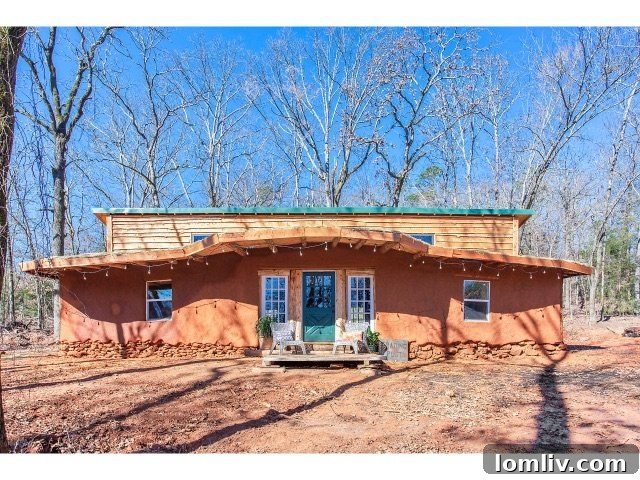
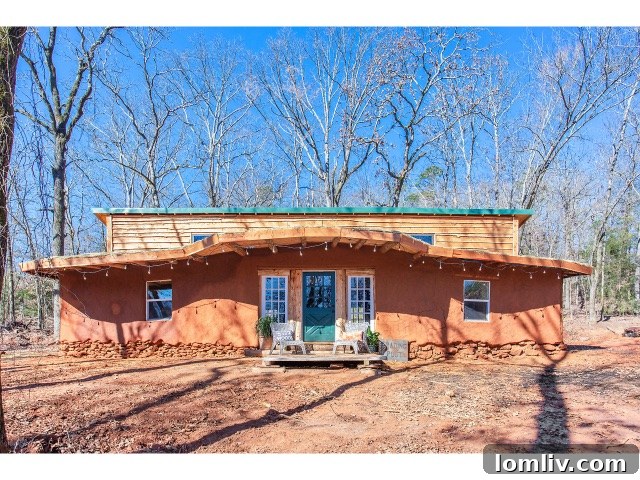
In an age where self-reliance and sustainable living are more appealing than ever, many are looking back to simpler times, much like the pioneering spirit of Little House on the Prairie. The concept of growing our own food, embracing community, and cherishing family time resonates deeply in today’s world. As we cultivate victory gardens and adopt habits of our great-grandparents, the idea of building our own homes, tailored to our needs and values, seems not only natural but profoundly empowering. What if constructing a durable, beautiful, and affordable home was within everyone’s reach?
This vision is not a distant dream but a tangible reality, thanks to the pioneering work of Cat Taylor. She is at the forefront of a movement dedicated to demystifying home construction through the ancient yet revolutionary technique of cob building, empowering individuals to create their own sustainable sanctuaries.
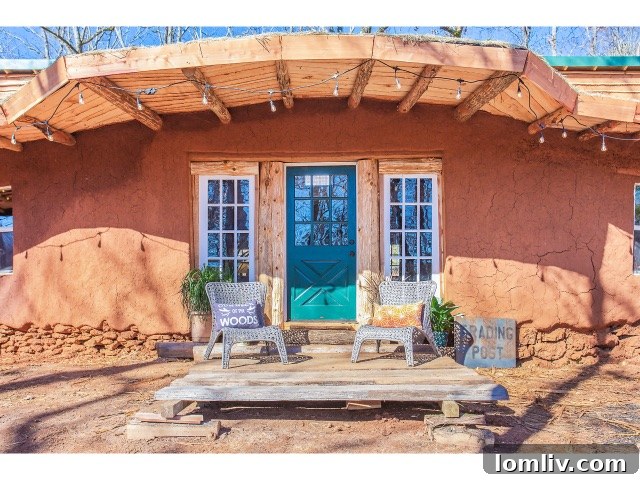
Cat Taylor is more than just a master natural builder; she’s a passionate advocate on a mission to redefine shelter. Her core philosophy is rooted in a fundamental human right: “I believe everyone should be able to provide shelter for themselves,” Cat emphasizes. “Shelter is one of the most basic human needs, and I want to empower people to have confidence about building a home for themselves. You don’t have to hire professionals. Anyone can build a cob house, even if you are in a wheelchair or paralyzed. And your kids can help!” This inclusive approach highlights the accessibility and collaborative spirit inherent in cob construction, making it a truly universal skill.
What Exactly is a Cob House? The Ultimate Sustainable Dwelling
At its heart, a cob house is a marvel of natural engineering, built from a simple yet incredibly potent mixture of earth, sand, straw, and water. Originating in Wales, the word “cob” itself means “a lump or rounded mass,” perfectly describing its sculpted form. While often compared to adobe, cob distinguishes itself in its mixing process and application; adobe is typically formed into sun-dried bricks that are then stacked, whereas cob is continuously sculpted while wet, allowing for unparalleled architectural freedom and fluidity.
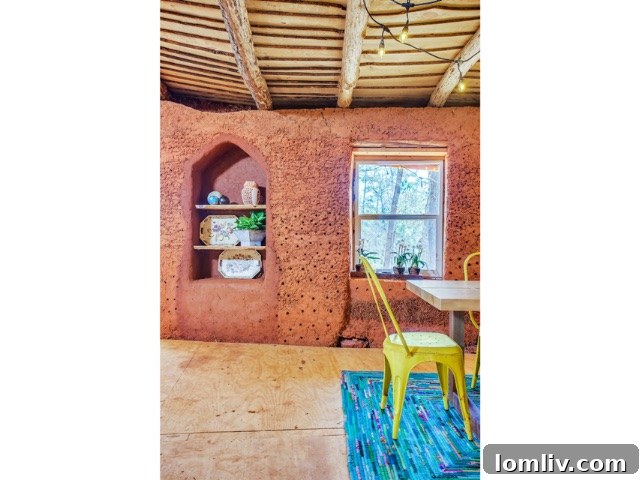
Cob stands out as an exceptional building material for a multitude of compelling reasons. Once dried, it achieves a remarkable hardness comparable to concrete, yet it retains a pliancy during construction that allows for incredible artistic expression. Imagine crafting homes with gracefully curved walls, built-in shelves, and organic shapes that flow seamlessly with the landscape – all possible with cob. This sculptural quality is a key differentiator, empowering builders to create unique, personalized living spaces that would be prohibitively expensive or complex with conventional materials.
Unmatched Durability and Eco-Friendliness
Beyond aesthetics, cob offers impressive practical advantages. It is inherently fireproof, providing a significant safety feature for homeowners. Environmentally, cob is a champion of sustainability. It utilizes readily available, often local materials, significantly reducing transportation costs and carbon footprint. Its construction does not contribute to deforestation, reduce pollution, or depend on energy-intensive power tools, making it one of the most eco-conscious building methods known. Furthermore, cob homes boast incredible resilience: they can withstand extreme climates, offering superior thermal mass that keeps interiors cool in summer and warm in winter, drastically cutting energy bills. Perhaps most astounding is its structural integrity – a well-built cob house can survive a 10.1 magnitude earthquake and even stop a 55-caliber bullet, showcasing its extraordinary strength and safety.
Cost-Effectiveness and the Challenge of Visibility
From an economic standpoint, there is arguably no more cost-effective building material. The primary ingredients – earth, sand, and straw – are often sourced directly from the building site or nearby, minimizing material costs to nearly zero. This drastically reduces the financial barrier to homeownership, making self-built shelter accessible to a much broader population. The main hurdle for cob remains its visibility; it’s a technique not widely known or adopted in modern construction. However, Cat Taylor is fiercely committed to changing this perception, bringing cob building into the mainstream and proving its viability as a sustainable and beautiful housing solution for the 21st century.
From Construction Roots to Sculptural Homes: Cat Taylor’s Unique Path
Cat Taylor’s journey to becoming a master natural builder is a compelling fusion of practical expertise and artistic flair. Growing up immersed in the construction business, she inherited a foundational understanding of building principles. However, her inherent creativity soon led her down a more artistic path, specializing in sculpting and painting, where she honed her ability to transform raw materials into expressive forms. This artistic background, combined with her construction DNA, would later prove instrumental in her innovative approach to home building.
Life, as it often does, presented a pivotal moment when Cat found herself as a single mom, prompting a reevaluation of her career. The need for a more lucrative and stable path became evident, drawing her back to her roots in construction. Her first major project involved remodeling a foreclosed property, a venture she undertook with characteristic determination. During this process, she encountered an old, dilapidated swimming pool that presented a financial dilemma: refurbishment wouldn’t yield a worthwhile return on investment. This challenge, however, sparked her ingenuity.
Cat embarked on extensive research, exploring alternatives to traditional pool renovation. It was then that an Australian website detailing natural pools captured her imagination, providing the perfect canvas to re-engage her sculpting talents. She meticulously carved faux flagstone from concrete, engineered six cascading waterfalls, and mastered the creation of a natural filtration system. This innovative transformation not only elevated the property’s appeal but, as Cat proudly states, “It’s what sold the property.” More impressively, this project tripled her initial investment, a testament to her vision and practical skills.
The success of the natural pool garnered significant attention. A local school principal, impressed by her work, commissioned Cat to create a similar water feature on school grounds, envisioning a tranquil space where students could relax and study. Returning to her research, Cat delved deeper into natural building techniques, eventually stumbling upon the concept of cob houses. This discovery triggered her proverbial “Aha!” moment.
“I thought this combines my love of sculpting and my remodeling experience,” Cat recalls. “I realized I could sculpt a home to live in, and I was hooked!” This revelation perfectly married her artistic passion with her practical building knowledge, laying the groundwork for her future in natural building. The idea of not just building a structure, but sculpting a living space that was both functional and aesthetically pleasing, became her new driving force.
Inspiration Forged in Adversity: A Mission Born from Resilience
Life, however, often tests even the most determined spirits. Cat was soon faced with a series of profound personal challenges: a cancer diagnosis, followed by a double mastectomy, and later, the debilitating effects of aspartame poisoning. These were formidable curveballs that might deter many, but Cat Taylor is not one to be kept down for long. Instead, these experiences deepened her resolve and clarified her purpose, transforming adversity into an even stronger commitment to self-sufficiency and natural living.
Throughout her treatments and recovery, Cat channeled her energy into relentless research, devouring every piece of information she could find on natural building methods and, specifically, cob homes. She understood that if she could overcome these personal battles, she could certainly master the art of building her own shelter. The moment her health allowed, she wasted no time. She traveled to Oregon to attend a specialized natural building class, immersing herself in the hands-on techniques of cob construction. This was not just a learning experience; it was a deeply personal affirmation of her path.
Upon her return, Cat and her second husband made a transformative decision. They sold their conventional home, purchased 45 acres nestled within the picturesque East Texas piney woods, and immediately set to work on her vision. In May 2018, the construction of her own cob house began, a tangible symbol of her resilience and commitment. Simultaneously, she launched a series of workshops, eager to share her newfound knowledge and empower others to embark on their own natural building journeys. Her personal struggles had not only led her to cob but had also ignited a powerful desire to teach and uplift, proving that even in the face of profound difficulty, a meaningful mission can emerge.
A Story Worth Sharing: Empowering Veterans Through Cob Building
Cat’s innovative work and unique approach to cob building eventually caught the attention of the DIY Network, which expressed keen interest in featuring her home and workshops on their popular program, “Building Off the Grid.” Surprisingly, Cat initially declined their offer – twice. She wasn’t driven by fame but by a deeply personal and evolving mission. It took a persuasive call from her former instructor at the Oregon cob building school to change her mind. He pleaded with her, highlighting a concerning trend: “They were concerned that people in the television world were making a mockery of cob building and viewers were seeing cob homes as hippie flophouses or mud huts,” Cat explained. “I was asked to show viewers it was feasible and to represent cob building properly.” This appeal resonated with Cat, who understood the importance of accurate representation for the broader acceptance of natural building.
By this time, Cat had developed her own powerful agenda. With a disabled veteran husband, she was intimately familiar with the benefits and challenges associated with programs like the Texas Veteran’s Land Board (VLB). Established in the aftermath of World War II, the VLB offers veterans an incredible opportunity to purchase land at below-market interest rates with only a minimal down payment of five percent, often without stringent credit checks. These were 30-year loans, requiring only road access to the property. While the VLB made land acquisition accessible, Cat, ever the diligent researcher, began to uncover a perplexing pattern of foreclosures among veteran-owned properties. It was a disconnect she couldn’t ignore.
“Then it struck me,” Cat recalled with profound clarity. “Veterans could afford the land, but either could not afford to build or, once they built, could not afford the mortgage payments.” This realization ignited a powerful new purpose within her. She understood that merely owning land wasn’t enough; true self-sufficiency required affordable, sustainable housing. “I decided at that moment to concentrate on building cob homes for veterans and teaching them the skills necessary to create their own homes,” she declared. The DIY Network program, initially an opportunity to simply showcase cob, transformed into the perfect vehicle to amplify this vital message. Cat envisioned using the show not just to demonstrate a building technique, but to highlight a real, livable solution for veterans, moving beyond a mere structural shell to a fully realized, comfortable home.
Making Cob Houses Look Move-in Ready: The Art of Staging
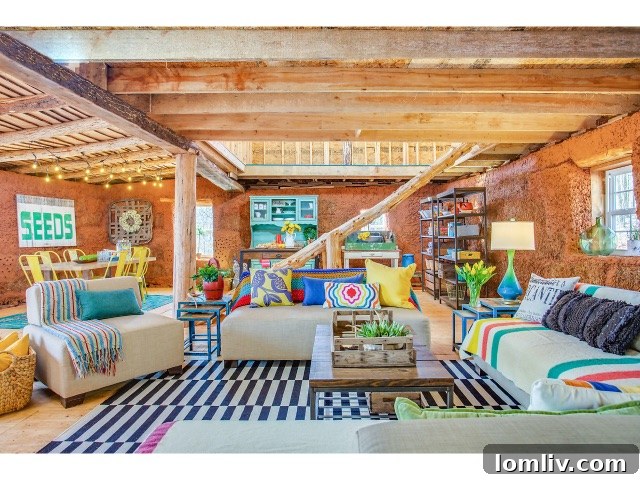
To truly showcase the potential of cob homes as viable, appealing living spaces, Cat understood that presentation was key. This is where professional home stager Karen Otto of Home Star Staging entered the picture. When the production company for “Building Off the Grid” first approached Karen about staging a project in rural East Texas, her initial response was disinterest. Karen, a seasoned professional, was well aware that television projects, despite their apparent glamour, often entail extensive, uncompensated labor and can pull her away from her regular, paying clients. Having had previous experiences with TV productions, she politely declined.
However, the production team, sensing the unique opportunity and the importance of Cat’s project, did not give up. After a series of persistent conference calls and emails, and gaining a deeper understanding of the vision and the collaborative spirit of Cat Taylor and her team, Karen and Home Star Staging finally agreed. “After several conference calls, emails, and understanding who we would be working with on this project, we agreed,” Karen stated, recognizing the profound impact her work could have.
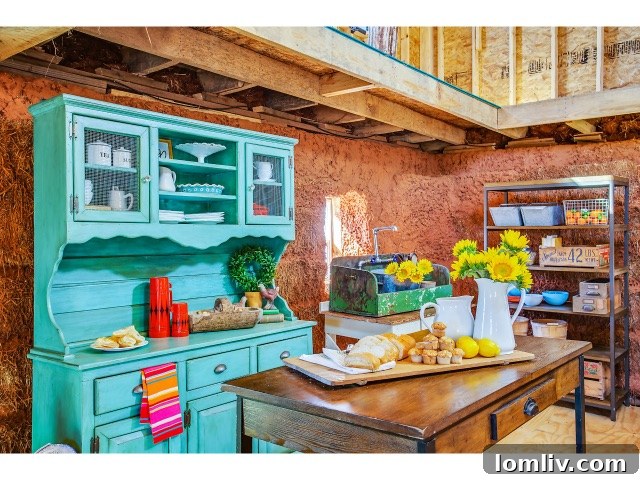
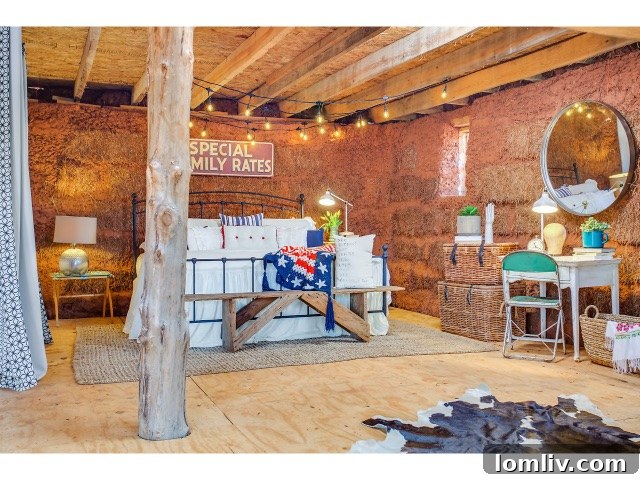
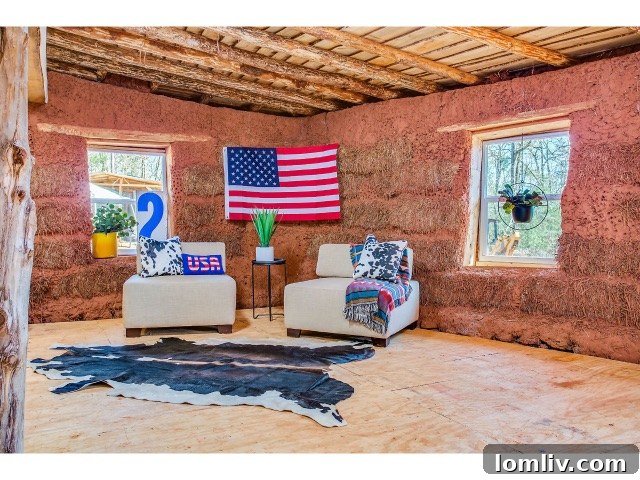
The rest, as they say, is history. Karen’s expertise in home staging proved invaluable. Her thoughtful arrangement of furniture, decor, and accessories provided the crucial finishing touches that transformed Cat’s cob house from an impressive structure into a warm, inviting, and utterly livable home. This professional staging not only enhanced the aesthetic appeal for the television audience but, more importantly, demonstrated that cob houses are not just functional but can be exquisitely beautiful. It effectively countered the “hippie flophouse” stereotype, presenting cob building as a sophisticated, comfortable, and highly desirable option for sustainable living. The staging made Cat’s cob house truly “move-in ready,” offering a clear vision of comfortable, eco-friendly homeownership to countless viewers.
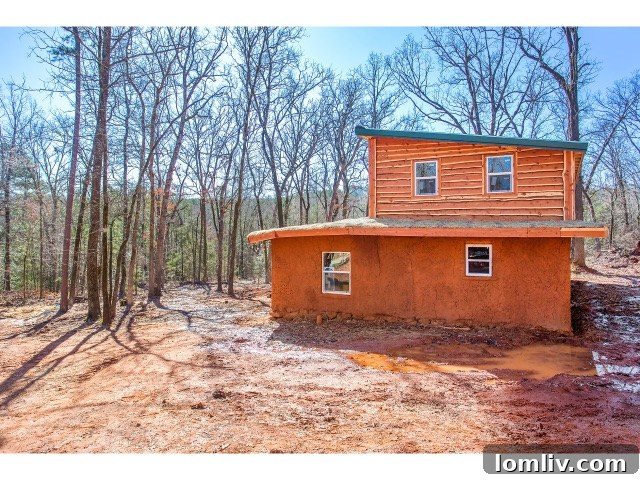
Cat Taylor continues to be a beacon of empowerment in the natural building community, holding several workshops throughout the year and speaking at events nationwide. Her message is clear, passionate, and resonates deeply with those seeking autonomy and sustainability in their lives. “My goal is to teach as many people as possible that you can build your own home,” Cat reiterates. “You do not need professionals. It won’t cost a fortune. Shelter is a basic human need, and you can provide it for yourself.”
Her work is more than just teaching a building technique; it’s about fostering a profound sense of self-reliance, challenging conventional notions of housing, and making sustainable living accessible to all. If Cat Taylor’s inspiring story and the promise of cob building have piqued your interest, much like they have ours, you can explore more about her workshops and philosophy at Cob Hill Natural Building. We encourage you to delve into this transformative world. And if you decide to embark on your own cob house journey, please reach out – we would genuinely love to follow your progress and share your unique story!