The real estate landscape in the Dallas-Fort Worth Metroplex, particularly within Fort Worth and Tarrant County, is navigating increasingly challenging waters. While many real estate brokerages and their agents celebrated a banner year in 2021, marked by record-breaking sales volumes and swift closings, an undercurrent of concern is now rippling through the market. Homebuyers and their dedicated Realtors are quietly, yet persistently, voicing anxieties that 2022 is poised to present an unprecedented set of hurdles. The celebratory clinks of champagne glasses from last year are being replaced by the distinct sound of mounting apprehension – a sound that, while not yet full-blown panic, is certainly cause for serious consideration within the Texas real estate community.
Recent data released by the Greater Fort Worth Association of Realtors (GFWAR), drawing insights from the Texas Real Estate Research Center for December 2021, paints a stark picture. For many involved in the home buying process, these statistics are far from encouraging, highlighting a market dynamic that favors very few and challenges most. This isn’t merely an isolated blip; it’s the latest confirmation of a trend that has been escalating for some time.
Decoding the Inventory Crisis in Tarrant County Real Estate
The issue of dwindling housing inventory in Tarrant County and the broader Dallas-Fort Worth Metroplex is not a revelation. For over two years, columns and market analyses have consistently predicted and discussed the severe shortage of homes for sale. This decline began its accelerated trajectory in March 2020, coinciding with the onset of the COVID-19 pandemic and its far-reaching economic and social impacts across the United States. Since then, the number of available homes has experienced a relentless, downward spiral, creating immense pressure on buyers and agents alike.
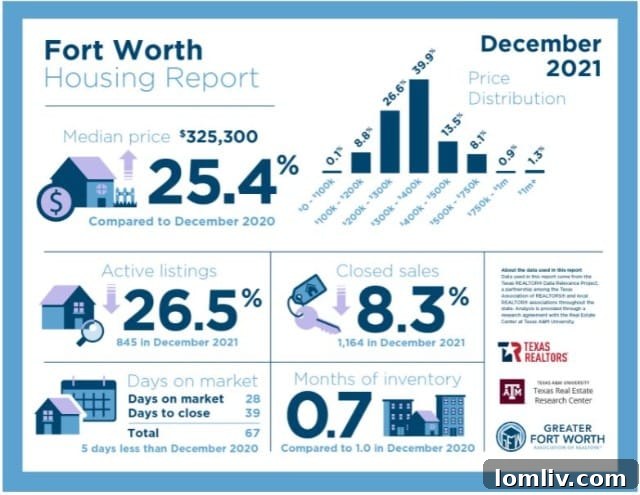
The latest report from GFWAR starkly underscores the severity of this crisis, revealing that Fort Worth and Tarrant County currently possess a mere 0.7 months’ supply of housing. To put this into perspective, this means that if no new homes were to enter the market, the existing inventory would be completely depleted in less than a month based on the current sales pace. This figure is shockingly low when compared to what is traditionally considered a healthy, balanced real estate market, which typically hovers around a six-month supply of inventory. Even for those with a rudimentary understanding of mathematics, it is clear that 0.7 months is profoundly less than six months, signaling a market imbalance of epic proportions.
For nearly two years, the conversation around historically low inventory has dominated real estate discussions. We’ve delved into the intricacies of supply chain disruptions affecting new home construction, the extensive delays builders face, and their struggle to fulfill orders and obligations amidst rising material costs and labor shortages. The narrative of escalating home prices and the undeniable dominance of a seller’s market has been consistently reiterated. So, what has fundamentally changed to amplify this concern among Realtors and buyers, turning quiet worry into a palpable sense of alarm? The shift is subtle yet profound: reality, in its most challenging form, is now setting in across all segments and price points of the housing market.
The Paradox of Selling: When There’s Nowhere to Go
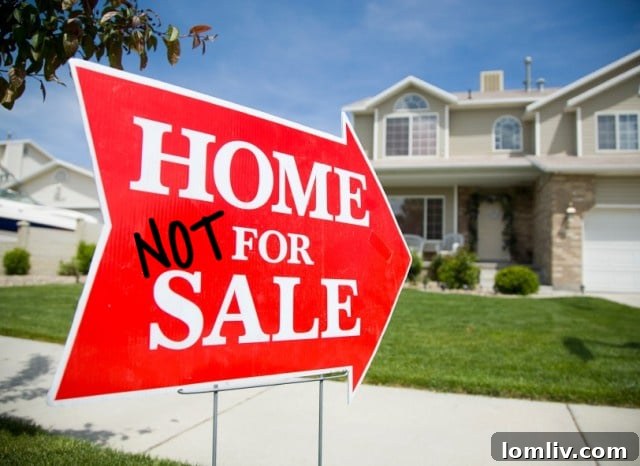
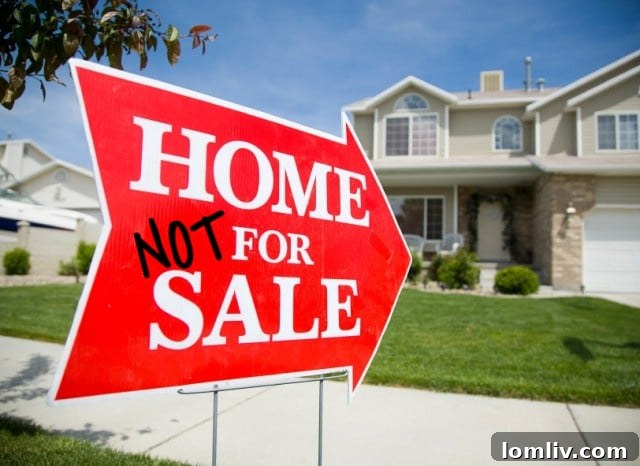
A troubling new trend is emerging that further complicates the already strained housing market in Tarrant County. Realtors from various brokerages across the region are reporting a growing number of instances where sellers, after placing their homes on the market and receiving highly favorable offers—often at or above their asking price—are subsequently pulling their properties off the market. This scenario creates a perplexing paradox: homes are technically “for sale,” yet the transactions aren’t completing. This isn’t due to a lack of buyer interest or insufficient offers; rather, it stems from the sellers’ own dilemma of finding their next home in an equally constrained market.

Consider a recent anecdote from a prestigious, gated neighborhood in Fort Worth. A home was listed at a significant price, arguably above what its appraisal might typically support. Within hours of going live, it attracted an immediate, over-asking-price offer from a cash buyer, presenting an ideal scenario for most sellers. Yet, the seller chose to withdraw the property from the market. The reason? They had no definitive plan or alternative housing solution for moving so quickly. This sequence of events—listing, immediate offers, and subsequent withdrawal—unfolded in less than 24 hours, illustrating the speed and intensity of this emerging market friction. This is not an isolated incident; variations of this scenario are now recurring with alarming frequency across all price ranges and property types within the Fort Worth and Tarrant County housing markets.
Sellers are naturally enthusiastic about realizing a high return on their investment in the current robust market conditions. The prospect of significant profits is appealing. However, this excitement quickly diminishes when faced with the daunting reality of their subsequent move. If sellers cannot secure their next residence—whether it’s another home to purchase or even a suitable rental property—they are increasingly unwilling to proceed with the sale of their current dwelling. This hesitation, though understandable from an individual seller’s perspective, creates a detrimental ripple effect across the entire real estate ecosystem.
The Unprecedented Housing Gridlock and Its Economic Impact
The core implication is profoundly simple yet devastatingly impactful: if sellers don’t sell, buyers cannot buy. While this statement might appear self-evident, the market has never before experienced this specific type of systemic gridlock. Traditionally, low inventory meant competitive bidding, but homes still exchanged hands. Now, homes are being effectively frozen out of the transaction cycle. This paralysis at the point of sale has far-reaching consequences. Without sufficient properties entering the market, the already exorbitant rental rates continue their upward trajectory, further squeezing consumers. This creates a vicious cycle: potential sellers become reluctant to sell because they can’t find their next home, exacerbating the inventory shortage, which in turn drives up prices and rental costs even further.
Indeed, 2021 was an exceptionally prosperous year for numerous Realtors and real estate brokerages in North Texas. Records were broken, and success was celebrated. Yet, beneath the veneer of those achievements, the very same professionals are now beginning to acutely feel the pinch of the current market reality and the ominous predictions for the near future. The euphoric glow of past successes is being overshadowed by a growing sense of vulnerability and uncertainty.
There is no straightforward solution, no magic wand to wave that will instantly resolve this complex issue. This isn’t merely a fleeting market anomaly attributable to COVID-19, seasonal fluctuations, or adverse weather conditions. The underlying problem is fundamental: a severe lack of willingness or ability for homeowners to transition their properties onto the market. Should this trend of seller reluctance persist, 2022 could undeniably become the most bizarre and challenging year for real estate professionals since the tumultuous period of the Great Recession. But unlike the recession, where a lack of capital was the primary constraint, today’s market faces an inverse challenge.
A Reverse Recession Scenario Unfolding in the Texas Housing Market?
Could we be witnessing the early stages of a “reverse recession” in the housing market? This term, while unconventional, aptly describes a situation where there is an abundance of available capital and an overwhelming number of eager buyers, yet an insufficient supply of sellers willing or able to transact. The demand side of the equation is robust, fueled by strong employment, relatively low interest rates (despite recent increases), and continued population growth in desirable areas like the Dallas-Fort Worth Metroplex. However, the supply side is critically broken. The traditional market mechanisms are faltering not due to a lack of economic activity, but due to a fundamental breakdown in the availability of housing units for purchase.
This “reverse recession” scenario presents a unique set of challenges. It’s a market where liquidity exists, but transactional velocity is hampered by scarcity. This isn’t fantastic for anyone involved in the home sales business. Any individual who suggests that the current Fort Worth real estate market is “fantastic” is, at best, misinformed, and at worst, disingenuous. From the frustrated homebuyer making multiple offers, to the weary Realtor guiding them, to the broker manager overseeing dwindling transactions, the lender processing fewer mortgages, and the title company closing fewer deals—everyone involved is quietly, or not so quietly, making a noise. A noise that resonates deeply with the sound of panic, signaling a profound shift and an uncertain path forward for the Texas housing market in 2022.
**Word Count Check:** Approximately 1010 words.