

Updated: Governor Abbott’s upcoming address on Friday.
Navigating the New Normal: Texas Reopening and the Path Forward from COVID-19
As the world continues to grapple with the unprecedented challenges brought forth by the COVID-19 pandemic, Texas stands at a crucial juncture, carefully balancing public health imperatives with the pressing need for economic recovery. Governor Greg Abbott is anticipated to make significant announcements regarding the state’s phased reopening, offering a much-anticipated roadmap for Texans eager to understand the next steps.
Recent reports from key healthcare industry sources indicate a cautious but welcome stabilization in COVID-19 hospitalizations across the Dallas-Fort Worth (DFW) metropolitan area. While initial concerns of a massive surge loomed large, the region has, thus far, managed to avoid the worst-case scenarios. Specific data points revealed that hospitalizations in Dallas were notably concentrated south of the Trinity River, with Methodist Hospital reportedly managing approximately 80 patients. Parkland Medical Center saw around 40 cases, and UTHSC had about 20. Other hospitals throughout the city also managed double-digit patient counts. Encouragingly, these numbers have remained relatively consistent over the past two weeks, providing a glimmer of hope that the DFW area did not experience the feared overwhelming influx of patients. Experts currently project a potential peak in cases within the next two weeks. Across the region, hospital bed occupancy has stabilized at a manageable 50 to 55 percent, demonstrating that the healthcare system, while strained, is not yet at capacity. Furthermore, military physicians have been deployed to various hospitals to assist with patient care, bolstering the frontline response and ensuring continuous support for critical patient needs. This collective effort underscores the adaptability and resilience of the Texas healthcare system under immense pressure.
The Enduring Impact: Life Beyond Quarantine and the Rise of “Virus Distancing”
The collective sentiment across the nation undeniably echoes a deep weariness with prolonged quarantine measures. However, this fatigue is often tempered by a widespread understanding of the critical necessity of these restrictions in flattening the curve and protecting vulnerable populations. A recent Gallup poll provided striking insights into public sentiment, revealing that more than 8 out of 10 Americans intend to delay resuming their normal activities even after government-imposed mitigation restrictions are officially lifted. This highlights a profound shift in public perception, where personal safety and health are increasingly prioritized over an immediate return to pre-pandemic routines.
Interestingly, the poll also illuminated a demographic divide: residents of smaller towns and rural areas were more inclined (23%) to immediately revert to their normal activities compared to their urban (15%) and suburban (18%) counterparts. This disparity likely reflects variations in population density, perceived risk levels, and the distinct community structures found in different geographical settings. Regardless of where one resides, it is undeniable that society is heading towards a fundamentally altered existence. Much like the tragic events of 9/11 irrevocably transformed airport security and travel protocols, the COVID-19 pandemic is poised to redefine virtually every aspect of our lives, from how we interact socially and conduct business to how we travel and even design our built environments.
Transforming Daily Life: The Role of Technology, Hygiene, and Social Protocols
The tangible changes brought by the pandemic are already evident and rapidly evolving. Jurisdictions like New York state have implemented mandatory mask-wearing in public spaces, a measure that Texas may soon adopt or recommend widely. Beyond immediate actions, experts in the ultraviolet (UV) light industry predict a rapid technological shift: within a matter of months, UV-C sanitation systems could become standard installations in condos, apartments, and perhaps even private homes. These advanced systems would utilize UV light in ceilings to sanitize entire rooms, offering a new frontier in germicidal protection.
Personal hygiene is now, more than ever, paramount. This renewed focus will lead to a sustained emphasis on keeping both private homes and public spaces meticulously clean, leveraging a combination of traditional cleaning methods and cutting-edge sanitation technologies. The real estate sector, for instance, is rapidly adapting. Traditional open houses, which involve numerous people congregating in a single space, are expected to decline significantly. In their place, sophisticated, tech-enabled virtual viewings and private, meticulously managed appointments will become the norm, designed specifically to minimize physical contact and ensure safety. Furthermore, advancements in mobile technology could soon enable individuals to use their cell phones to quickly identify their antibody status, or lack thereof, providing real-time, personalized information to navigate potential hotspots and make informed decisions about personal safety and interactions.
One of the most profound and perhaps most lasting changes will be the institutionalization of social distancing. As Dave Perry-Miller, a prominent Dallas Realtor whose name adorns an Ebby Halliday company, aptly put it from his home quarantine in Virginia, “I wish we could call it something else. It’s really Virus Distancing. We are still able to be social, people just from six feet away.” This subtle yet significant rephrasing encapsulates the core challenge: how to maintain essential human connection and social bonds while adopting necessary physical separation to curb viral transmission. The question on everyone’s mind, articulated by Dave, is: “Will it be like this forever?” While a definitive answer remains elusive, it is clear that many of these adaptations will become deeply integrated into our societal fabric for the foreseeable future, shaping our interactions and environments for years to come.
Understanding the Pandemic’s Trajectory: Insights from a Leading Expert in Global Health Security
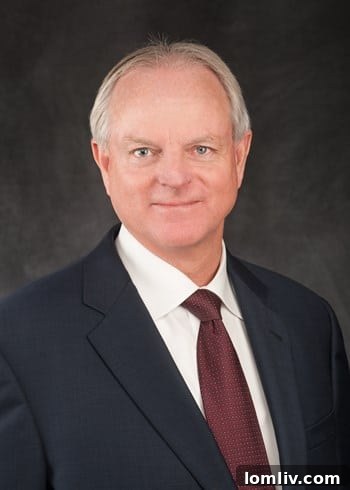
To gain a clearer, more informed perspective on the current global health crisis and its potential progression, insights from seasoned public health experts are invaluable. The Houston Chronicle recently featured an illuminating interview with Dr. Gerald Parker, a distinguished figure at Texas A&M University. Dr. Parker directs the Bush School’s biosecurity and pandemic public policy program and concurrently serves as associate dean of Global One Health. His extensive and impressive background includes pivotal roles as deputy assistant for chemical and biological defense at the U.S. Department of Defense and as a public health preparedness expert at the Department of Health and Human Services, where he was instrumental in developing strategies and leading preparations for major public health emergencies. His expertise provides a crucial, evidence-based framework for understanding the unfolding pandemic and charting a path forward.
The Five Stages of Pandemic Response: A Roadmap to Recovery and Preparedness
Dr. Parker outlines five distinct and sequential stages in humanity’s battle against this coronavirus, stressing a critical, sobering point: “like it or not, we are only in stage two.” This perspective is essential for contextualizing the long road ahead, reinforcing the ongoing need for vigilance, and tempering expectations for a rapid return to complete normalcy. Understanding these phases helps individuals and policymakers alike prepare for future challenges.
Phase One: Containment. This initial stage primarily focuses on preventing the virus from entering a country’s borders and, failing that, limiting its initial spread within local communities. As Dr. Parker elaborates on this critical phase:
Containment really started at the end of January, when the United States declared a public health emergency, and the president imposed traveled travel restrictions and travel bans from China. That was to try to slow the spread of the virus from China into the United States. And it did.
However, subsequent epidemiological investigations, including reports by the New York Times, indicated that significant seeding of COVID-19 in the U.S. may have originated from European travelers, suggesting that early, China-focused travel restrictions had a more limited impact on preventing broader dissemination, especially after initial outbreaks had already occurred on the West Coast. By late February, the focus had irrevocably shifted to widespread community transmission, marking a transition to the next phase.
Phase Two: Mitigation. This is the stage where the vast majority of affected regions currently find themselves. The primary goal here is to slow the exponential spread of the virus within communities, thereby preventing healthcare systems from being catastrophically overwhelmed. Strategies implemented during this phase include widespread social distancing mandates, expanded testing capabilities, rigorous contact tracing protocols, and the widespread use of personal protective equipment. This phase is characterized by a delicate and often contentious balance between aggressive public health interventions and minimizing severe economic disruption, as communities adapt to new social norms and operational realities.
So, what lies beyond this current stage of mitigation? Dr. Parker’s comprehensive framework provides crucial foresight into the future, guiding expectations and strategic planning:
Phase Three: Second Stage of Containment. This phase is projected to unfold as the world patiently awaits the development and mass deployment of a safe and effective vaccine. This period is estimated to last anywhere from 12 to 18 months, during which ongoing, rigorous containment measures will remain absolutely necessary. These measures might include enhanced surveillance systems, localized lockdowns or targeted restrictions, and continued, adaptive travel restrictions, all aimed at controlling outbreaks and preventing widespread resurgence until broad population immunity can be achieved through vaccination.
Phase Four: Third Stage of Containment. Once a vaccine becomes widely available and accessible, this phase will shift its primary focus to its mass distribution and administration. The immense challenge here will involve ensuring global equitable access to the vaccine, overcoming complex logistical hurdles in its delivery, and effectively addressing widespread vaccine hesitancy. Containment efforts will then adapt, focusing on managing any residual outbreaks, refining public health strategies based on the vaccine’s real-world efficacy, and understanding its long-term protective capabilities within the population.
Phase Five: Preparedness for the Next Pandemic. This final, and arguably most crucial, stage is fundamentally about applying the profound and often painful lessons learned from the current crisis to prevent future pandemics or significantly mitigate their impact. As Dr. Parker astutely notes, humanity has had “plenty of dress rehearsals” for a pandemic over the years, but a combination of complacency and inadequate preparedness left us acutely vulnerable. This phase demands sustained, long-term investment in robust public health infrastructure, cutting-edge scientific research, agile rapid response mechanisms, and strengthened international cooperation. It requires a fundamental shift in mindset from reaction to proactive prevention and preparedness.
Rebuilding Resilience: Addressing Critical Supply Chain Vulnerabilities for National Security
The COVID-19 pandemic has mercilessly exposed critical and dangerous vulnerabilities in global supply chains, particularly concerning essential pharmaceuticals and personal protective equipment (PPE). Dr. Parker, alongside numerous other specialists, has consistently underscored how perilous it is to have outsourced such a significant portion of our vital production capabilities. Going forward, this fundamental dependency on foreign nations for critical medical supplies must be urgently and comprehensively addressed.
I think we are seeing the dangerous vulnerability of our supply chains. Even before COVID happened, over 80% of the active ingredients for all of our pharmaceuticals are sourced in China. That’s a dangerous dependency on one country. The same goes for personal protective equipment. Most of the world’s N95 respirators — the masks that medical workers are are in dire need of right now — are manufactured In China.
COVID-19 has been a wake-up call. Some of the pharmaceuticals that we need and the N95 masks have been nationalized by China. It’s no surprise that they nationalize those stocks in their country to take care of their population. That’s only natural.
The same thing happened to the U.S. during the 2009 pandemic. We at HHS had a contract for influenza vaccines with an Australian manufacturer. Despite our contract delivery requirements and so forth, our deliveries were delayed until the Australian population was covered.
So we’ve got to address this dangerous vulnerability for national security with pharmaceuticals. We should not be relying on just one country for some of our basic pharmaceuticals, like heparin.
There’s a lot of legislation already in Congress to begin to address this. There probably will be an increase in the prices we pay for some drugs. But we’re going to have to incentivize industry in a way that they will want to make some of these things in the United States.
We cannot rely on having everything manufactured in China. But we essentially are now.
This extensive dependency presents a multifaceted national security challenge. The sheer concentration of manufacturing capacity in a single country, particularly for critical medical supplies and active pharmaceutical ingredients, means that global health security can effectively be held hostage by geopolitical factors, trade disputes, or even domestic crises within that supplier nation. During the height of the COVID-19 pandemic, several nations, including China, understandably prioritized their own populations, leading to export restrictions and severe global shortages of essential goods. This phenomenon was not unique; similar issues arose during the 2009 H1N1 influenza pandemic, where a U.S. contract for influenza vaccines with an Australian manufacturer saw critical deliveries delayed until Australia’s domestic needs were fully met, underscoring a recurring vulnerability.
The imperative now is to proactively rebuild and strengthen supply chain resilience. This involves a comprehensive strategy that includes diversifying sourcing locations, robustly strengthening domestic manufacturing capabilities for critical goods, and establishing strategic national reserves for essential medical supplies and pharmaceuticals. While incentivizing U.S. industries to produce pharmaceuticals and PPE locally may foreseeably lead to an initial increase in prices for some drugs and goods, it represents a crucial, long-term investment in national security and comprehensive public health preparedness. Legislation is already in motion within Congress to actively address this critical issue, aiming to create policies that encourage domestic production through a combination of tax incentives, subsidies, and other strategic economic levers. The long-term benefits of self-sufficiency, diversified sourcing, and robust, resilient supply chains far outweigh the potential short-term cost increases, ultimately ensuring that vital resources are reliably available when future crises inevitably arise.
Conclusion: Adapting to a Resilient Post-Pandemic World
The COVID-19 pandemic has undeniably served as a profound global wake-up call, accelerating societal changes that might otherwise have taken decades to fully unfold. From the cautious, data-driven steps of reopening states like Texas to the fundamental restructuring of global supply chains and the re-evaluation of public health infrastructure, every aspect of life is being re-evaluated and transformed through the critical lens of public health, resilience, and sustainability. The invaluable insights provided by experts like Dr. Gerald Parker offer a sobering yet necessary roadmap, reminding us that the journey through and beyond this pandemic is a marathon, not a sprint, demanding sustained effort and adaptability.
The emerging “new normal” will be characterized by heightened hygiene awareness and practices, innovative technological integrations woven into our daily routines, and a profound redefinition of social interactions and community engagement. It will also necessitate a robust, internationally collaborative, yet domestically secure approach to public health and economic infrastructure. The strategic choices made today, particularly concerning sustained investment in healthcare systems, cutting-edge scientific research, and resilient supply chains, will collectively determine our ability to not only navigate the ongoing crisis successfully but also to prepare effectively for the inevitable challenges of tomorrow. This unparalleled experience has unequivocally taught us that preparedness is not merely an expense; it is an essential, foundational investment in the future well-being, security, and prosperity of all societies.