As the crisp air of autumn ushers in the cooler months, homeowners across the region begin their annual preparations for winter. Ensuring your home is safe, efficient, and comfortable through the colder season requires a proactive approach to maintenance. Here at Daltxrealestate.com, we understand the critical importance of a well-maintained home, and that’s why we’ve partnered with the meticulous experts at Green Scene Home Inspections. Every week, through our “Upon Closer Inspection” series, they provide invaluable insights into the often-overlooked details that contribute to a healthy and secure living environment.
This season, our inspectors have compiled a list of three essential and seriously smart checks every homeowner should prioritize. These aren’t just minor fixes; they are crucial components of your home’s safety and operational efficiency, capable of preventing costly repairs, health hazards, or even dangerous situations. From the intricate workings of your heating system to the unseen dangers lurking in your garage, understanding these potential issues can save you significant trouble and expense. Let’s dive into these expert recommendations to help you safeguard your home and family this winter.
1. Essential Furnace Flame Sensor Maintenance
As winter approaches, your furnace becomes the unsung hero of your home, working tirelessly to keep you warm. Yet, a tiny, often-overlooked component can bring its operation to a screeching halt: the flame sensor. Inspector Alex shares a common scenario: “Yesterday my wife was complaining that the heat wasn’t working, so I went up in the attic and could hear the burners kick on and then go out immediately.” This exact symptom is a tell-tale sign of a problematic flame sensor.
The flame sensor is a critical safety device in modern furnaces. Its primary role is to detect the presence of a flame after the gas valve opens and the igniter sparks. If the sensor doesn’t detect a flame within a few seconds, it signals the furnace’s control board to shut off the gas supply, preventing a dangerous buildup of uncombusted natural gas. This protective mechanism is designed to keep your home safe from potential explosions or carbon monoxide leaks. However, over time, the metal rod of the flame sensor can become coated with carbon and oxidation, effectively tarnishing its surface. This tarnished layer acts as an insulator, preventing the sensor from accurately detecting the electrical current generated by the flame, causing it to “think” there’s no flame present even when there is. Consequently, the furnace will cycle on, ignite, but then immediately shut down as the safety system is triggered.
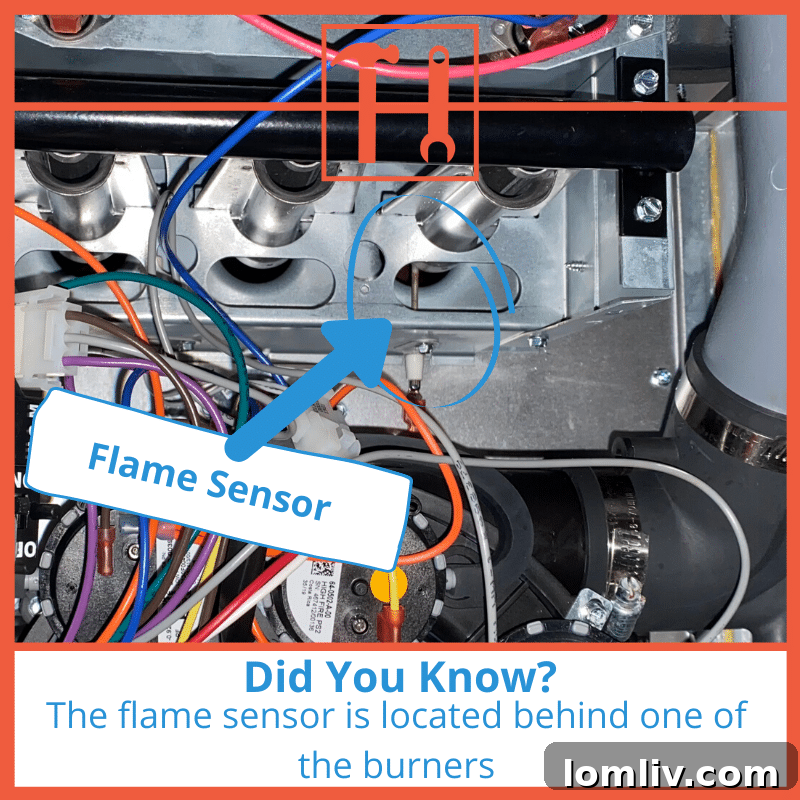
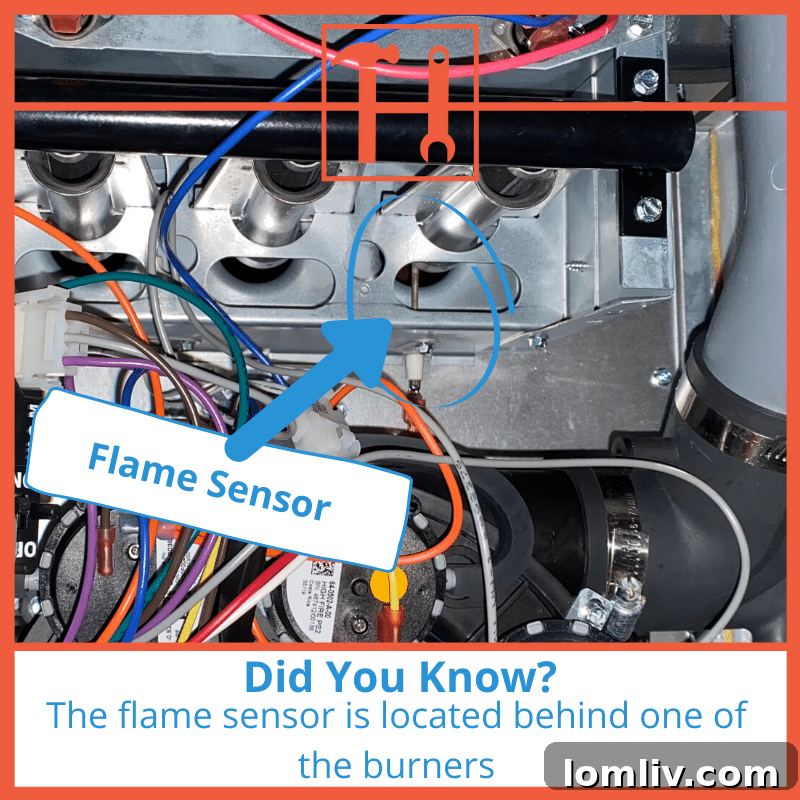
The good news is that this is often an easily serviceable issue. The flame sensor, typically a slender metallic rod pointing directly into the burner flame (as seen in the image above), is an inexpensive part that can be replaced if faulty. More often than not, simply polishing the sensor with fine-grit steel wool can restore its functionality. This simple cleaning process removes the insulating layer of carbon and allows the sensor to properly detect the flame. Performing this task yourself can save you the wait time and the cost of an HVAC technician’s service call. However, if you’re uncomfortable working with your furnace, or if cleaning doesn’t resolve the issue, it’s always best to call a qualified HVAC professional to diagnose and repair the problem. Regular furnace maintenance, including an annual check-up, should always include inspecting and cleaning this vital component, ensuring your heating system operates safely and efficiently throughout the coldest months.
2. Ensuring Safety with Grounded Corrugated Stainless Steel Tubing (CSST)
Corrugated Stainless Steel Tubing, or CSST, has become a widely adopted material for gas lines in millions of homes due to its flexibility, ease of installation, and cost-effectiveness. However, its widespread use has also brought to light a critical safety concern, particularly regarding its susceptibility to lightning strikes. Inspector Luis highlights this issue, stating, “CSST gas lines are installed in millions of homes, and you may have heard of them from news stories about lightning strikes causing explosions.” The core of the problem lies in CSST’s thin-walled construction. Unlike traditional black iron pipes, CSST can be punctured by the high voltage and current associated with a lightning strike, leading to gas leaks and potentially catastrophic explosions or fires.
To mitigate this severe risk, CSST lines are explicitly required to be properly grounded and bonded. Grounding provides a safe path for electrical energy, such as that from a lightning strike, to dissipate into the earth, thereby protecting the gas line from damage. Bonding ensures that all metal components in the gas piping system have the same electrical potential, further preventing dangerous arcing. The standard method for grounding CSST involves connecting a #8 AWG copper wire from the gas manifold (a central point where gas lines branch off) to the main electrical panel box’s ground bus. This creates a direct and robust pathway for electrical currents to bypass the gas line and safely flow to the ground.
This is not a task for the average DIY enthusiast. Incorrect grounding can be as dangerous as no grounding at all. If you have CSST in your home and are unsure about its grounding status, or if you suspect it may be improperly bonded, it is imperative to call a licensed electrician. They possess the expertise and specialized equipment to correctly assess, install, or verify the grounding system according to local building codes and safety standards. Proactive inspection and proper grounding of CSST are vital steps in protecting your home and family from the devastating consequences that an ungrounded system poses during severe weather. For a visual explanation and further details on the importance of CSST bonding, you can refer to resources like the following video:
3. The Dangers of Return Air Vents in the Garage
While the thought of having an air-conditioned garage might sound appealing, incorporating it into your home’s central HVAC system by installing return air vents can pose serious health and safety risks. Inspector Brian emphatically states, “According to building code, you should never place return air vents in the garage (or closet, bathroom, toilet room, kitchen, garage, mechanical room, boiler room, furnace room or unconditioned attic).” This isn’t an arbitrary rule; it’s a critical safeguard designed to protect the indoor air quality and safety of your living spaces.
The primary function of a return air vent is to draw air from a space back into the HVAC system for conditioning (heating or cooling) and redistribution throughout the home. When a return vent is placed in a garage, it creates a direct pathway for hazardous contaminants to enter your main living areas. Garages are inherently areas where dangerous substances are stored and used. These include carbon monoxide from running vehicles, highly flammable gasoline fumes, paint solvents, pesticides, cleaning chemicals, and various other volatile organic compounds (VOCs). These airborne pollutants, even in seemingly low concentrations, can have detrimental effects on human health, ranging from headaches, dizziness, and respiratory issues to more severe, long-term health problems and even carbon monoxide poisoning, which can be fatal.
Furthermore, drawing air from a garage can introduce dust, allergens, and other particulates into your home’s filtered air supply, compromising the overall indoor air quality. It also creates an imbalance in your HVAC system, potentially leading to inefficient operation and higher energy bills as the system struggles to condition highly contaminated or unconditioned air. Building codes specifically prohibit return air ducts in these types of spaces because they are either sources of contaminants or are considered unconditioned, negatively impacting the system’s performance and safety. If you desire climate control in your garage, dedicated, independent systems like ductless mini-split units are the appropriate and safe solution, as they do not connect to your home’s main HVAC system. Discovering a return air vent in your garage warrants immediate attention from a qualified HVAC professional to ensure its proper removal and sealing, thus protecting your home’s air quality and the well-being of its occupants.
Stay Ahead of The Game with Professional Home Inspections
The changing seasons always bring new challenges and considerations for homeowners. Being proactive about maintenance and safety can save you from unexpected breakdowns, expensive repairs, and potential hazards. The insights provided by our expert inspectors Alex, Luis, and Brian underscore the importance of understanding the intricate systems within your home and knowing when to call in a professional.
Don’t wait for a problem to escalate into an emergency. If you’re concerned about unsafe or improperly installed systems in your house, or if you simply want the peace of mind that comes with a thorough professional assessment, consider scheduling a comprehensive home inspection. Our “Seasonal Home Maintenance Check Up” offered by Green Scene Home Inspections is designed to identify these hidden issues before they become major concerns. Take the initiative to #AskAHomeInspector and ensure your home is not only comfortable but also safe and compliant for the winter ahead. Protecting your investment and the well-being of your family starts with expert knowledge and timely action.