Unmasking the Silent Threat: Radon Levels on the Rise in North Texas Homes
A few months ago, an unexpected letter arrived in my mailbox, sparking a wave of concern throughout my neighborhood. It announced that radon testing was underway across Hillcrest, specifically in the JanMar streets, following the discovery of unusually high radon levels in a local home. This alert, from Clear Environmental, was a proactive step to inform residents and offer vital radon testing services. The immediate reaction was one of surprise: “Radon in Dallas? Isn’t that primarily a concern for mountain states?” This seemingly innocuous gas, often associated with regions far from the flatlands of North Texas, is now prompting a reevaluation of our local environmental health risks, shining a light on a potential hidden danger within our homes.
What is Radon? The Invisible Danger Lurking in Our Homes
Radon is a naturally occurring radioactive gas, a silent, invisible, and odorless threat. It’s also tasteless, meaning it provides no sensory warning of its presence. Formed from the natural radioactive decay of uranium in soil, rock, and water, radon can seep into homes through cracks and other openings in the foundation, making it a pervasive indoor air pollutant. The alarming reality is that radon is recognized as the second-leading cause of lung cancer globally, surpassed only by smoking. Each year, it is estimated to be responsible for the deaths of approximately 21,000 Americans due to radon-induced lung cancer, affecting both smokers and non-smokers alike. This statistic underscores the critical importance of understanding and addressing radon exposure, turning what was once thought of as a distant problem into a very real and present danger for communities like North Texas.
Radon in North Texas: Challenging Outdated Assumptions
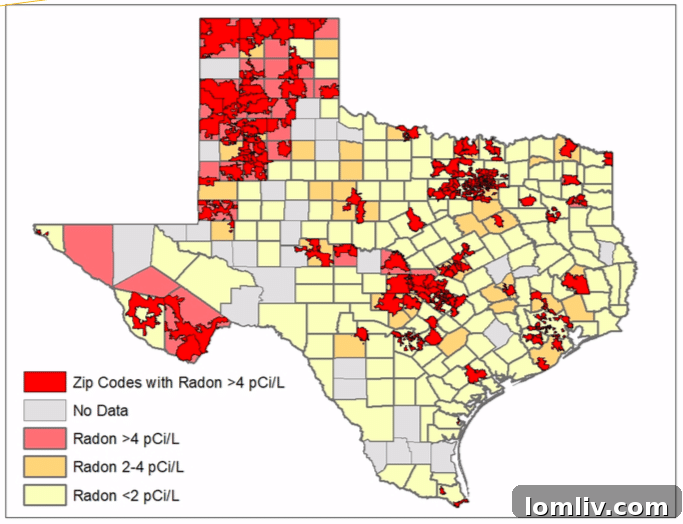
For decades, North Texas, including the bustling Dallas-Fort Worth metropolitan area, was largely classified by the Environmental Protection Agency (EPA) as a Zone 3 region—indicating a low potential for elevated indoor radon levels. This classification, largely based on a government-contracted gamma ray flyover conducted in the early 1990s, suggested that most homes would have average indoor radon levels below the EPA’s action level of 4 picocuries per liter of air (pCi/L).
However, recent findings are starkly challenging these long-held assumptions. According to Zack Shipley from CLEAR Environmental, “There is more radon in North Dallas than previously thought.” He explains that the earlier gamma ray tests may not have provided a sufficiently deep penetration, especially given the dense, compacted soil common in North Texas. This geological characteristic could have masked the true extent of radon activity below the surface.
The latest data from local testing initiatives paints a concerning picture. “Now we are finding that 40% of the homes we are testing are coming up with higher levels of radon,” Shipley reveals. This significant percentage points to a widespread issue that was previously underestimated. High radon levels are not confined to isolated incidents but are being detected across several key areas including Plano, Arlington, North Dallas, and Farmers Branch. Shipley cautions, “But I think we are only scratching the surface,” suggesting that as more homes are tested, the prevalence of elevated radon could prove to be even higher.
This evolving understanding of radon risk in North Texas highlights a critical need for increased awareness and proactive testing. The health implications for thousands of residents living in homes with undetected high radon levels are substantial, making community-wide education and accessible testing services more important than ever.
The Fracking Connection: A Potential Catalyst for Rising Radon
While radon is naturally occurring, there’s growing scientific inquiry into whether human activities, particularly hydraulic fracturing (fracking), might exacerbate its release into the environment and subsequently into homes. This hypothesis gains considerable weight when examining states like Pennsylvania, which historically was also classified as an EPA Zone 3 for radon risk.
The Johns Hopkins Bloomberg School of Public Health published compelling research highlighting this potential link. Their study found a disturbing trend: radon levels in Pennsylvania homes, where 42 percent of readings now surpass the government’s safe limit, have been on the rise since 2004. This timeline directly correlates with the onset of widespread natural gas drilling through fracking in the state.
Johns Hopkins Bloomberg School of Public Health researchers say that levels of radon in Pennsylvania homes – where 42 percent of readings surpass what the U.S. government considers safe – have been on the rise since 2004, around the time that the fracking industry began drilling natural gas wells in the state.
The researchers, publishing online April 9 in Environmental Health Perspectives, also found that buildings located in the counties where natural gas is most actively being extracted out of Marcellus shale have in the past decade seen significantly higher readings of radon compared with buildings in low-activity areas. There were no such county differences prior to 2004. Radon, an odorless radioactive gas, is considered the second-leading cause of lung cancer in the world after smoking.
The mechanism behind this potential link is rooted in the very nature of fracking. The process involves injecting high-pressure fluid into the earth to fracture shale rock formations and release natural gas. This intense disruption of the earth’s subsurface layers can be likened to “stirring a hornet’s nest.” Such activity has the potential to bring to the surface not only natural gas but also heavy metals, various organic compounds, and critically, radioactive materials like radium-226. Radium-226 is a precursor that decays directly into radon gas.
Consequently, the argument is that fracking could increase the mobility and release of these naturally occurring radioactive elements from geological formations, facilitating their migration into the ambient air, well water, and subsequently, into residential structures. While further research is ongoing to fully understand the intricate relationship between fracking and indoor radon levels, the evidence from Pennsylvania provides a serious cause for concern and warrants careful consideration in regions where fracking is prevalent, or where its by-products might migrate, potentially including areas like North Texas.
How Radon Invades Your Home: Understanding Entry Points and Accumulation
Radon gas originates from the natural breakdown of uranium in soil, rock, and water. As it forms, it travels upward through the ground. When it encounters a building, it seeks the path of least resistance to enter. Homes are rarely airtight, providing numerous potential entry points for this insidious gas.
Common Entry Points for Radon:
- Cracks in Solid Foundations: Even microscopic cracks in concrete slabs and basement walls can allow radon to seep through.
- Floor-Wall Joints: The space where the foundation walls meet the floor slab is a common pathway.
- Construction Joints: Gaps in construction materials.
- Sump Pumps and Floor Drains: Openings around these features provide direct access from the soil beneath the house.
- Utility Penetrations: Gaps around pipes, wires, and other utilities entering the foundation.
- Pores and Tiny Openings in Concrete: Concrete is naturally porous, allowing some gas to pass through.
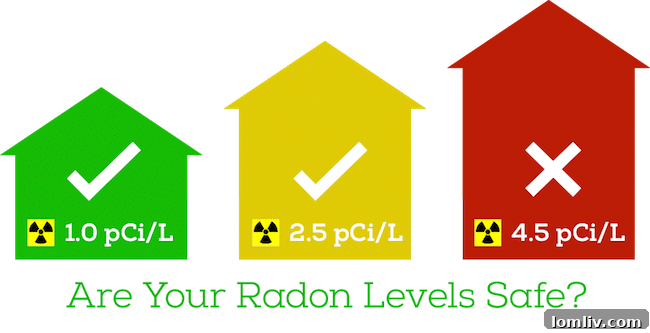
Once inside, radon can accumulate to dangerous levels, particularly in the lowest parts of the home, such as basements or ground-floor rooms. This is because radon is heavier than air and often gets trapped in these less-ventilated spaces. Unlike outdoors, where radon disperses quickly into the atmosphere and poses minimal risk, indoor environments can trap the gas, leading to concentrations far exceeding safe limits. The EPA has established an action level of 4 picocuries per liter of air (4 pCi/L). While there is no known safe level of radon exposure, if your home’s radon level is 4 pCi/L or higher, the EPA recommends taking action to reduce it.
It’s important to note that many homes in Dallas and North Texas do not have basements, leading some homeowners to falsely believe they are immune to radon risk. However, radon can just as easily enter ground-level homes through slab foundations and crawl spaces. The absence of a basement does not eliminate the risk, merely changes the potential accumulation dynamics.
The Silent Killer: Health Risks Associated with Radon Exposure
The grave danger of radon lies in its radioactive nature. When radon gas decays, it releases tiny radioactive particles. When these particles are inhaled, they can damage the cells lining the lung. This damage can lead to the development of lung cancer over time. The risk associated with radon exposure is cumulative; the longer and higher the exposure, the greater the risk.
According to the American Association of Radon Scientists and Professionals, the figure of 21,000 annual deaths is directly attributed to radon-induced lung cancer, making it a significant public health concern. What makes radon particularly insidious is its ability to affect individuals regardless of their smoking history. While smokers exposed to radon face a significantly higher risk of developing lung cancer, non-smokers are by no means immune. In fact, radon is the leading cause of lung cancer among non-smokers, making it a universal threat to anyone residing in a home with elevated levels.
Symptoms of lung cancer, such as persistent cough, shortness of breath, chest pain, and unexplained weight loss, typically do not appear until the disease is advanced. This further emphasizes the importance of preventive measures like testing, as you cannot rely on physical symptoms to detect radon exposure. Radon has been recognized as a carcinogen for decades, prompting some states to mandate disclosure of elevated radon levels during real estate transactions. This requirement helps protect prospective buyers from inheriting a hidden health hazard, a practice that reflects the serious nature of this silent killer.
Taking Action: Radon Testing Your Home Is the First Step
Given the invisible and odorless nature of radon, the only reliable way to determine if your home has elevated levels is through testing. Fortunately, this process is straightforward, accessible, and relatively inexpensive compared to the potential health risks and mitigation costs.
Types of Radon Tests:
- Short-Term Tests: These tests typically remain in your home for 2 to 90 days. Activated charcoal tests, like those offered by Clear Environmental, are among the quickest, requiring only 48 to 96 hours. They are easy to deploy, often involving placing two test kits in the lowest occupied level of your home, usually taped to a wall to ensure proper air circulation. Short-term tests are excellent for an initial screening.
- Long-Term Tests: These tests remain in your home for more than 90 days, providing a more accurate average of your home’s radon levels over different seasons and living conditions. They are often recommended if a short-term test indicates borderline or elevated levels.
Once the testing period is complete, the devices are sealed and sent to a licensed laboratory for analysis. “We send them off to a licensed laboratory and have the results within a few days,” confirms Zack Shipley. Prompt results allow homeowners to quickly understand their risk and decide on the next steps.
Clear Environmental, for instance, offers professional testing services at an accessible price point: “$180 for two ground floor tests, and any additional testing is $60 each.” Scheduling for such services can often be done conveniently online right here. If initial tests reveal high radon levels, homeowners have several options:
- Immediate Mitigation: For very high readings, immediate action to reduce radon levels may be advised.
- Follow-Up Short-Term Tests: To confirm initial high readings, another set of short-term tests can be performed.
- Long-Term Testing: For a more comprehensive assessment, especially if initial results are borderline, a long-term test over 90 days to one year can provide a definitive average before deciding on mitigation.
Regardless of the chosen path, testing is undeniably the crucial first step. It empowers homeowners with the knowledge needed to protect their families from this unseen threat. Even if your initial test shows low radon levels, it is highly recommended to retest every two years. As a gas, radon is constantly moving and its levels can fluctuate due to changes in soil conditions, foundation integrity, or even weather patterns, meaning a previously clear home could develop elevated levels over time. Furthermore, if you are in the process of buying a home, requesting a radon test as part of your inspection is a wise and increasingly common practice.
Radon Mitigation: Effectively Reducing Risk
If your home tests positive for elevated radon levels (above 4 pCi/L), the good news is that effective mitigation techniques are available to significantly reduce indoor radon concentrations. These systems are designed to safely remove radon gas from beneath your home before it can enter the living space.
Common Mitigation Methods:
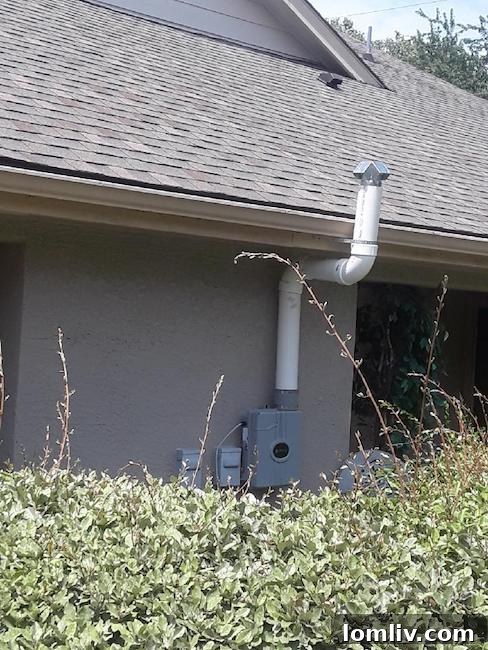
- Sub-Slab Depressurization (SSD): This is the most common and generally most effective method. It involves installing a vent pipe system and a fan to draw radon gas from beneath the concrete slab and vent it safely outside the home, usually above the roofline.
- Sealing Cracks and Openings: While not a standalone solution, sealing cracks in the foundation, floor-wall joints, and other entry points can help prevent radon entry and improve the effectiveness of other mitigation systems.
- Crawl Space Ventilation: For homes with crawl spaces, active or passive ventilation systems can be installed to draw radon from the crawl space and vent it outdoors.
- House Pressurization: Sometimes used in conjunction with other methods, this involves adjusting heating and cooling systems to create positive pressure within the home, helping to prevent soil gases from entering.
Radon mitigation systems are typically installed by certified professionals. The goal of mitigation is to reduce indoor radon levels to below the EPA action level of 4 pCi/L, ideally to 2 pCi/L or lower. After a mitigation system is installed, follow-up testing is essential to ensure its effectiveness. Investing in mitigation is a proactive health decision that safeguards your family’s well-being and enhances your home’s safety profile. More information on how to rid your home from radon can be found on the EPA’s Citizens Guide to Radon.
The Importance of Ongoing Vigilance and Real Estate Considerations
Understanding radon is not a one-time event; it requires ongoing vigilance. Even after testing and, if necessary, mitigation, it’s crucial to remain proactive. Retesting your home every two years, or after significant renovations, major weather events, or changes to your home’s foundation, is a responsible practice. This ensures that any shifts in radon entry pathways or ground conditions are detected promptly, allowing for timely intervention.
In the real estate market, radon testing is becoming an increasingly important factor. Many multi-family and nursing home lenders have already made radon testing mandatory for mortgage approval, signaling a growing recognition of its health and financial implications. As a prospective homebuyer, asking for a radon test as part of your due diligence is a smart move. It provides peace of mind or, if elevated levels are found, allows you to negotiate for mitigation efforts before finalizing your purchase.
Conversely, if you are selling a home, being proactive about radon testing and mitigation can be a significant asset. Demonstrating a clear radon report or a professionally mitigated system can alleviate buyer concerns, potentially speeding up the sale process and even adding value to your property. Awareness and transparency regarding radon levels are becoming standard practice, protecting both buyers and sellers.
Conclusion: Empowering North Texas Homeowners Against an Invisible Foe
The reevaluation of radon risks in North Texas serves as a critical reminder that environmental health threats can evolve and manifest in unexpected ways. What was once considered a low-risk area is now revealing significant pockets of elevated radon, challenging long-held assumptions and demanding immediate attention from homeowners. The potential links to geological factors, urban development, and even activities like fracking underscore the complexity of this issue.
However, the good news is that the solution is within reach. Radon is a preventable health hazard. By understanding what radon is, how it enters our homes, and the severe health risks it poses, we can empower ourselves to take action. Simple, affordable testing is the frontline defense against this silent killer. For my own family, getting our home tested and finding it clear brought immense relief—one less thing to worry about in this ever-changing world. For all North Texas homeowners, the message is clear: don’t wait for a letter; take the initiative to test your home. Protect your family’s health and ensure your living space is truly safe from this invisible threat. Your well-being depends on it.