Mastering Mortgage Rate Decisions: Lock or Float?
In the dynamic world of real estate, few decisions carry as much financial weight as when to lock in your mortgage rate. A well-timed move can save you thousands of dollars over the life of your loan, while a misstep could prove costly. This week, we delve into the intricate art of timing your mortgage rate decision, guided by insights from one of the most trusted names in the industry. Understanding the nuances of market indicators is paramount for both first-time homebuyers and seasoned investors looking to refinance. It’s not just about finding the lowest rate; it’s about securing the *right* rate at the *right* moment for your unique financial situation. We empower you with the knowledge to navigate these crucial choices with confidence and clarity, ensuring you make the most informed decision possible in today’s ever-changing economic climate.
Deciphering Economic Charts: Your Key to Mortgage Rate Timing
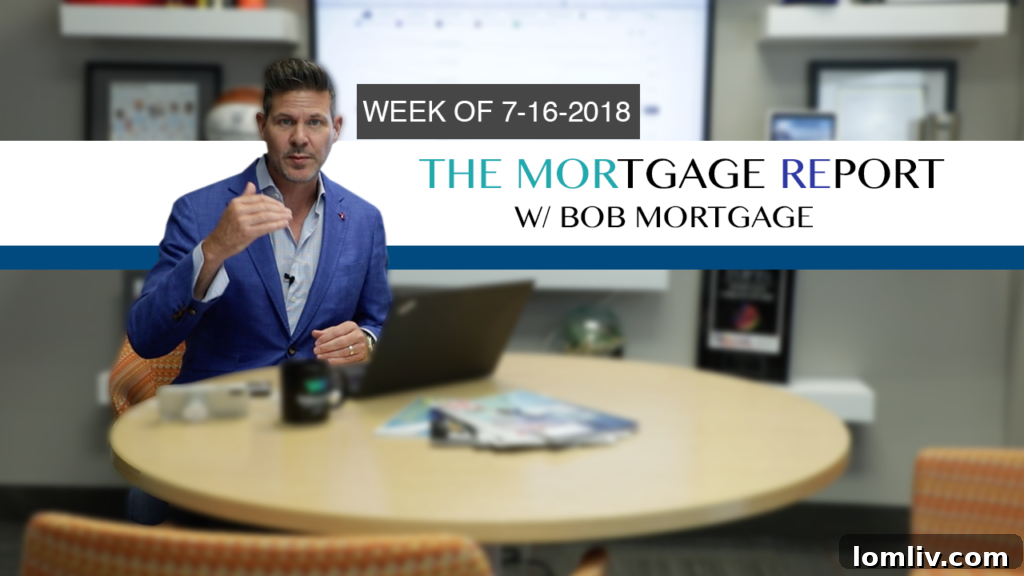
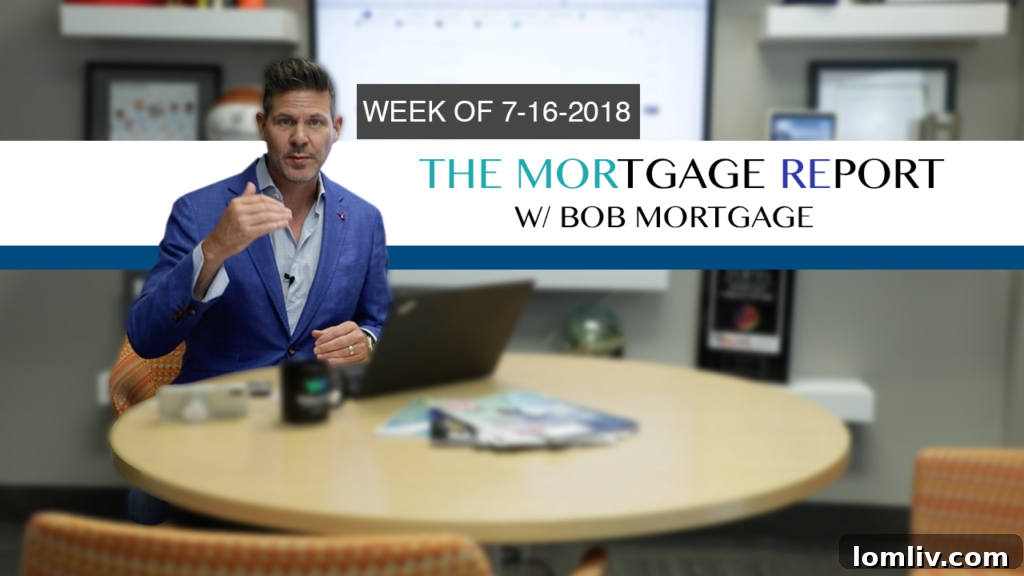
The question on every borrower’s mind often boils down to a simple dilemma: should I lock my mortgage rate now, or should I float it, hoping for a better opportunity? Navigating this choice requires more than just a gut feeling; it demands an understanding of the economic forces at play. Our esteemed mortgage expert, Bob Johnson, affectionately known as BobMortgage, pulls back the curtain on how professionals read the market. He provides an invaluable primer on interpreting economic charts, specifically focusing on the critical 100-day and 25-day moving averages. These technical indicators, often used by market analysts, offer a clearer picture of underlying trends in interest rates, helping you make a more strategic decision about your home financing. Learning to read these charts effectively can transform a potentially stressful decision into an empowered one, giving you an edge in securing optimal mortgage terms.
The Significance of Moving Averages in Mortgage Analysis
Moving averages are fundamental tools in technical analysis, designed to smooth out price data over a specific period, thereby creating a constantly updated average price. By eliminating the ‘noise’ of short-term fluctuations, they reveal clearer trends and potential shifts in market direction. For mortgage rates, these trends are crucial. The 100-day moving average is a long-term indicator, providing a broad view of the market’s trajectory over approximately four months. It helps identify sustained uptrends or downtrends, suggesting whether the overall environment is becoming more favorable or challenging for borrowers. A rate consistently staying above its 100-day moving average might signal an enduring upward trend, while consistently below could indicate a persistent decline. This long-term perspective is essential for strategic planning and understanding the bigger picture of rate movements.
Conversely, the 25-day moving average acts as a shorter-term indicator, reflecting more immediate market momentum and recent changes. It is more responsive to current events and can signal nascent shifts that the longer-term average might not yet capture. When the 25-day moving average crosses above or below the 100-day moving average, it often generates significant signals for analysts and borrowers alike. These crossovers can be powerful indicators of potential market reversals or accelerations, offering timely insights for those deciding whether to lock in a rate or wait. Understanding how these two averages interact provides a comprehensive framework for assessing both the current pulse and the long-term direction of mortgage rates, equipping you with a robust strategy for making informed decisions.
Interpreting Crossovers: Golden Cross and Death Cross
The interplay between the 25-day and 100-day moving averages offers powerful predictive signals known as ‘crossovers.’ A particularly significant event is the ‘Golden Cross,’ which occurs when the shorter-term 25-day moving average crosses above the longer-term 100-day moving average. In financial markets, a Golden Cross is generally considered a bullish signal, suggesting that momentum is shifting upwards, and a sustained increase in rates might be on the horizon. For mortgage borrowers, this could imply that rates are likely to rise in the near future, making it an opportune time to consider locking in a rate before it climbs higher. Conversely, a ‘Death Cross’ happens when the 25-day moving average drops below the 100-day moving average. This is typically seen as a bearish signal, indicating that rates might be poised for a downward trend or continued decline. For those contemplating floating their rate, a Death Cross could suggest waiting might yield a more favorable outcome, as rates could potentially drop further. These chart patterns, while not foolproof, provide valuable probabilistic insights into market direction, allowing borrowers to react more strategically to potential rate movements. Bob Johnson emphasizes that these aren’t just abstract concepts but practical tools that can directly impact your financial future.
Beyond Moving Averages: Other Influential Economic Factors
While moving averages provide critical technical insights, a holistic understanding of mortgage rate dynamics requires considering a broader array of economic indicators. Mortgage rates are intrinsically linked to the overall health and outlook of the economy. Key factors include inflation data, such as the Consumer Price Index (CPI), which directly influences the Federal Reserve’s monetary policy decisions. When inflation rises, the Fed often raises its benchmark interest rates, which in turn can push mortgage rates higher. Employment reports, including non-farm payrolls and unemployment rates, also play a significant role. Strong job growth signals a robust economy, potentially leading to higher inflation and rates, whereas weak employment data could suggest the opposite. Gross Domestic Product (GDP) growth indicates the pace of economic expansion or contraction; robust growth often correlates with higher rates, while slowdowns can suppress them. Furthermore, global economic events, geopolitical tensions, and even the sentiment of financial markets (e.g., bond market volatility, particularly the 10-year Treasury yield) can all exert considerable influence on the direction of mortgage rates. An informed borrower, guided by an expert like Bob Johnson, looks at these multifaceted indicators to form a comprehensive market view, reducing reliance on single metrics and enhancing the accuracy of their rate decisions.
Bob Johnson: The Trusted Voice in Mortgage Finance
In a world overflowing with financial advice, finding a truly reliable and insightful expert is invaluable. This is where Bob Johnson, also known as BobMortgage, stands apart. As a senior mortgage adviser with the nation’s oldest private lender, Wallick & Volk, Bob brings decades of unparalleled experience and a deep understanding of the mortgage market. His reputation is built on transparency, honesty, and an uncanny ability to distill complex economic data into actionable advice. Bob doesn’t just present charts; he interprets them in the context of real-world scenarios, helping clients understand what market movements truly mean for their individual financial goals. His commitment to client education ensures that borrowers are not just given a rate but are equipped with the knowledge to make confident decisions. Wallick & Volk, with its rich history and unwavering commitment to client success, provides the perfect institutional backing for Bob’s expertise. Founded on principles of integrity and service, Wallick & Volk has been a cornerstone of the American lending landscape for generations, making Bob a part of a legacy of trust and excellence in the mortgage industry. Choosing to work with an advisor of Bob’s caliber means gaining access to a wealth of knowledge that can significantly impact your financial well-being, whether you’re buying your first home, looking to refinance, or investing in real estate.
Wallick & Volk: A Legacy of Trust and Expertise
For over a century, Wallick & Volk has stood as a beacon of stability and reliability in the mortgage lending industry. As the nation’s oldest private lender, its longevity is a testament to its enduring commitment to clients and its adaptability through various economic cycles. Founded in 1904, Wallick & Volk has consistently upheld a standard of excellence, guiding generations of families through the homeownership journey. Their extensive experience means they’ve seen it all – booms, busts, and everything in between – giving them a unique perspective on market trends and risk management. This deep institutional knowledge translates directly into robust, well-informed advice for borrowers. The firm prides itself on its personalized approach, ensuring that each client receives tailored solutions that align with their specific financial situation and aspirations. When you work with a Wallick & Volk advisor like Bob Johnson, you’re not just getting a loan; you’re gaining a partner with a century-long legacy of trust, integrity, and a profound understanding of the intricacies of mortgage finance. This unwavering dedication to client success is precisely why Bob Johnson chooses to align his expertise with such a reputable and established institution, providing borrowers with an unmatched level of confidence and security in their mortgage decisions.
Making Your Mortgage Decision: Lock, Float, and Consult an Expert
The decision to lock or float your mortgage rate is highly personal, influenced by your financial stability, risk tolerance, and current market conditions. If you prioritize certainty and want to protect yourself from potential rate increases, locking in your rate can provide peace of mind, especially in a volatile or rising rate environment. This is often advisable if you are close to closing and rates are trending upwards. Conversely, if you have a higher risk tolerance and believe that rates might fall further before your closing, floating your rate could potentially lead to a lower interest rate, though it comes with the inherent risk of rates moving against you. This strategy might be considered in a clearly declining rate environment, but it requires careful monitoring and expert guidance.
Regardless of the general market outlook or what the charts suggest, the most crucial step is to consult with an experienced mortgage advisor. An expert like Bob Johnson doesn’t just interpret data; he helps you apply it to your unique circumstances. He can assess your personal financial health, understand your long-term goals, and weigh these factors against the current market signals. Bob can explain complex economic charts, dissect the implications of moving averages, and provide clear, actionable recommendations tailored specifically for you. His insight can help you avoid costly mistakes and seize optimal opportunities. Don’t leave your mortgage decision to chance or a hasty interpretation of market data. Find out more about the mechanics of economics in the mortgage industry from the expert himself right now, and empower your homeownership journey with informed choices.
For further personalized advice and to understand how current market trends specifically impact your mortgage options, reach out to Bob Johnson and the trusted team at Wallick & Volk today. Make your next mortgage decision your best one.