WindMass Capital’s Vision for North Oak Cliff: A Transformative Development Project on Hold
After more than a year of extensive engagement with local residents, community stakeholders, and various departments within the City of Dallas, the highly anticipated development team from WindMass Capital has decided to put their ambitious project on hold. This decision comes just ahead of a crucial City Council meeting where their proposal for a complex land swap and mixed-use development in North Oak Cliff was slated for discussion.
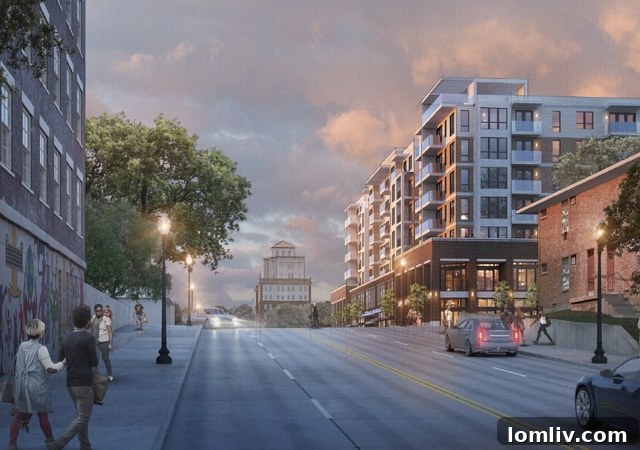
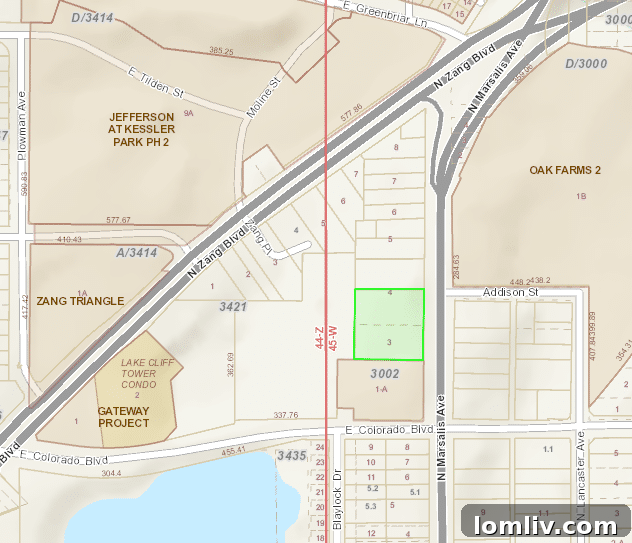
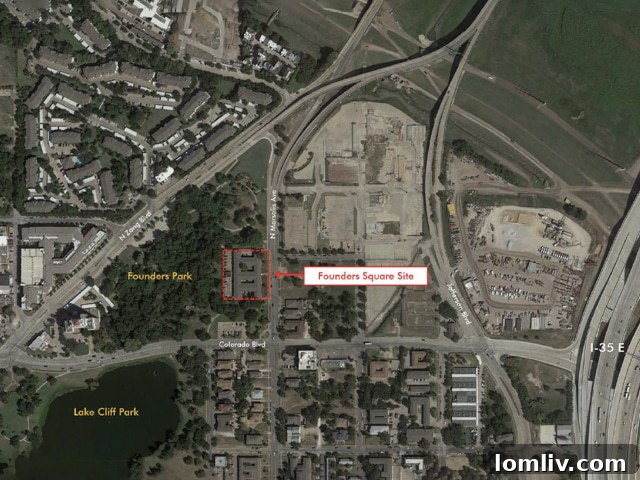
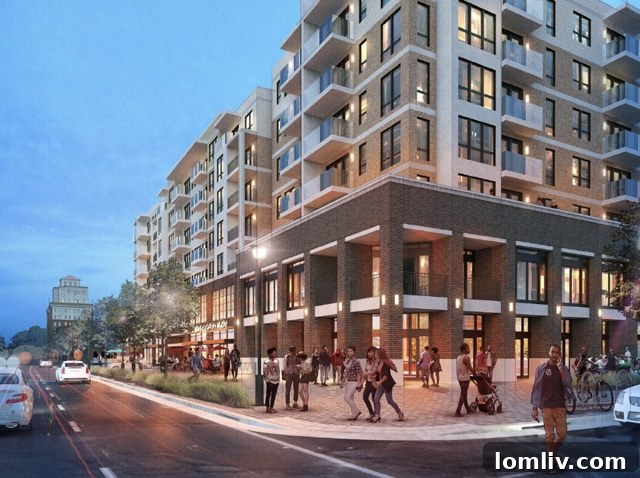
At the heart of this innovative proposal lies WindMass Capital’s ownership of the Founders Square Apartments. Over several decades, this property found itself uniquely situated, surrounded on three sides by Oak Cliff’s beloved Founders Park. The core idea was remarkably audacious yet brilliant: WindMass sought to exchange their existing 1.37-acre parcel for an equally sized, adjacent 1.37-acre plot located at the prominent corner of Colorado Boulevard and Marsalis Avenue. On this new site, they envisioned constructing a vibrant, new mixed-use apartment building, complete with ground-floor retail spaces designed to serve the community. Following the completion of the new development, their plan included demolishing the old Founders Square building, meticulously cleaning up the land, and donating this revitalized space back to the city to seamlessly expand Founders Park. Adding to this already impressive commitment, WindMass Capital also pledged a half-million dollars towards further enhancements and improvements within Founders Park. This innovative approach promised a win-win scenario, addressing both urban development needs and significant public green space expansion.
Willis Winters, the Director of the Dallas Park Department, underscored the significance of this project during a recent Park Board meeting. He highlighted the city’s long-standing desire, spanning many years, to acquire the Founders Square property to create a more cohesive and contiguous Founders Park. However, budgetary constraints had always made such an acquisition financially unfeasible. This proposed land swap and development would have effectively achieved the Parks Department’s long-held objective without direct city expenditure, offering a creative solution to a persistent urban planning challenge.
Remarkably, the proposal garnered widespread support from both nearby residents and key community stakeholders—a rare and significant achievement in the often contentious world of urban development, especially in rapidly evolving neighborhoods like Oak Cliff.
Navigating Legal Complexities: The Public Vote Requirement
Initially, when WindMass Capital began discussions with Director Winters and Oak Cliff District 1 Parks Board representative Barbara Barbee last spring, the process for this unique land exchange seemed straightforward. Given that it was a direct trade—an “apples-for-apples” swap rather than a sale—there was an initial understanding that the path forward might be relatively simple.
However, the situation grew significantly more complex last month when city attorneys reviewed the proposal. Citing Section 253.001 of the Texas Local Government Code, they determined that a public vote would be legally required for the land swap to proceed. This unexpected requirement instantly escalated the project’s timeline and scope, mandating a vote to take place as early as the upcoming May ballot. For the vote to be placed on the ballot, it first needed approval from the City Council, which in turn depended on prior authorization from the Park Board. This suddenly placed the item on the Jan. 10 agenda, setting a rapid pace for a deal that had been developing for over a year.
Despite this new hurdle, the WindMass developers demonstrated their commitment to the project. They agreed to cover the $200 fee required to place the initiative on the ballot and committed to funding any necessary information campaigns to effectively educate voters about the proposal. This was in addition to the substantial investment they had already made, exceeding $100,000, covering critical aspects such as traffic studies, architectural designs, detailed plans, artistic renderings, and legal fees. Their willingness to invest further underscored the perceived value and potential of this development for the North Oak Cliff community.
The Challenge of Public Perception and Information Campaigns
It’s crucial to understand the true nature of the proposed public vote: it was not a final approval for the project itself. Instead, the vote would merely grant city staff the authority to formally negotiate a potential deal with the developers. Should the public vote pass, all intricate details of the negotiation—including specific requirements for affordable housing, the precise mechanics of the land swap, and the exact allocation of the half-million dollars for Founders Park improvements—would still need to be meticulously agreed upon by both city staff and WindMass Capital. Following these negotiations, the agreement would then require approval from the Park Board, and finally, a definitive endorsement from the Dallas City Council. This multi-stage process indicated a long and diligent path, with ample opportunities for public input and governmental oversight.
This grand vision, supported by the local community, held immense potential to significantly enhance Founders Park and add considerable value to the vibrant North Oak Cliff neighborhood. It presented an opportunity for thoughtful urban development that integrated public amenities with private investment. However, the path became significantly steeper when, just five days before the critical City Council vote, the largest news source in Dallas published a sensationalized article. This piece reportedly sowed mistrust and, critically, lacked fact-checking with either the developers, the council representative, or even the neighborhood groups who had expressed support for the project. Such an article, particularly one appearing so close to a decisive vote, profoundly complicates any pre-existing efforts to run an already uphill information campaign designed to educate citizens for a public vote. It creates a significant challenge in building consensus and trust, making it difficult for the public to discern accurate information amidst potentially misleading narratives.

Project Paused: A Moment for Reconsideration
In light of these new complexities and the challenging public environment, WindMass Capital has decided to pump the brakes on the Founders Square project for now. There are no immediate plans for the existing Founders Square Apartments property. Perhaps this pause is a blessing in disguise; removing such a complex and potentially divisive issue from the May ballot might prevent it from becoming another polarizing “litmus test” issue for political candidates, akin to past debates surrounding projects like the Trinity Tollroad. Dallas’s urban development landscape is evolving rapidly, and some issues require more thoughtful consideration than the tight timelines of a ballot initiative allow.
There remains a glimmer of hope that either city attorneys or the developer will discover an alternative path forward for this promising project. Sometimes, time itself is the most valuable asset. Time allows for new staff to rotate into key positions, potentially bringing fresh perspectives and innovative solutions. It also provides an opportunity for the city to adapt to its burgeoning role as a hub for creative urban policies, observing how recent initiatives fare before tackling new, unprecedented challenges. Dallas has seen a significant year for forward-thinking urban policy, with the approval of Accessory Dwelling Units, an updated Article X tree code, the development of a Neighborhood Forest Overlay, the implementation of Incentive Zoning, and the introduction of a new Affordable Housing program. This period of dynamic policy changes may provide the necessary context and experience to eventually revisit and successfully navigate projects as intricate as the WindMass Capital proposal.
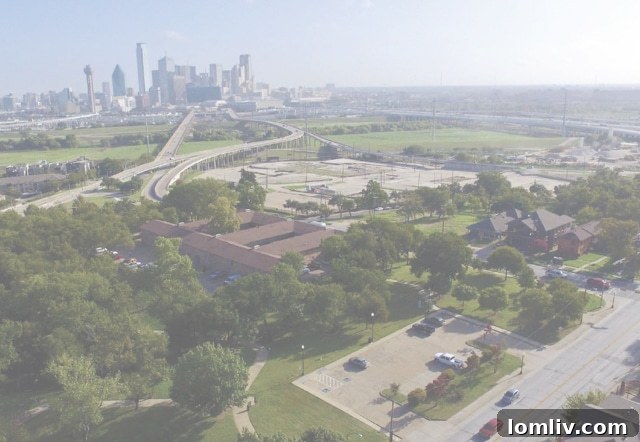
Detailed Project Overview: A Glimpse into the Future
Given the possibility that this visionary project could resurface in the future, it’s valuable to retain a comprehensive understanding of its key details and proposed features:
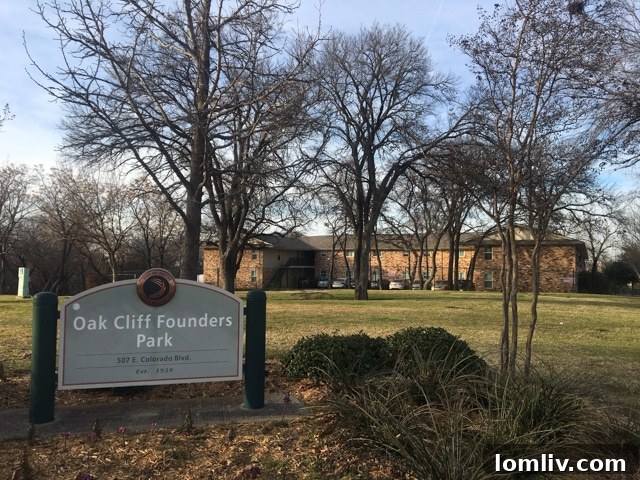
- The existing Founders Square Apartments property is a two-story structure, originally constructed in 1963, comprising 65 units and housing approximately 92 residents.
- WindMass Capital acquired the property in January 2017, subsequently undertaking significant renovations and bringing in a new property management firm to enhance the complex.
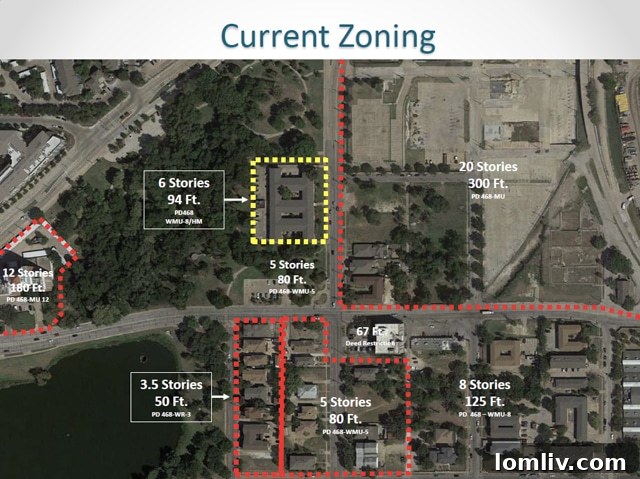
- The current zoning for the Founders Square parcel allows for considerable density, permitting structures up to six stories tall and 94 feet in height, with the potential for up to 250 units by right. Notably, this zoning does not impose a requirement for underground parking.
- Conversely, the corner park parcel, which was targeted for the new development, is zoned to allow for five stories and 80 feet of height. This zoning explicitly permits mixed-use development, including retail on the ground floor, and importantly, mandates required underground parking, aligning with contemporary urban design principles.
- The proposed project sought a zoning increase to allow for seven stories and 88 feet of height, accommodating 223 units. This slight increase in height and density was carefully planned to optimize the site while respecting the surrounding urban fabric.
- A significant portion of this corner parcel, specifically 1.258 acres, was originally listed as Oak Cliff Portal Park PH1. This land was privately owned until January 20, 1982, when the Dallas Park Department acquired it from the Adolph J. Weinberger Estate, subsequently integrating it into the larger Founders Park system. This historical context underscores the sensitive nature of any proposed changes to publicly-owned parkland.
- Regarding affordable housing, WindMass developers expressed a willingness to include 10 percent (approximately 22 units) as affordable housing within the proposed development. Should the project have sought Tax Increment Financing (TIF) incentives, the requirement for affordable units would increase to 20 percent (approximately 45 units).
- Interestingly, current rents at Founders Square are comparable to 80 percent of the Area Median Family Income (AMFI) rates. However, according to the developers, many existing residents earn over $50,000 per year, which would actually disqualify them from eligibility for most “affordable” units as defined by these programs, highlighting a common challenge in targeting genuine affordable housing needs.
A Crucial Conversation: Defining Affordable Housing in Dallas
The complexities surrounding the Founders Square project underscored a larger, pressing need within the Dallas community: a citywide conversation about the precise definition and objectives of affordable housing. The term is frequently invoked by Dallas City Council members and various board representatives, often used as a catch-all solution, yet there remains a significant lack of clarity regarding what we are truly aiming to achieve and for whom.
Affordable housing is, in itself, a multifaceted issue. For context, and because it was a relevant point raised during the Park Board meeting discussing this very project, consider the definition of 80 percent AMFI. At this income level, a single individual earning under $43,250 annually would qualify for rent at approximately $1,081 per month. While this is certainly not “cheap,” it largely falls into the category of workforce housing, catering to essential workers who often struggle to find reasonably priced accommodation within the city. This is the standard typically mandated by TIF agreements.
To provide a clear contrast, current market-rate rents at Founders Square are around $900 per month for a one-bedroom unit and $1,000 per month for a two-bedroom unit—these are unsubsidized, market-driven prices. If the city’s aspiration is to increase the availability of public housing or Section 8-qualifying properties—where, for example, a family of four earning under $23,150 annually could qualify for a two-bedroom unit at $580 per month—then we are talking about a fundamentally different type of housing challenge. Such programs are typically managed by the Dallas Housing Authority, an entity entirely separate from the City of Dallas government, operating with distinct mandates and funding structures.
The City of Dallas’s current initiatives, such as TIF affordable requirements and the newer Incentive Zoning, are primarily designed to generate more housing options within the 50-100 percent AMFI range. The strategic goal here is to alleviate pressure on the Dallas Housing Authority’s limited funds, thereby freeing up resources to better serve those truly in dire need, typically individuals and families earning between 0-50 percent AMFI. It’s important to note that the city’s programs do not prevent a developer from also leveraging other affordable housing initiatives; however, integrating such programs often constitutes an entirely separate and distinct agreement, further underscoring the complexity of addressing Dallas’s diverse housing needs.
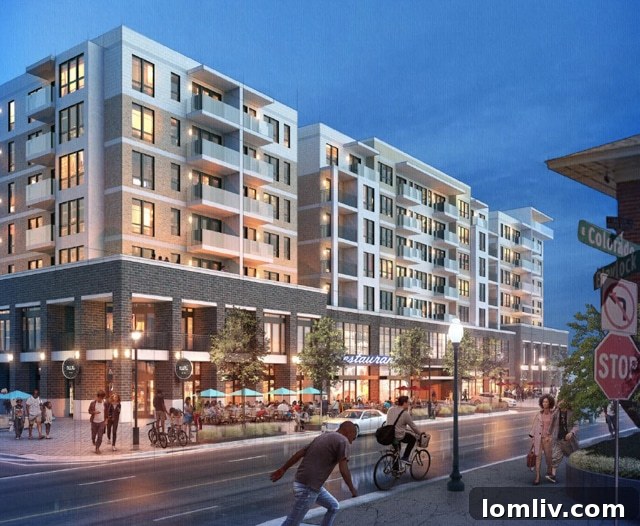
Neighborhood Support: A True Indicator of Quality Development
The widespread support this project received from neighborhood stakeholders in North Oak Cliff stands as a testament to its quality and the developer’s thoughtful approach. It’s a crucial reminder that not all neighborhood groups are simply “Not In My Backyard” (NIMBY) proponents. In areas experiencing significant development changes, like Oak Cliff, genuine neighborhood support is a powerful indicator. It signifies not only a well-conceived project that aligns with community values but also reflects a developer who has respectfully engaged with concerns, provided transparent details, and demonstrated a willingness to make meaningful adjustments based on community feedback.
This level of clear community engagement was evident in WindMass Capital’s process. As longtime nearby resident Michael Mendoza eloquently articulated:
“The idea of changing the configuration of Founders Park offers significant opportunities to improve the park and to influence a better development outcome for the Lake Cliff neighborhood. Developing the prominent corner of Marsalis and Colorado, rather than continuing to utilize land currently occupied by an apartment building wedged awkwardly into the middle of the park, directly aligns with the neighborhood’s long-standing land use objectives. These objectives were meticulously outlined during the 10-plus year public hearing process that culminated in the Lake Cliff Gateway Form Based Code and land use plan, specifically developed to accommodate the existing mix of uses by improving transitions to surrounding neighborhoods.
Furthermore, the recently added parking lot, which was installed without any public input, is predominantly used as overflow parking for an under-parked daycare center and nearby multifamily units, rather than serving the broader park needs.”
Such nuanced insights, detailing the importance of strategic land use and the practical realities of urban infrastructure, typically come only from deeply engaged, longtime residents. Their perspective highlights the profound community value embedded in finding a way to achieve such an ambitious and integrated project.
While acknowledging that certain details still required refinement, the proposed timeline for the project allowed ample opportunity for continued negotiation and adjustment. Even if citizens had voted in May to permit negotiations, both the City of Dallas and WindMass Capital would have retained the flexibility to withdraw from the process at any point until a final agreement received formal approval by the Dallas City Council. This built-in flexibility is a standard and vital component of complex urban development deals, ensuring that all parties can proceed with caution and confidence.
The Future of Dallas Development: Embracing Creativity and Collaboration
Dallas, like many burgeoning metropolitan areas, often struggles to find projects that genuinely enhance our public green spaces while simultaneously providing essential neighborhood retail and services in appropriately scaled locations near single-family residential areas. The WindMass Capital proposal for North Oak Cliff arguably represented one of the finest examples seen in Dallas real estate development that truly promised to add tangible quality-of-life value to a community.
As we continue to push our city in new directions and aspire to world-class designations, we will inevitably encounter increasingly complex “shades of gray” within our existing policies, navigating situations where no clear precedent has been set. Building a truly great city demands creativity, innovation, and a collaborative spirit. To successfully navigate these uncharted waters, we require city attorneys who act not merely as gatekeepers but as active allies in the creative process, working hand-in-hand with the city council and, crucially, with the community to bring desired projects to fruition. This collaborative approach is paramount, especially when strong community desire for development exists.
Instead of defaulting to identifying every potential pitfall and allowing fear-mongering to foster complacency, Dallas needs a more proactive and strategic approach. This involves clearly defining our terms—especially for critical concepts like affordable housing—setting unambiguous goals informed by community needs, rigorously monitoring our progress through metrics tied to neighborhood plans, and, most importantly, continuously seeking out and implementing creative solutions to the intricate details that collectively forge truly great and livable neighborhoods. The WindMass project, despite its pause, serves as a powerful case study in the ongoing evolution of Dallas’s urban planning landscape, emphasizing the need for forward-thinking collaboration to achieve our collective civic aspirations.
Amanda Popken is a dedicated community strategist and economic development specialist, with a profound focus on incremental urbanism. Her work centers on promoting, inspiring, teaching, and actively engaging communities to cultivate their own social capital for sustainable growth and development. She can be found at amandapopken.com.