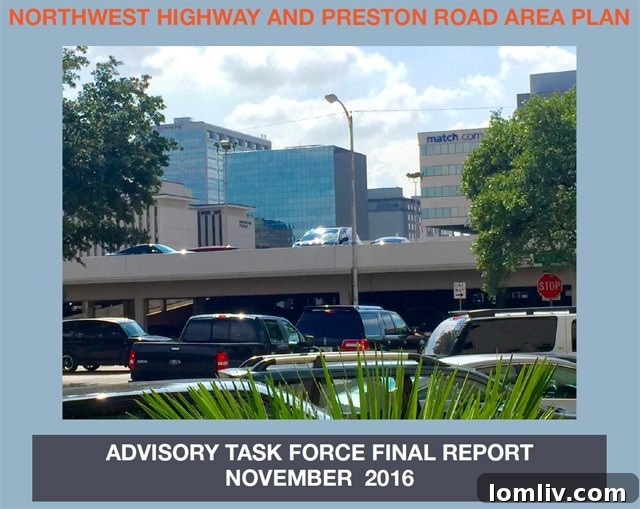
Dallas’s Preston Center Plan: A Critical Examination of the Northwest Highway & Preston Road Task Force Report
After two years and a hefty sum of $300,000, the final report by the Northwest Highway and Preston Road Area Plan task force has landed, yet its core message seems to identify problems that will ultimately cost the City of Dallas even more time and money to resolve. This extensive endeavor, meant to chart a clear path for the future of a vital Dallas district, has instead delivered a document criticized for its lack of concrete action and actionable solutions. The underlying issue, it appears, stems from a process reportedly influenced by personal agendas, leading to the sidelining of critical data provided by professional consultants.
The sentiment, as expressed by one astute observer, suggests a “watered-down, namby-pamby report” — a consensus-driven outcome that, while using all the right buzzwords to placate community concerns, delivers little in the way of tangible substance. Rather than offering innovative strategies or detailed implementation plans, the report largely reiterates existing knowledge and desires, consistently deferring solutions to future studies and additional funding. This approach raises significant questions about the efficacy and value of such prolonged and expensive planning processes.
During the recent public meeting, attendees nodded in agreement to the familiar refrains: traffic is a problem, finding lunch-time parking in Preston Center can be difficult, the Preston Center parking garage is aesthetically unappealing, and concerns persist about specific residential developments. However, what seemed to escape broader comprehension was the report’s underlying mechanism: every identified issue and every seemingly novel recommendation is ultimately presented as “someone else’s problem” to study, evaluate, fix, and finance. It reads, in essence, like a compiled list of community meeting suggestions, rather than a strategic planning document.
The actual recommendations within the report are notably devoid of detail or enforcement mechanisms, frequently offloading responsibility to other entities or future, unspecified initiatives. This systemic lack of specificity leads many to conclude that 99 percent of this report’s content could have been drafted years ago by an intern, without the substantial investment of time and taxpayer dollars. Such an outcome, particularly in light of past planning controversies like the Fair Park debacle, unfortunately speaks volumes about the perceived quality of work sometimes accepted by the City of Dallas.
Traffic Congestion: A Perennial Dallas Challenge Without a Concrete Roadmap
Traffic is undeniably a significant concern for residents and commuters in the Northwest Highway and Preston Road area. While the report acknowledges this widespread perception, it offers little in the way of detailed, actionable solutions. Interestingly, some data suggests that traffic conditions might be less severe now than they were a decade ago, yet the perception of worsening congestion persists.
The Elusive Solutions to Dallas Traffic
Various roadway agencies have indeed brainstormed potential possibilities for optimizing or altering traffic patterns. These have ranged from ambitious, even speculative, ideas like constructing a toll tunnel under Northwest Highway to divert cross-town traffic from the Dallas North Tollway to Central Expressway. The feasibility and impact of such grand-scale projects remain uncertain, especially given the mixed results and ongoing debate surrounding other complex infrastructure projects, such as the LBJ Expressway’s toll lanes. The concept of an additional over/underground bridge or tunnel across Northwest Highway, perhaps between Douglas and Pickwick, also frequently surfaces in discussions.
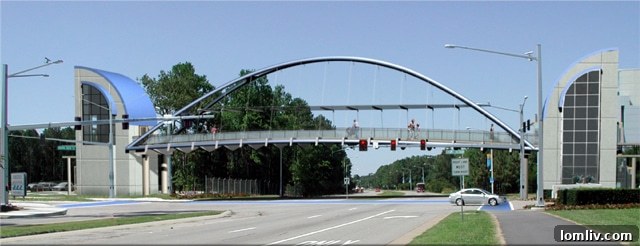
However, a critical flaw in these discussions and within the task force’s report is the conspicuous absence of realistic planning for land acquisition. It is evident that there is virtually no available land to accommodate the necessary approaches and structures for such major infrastructure projects in this densely developed area, unless significant private property, potentially from large landowners like Mark Cuban, were acquired—a proposition that the task force seems to have dismissed outright with its critical stance towards certain developers.
Despite two years of study, the report presents zero concrete work towards creating a viable traffic management plan, complete with detailed engineering estimates and projected costs. Agencies such as TXDot, the City of Dallas, and the NTTA have yet to offer even the slightest indication of a comprehensive strategy to solve or significantly mitigate the area’s traffic congestion. This glaring omission leaves residents and taxpayers without a clear understanding of how these persistent problems will ever be addressed, perpetuating a cycle of frustration and inaction.
Parking Woes in Preston Center: Data vs. Anecdote
The task force’s perspective on parking in Preston Center appears to diverge significantly from measurable reality. While consultants like Kimley Horn conducted thorough car counts over a week, demonstrating that the parking issue is less severe than commonly perceived, the task force seemingly prioritized anecdotal evidence. The belief that parking is consistently problematic often stems from the challenge of finding a space in front of popular establishments like Snuffers during the peak lunch hour—a narrow window when demand indeed outstrips immediate supply.
Reconciling Perceptions and Reality in Preston Center Parking
The task force contested the consultants’ findings, arguing that the presence of 10 percent vacant retail space during the counting period and the inclusion of dedicated bank parking spaces rendered the report inaccurate. They also suggested that without accounting for full occupancy, the data was skewed. This argument, however, appears to miss a crucial point: had the task force simply requested it, Kimley Horn could have easily augmented their counts and modeled parking requirements based on full occupancy scenarios. The fact that this apparently wasn’t requested highlights a potential disconnect between the task force’s assumptions and the available analytical tools.
Furthermore, given that the central garage experiences its peak fullness between noon and 1 p.m., and the vacant floor space was primarily retail—not restaurant—the actual impact of these vacancies on lunch-time parking availability would have been minimal. The real issue often boils down to a localized pinch during a specific hour, rather than a pervasive, area-wide parking crisis. This distinction is vital for developing targeted, effective solutions rather than overhauling the entire parking system.
Adding to the list of readily solvable yet unaddressed issues, it has been known since January that over 100 Preston Center workers routinely park incorrectly on the lower level of the garage, exacerbating perceived shortages. Eleven months later, the final report merely recommends that “someone” police this problem. This illustrates a profound reluctance to even implement the bare minimum of problem-solving, suggesting a missed opportunity for immediate, impactful action that could have alleviated a portion of the parking stress the very next day.
Zoning Stagnation: Missed Opportunities for Preston Center’s Future
Within the heart of Preston Center, the task force’s recommendations concerning zoning propose zero changes to the current regulations. This stance is particularly puzzling given the area’s significant untapped density, which could be leveraged for strategic development even without extensive appeals to the Plan Commission. This “do-nothing” approach fails to offer any concrete incentives or “carrots” to developers, thus hindering the realization of the vibrant, mixed-use fantasy that the report vaguely envisions.
The Illusion of Progress: Zoning Recommendations in Preston Center
The report is replete with glittering generalities about desired outcomes but offers no specific, actionable zoning modifications to achieve them. If the hope is that developers will spontaneously align with these recommendations, the reality of recent area development tells a different story. An office building is currently under construction on Berkshire, a use widely considered suboptimal for the area due to its negative traffic impact and its direct contradiction of the mixed-use goals. Similarly, a senior living facility is being built on Lomo Alto—while slightly less detrimental than an office building, it falls far short of the dynamic residential development that the area supposedly hopes for.
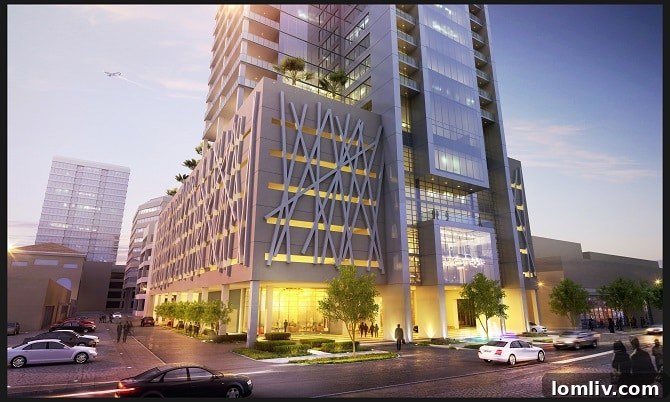
Perhaps the most poignant example of missed opportunity is the fate of the Highland House residential high-rise, proposed by Crosland. This project, which aimed for a mixed-use development and partially initiated the entire two-year task force process, was ultimately rejected. The irony is stark: a proposal that arguably aligned more closely with the stated goals of the plan was “kiboshed,” while less desirable developments proceed, leaving many to question the task force’s true impact and priorities.
Residential Zones and the “Pink Wall”: Vague Directives and Unaddressed Hurdles
Residential zones within the broader study area similarly remain untouched by any proposed rezoning, indicating a general avoidance of controversial but potentially necessary changes. Notably, there’s a discernible undercurrent throughout the report, with both covert and overt textual references seemingly targeting specific developers, most notably Mark Cuban. This personalization of planning issues further detracts from an objective, data-driven approach to urban development.
The recommendations for the “Pink Wall” zoning area are equally insubstantial, characterized by what many consider “weak tea.” The plan suggests allowing four stories for new construction west of Edgemere, but only in exchange for a smaller lot footprint than currently exists. Anyone familiar with the Pink Wall area knows its charm lies in its generous setbacks, abundant trees, and park-like small complexes. The notion that a developer would sacrifice lot coverage for a mere single additional story, thereby making the project less financially viable, appears to be a pipe dream, disconnected from market realities.
Furthermore, a significant impediment facing residents—the shocking revelation of “zombie deed restrictions” that were undisclosed to condo buyers for 45 years—is cavalierly tossed back to residents to resolve. This abdication of responsibility by the task force, effectively a bald-faced stalling tactic, underscores the report’s reluctance to tackle complex, pre-existing legal and community challenges. Such an approach raises legitimate questions about the task force’s understanding of the community’s pressing needs and its commitment to finding genuine solutions.
The Broader Implications: A Pattern of Inaction in Dallas Urban Planning
The shortcomings of the Northwest Highway and Preston Road Area Plan task force report are not isolated incidents but rather reflective of broader challenges within Dallas urban planning. This costly and time-consuming exercise, which produced largely vague and non-committal recommendations, bears an unsettling resemblance to previous planning missteps, such as the widely criticized Fair Park debacle. The recurring pattern of forming committees, spending significant public funds, and ultimately delivering reports that lack actionable strategies or accountability is a disservice to Dallas residents and taxpayers.
Effective urban planning requires more than just identifying problems; it demands comprehensive data analysis, innovative solution development, clear implementation strategies, and robust financial planning. A report that consistently defers responsibility, ignores expert data in favor of anecdotal opinion, and offers “glittering generalities” rather than concrete incentives for desired development outcomes, essentially wastes valuable resources. It undermines public trust in civic processes and delays critical infrastructure and development improvements that are essential for the city’s growth and quality of life.
The true cost of such ineffective planning extends beyond the initial $300,000. It includes the ongoing burden of unresolved traffic congestion, inadequate parking solutions, missed opportunities for smart, mixed-use development, and the perpetuation of complex zoning issues. Dallas needs proactive, data-driven planning that translates vision into reality, fosters sustainable growth, and genuinely addresses the evolving needs of its vibrant communities.
Conclusion: Charting a Clearer Course for Preston Center
The Northwest Highway and Preston Road Area Plan task force report, despite its extensive gestation and considerable cost, leaves much to be desired. Its failure to provide concrete, actionable recommendations for critical issues like traffic, parking, and zoning suggests a fundamental flaw in its approach, perhaps exacerbated by internal disagreements and a reluctance to challenge existing narratives or embrace difficult decisions. For Preston Center to truly evolve into the vibrant, functional district envisioned by its residents, a more robust, accountable, and data-informed planning methodology is urgently required.
The city’s future development hinges on its ability to move beyond consensus-driven placation to embrace decisive action. This means leveraging expert insights, setting clear implementation pathways, and committing the necessary resources to actualize plans, rather than merely identifying problems for future generations to address. Only then can Dallas ensure that its planning efforts lead to tangible improvements and sustainable growth for its cherished neighborhoods like Preston Center.
Remember: High-rises, HOAs, and renovation are my beat. But I also appreciate modern and historical architecture balanced against the YIMBY movement. If you’re interested in hosting a Candysdirt.com Staff Meeting event, I’m your guy. My writing has been recognized with Bronze and Silver awards from the National Association of Real Estate Editors. Have a story to tell or a marriage proposal to make? Shoot me an email [email protected].
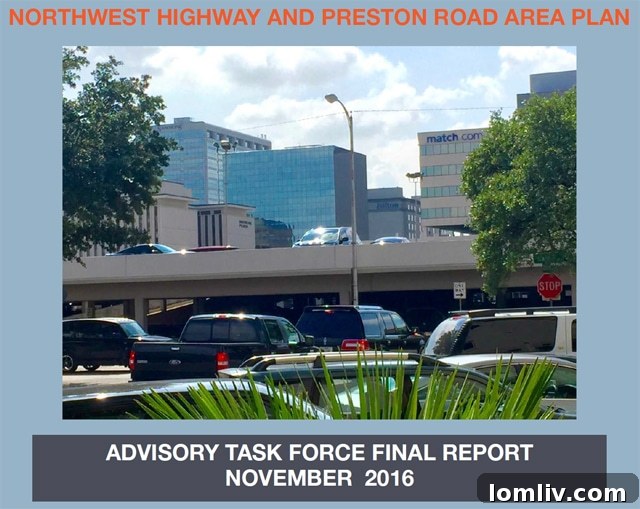
Dallas’s Preston Center Plan: A Critical Examination of the Northwest Highway & Preston Road Task Force Report
After two years and a hefty sum of $300,000, the final report by the Northwest Highway and Preston Road Area Plan task force has landed, yet its core message seems to identify problems that will ultimately cost the City of Dallas even more time and money to resolve. This extensive endeavor, meant to chart a clear path for the future of a vital Dallas district, has instead delivered a document criticized for its lack of concrete action and actionable solutions. The underlying issue, it appears, stems from a process reportedly influenced by personal agendas, leading to the sidelining of critical data provided by professional consultants.
The sentiment, as expressed by one astute observer, suggests a “watered-down, namby-pamby report” — a consensus-driven outcome that, while using all the right buzzwords to placate community concerns, delivers little in the way of tangible substance. Rather than offering innovative strategies or detailed implementation plans, the report largely reiterates existing knowledge and desires, consistently deferring solutions to future studies and additional funding. This approach raises significant questions about the efficacy and value of such prolonged and expensive planning processes.
During the recent public meeting, attendees nodded in agreement to the familiar refrains: traffic is a problem, finding lunch-time parking in Preston Center can be difficult, the Preston Center parking garage is aesthetically unappealing, and concerns persist about specific residential developments. However, what seemed to escape broader comprehension was the report’s underlying mechanism: every identified issue and every seemingly novel recommendation is ultimately presented as “someone else’s problem” to study, evaluate, fix, and finance. It reads, in essence, like a compiled list of community meeting suggestions, rather than a strategic planning document.
The actual recommendations within the report are notably devoid of detail or enforcement mechanisms, frequently offloading responsibility to other entities or future, unspecified initiatives. This systemic lack of specificity leads many to conclude that 99 percent of this report’s content could have been drafted years ago by an intern, without the substantial investment of time and taxpayer dollars. Such an outcome, particularly in light of past planning controversies like the Fair Park debacle, unfortunately speaks volumes about the perceived quality of work sometimes accepted by the City of Dallas.
Traffic Congestion: A Perennial Dallas Challenge Without a Concrete Roadmap
Traffic is undeniably a significant concern for residents and commuters in the Northwest Highway and Preston Road area. While the report acknowledges this widespread perception, it offers little in the way of detailed, actionable solutions. Interestingly, some data suggests that traffic conditions might be less severe now than they were a decade ago, yet the perception of worsening congestion persists.
The Elusive Solutions to Dallas Traffic
Various roadway agencies have indeed brainstormed potential possibilities for optimizing or altering traffic patterns. These have ranged from ambitious, even speculative, ideas like constructing a toll tunnel under Northwest Highway to divert cross-town traffic from the Dallas North Tollway to Central Expressway. The feasibility and impact of such grand-scale projects remain uncertain, especially given the mixed results and ongoing debate surrounding other complex infrastructure projects, such as the LBJ Expressway’s toll lanes. The concept of an additional over/underground bridge or tunnel across Northwest Highway, perhaps between Douglas and Pickwick, also frequently surfaces in discussions.
However, a critical flaw in these discussions and within the task force’s report is the conspicuous absence of realistic planning for land acquisition. It is evident that there is virtually no available land to accommodate the necessary approaches and structures for such major infrastructure projects in this densely developed area, unless significant private property, potentially from large landowners like Mark Cuban, were acquired—a proposition that the task force seems to have dismissed outright with its critical stance towards certain developers.
Despite two years of study, the report presents zero concrete work towards creating a viable traffic management plan, complete with detailed engineering estimates and projected costs. Agencies such as TXDot, the City of Dallas, and the NTTA have yet to offer even the slightest indication of a comprehensive strategy to solve or significantly mitigate the area’s traffic congestion. This glaring omission leaves residents and taxpayers without a clear understanding of how these persistent problems will ever be addressed, perpetuating a cycle of frustration and inaction.
Parking Woes in Preston Center: Data vs. Anecdote
The task force’s perspective on parking in Preston Center appears to diverge significantly from measurable reality. While consultants like Kimley Horn conducted thorough car counts over a week, demonstrating that the parking issue is less severe than commonly perceived, the task force seemingly prioritized anecdotal evidence. The belief that parking is consistently problematic often stems from the challenge of finding a space in front of popular establishments like Snuffers during the peak lunch hour—a narrow window when demand indeed outstrips immediate supply.
Reconciling Perceptions and Reality in Preston Center Parking
The task force contested the consultants’ findings, arguing that the presence of 10 percent vacant retail space during the counting period and the inclusion of dedicated bank parking spaces rendered the report inaccurate. They also suggested that without accounting for full occupancy, the data was skewed. This argument, however, appears to miss a crucial point: had the task force simply requested it, Kimley Horn could have easily augmented their counts and modeled parking requirements based on full occupancy scenarios. The fact that this apparently wasn’t requested highlights a potential disconnect between the task force’s assumptions and the available analytical tools.
Furthermore, given that the central garage experiences its peak fullness between noon and 1 p.m., and the vacant floor space was primarily retail—not restaurant—the actual impact of these vacancies on lunch-time parking availability would have been minimal. The real issue often boils down to a localized pinch during a specific hour, rather than a pervasive, area-wide parking crisis. This distinction is vital for developing targeted, effective solutions rather than overhauling the entire parking system.
Adding to the list of readily solvable yet unaddressed issues, it has been known since January that over 100 Preston Center workers routinely park incorrectly on the lower level of the garage, exacerbating perceived shortages. Eleven months later, the final report merely recommends that “someone” police this problem. This illustrates a profound reluctance to even implement the bare minimum of problem-solving, suggesting a missed opportunity for immediate, impactful action that could have alleviated a portion of the parking stress the very next day.
Zoning Stagnation: Missed Opportunities for Preston Center’s Future
Within the heart of Preston Center, the task force’s recommendations concerning zoning propose zero changes to the current regulations. This stance is particularly puzzling given the area’s significant untapped density, which could be leveraged for strategic development even without extensive appeals to the Plan Commission. This “do-nothing” approach fails to offer any concrete incentives or “carrots” to developers, thus hindering the realization of the vibrant, mixed-use fantasy that the report vaguely envisions.
The Illusion of Progress: Zoning Recommendations in Preston Center
The report is replete with glittering generalities about desired outcomes but offers no specific, actionable zoning modifications to achieve them. If the hope is that developers will spontaneously align with these recommendations, the reality of recent area development tells a different story. An office building is currently under construction on Berkshire, a use widely considered suboptimal for the area due to its negative traffic impact and its direct contradiction of the mixed-use goals. Similarly, a senior living facility is being built on Lomo Alto—while slightly less detrimental than an office building, it falls far short of the dynamic residential development that the area supposedly hopes for.
Perhaps the most poignant example of missed opportunity is the fate of the Highland House residential high-rise, proposed by Crosland. This project, which aimed for a mixed-use development and partially initiated the entire two-year task force process, was ultimately rejected. The irony is stark: a proposal that arguably aligned more closely with the stated goals of the plan was “kiboshed,” while less desirable developments proceed, leaving many to question the task force’s true impact and priorities.
Residential Zones and the “Pink Wall”: Vague Directives and Unaddressed Hurdles
Residential zones within the broader study area similarly remain untouched by any proposed rezoning, indicating a general avoidance of controversial but potentially necessary changes. Notably, there’s a discernible undercurrent throughout the report, with both covert and overt textual references seemingly targeting specific developers, most notably Mark Cuban. This personalization of planning issues further detracts from an objective, data-driven approach to urban development.
The recommendations for the “Pink Wall” zoning area are equally insubstantial, characterized by what many consider “weak tea.” The plan suggests allowing four stories for new construction west of Edgemere, but only in exchange for a smaller lot footprint than currently exists. Anyone familiar with the Pink Wall area knows its charm lies in its generous setbacks, abundant trees, and park-like small complexes. The notion that a developer would sacrifice lot coverage for a mere single additional story, thereby making the project less financially viable, appears to be a pipe dream, disconnected from market realities.
Furthermore, a significant impediment facing residents—the shocking revelation of “zombie deed restrictions” that were undisclosed to condo buyers for 45 years—is cavalierly tossed back to residents to resolve. This abdication of responsibility by the task force, effectively a bald-faced stalling tactic, underscores the report’s reluctance to tackle complex, pre-existing legal and community challenges. Such an approach raises legitimate questions about the task force’s understanding of the community’s pressing needs and its commitment to finding genuine solutions.
The Broader Implications: A Pattern of Inaction in Dallas Urban Planning
The shortcomings of the Northwest Highway and Preston Road Area Plan task force report are not isolated incidents but rather reflective of broader challenges within Dallas urban planning. This costly and time-consuming exercise, which produced largely vague and non-committal recommendations, bears an unsettling resemblance to previous planning missteps, such as the widely criticized Fair Park debacle. The recurring pattern of forming committees, spending significant public funds, and ultimately delivering reports that lack actionable strategies or accountability is a disservice to Dallas residents and taxpayers.
Effective urban planning requires more than just identifying problems; it demands comprehensive data analysis, innovative solution development, clear implementation strategies, and robust financial planning. A report that consistently defers responsibility, ignores expert data in favor of anecdotal opinion, and offers “glittering generalities” rather than concrete incentives for desired development outcomes, essentially wastes valuable resources. It undermines public trust in civic processes and delays critical infrastructure and development improvements that are essential for the city’s growth and quality of life.
The true cost of such ineffective planning extends beyond the initial $300,000. It includes the ongoing burden of unresolved traffic congestion, inadequate parking solutions, missed opportunities for smart, mixed-use development, and the perpetuation of complex zoning issues. Dallas needs proactive, data-driven planning that translates vision into reality, fosters sustainable growth, and genuinely addresses the evolving needs of its vibrant communities.
Conclusion: Charting a Clearer Course for Preston Center
The Northwest Highway and Preston Road Area Plan task force report, despite its extensive gestation and considerable cost, leaves much to be desired. Its failure to provide concrete, actionable recommendations for critical issues like traffic, parking, and zoning suggests a fundamental flaw in its approach, perhaps exacerbated by internal disagreements and a reluctance to challenge existing narratives or embrace difficult decisions. For Preston Center to truly evolve into the vibrant, functional district envisioned by its residents, a more robust, accountable, and data-informed planning methodology is urgently required.
The city’s future development hinges on its ability to move beyond consensus-driven placation to embrace decisive action. This means leveraging expert insights, setting clear implementation pathways, and committing the necessary resources to actualize plans, rather than merely identifying problems for future generations to address. Only then can Dallas ensure that its planning efforts lead to tangible improvements and sustainable growth for its cherished neighborhoods like Preston Center.
Remember: High-rises, HOAs, and renovation are my beat. But I also appreciate modern and historical architecture balanced against the YIMBY movement. If you’re interested in hosting a Candysdirt.com Staff Meeting event, I’m your guy. My writing has been recognized with Bronze and Silver awards from the National Association of Real Estate Editors. Have a story to tell or a marriage proposal to make? Shoot me an email [email protected].